Sea creatures identification Adding Up to 5 Worksheets for 5-Year-Olds
3 filtered results
-
From - To
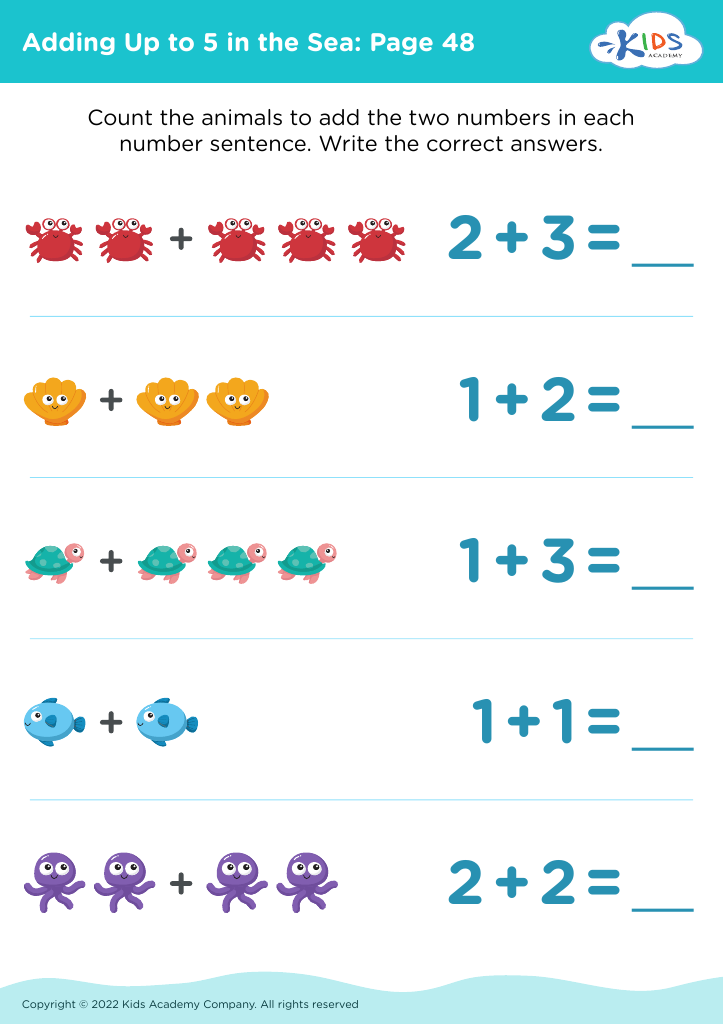
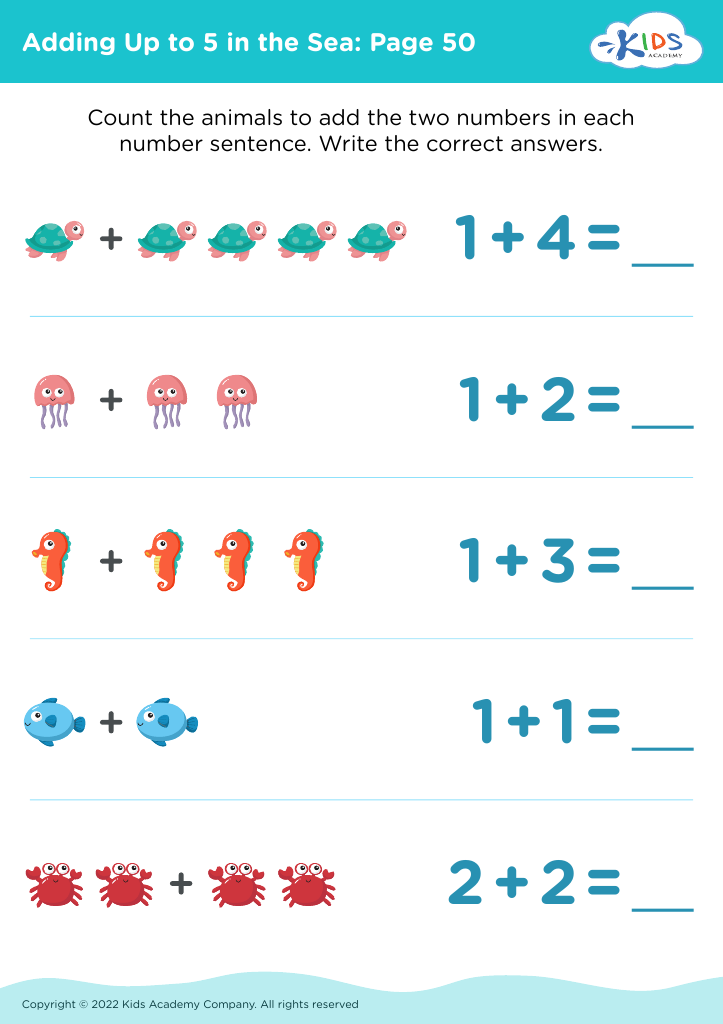
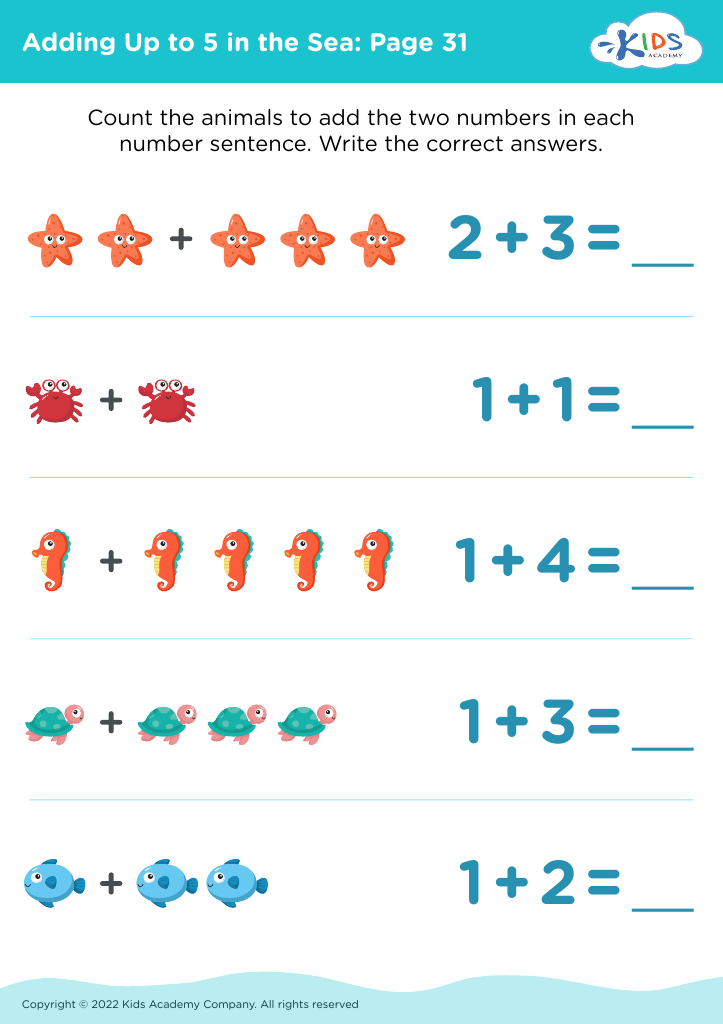
Explore the wonders of the ocean with our "Sea Creatures Identification: Adding Up to 5 Worksheets" designed specifically for 5-year-olds! These engaging worksheets introduce young learners to various sea creatures while enhancing their math skills through fun addition exercises. Kids will identify colorful sea animals such as octopuses, starfish, and dolphins, while practicing addition problems that stick to the number 5. With vibrant illustrations and simple language, these worksheets make learning enjoyable and interactive. Encourage your child's love for both mathematics and marine life with these educational resources that promote early numeracy and aquatic knowledge. Dive in today!




%20(1).jpg)


.jpg)
Teaching children about sea creature identification is important for several reasons. First, it helps them learn about the diverse ecosystem in our oceans. Understanding various marine animals, such as dolphins, sharks, jellyfish, and starfish, sparks curiosity and fosters a love for nature. When children recognize sea creatures, they develop observation skills and can engage in meaningful discussions about marine life.
Second, learning about sea creatures promotes environmental awareness. By knowing the names and roles of different ocean inhabitants, children will understand the importance of protecting marine habitats. This knowledge encourages them to become stewards of the environment from a young age.
Additionally, sea creature identification can be a fun, hands-on activity that engages young learners. Teachers and parents can incorporate this knowledge into games or storytelling, making learning interactive and enjoyable, which is crucial for 5-year-olds. It also develops critical thinking and problem-solving as children categorize and connect sea creatures with their features and behaviors.
Lastly, fostering this interest can lead to a lifelong passion for science and exploration, inspiring future marine biologists or environmentalists among the next generation. Therefore, supporting young learners in identifying sea creatures is beneficial for personal and environmental well-being.








