Visual Perception Skills Adding Up to 5 Worksheets for 5-Year-Olds
4 filtered results
-
From - To
Enhance your 5-year-old's math and visual perception skills with our "Visual Perception Skills Adding Up to 5 Worksheets." These engaging printables feature fun activities specifically designed to help young learners improve their ability to add numbers up to 5 while honing essential visual perception abilities. Perfect for preschool and kindergarten students, each worksheet encourages kids to recognize patterns, match objects, and solve sums in a playful and educational way. Boost your child's confidence in math with these expertly crafted resources from Kids Academy, making learning an enjoyable and rewarding experience. Motivate your little one to discover the joy of math!
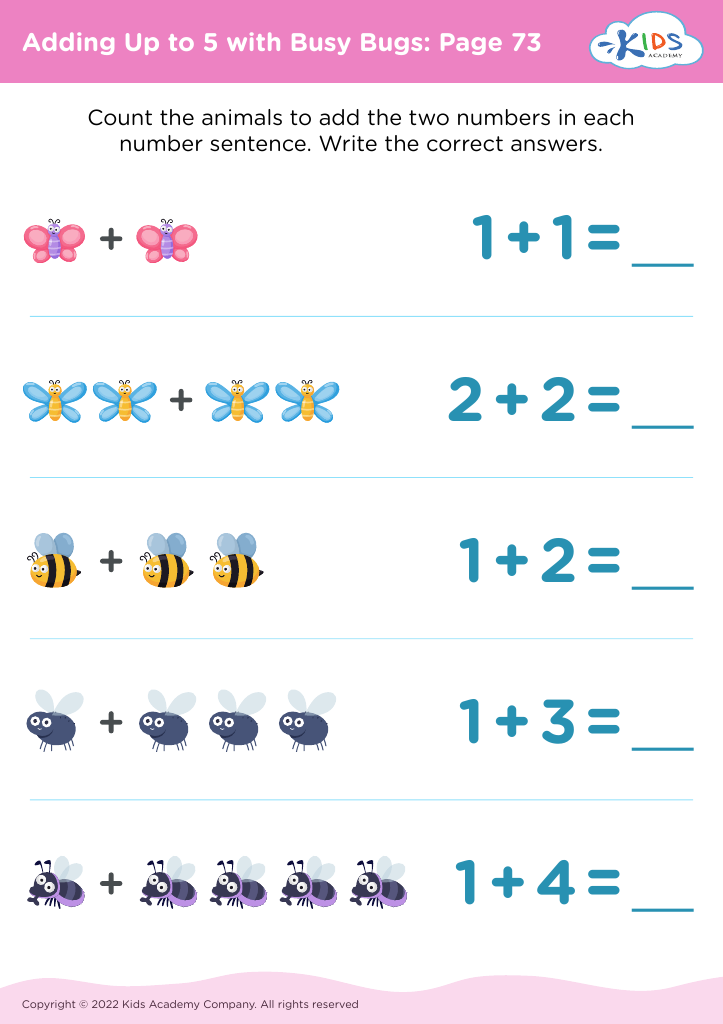
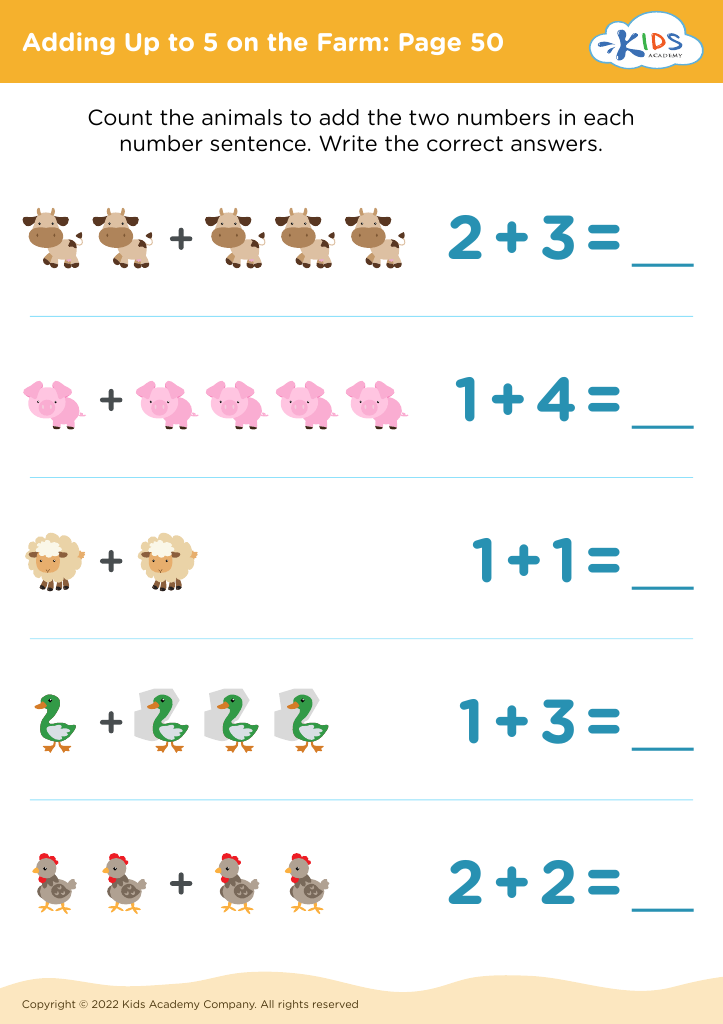
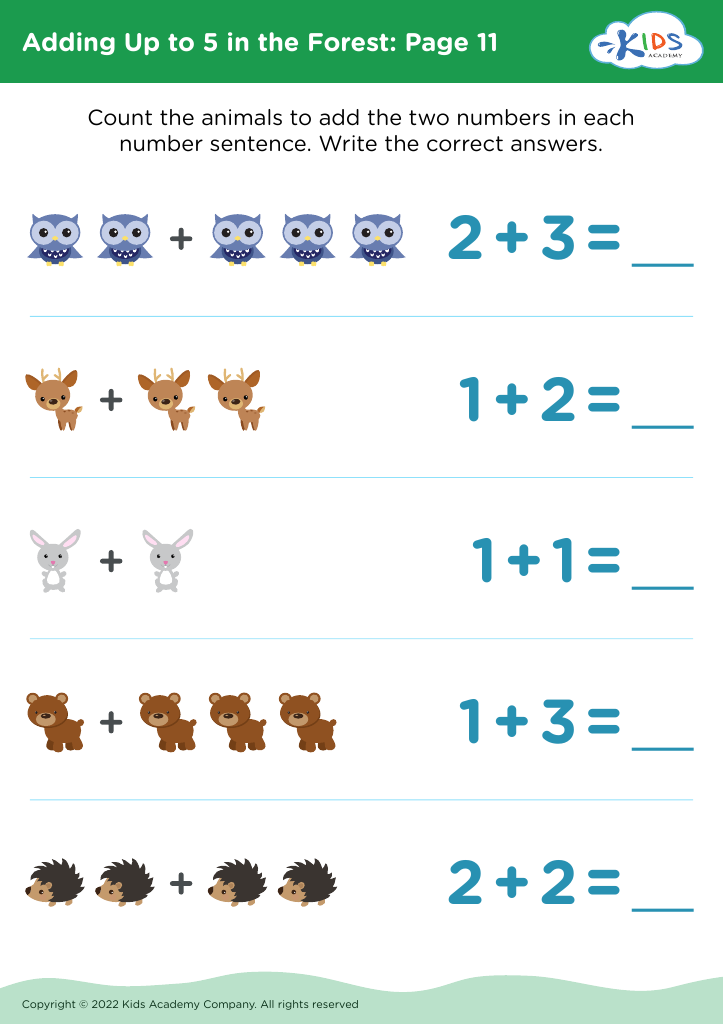
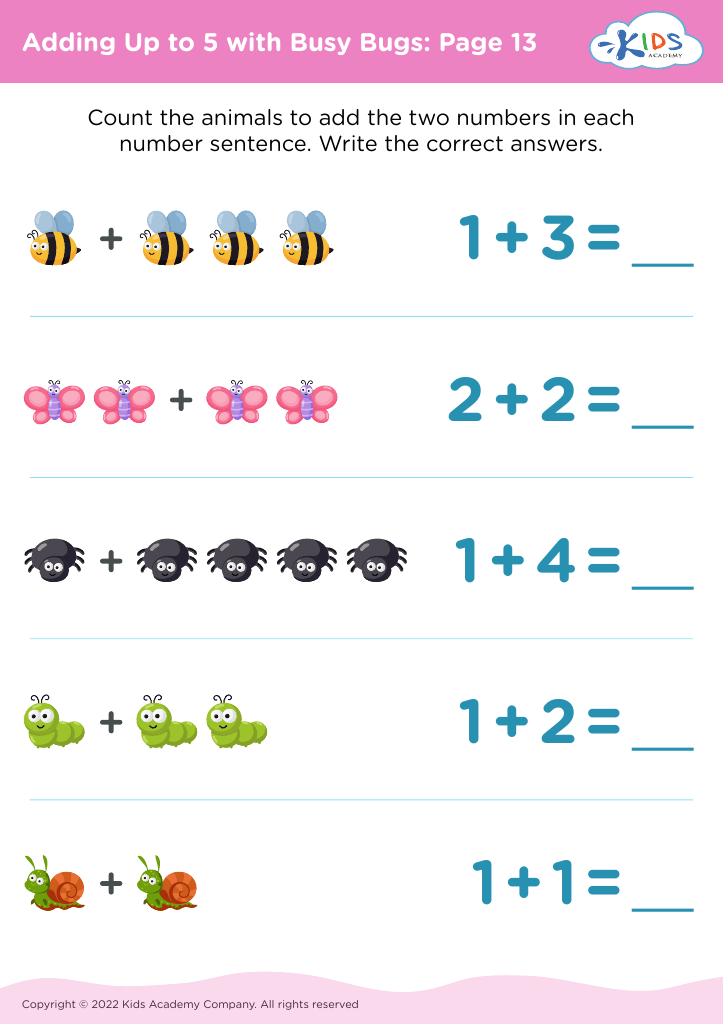



%20(1).jpg)




Parents and teachers should prioritize developing visual perception skills in 5-year-olds, particularly when learning to add up to 5, because these skills lay foundational groundwork for more complex mathematical thinking and overall cognitive development. Visual perception involves the brain’s ability to make sense of what the eyes see, which is crucial for understanding numbers, recognizing patterns, sorting objects, and performing tasks such as counting and simple arithmetic.
For young children, adding up to 5 is an important early milestone in math literacy. Strong visual perception allows children to quickly discern quantities, visually track moving objects, and match similar patterns, which facilitates quick and accurate responses to math problems. These skills extend beyond mathematics; they also support reading readiness and problem-solving abilities, enhancing overall learning potential.
Additionally, fostering visual perception skills helps in the development of hand-eye coordination and fine motor skills, which are important for daily tasks such as writing, drawing, and manipulating objects. By reinforcing these skills through playful, visual strategies like counting games, puzzles, and interactive activities, parents and teachers ensure smoother academic and developmental progress. Ultimately, investing in visual perception at this age equates to equipping children with essential tools that impact their multidisciplinary growth and future academic success.








