Addition up to 5 Addition & Subtraction Worksheets for 5-Year-Olds
4 filtered results
-
From - To
Introduce your child to the exciting world of math with our "Addition up to 5 Addition & Subtraction Worksheets for 5-Year-Olds"! Tailored specifically for young learners, these engaging printable worksheets help build foundational math skills through simple addition and subtraction problems. Each worksheet offers fun and vibrant illustrations to keep kids motivated while they practice counting and computing up to five. Perfect for at-home learning or classroom activities, these resources are designed to develop your child's confidence and proficiency in early math. Download now and start your child’s adventure in mastering basic arithmetic!
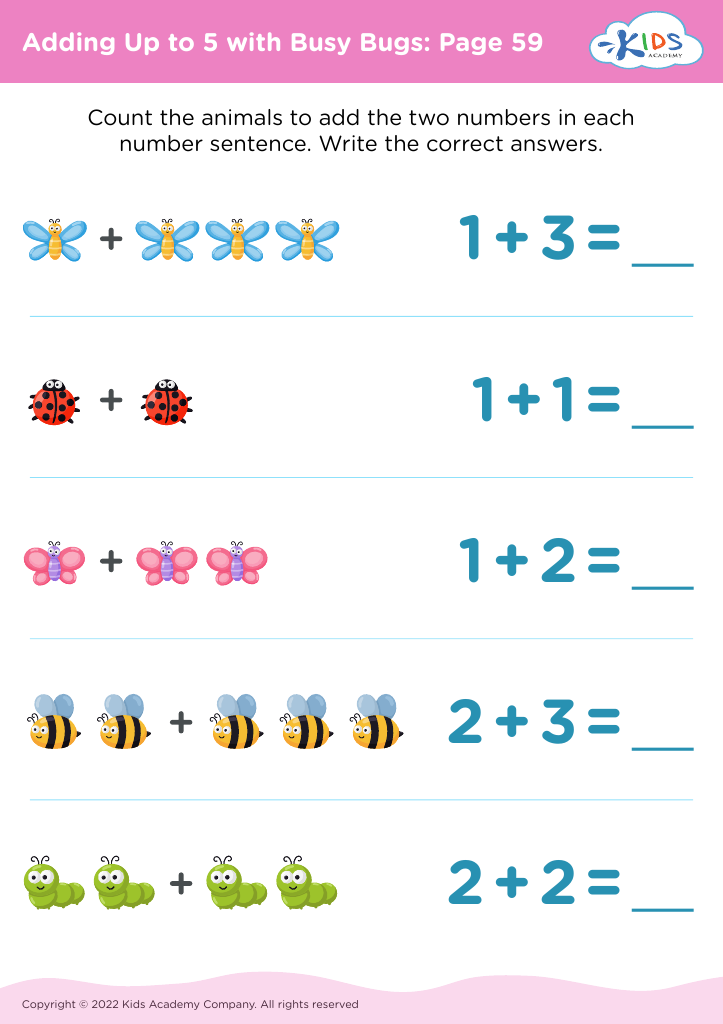
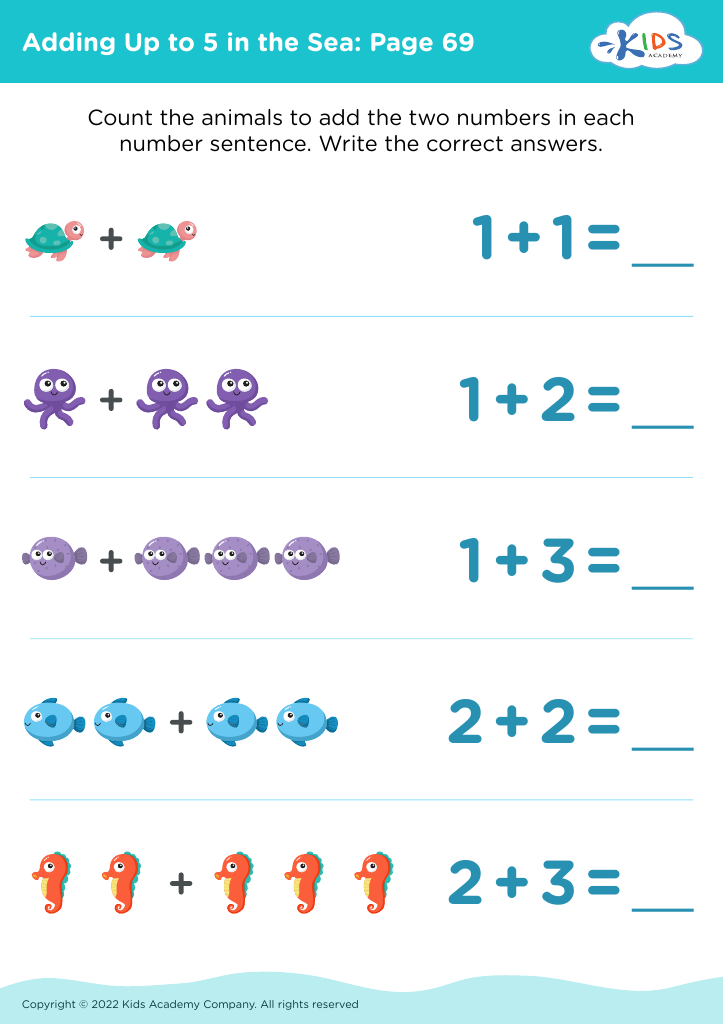
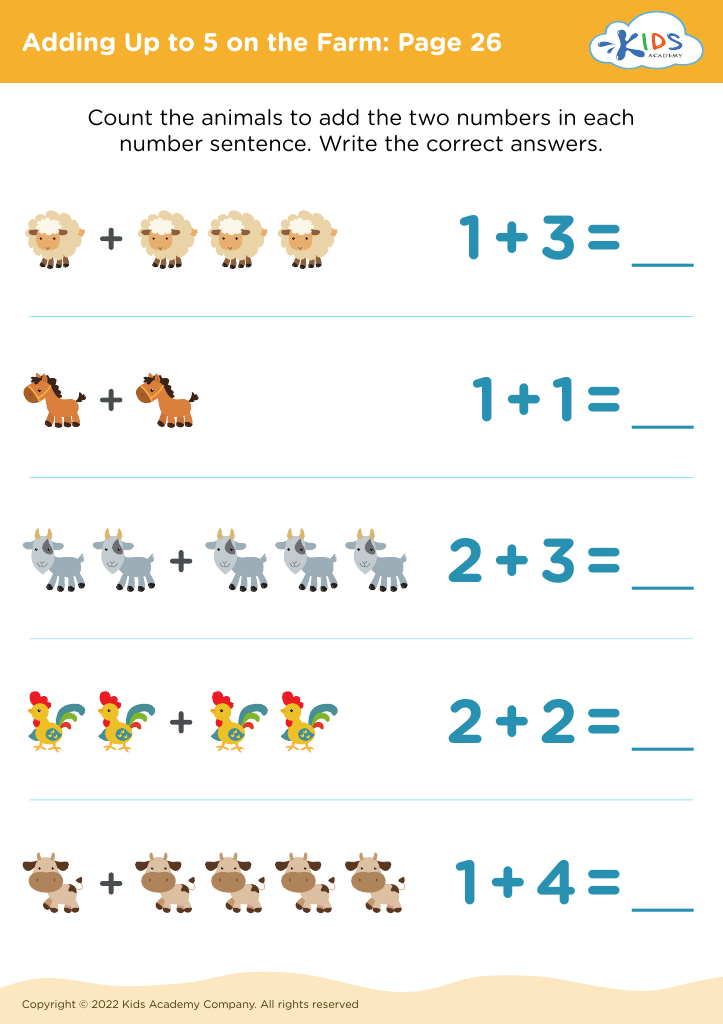
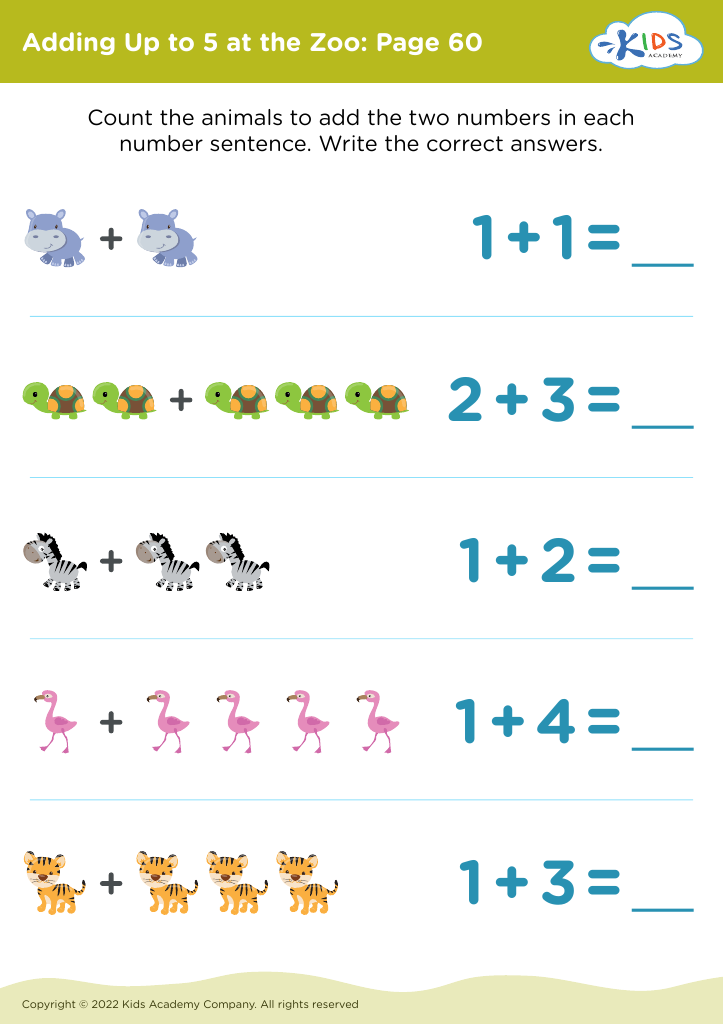








Parents and teachers should prioritize addition and subtraction up to 5 for 5-year-olds because these foundational math skills are critical for their cognitive and academic development. At this age, children are in the early stages of building their numerical understanding, which sets the groundwork for more complex math concepts they will encounter later.
Early math skills, such as addition and subtraction, enhance problem-solving abilities and logical thinking. By mastering these basic operations, children begin to develop number sense, recognize patterns, and understand relationships between numbers, which are essential skills not only in math but also in daily life.
Incorporating these concepts in a playful and intuitive manner, using everyday objects, games, and activities, also strengthens a child's ability to think analytically and approach problems with confidence. Moreover, fostering an early interest in math can instill a positive attitude towards learning and reduce anxiety associated with mathematics as they progress through their education.
Engaging with basic addition and subtraction also aids in the improvement of attention span and listening skills, as young learners have to follow instructions and focus on solving problems. This early attention to math enriches cognitive development and prepares children for a smoother academic journey. By investing time and resources in teaching these skills, parents and teachers are giving children essential tools they will use for a lifetime.








