Basic Addition Skills Addition & Subtraction Worksheets for 5-Year-Olds - Page 10

Check out this FREE Trial Lesson on Addition & Subtraction for age 5!

L

Favorites
With answer key
Interactive
  • 5
  • Basic Addition Skills
  • Addition & Subtraction
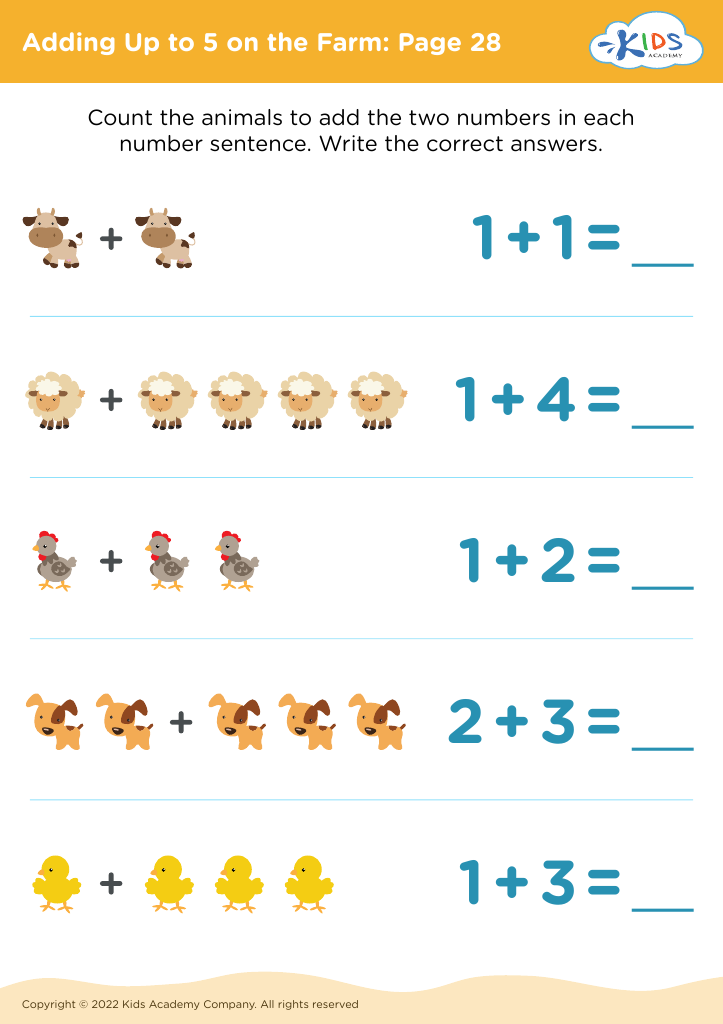
Adding Up to 5 on the Farm: Page 28
Worksheet
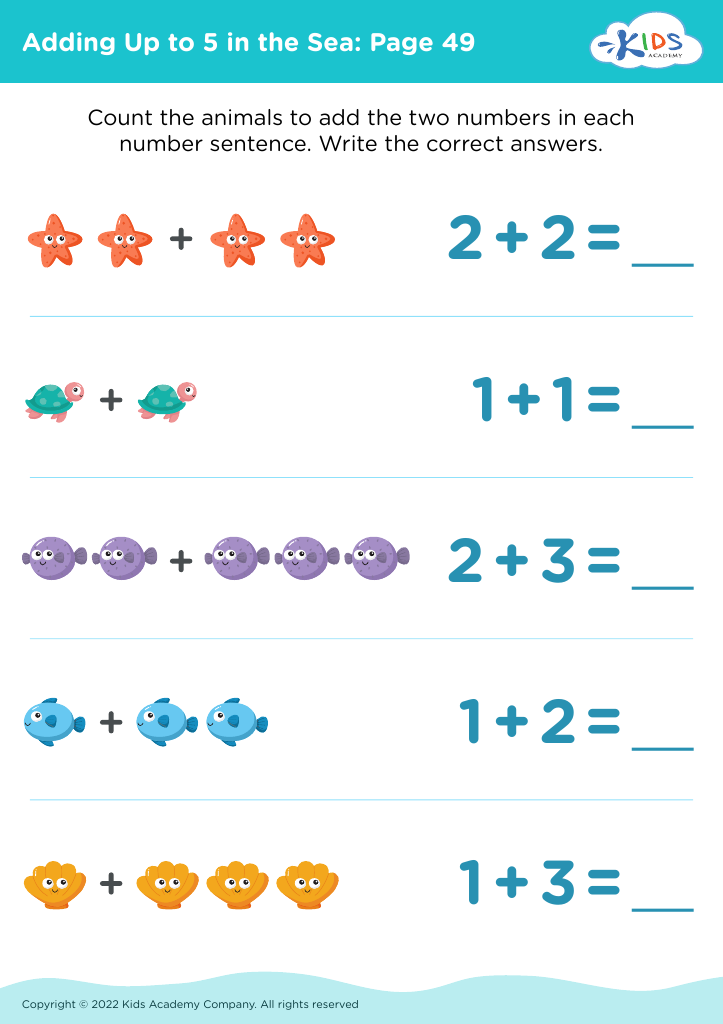
Adding Up to 5 in the Sea: Page 49
Worksheet
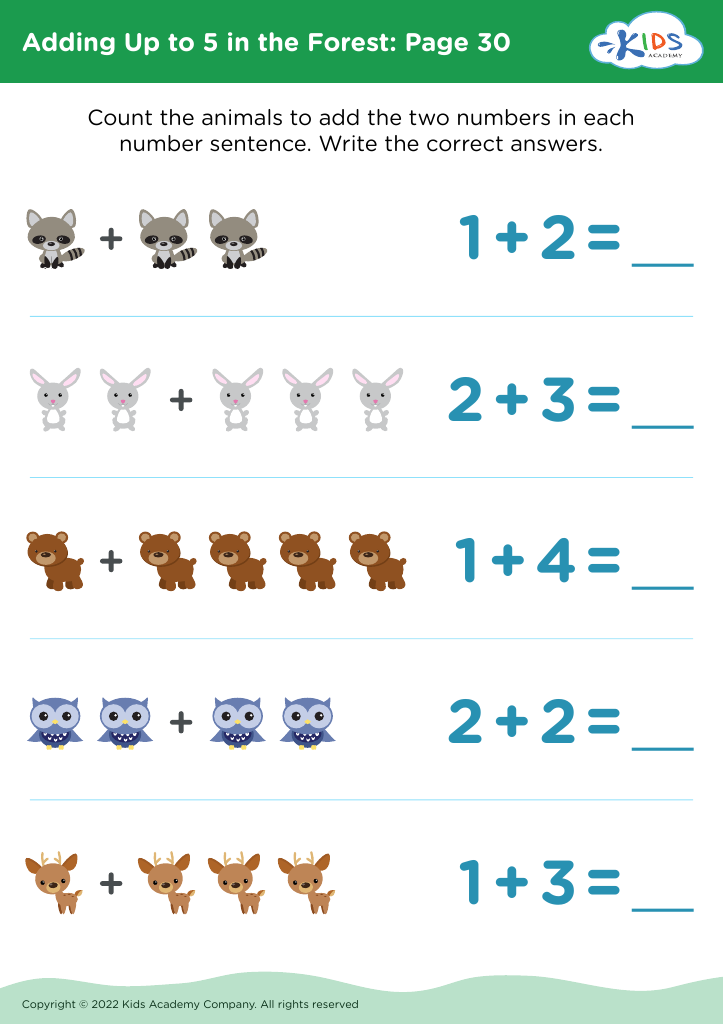
Adding Up to 5 in the Forest: Page 30
Worksheet
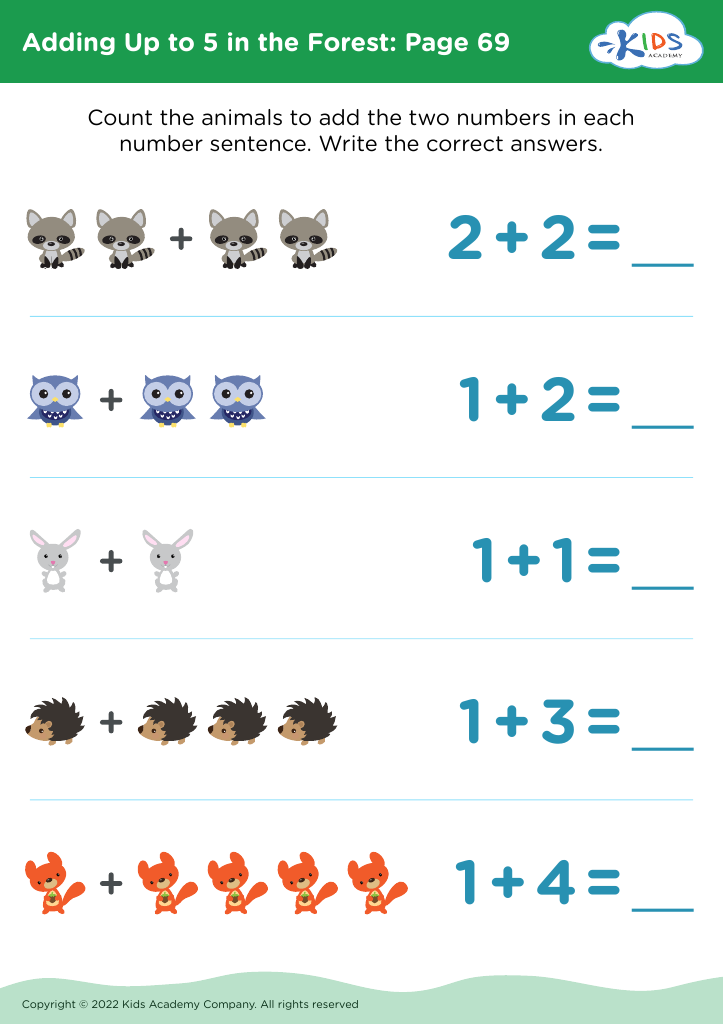
Adding Up to 5 in the Forest: Page 69
Worksheet
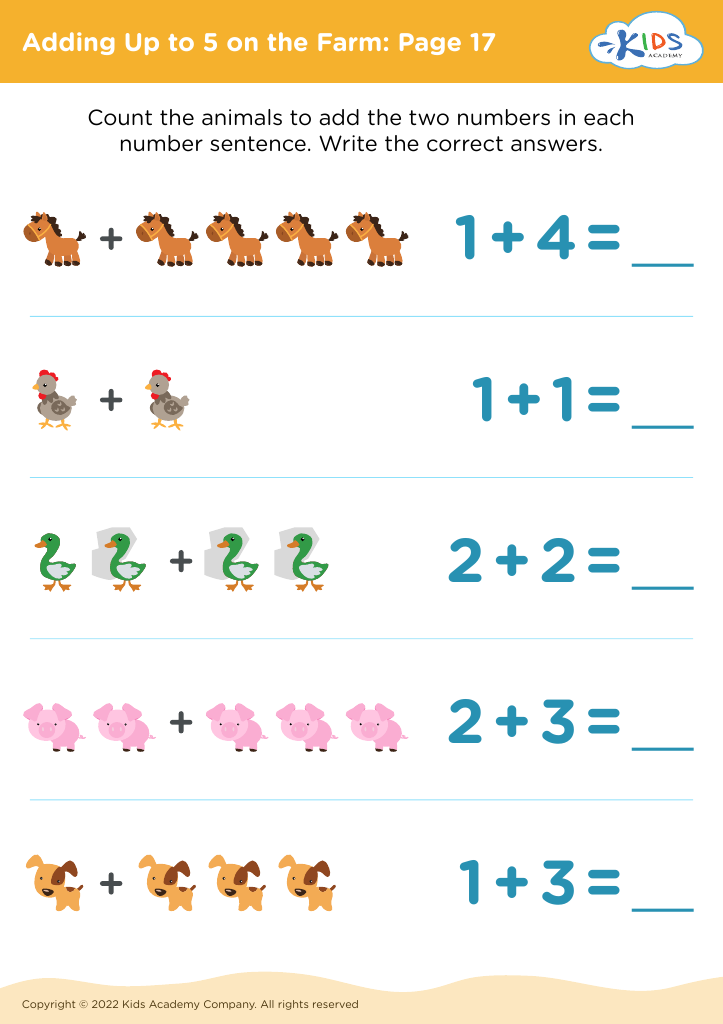
Adding Up to 5 on the Farm: Page 17
Worksheet
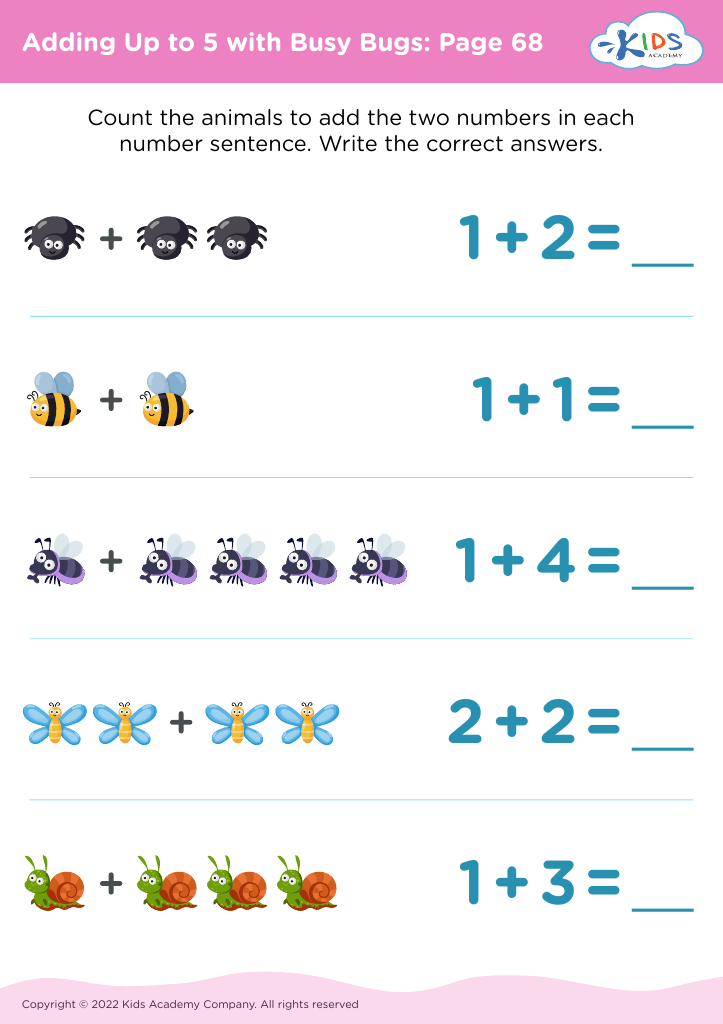
Adding Up to 5 with Busy Bugs: Page 68
Worksheet
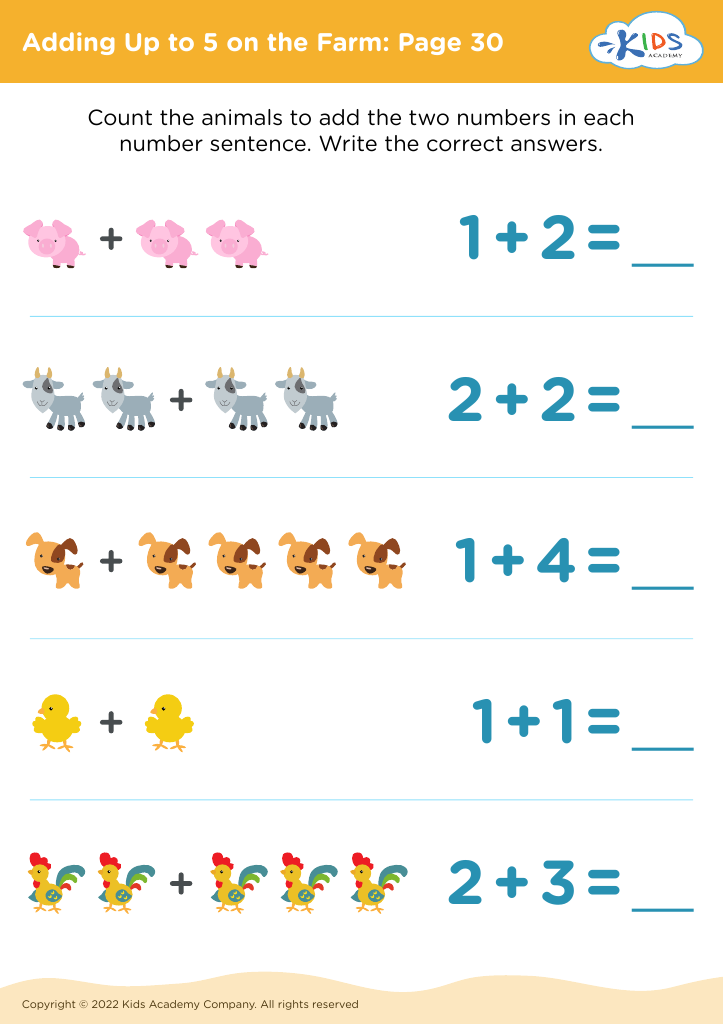
Adding Up to 5 on the Farm: Page 30
Worksheet
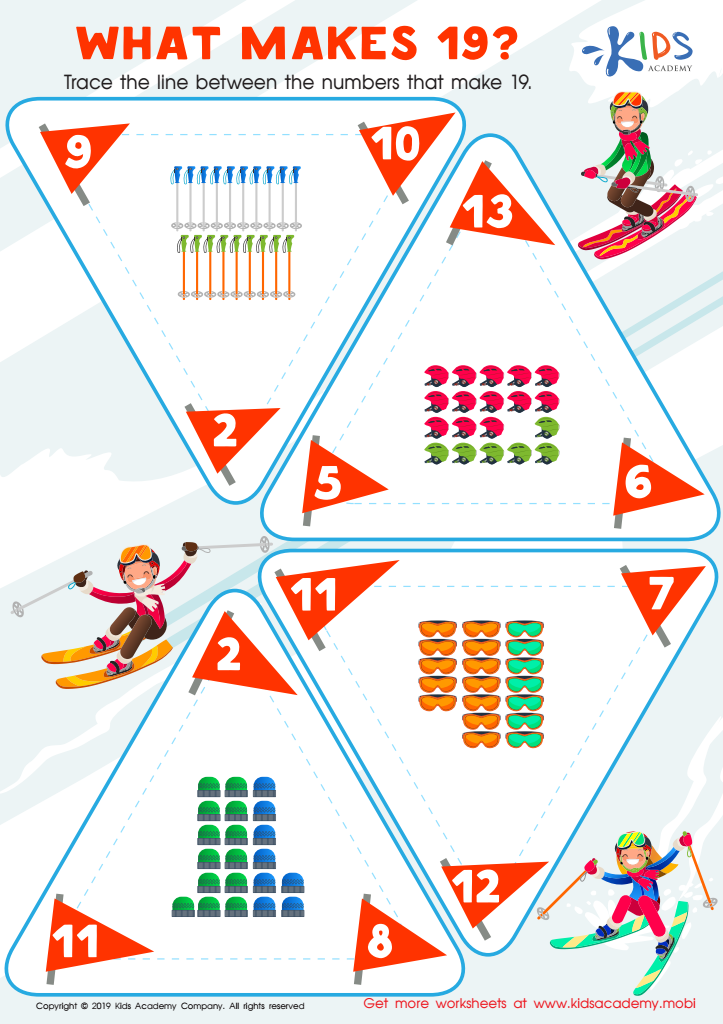
What Makes 19? Worksheet

What Makes 19? Worksheet

As a parent, it's your responsibility to help your kids learn. Put on the teacher hat and use this worksheet to teach them addition tricks. Help them count and add the objects, trace a line between the numbers that make 19, and take their learning a step further.
What Makes 19? Worksheet
Worksheet
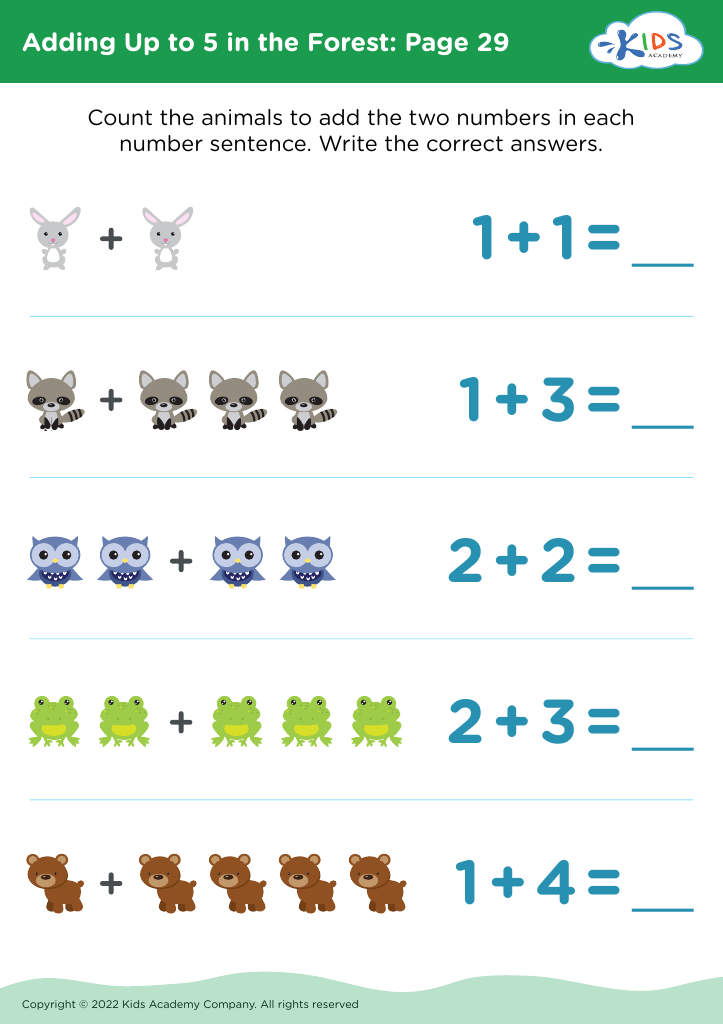
Adding Up to 5 in the Forest: Page 29
Worksheet
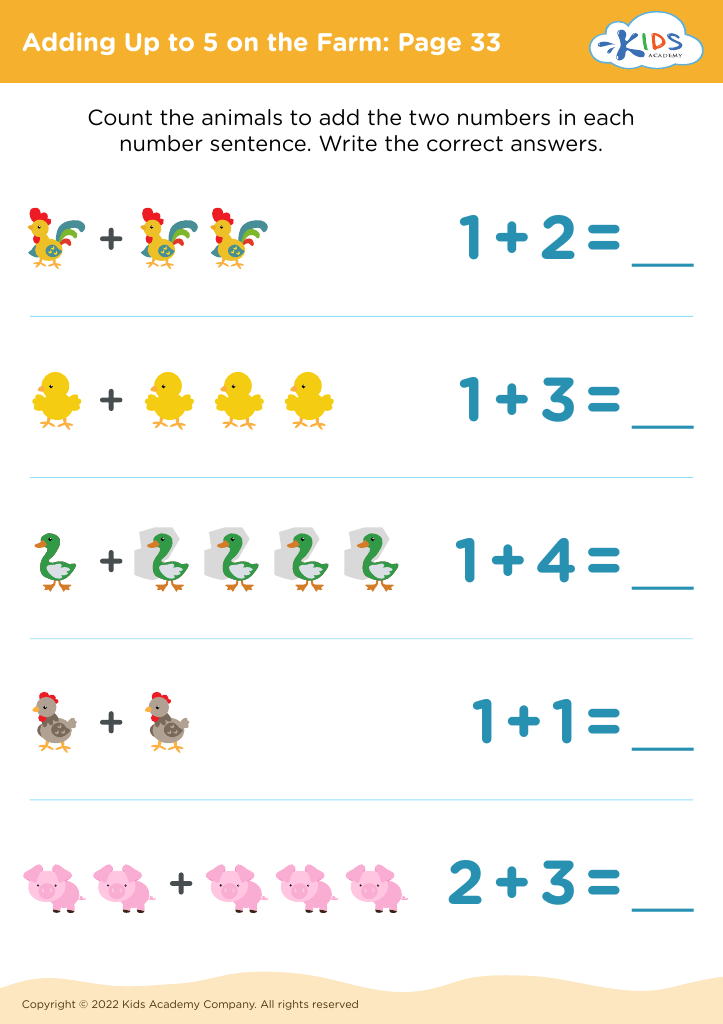
Adding Up to 5 on the Farm: Page 33
Worksheet
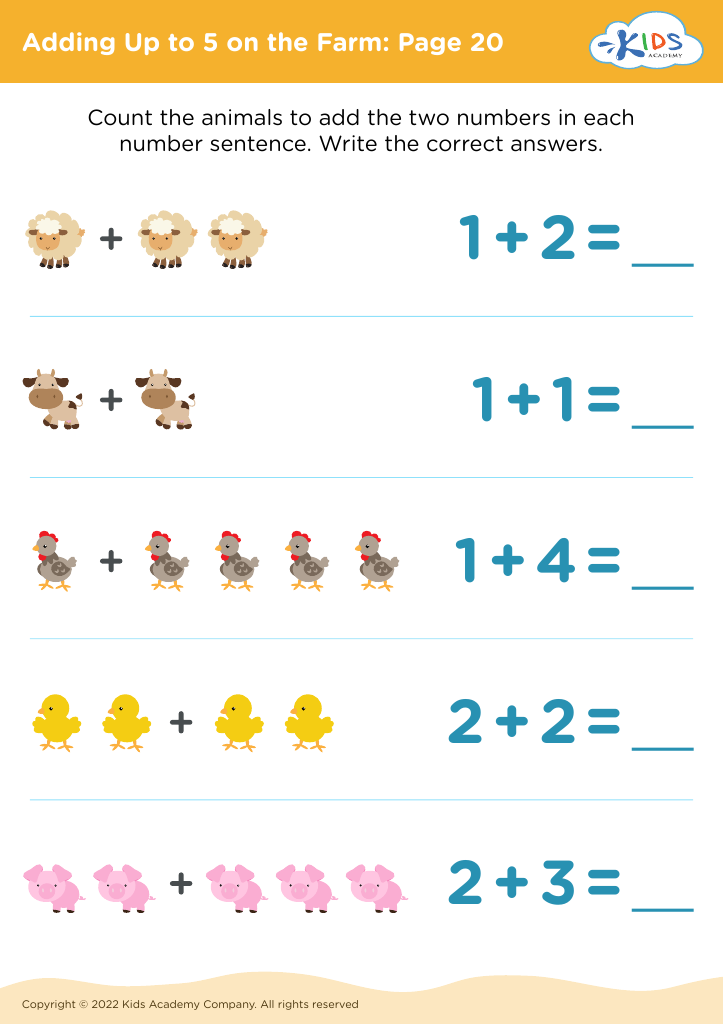
Adding Up to 5 on the Farm: Page 20
Worksheet
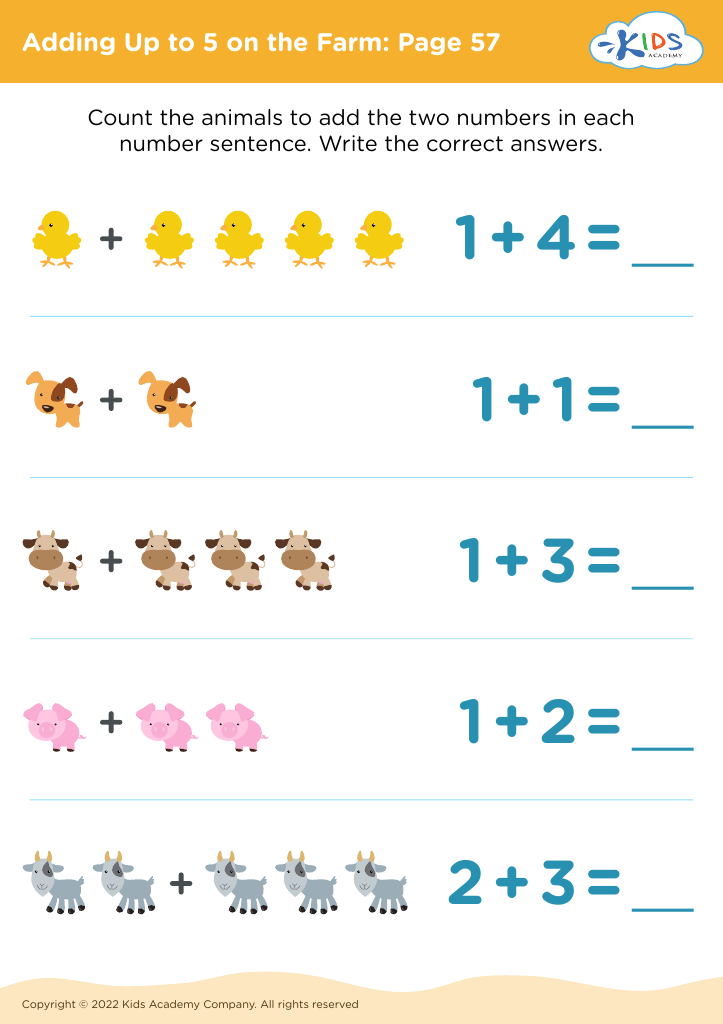
Adding Up to 5 on the Farm: Page 57
Worksheet
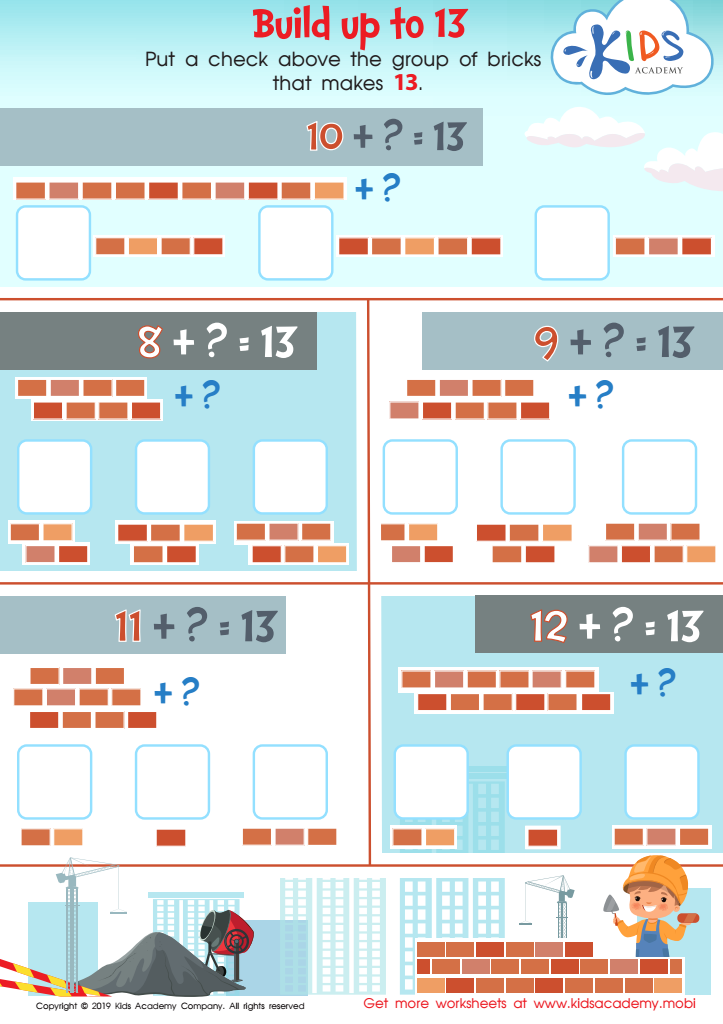
Build up to 13 Worksheet
Build up to 13 Worksheet

Help your kids master addition and subtraction with this worksheet! It'll help clear up any confusion they may have with adding different numbers. Have them add up the simple equations and mark the group of bricks that makes 13. It's a great way for them to get familiar with the basics.
Build up to 13 Worksheet

Worksheet
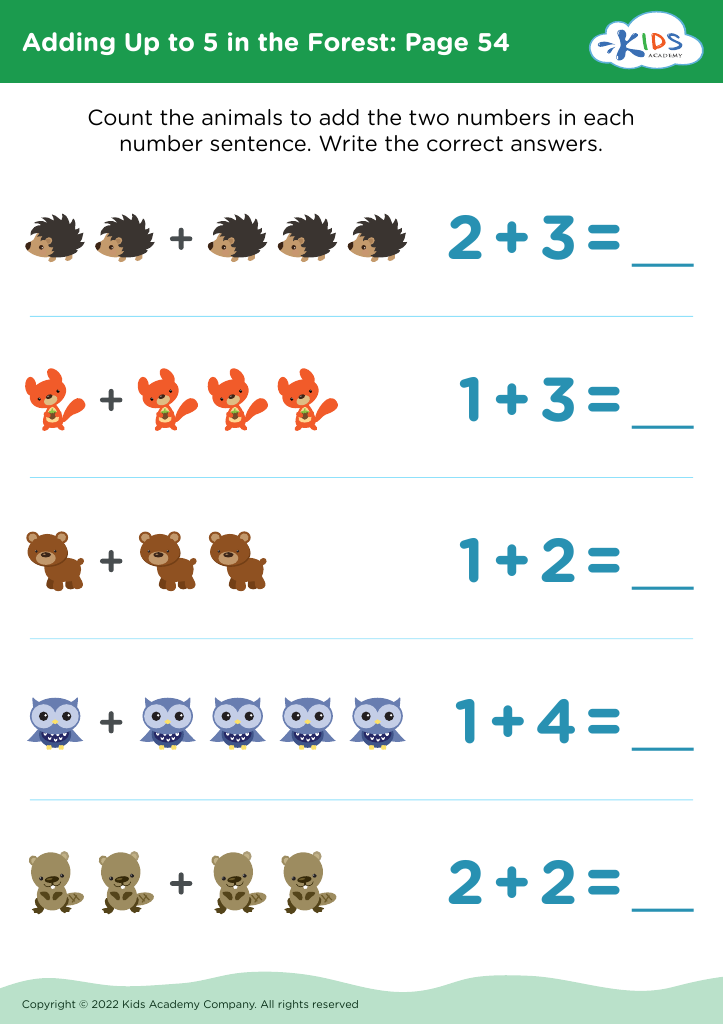
Adding Up to 5 in the Forest: Page 54
Worksheet
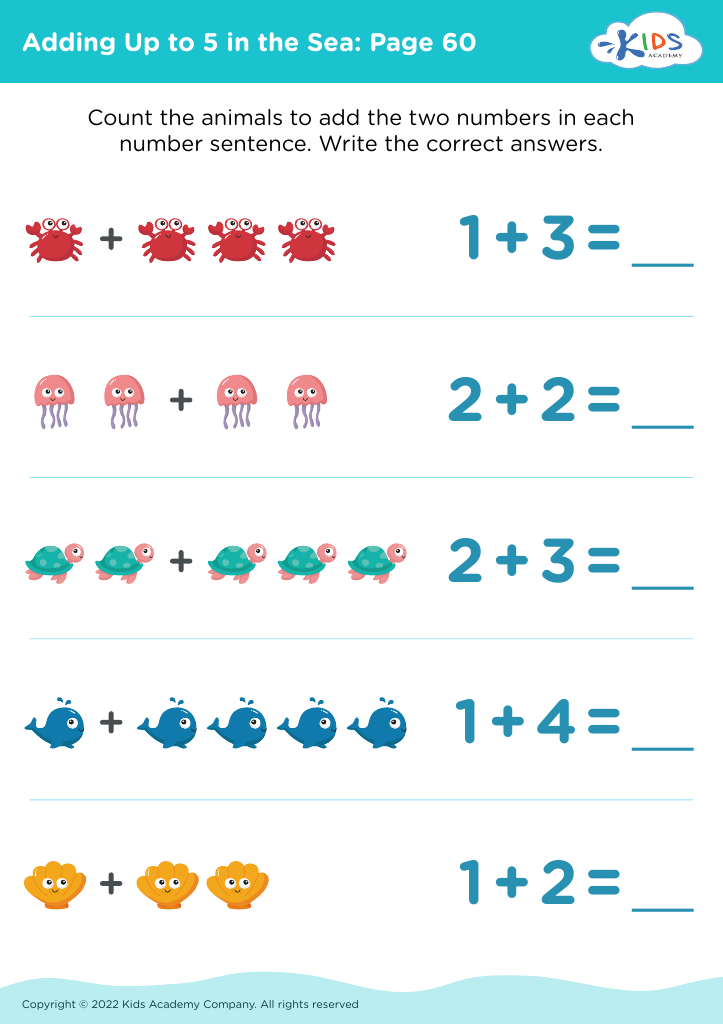
Adding Up to 5 in the Sea: Page 60
Worksheet
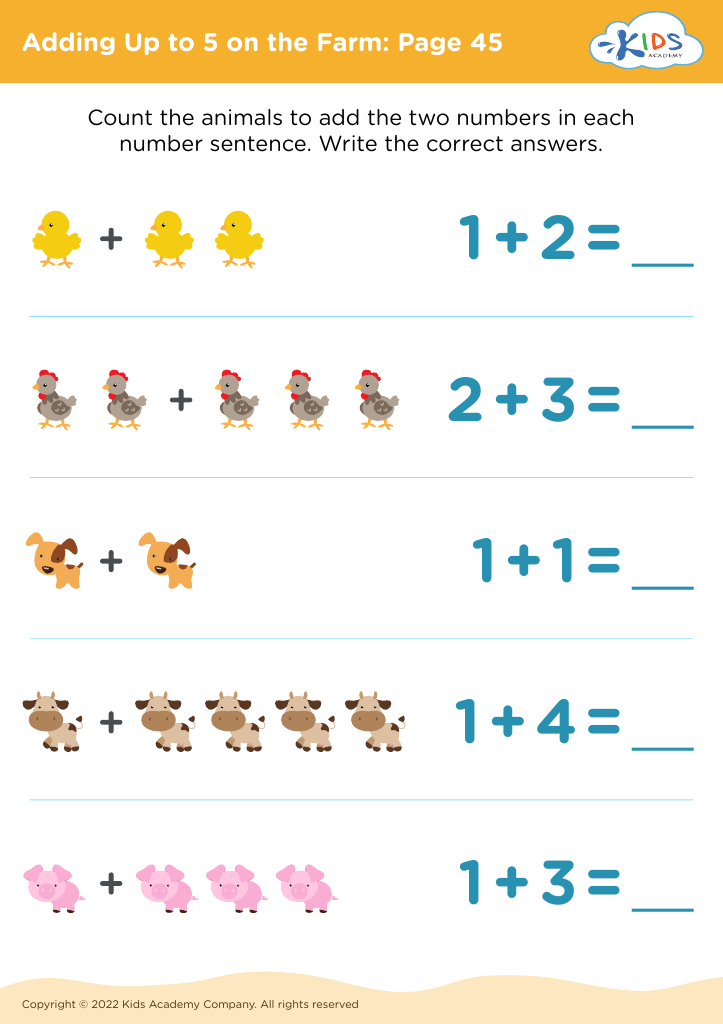
Adding Up to 5 on the Farm: Page 45
Worksheet
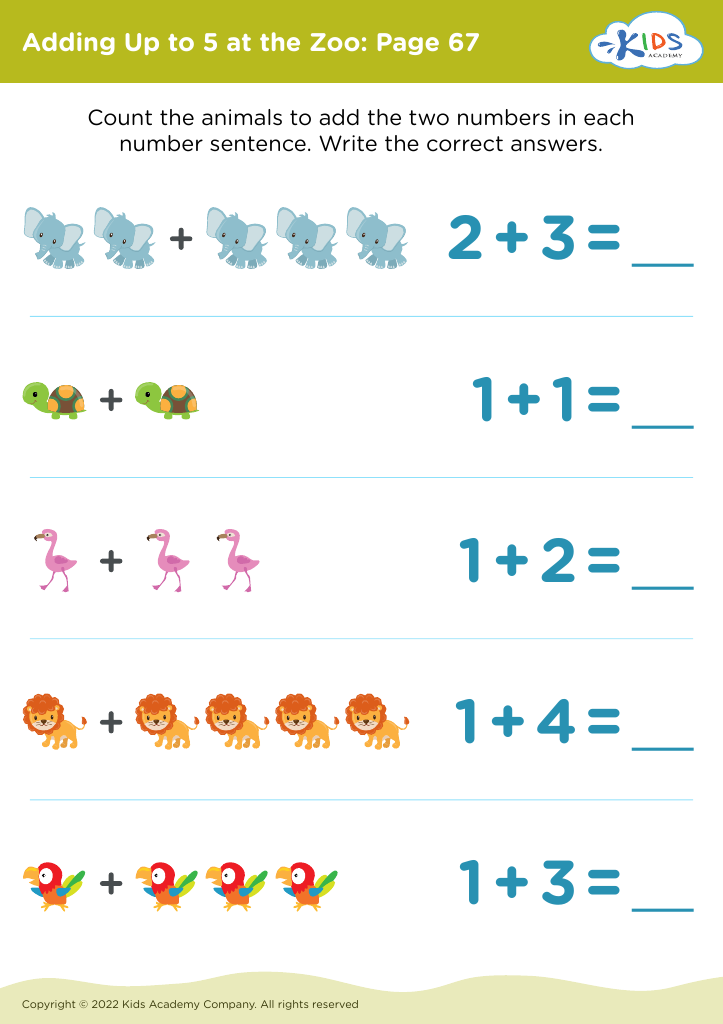
Adding Up to 5 at the Zoo: Page 67
Worksheet
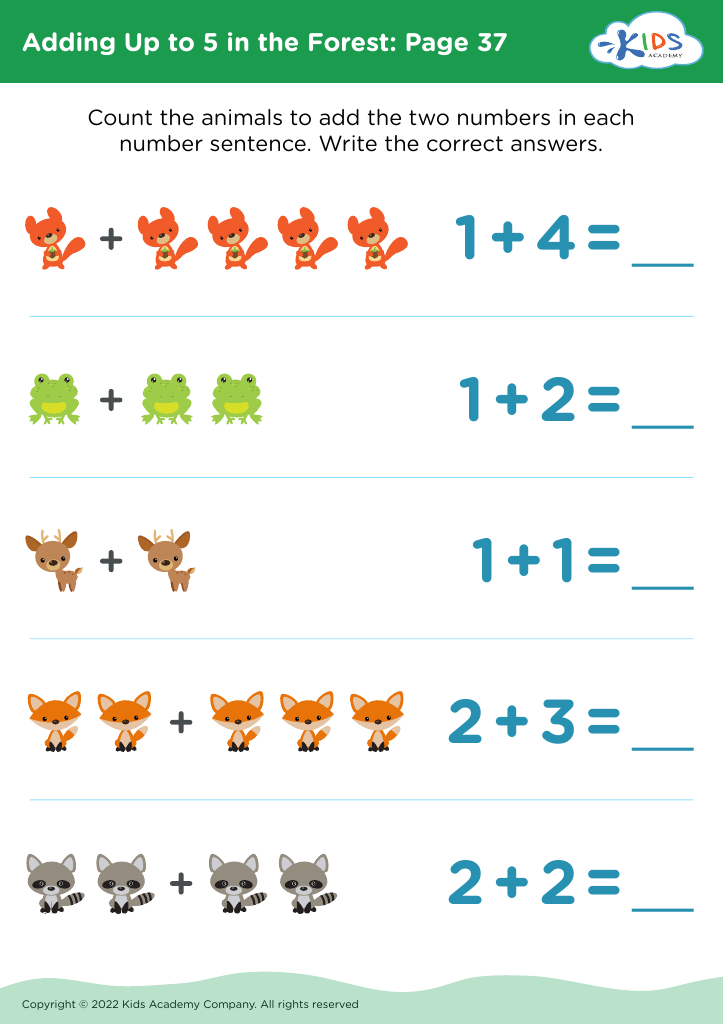
Adding Up to 5 in the Forest: Page 37
Worksheet
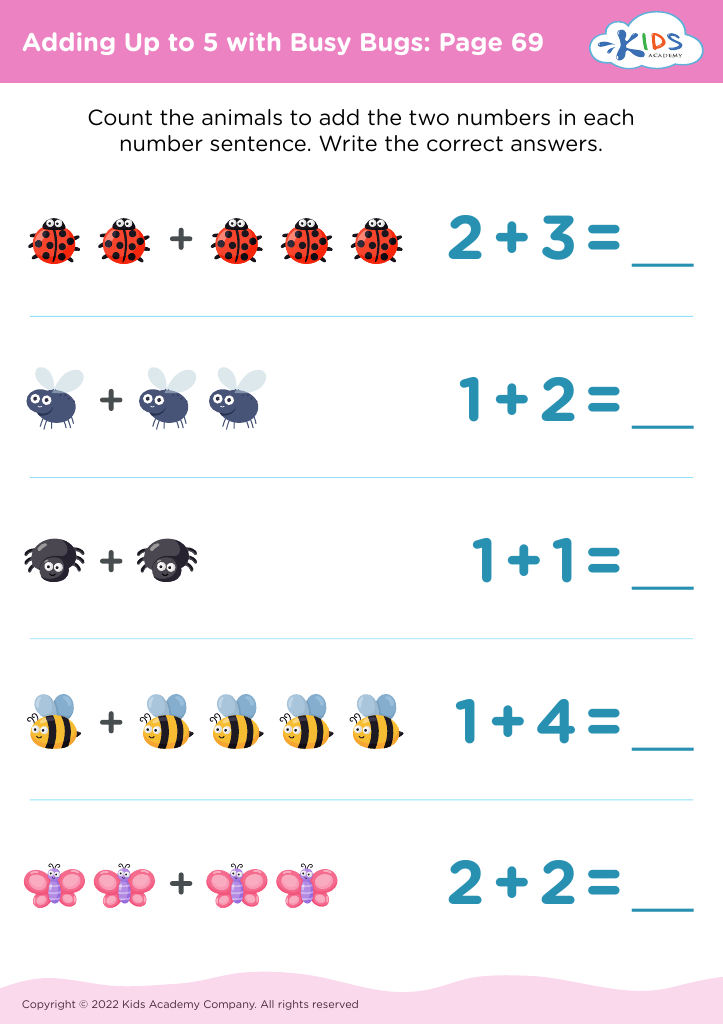
Adding Up to 5 with Busy Bugs: Page 69
Worksheet
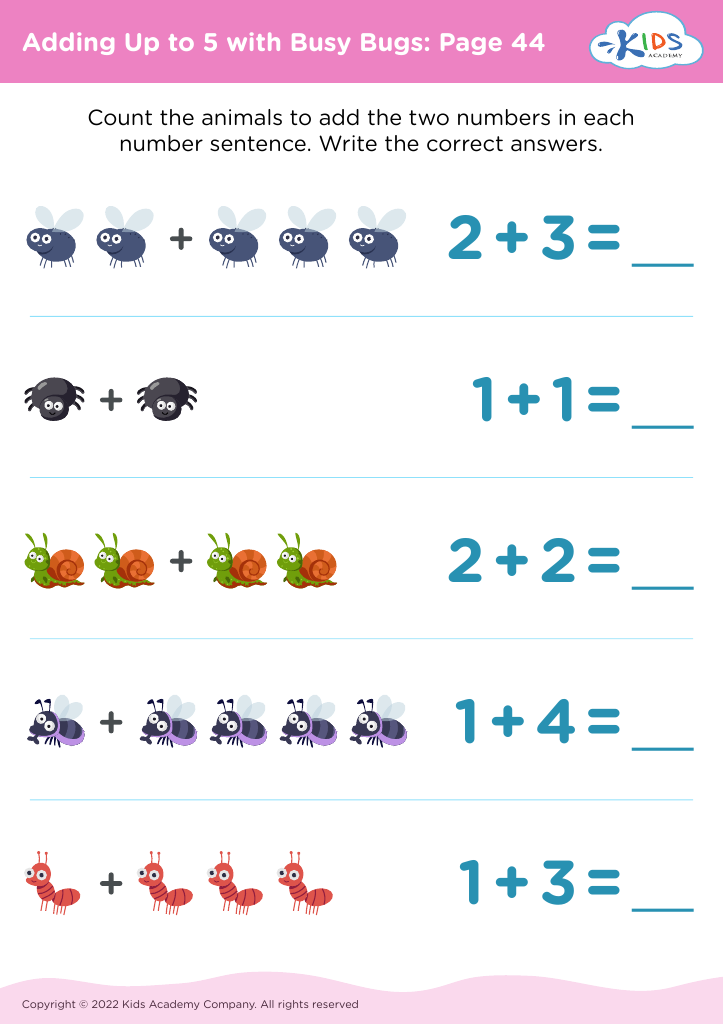
Adding Up to 5 with Busy Bugs: Page 44
Worksheet
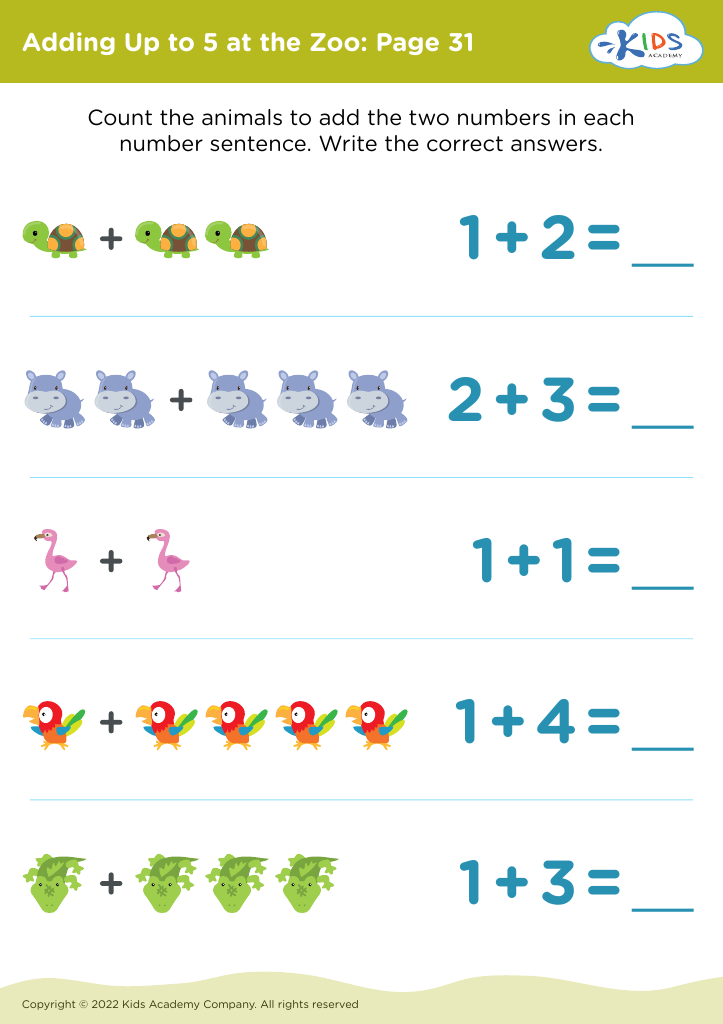
Adding Up to 5 at the Zoo: Page 31
Worksheet
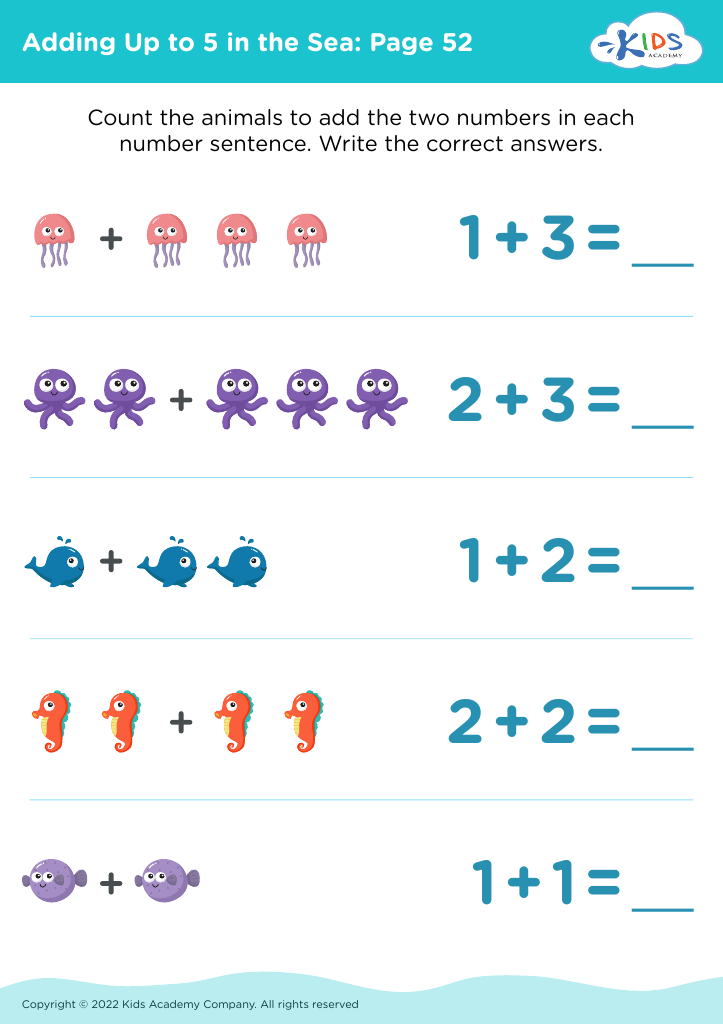
Adding Up to 5 in the Sea: Page 52
Worksheet
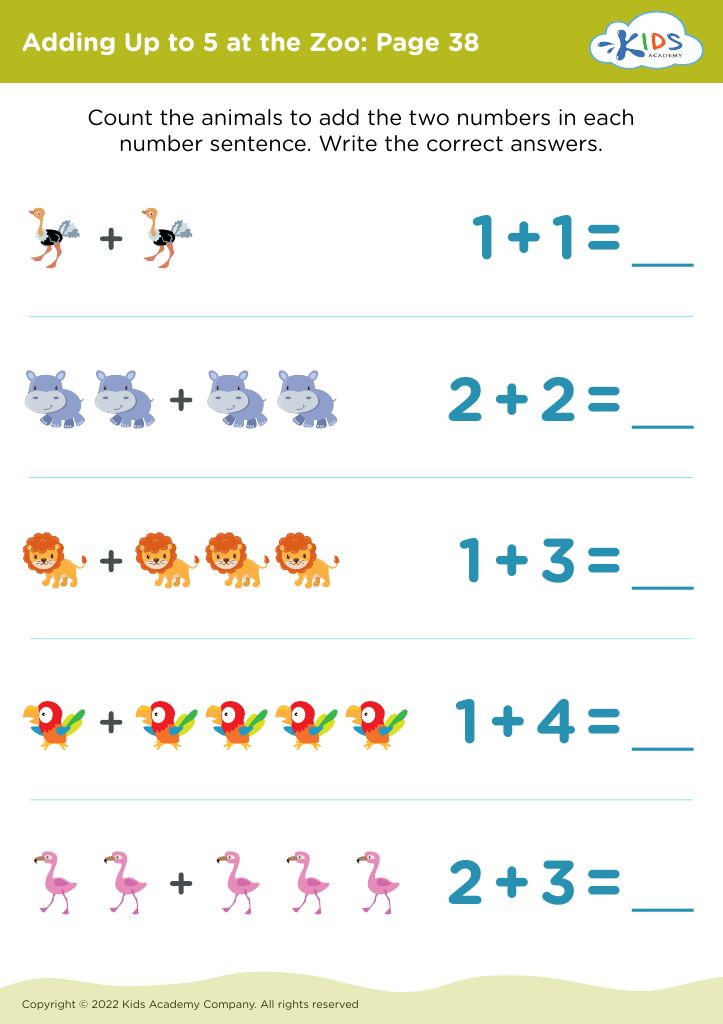
Adding Up to 5 at the Zoo: Page 38
Worksheet
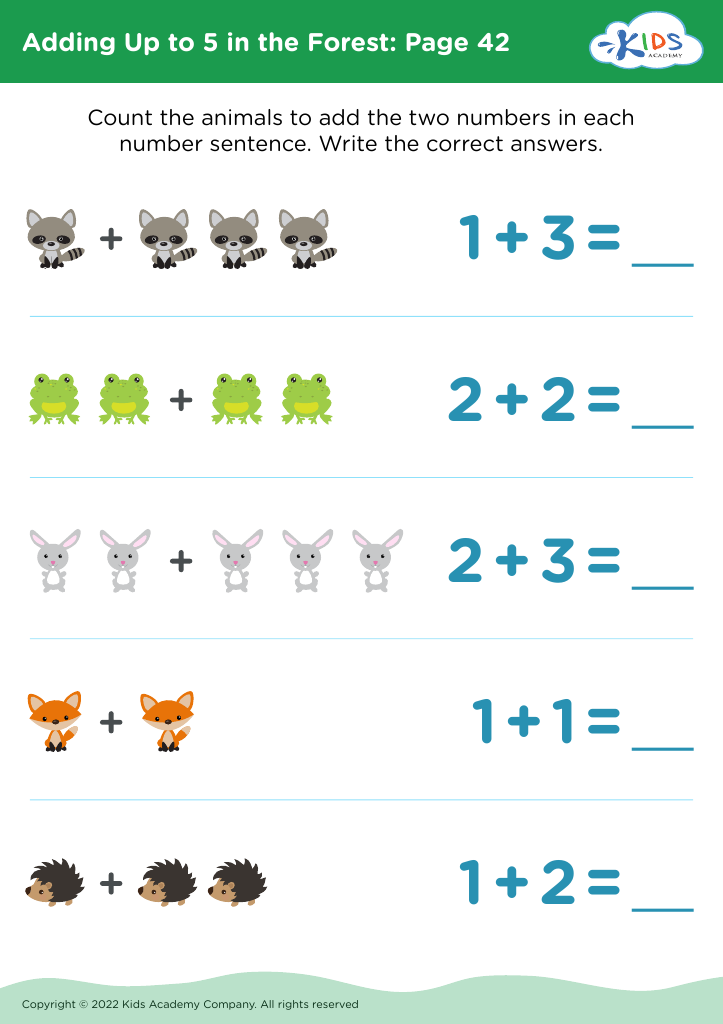
Adding Up to 5 in the Forest: Page 42
Worksheet


Developing basic addition and subtraction skills at a young age is crucial for several reasons. For one, it lays the foundational understanding of numeracy, which is essential for more advanced math concepts. Early exposure to these skills can significantly boost a child's confidence in their mathematical abilities. When children grasp addition and subtraction, they also develop critical thinking and problem-solving skills. They learn not just to count numbers but to understand relationships between them, which translates into better cognitive and analytical abilities.

Moreover, early math skills are strongly linked to future academic success. Studies have shown that children who excel in early math tend to perform well in other subjects throughout their education. This is because math strengthens logical thinking patterns that are applicable in various academic and real-life contexts.

In addition, practicing these skills provides opportunities for parents and teachers to bond with children through interactive and enjoyable activities. Games, puzzles, and real-world problem-solving tasks make learning feel like play, fostering a positive attitude toward education. In essence, caring about basic addition and subtraction during early childhood ensures that children not only start their academic journey on the right foot but also develop a lifelong love for learning.