
Basic Math understanding Addition & Subtraction Worksheets for 5-Year-Olds
7 filtered results
Difficulty Level
Grade
Age
-
From - To
Subject
Activity
Standards
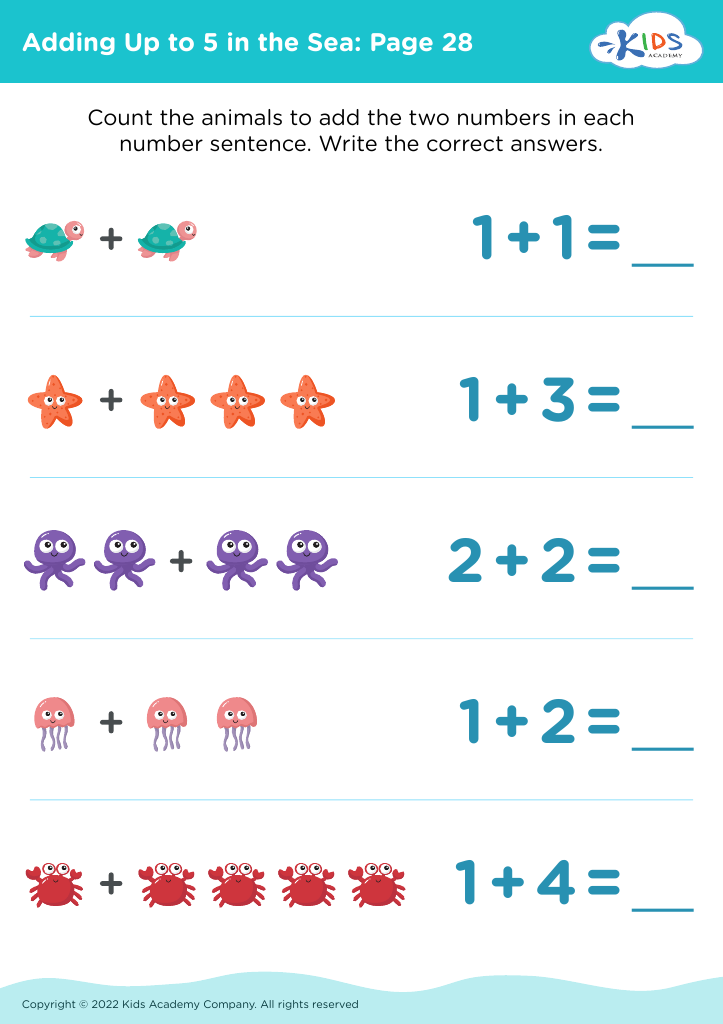
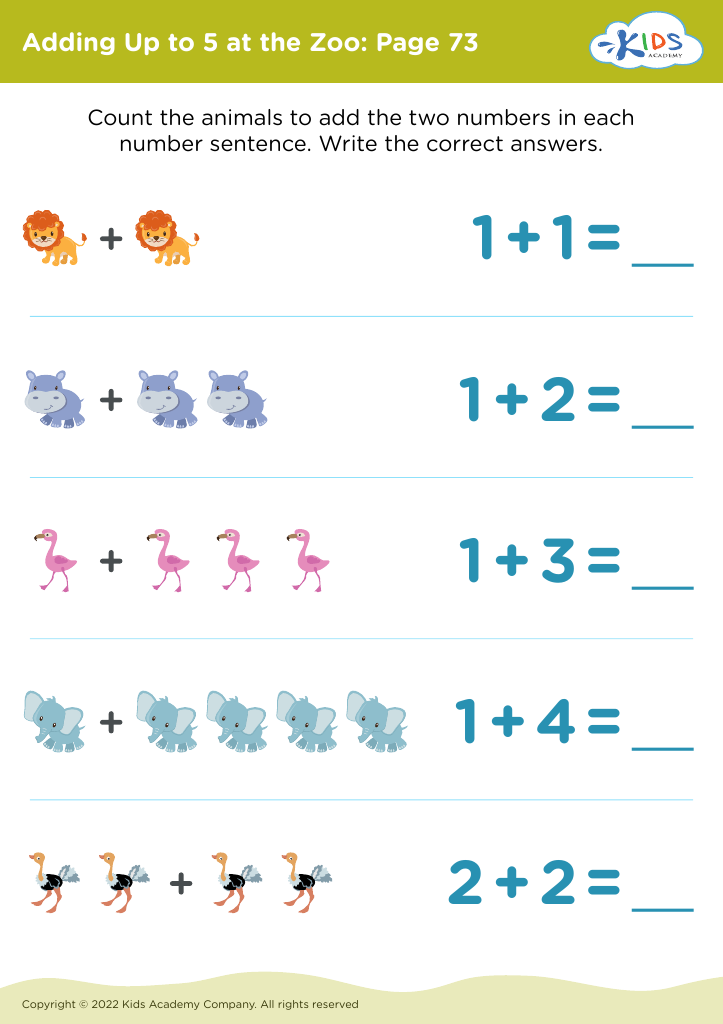
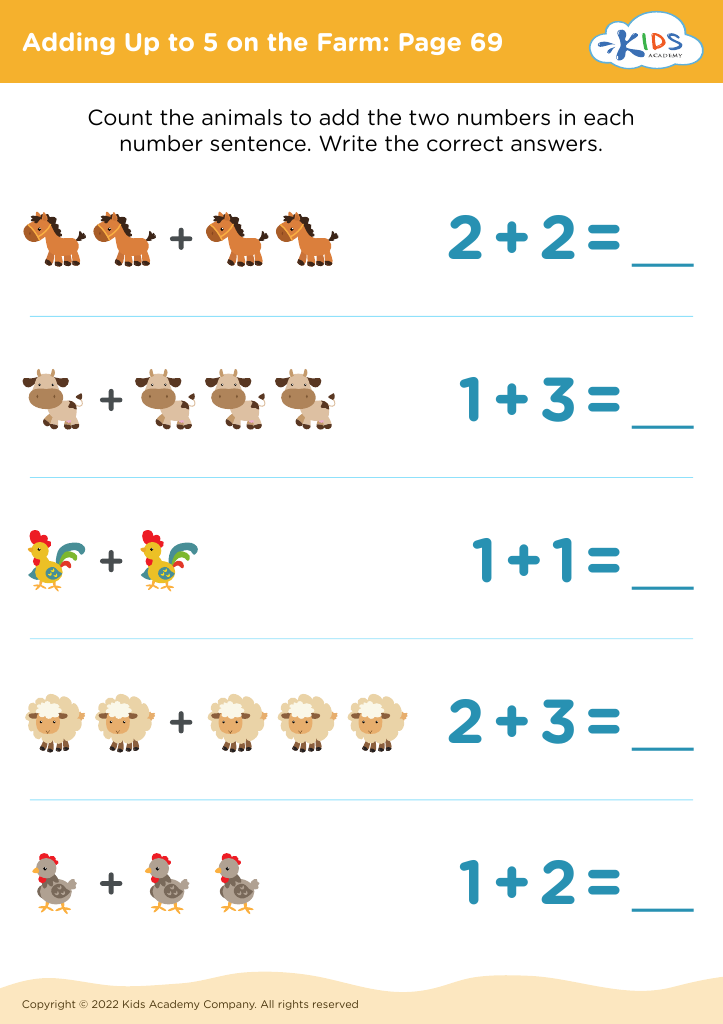
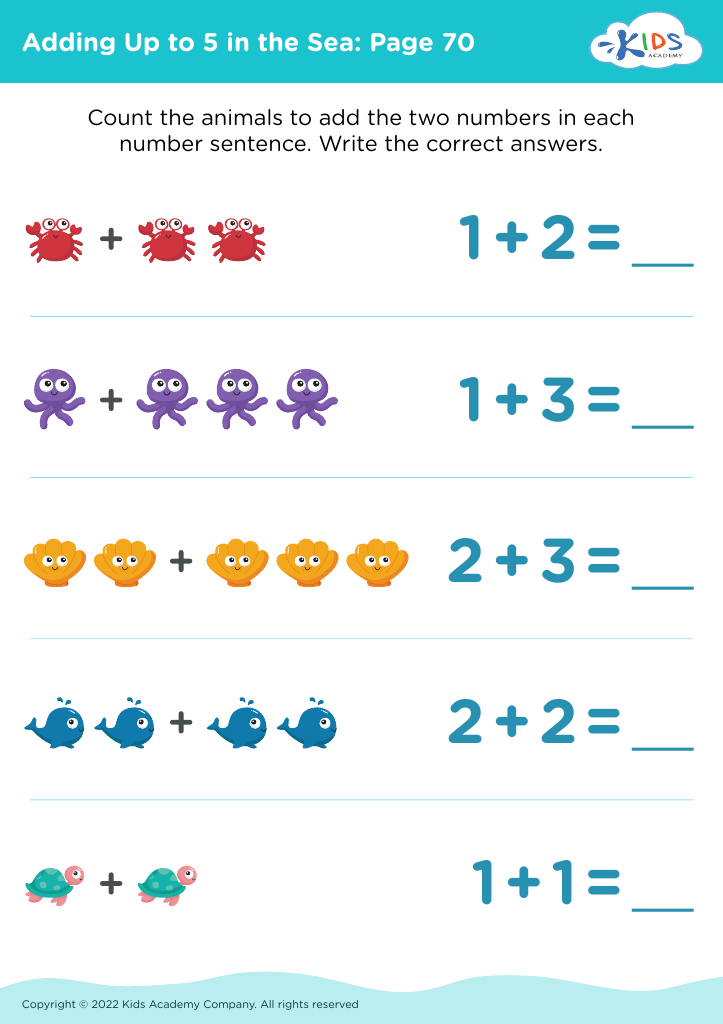
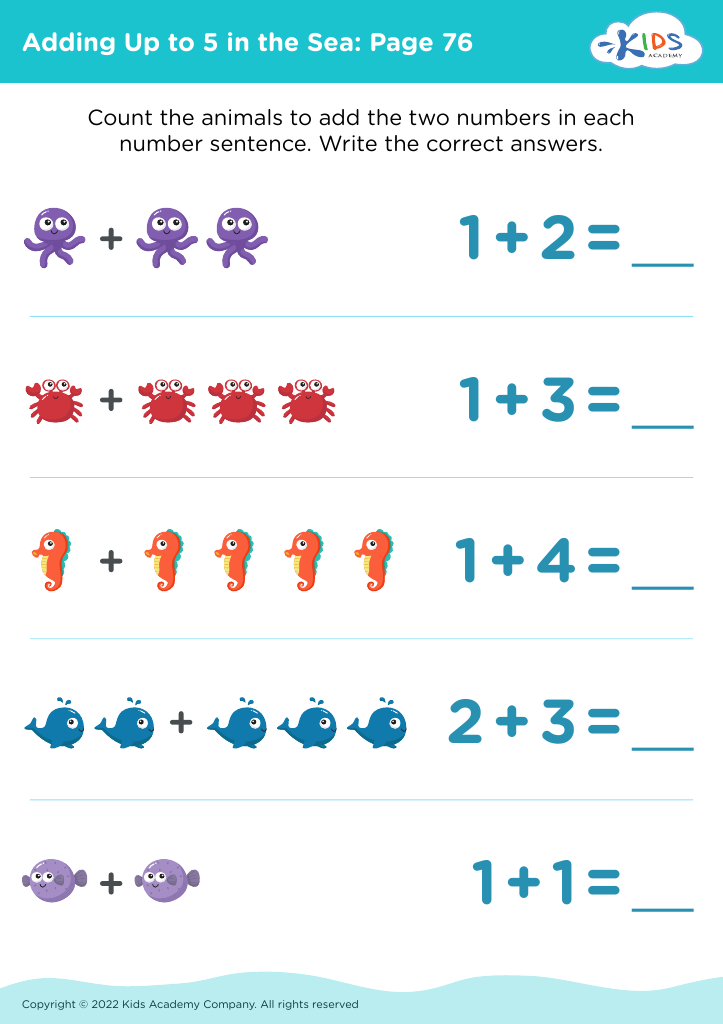
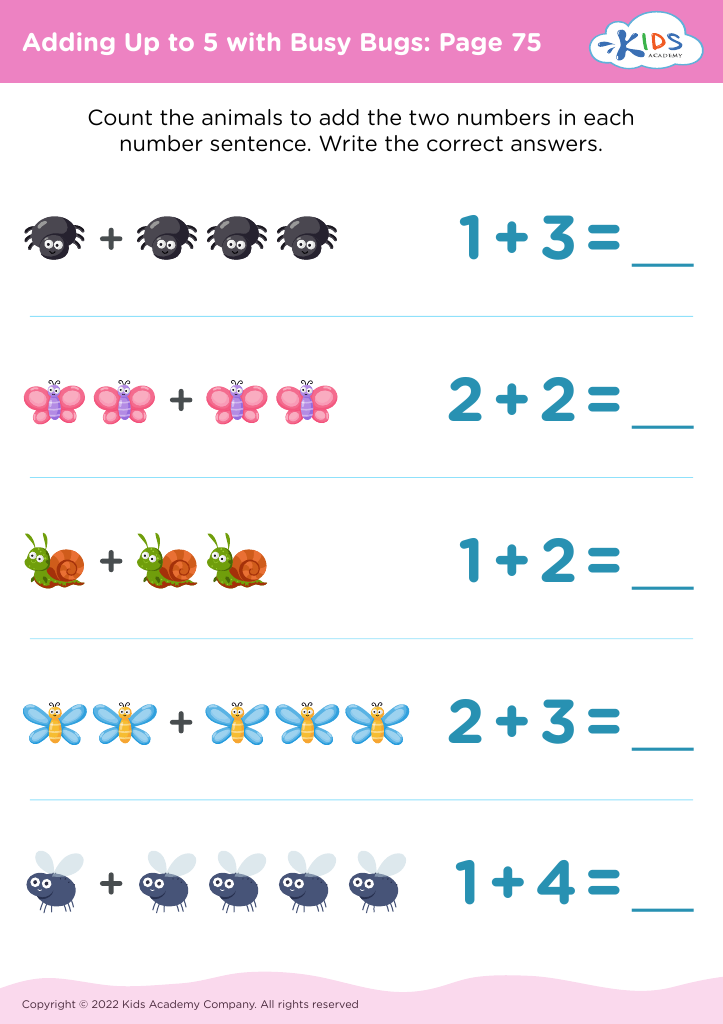
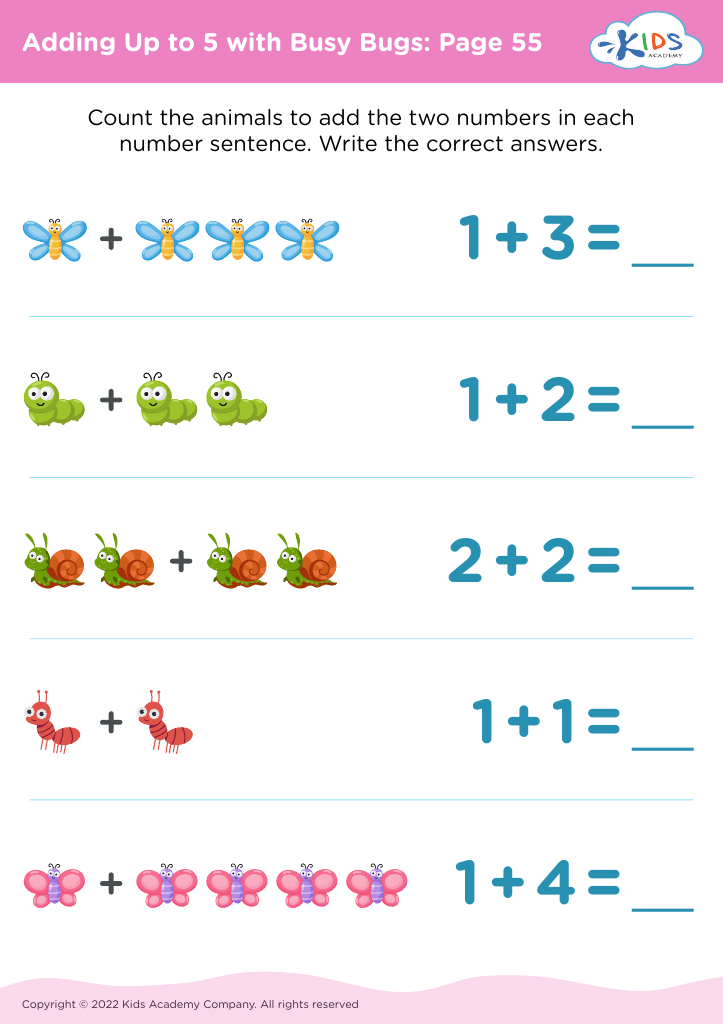
Discover our engaging Addition and Subtraction Worksheets designed specifically for 5-year-olds! These printable resources foster basic math understanding through fun and interactive activities that capture your child's interest. Each worksheet focuses on building foundational skills in addition and subtraction, encouraging young learners to develop crucial strategies through hands-on practice. With colorful illustrations and easy-to-follow instructions, children can explore simple equations and improve their problem-solving skills in a playful manner. Ideal for home or classroom use, these worksheets support early math learning, ensuring your child feels confident as they embark on their educational journey. Get started today and make math fun!
Favorites
With answer key
Interactive
Join Kids Academy for Free
Who is primarily going to use this learning content?








Understanding basic math concepts, particularly addition and subtraction, is crucial for 5-year-olds as it lays the foundation for future learning. At this age, children are developing their cognitive skills, and engaging them in math helps stimulate critical thinking. Learning these basic operations enhances their problem-solving abilities and boosts their confidence in tackling more complex math concepts later on.
Additionally, mastering addition and subtraction fosters essential life skills. Children begin to recognize patterns, understand quantity, and use numbers in everyday situations, such as sharing toys or counting snacks. This understanding is essential for early social interactions and can aid in their emotional development by instilling a sense of fairness and cooperation.
For parents and teachers, supporting children in grasping these skills can create a positive learning environment that promotes curiosity and enthusiasm about math. It also serves as an opportunity for bonding, as engaging in fun math-related activities can be enjoyable. Ultimately, when children feel confident in their math abilities, they are more likely to approach future learning with eagerness and resilience. Prioritizing basic math understanding opens doors to academic success and lifelong learning.








