Understanding number relationships Addition & Subtraction Worksheets for 5-Year-Olds
4 filtered results
-
From - To
Welcome to our "Understanding Number Relationships: Addition & Subtraction Worksheets for 5-Year-Olds" page! Here, you'll discover a variety of engaging and educational worksheets designed to introduce young learners to the fundamental concepts of addition and subtraction. These resources aim to strengthen number recognition, to promote counting skills, and to foster an understanding of how numbers relate to one another. Our worksheets feature colorful illustrations and age-appropriate exercises tailored to keep your child motivated while developing essential math skills. Explore our collection and watch your child gain confidence in their mathematical abilities while enjoying the learning process!
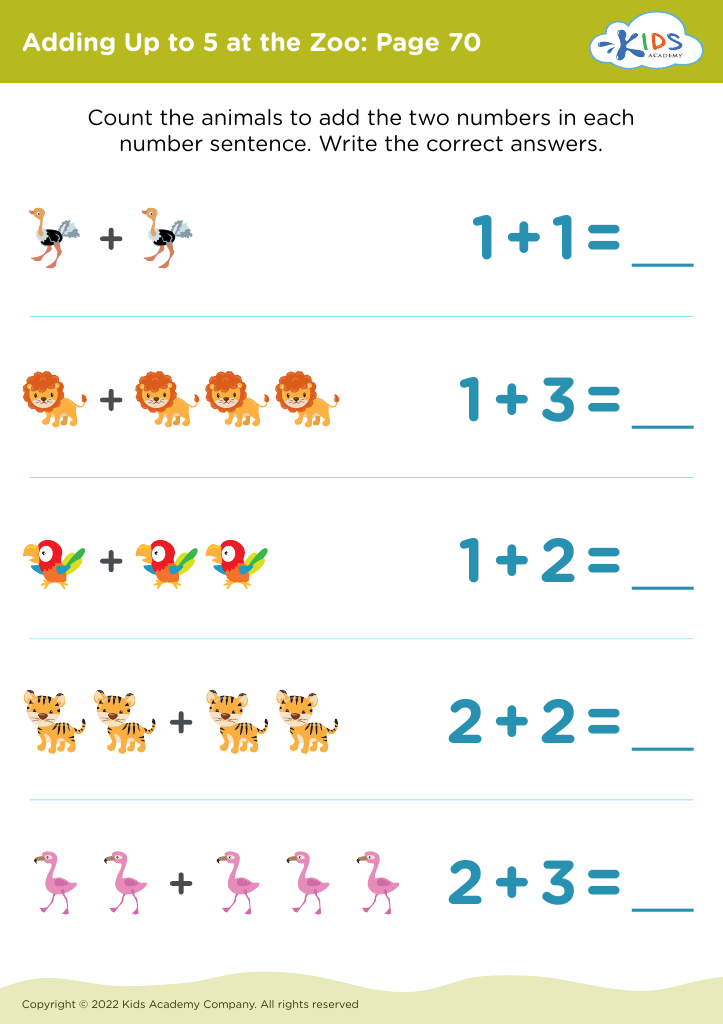
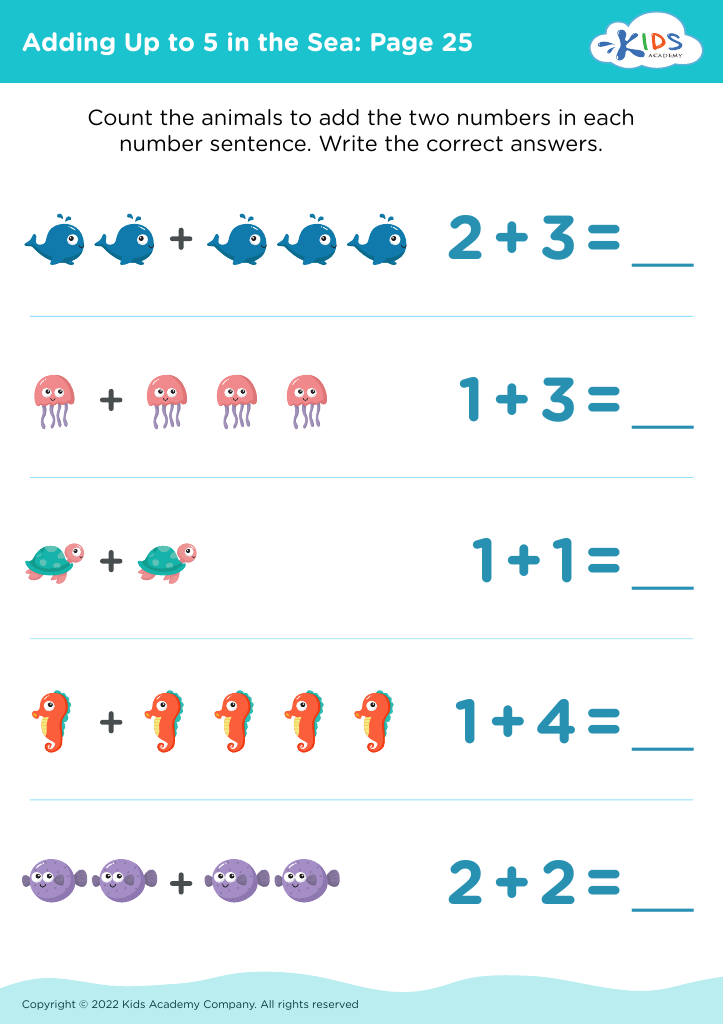
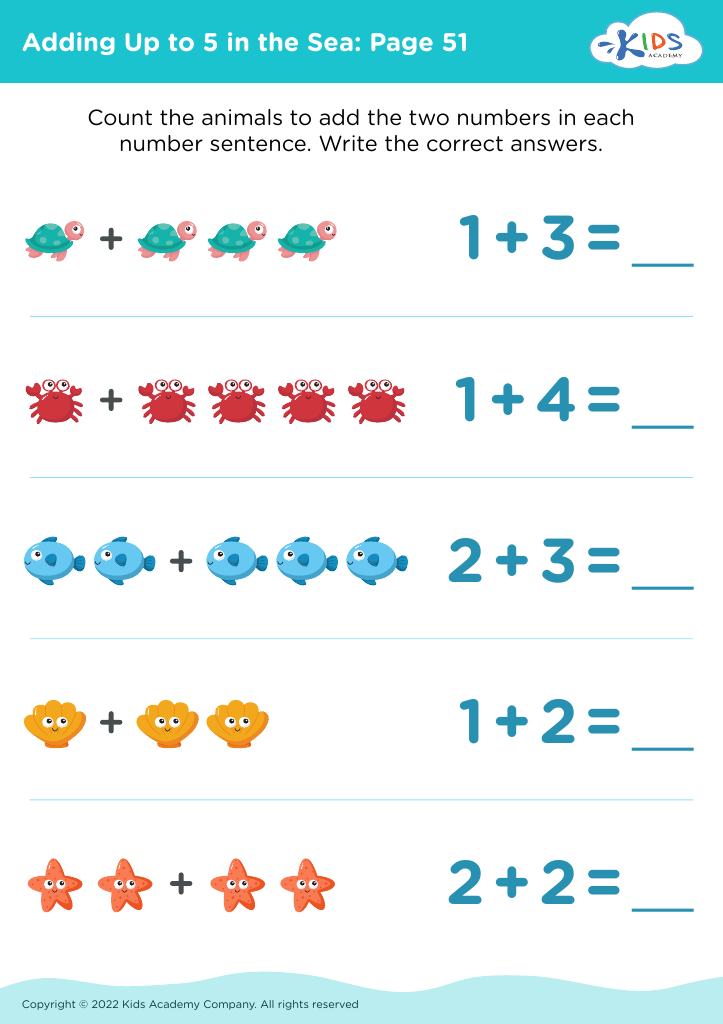
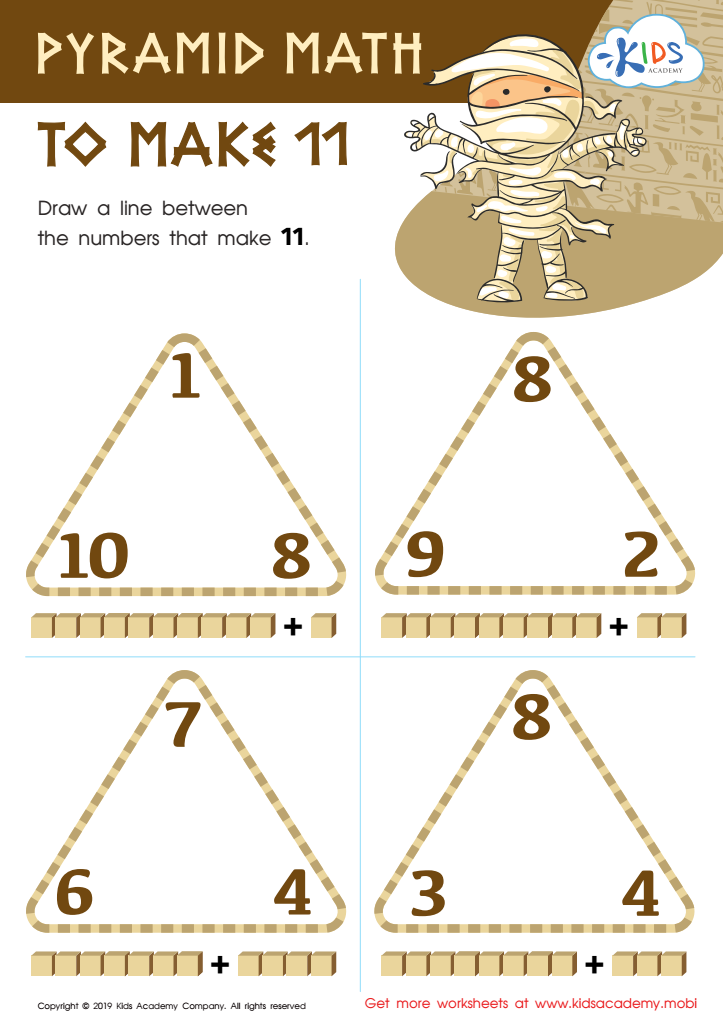
Pyramid Math to Make 11 Worksheet
 Assign to My Students








Understanding number relationships, particularly in addition and subtraction, is crucial for 5-year-olds as it lays the foundation for their mathematical ability and overall cognitive development. At this age, children begin to grasp the concepts of quantity, simple operations, and the intrinsic relationships between numbers. This foundational knowledge is essential not only for future math skills but also for everyday problem-solving.
When parents and teachers emphasize these concepts, they help children see math as a meaningful part of their world. For example, recognizing that adding one more item increases a group’s size directly connects to real-life experiences, enhancing their understanding and retention. It also fosters critical thinking, as children learn to manipulate numbers and explore different ways to solve problems.
Moreover, mastering addition and subtraction at an early age builds confidence in young learners, reducing math anxiety as they progress to more complex topics. Encouraging discussions and activities around number relationships encourages curiosity, promoting a positive attitude toward learning. Ultimately, when adults prioritize these foundational skills, they empower children to become proficient learners who are prepared for more advanced mathematics and problem-solving challenges in the future. Engaging with these concepts now sets a pathway for lifelong appreciation and success in mathematics.








