Visual Perception Skills Addition & Subtraction Worksheets for 5-Year-Olds
5 filtered results
-
From - To
Boost your child's math abilities with our Visual Perception Skills Addition & Subtraction Worksheets designed specifically for 5-year-olds! These engaging and colorful worksheets help young learners develop essential visual perception skills, enabling them to recognize patterns, shapes, and quantities. By integrating fun activities with foundational math concepts, children enhance their understanding of addition and subtraction while improving focus and observation skills. Whether in the classroom or at home, these worksheets support effective learning and help build confidence in young minds. Perfect for early grade teachers and parents, our resources ensure kids enjoy their learning journey as they master basic math skills!
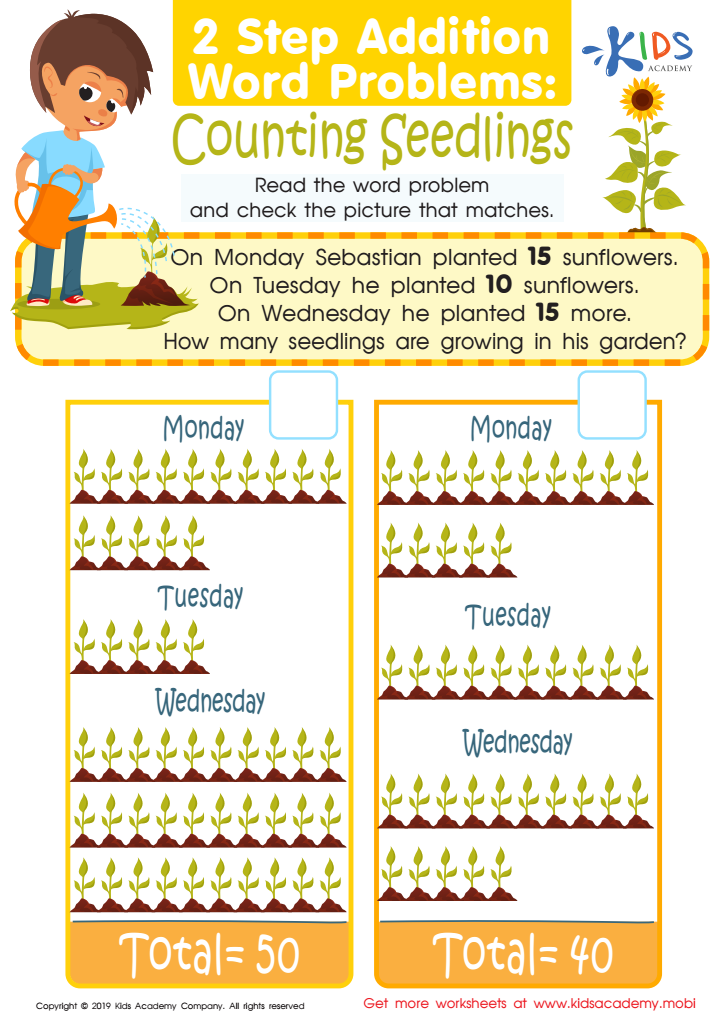
Counting Seedlings Worksheet
 Assign to My Students
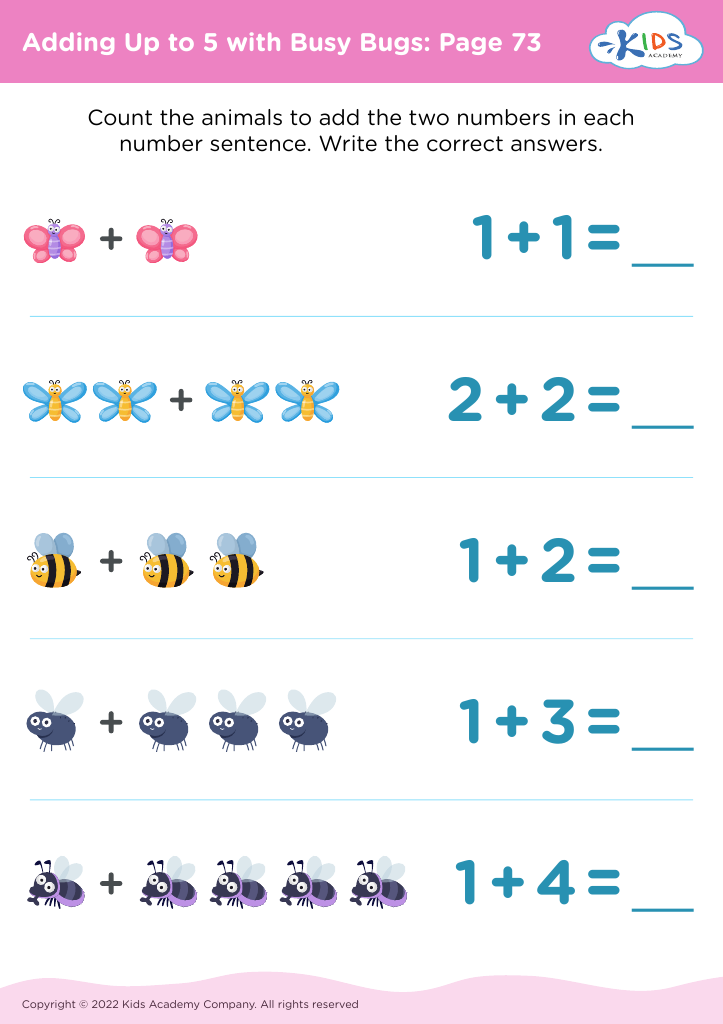
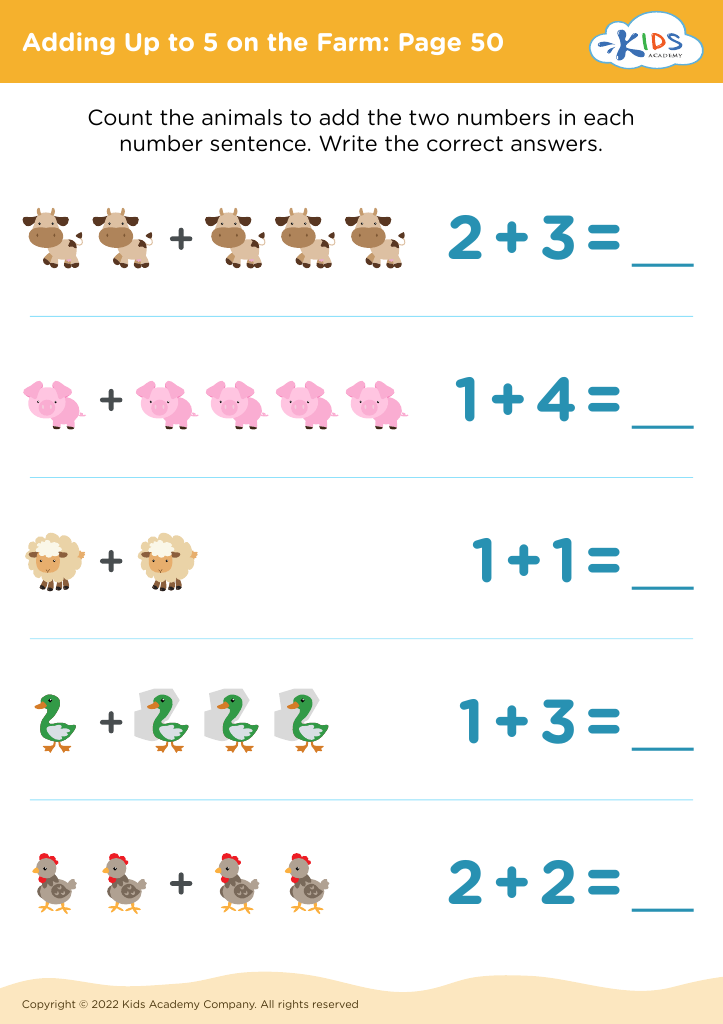
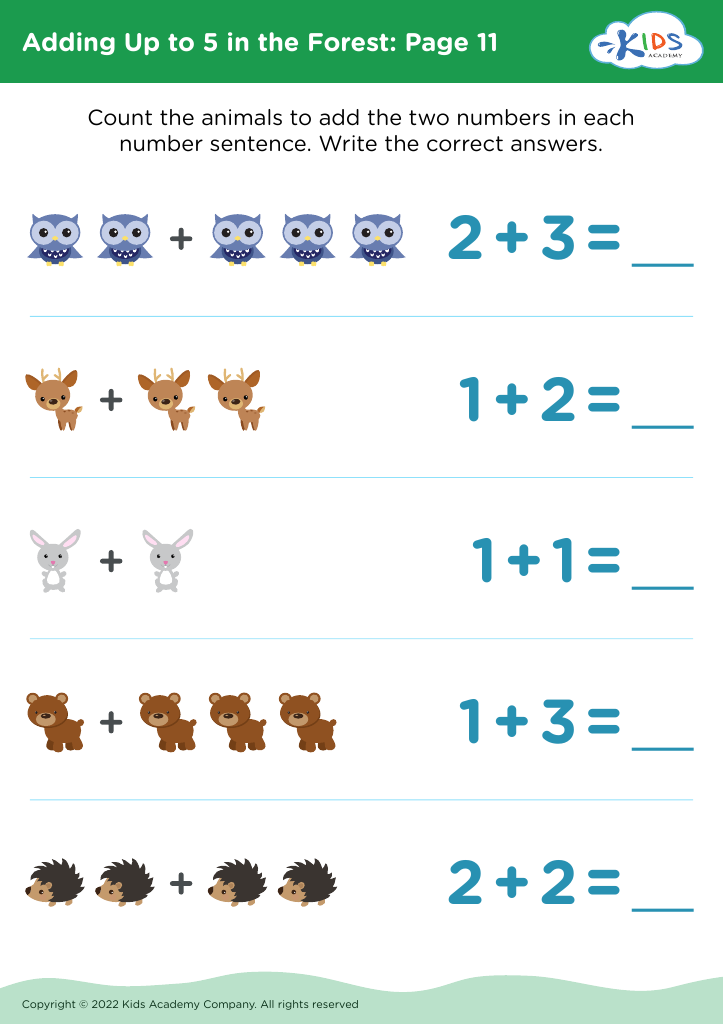
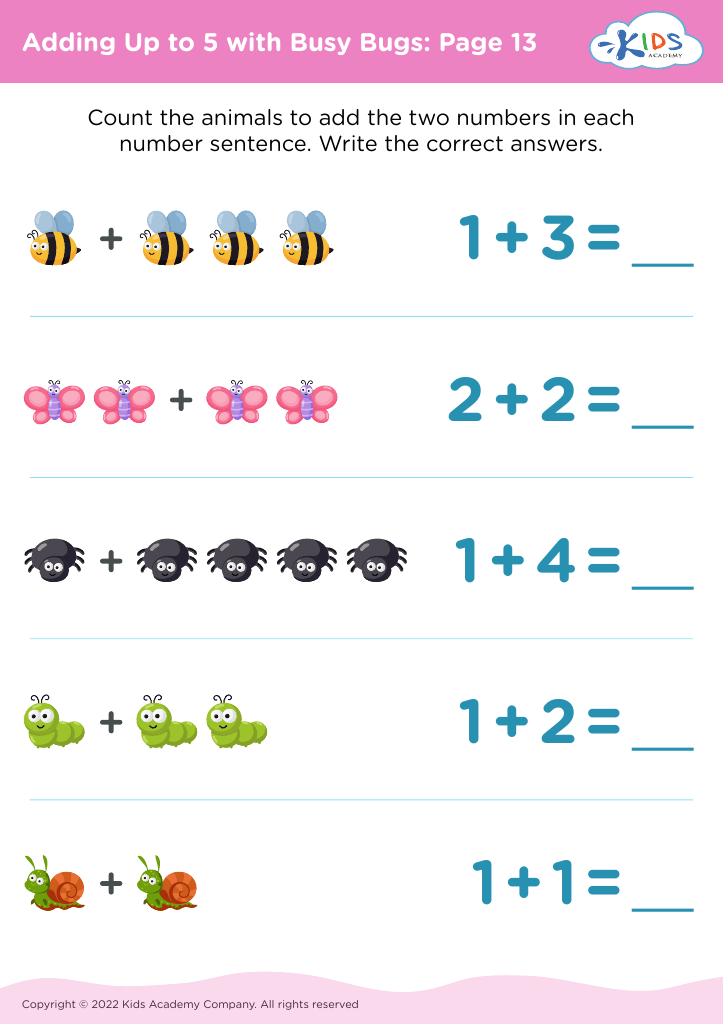








Visual perception skills are essential for young learners, especially when mastering foundational math concepts like addition and subtraction. For 5-year-olds, developing these skills plays a crucial role in their ability to interpret and process visual information, which is necessary for understanding numerical representations and math problems.
When children can accurately recognize shapes, sizes, and patterns, they establish a strong basis for problem-solving. Visual perception aids them in grouping objects, counting items, and calculating sums or differences, which directly impacts their mathematical fluency. Additionally, improving visual perception can enhance their ability to follow directions, organize information, and increase focus during learning activities.
Parents and teachers should prioritize these skills as part of early education, as they contribute significantly to a child’s overall cognitive development. Engaging in fun, hands-on activities like puzzles or games can foster these abilities while making learning enjoyable. Strong visual perception not only supports mathematical understanding but also builds the confidence needed for a young learner to approach challenges in school. By investing attention into these skills now, caregivers can set children on a path toward academic success and lifelong learning.








