Animal identification Addition Worksheets for 5-Year-Olds - Page 2
27 filtered results
-
From - To
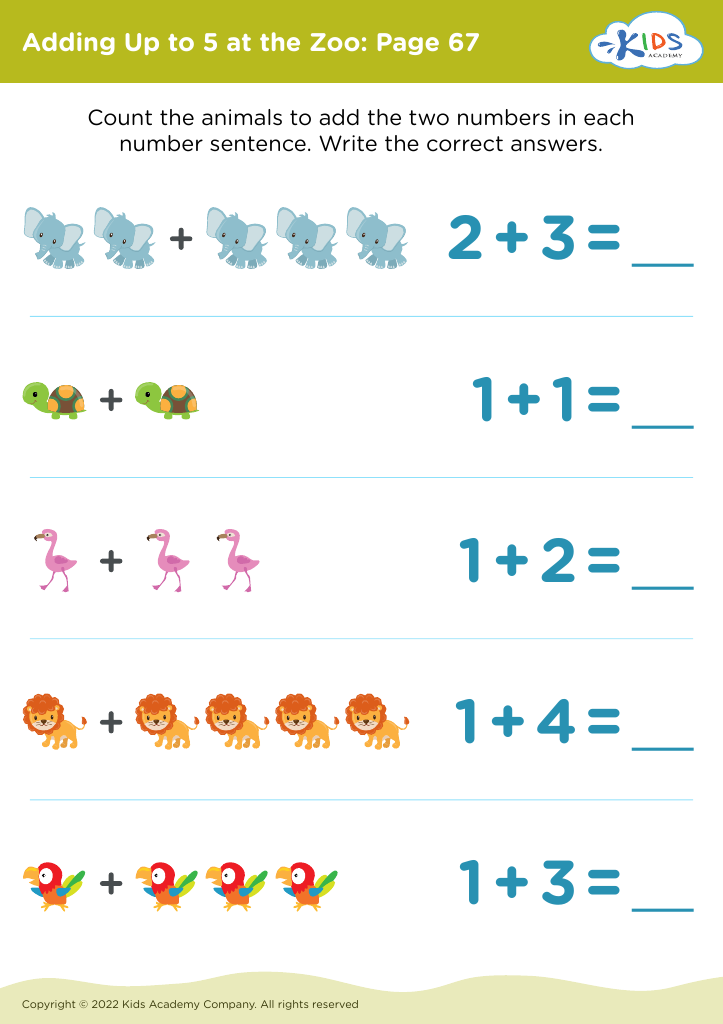
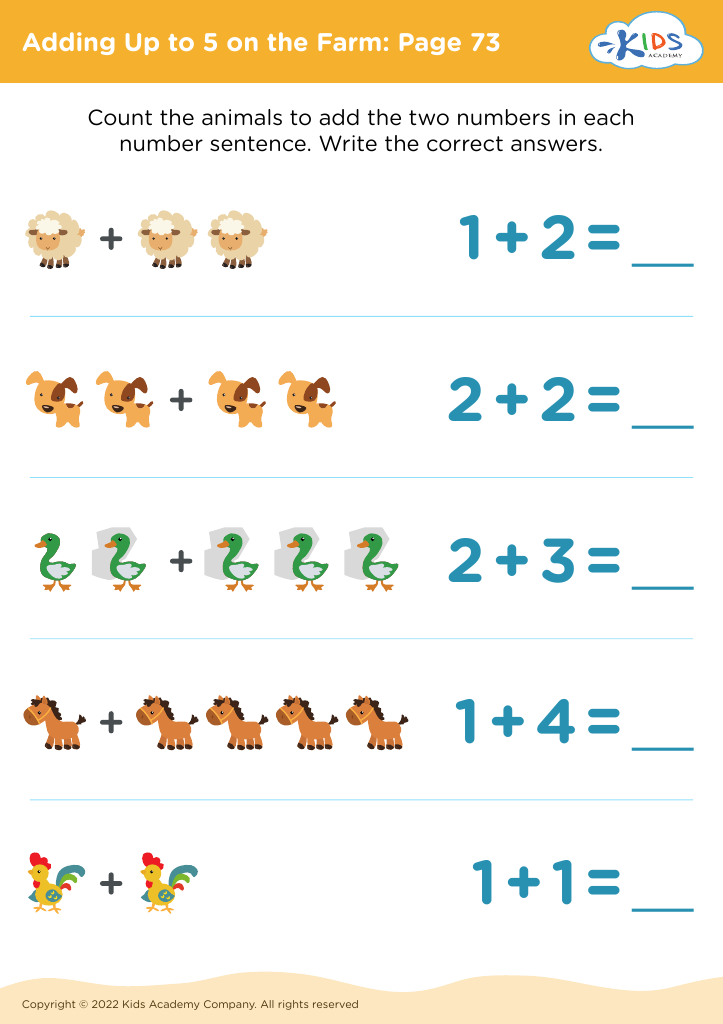
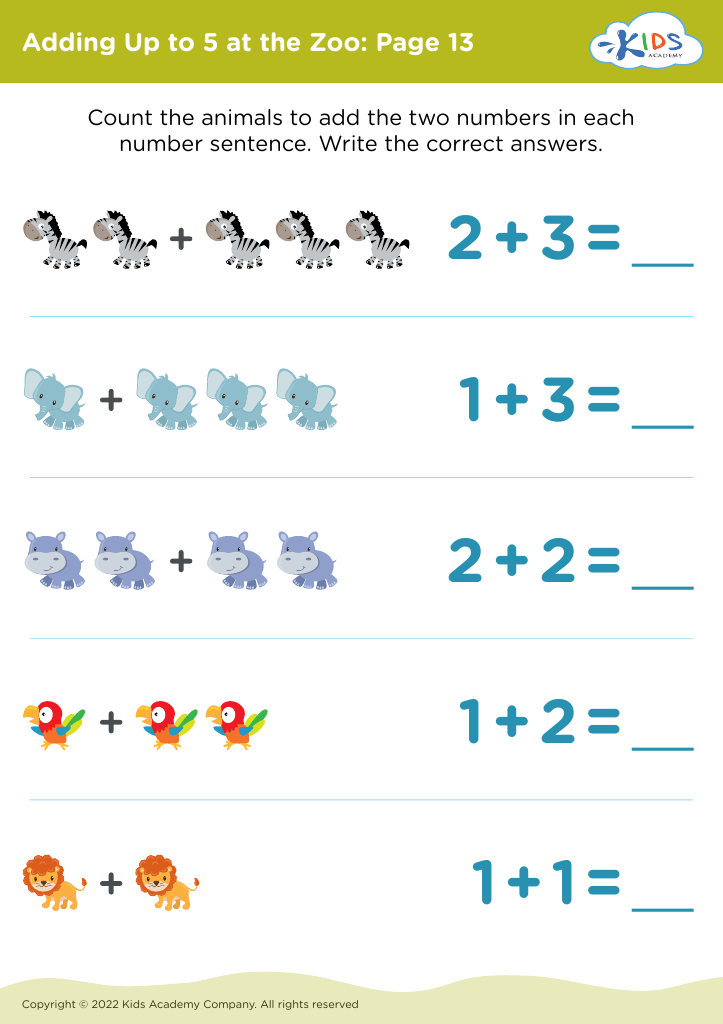








Animal identification addition is an engaging and effective way to teach foundational math skills to 5-year-olds. Parents and teachers should care about this approach for several reasons. First, it enhances children's numerical understanding through engaging visuals. Associating animals with numbers helps children develop cognitive connections, making abstract concepts more tangible and enjoyable.
Additionally, using animals in math activities encourages play-based learning—an essential part of early childhood education. By incorporating elements the children find relatable and fun, like their favorite animals, educators can create a positive learning environment that fosters curiosity and enthusiasm for learning.
Furthermore, animal identification addition fosters critical thinking and problem-solving skills. As children work to identify the animals and calculate their numbers, they practice essential cognitive abilities that promote logical reasoning. This approach also nurtures social skills when children collaborate in group activities.
Finally, instilling a love for numbers at an early age helps build a strong foundation for future mathematical learning. By making math relatable and enjoyable, parents and teachers enable children to develop a positive attitude towards learning, paving the way for academic success throughout their educational journey. Encouraging this playful yet educational method will set children up for a lifetime of curiosity and achievement in mathematics.








