Enhances concentration Addition Worksheets for 5-Year-Olds
4 filtered results
-
From - To
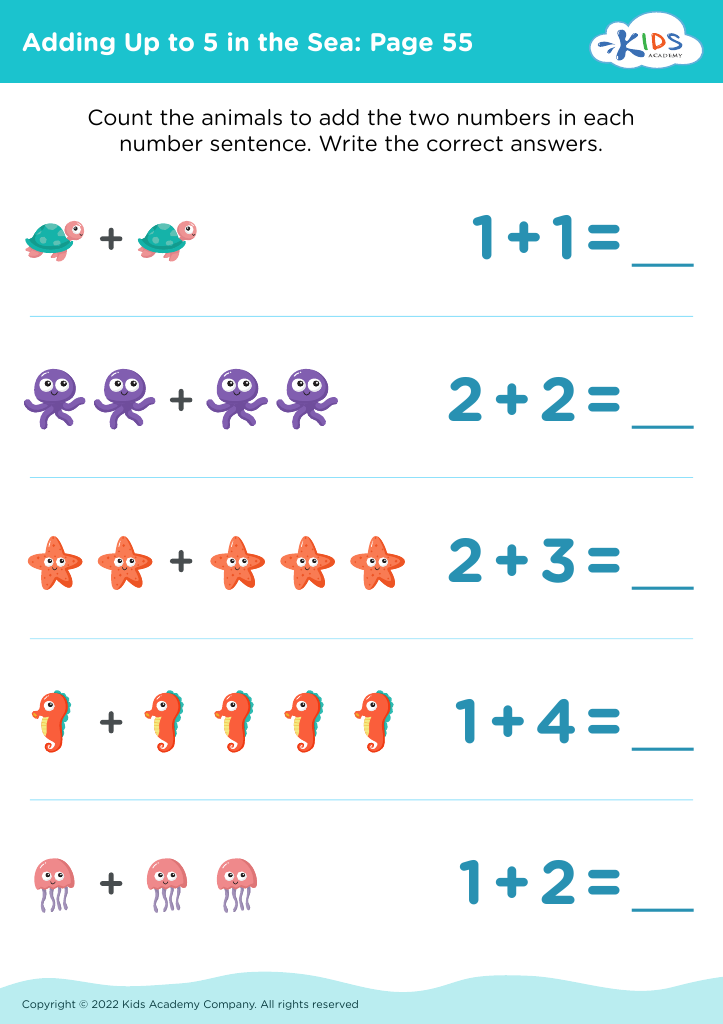
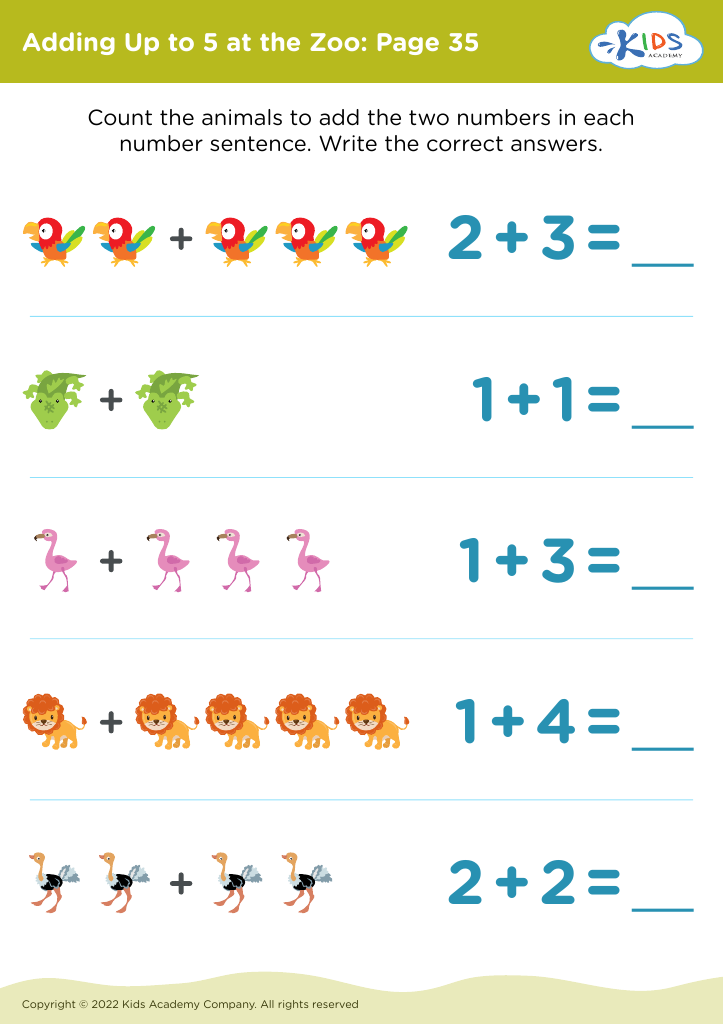
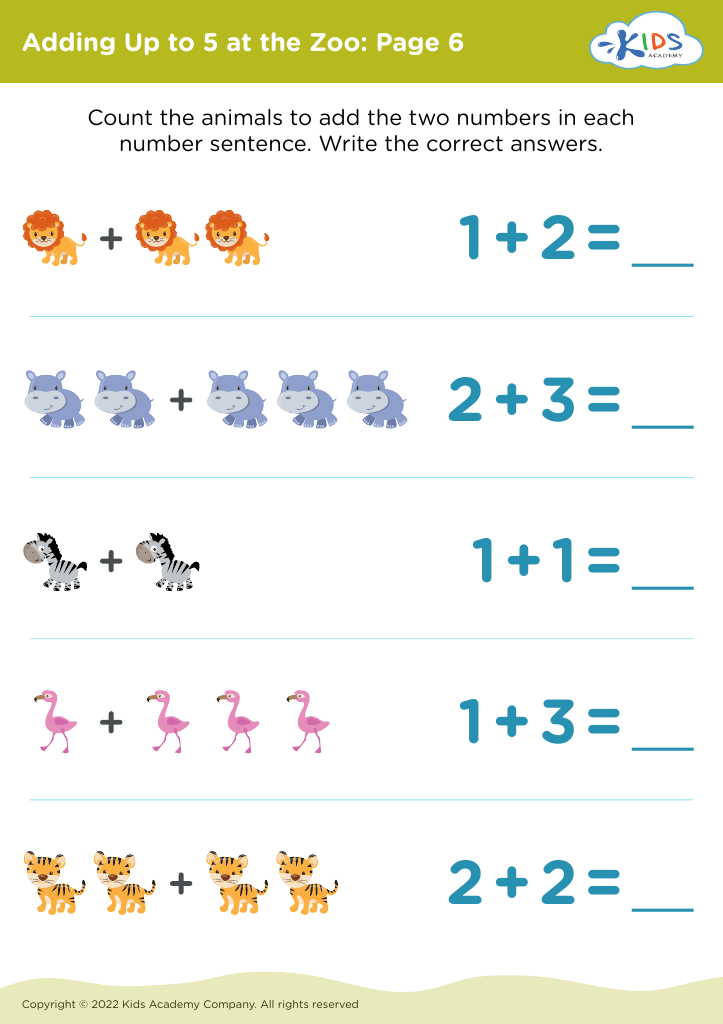
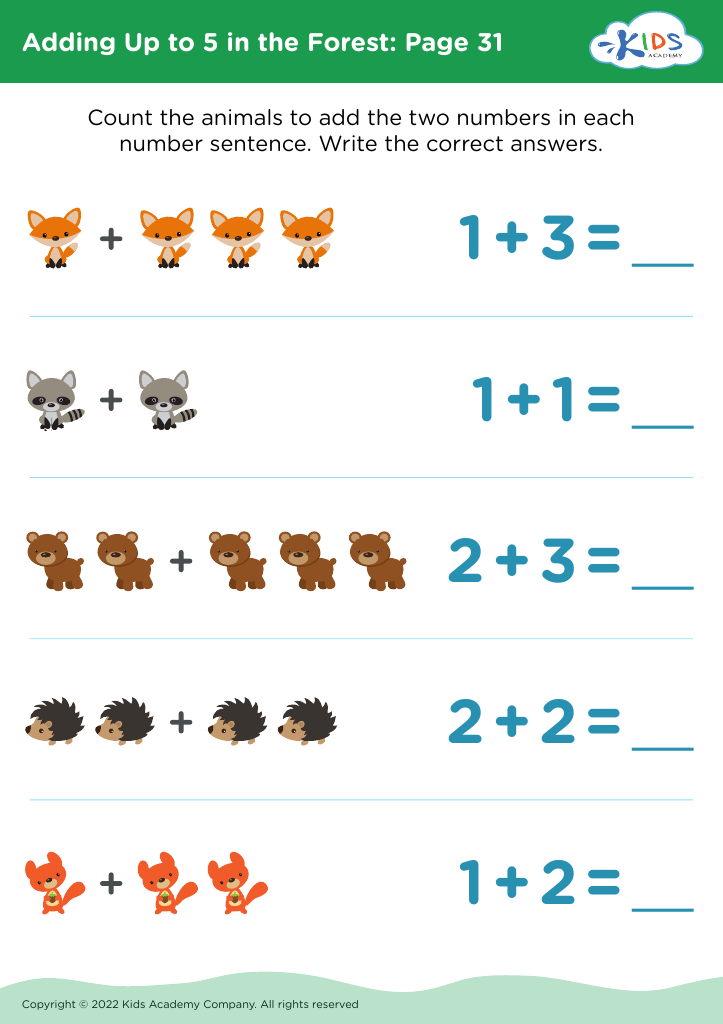
Enhance your 5-year-old's concentration with our engaging Addition Worksheets designed specifically for young learners. These interactive worksheets not only introduce essential addition skills, but also capture children’s attention, making learning fun and effective. Filled with colorful illustrations and age-appropriate exercises, they encourage kids to focus, develop problem-solving abilities, and strengthen their mathematical foundation. Perfect for home or classroom use, our worksheets are aligned with educational standards, promoting cognitive growth through enjoyable activities. Spark your child's interest in math and boost their concentration skills today with these vibrant, productive resources! Get ready for hours of educational excitement!








Enhancing concentration in 5-year-olds is pivotal for their overall development and foundational learning. At this age, children's brains are rapidly developing, making it essential to cultivate their ability to focus. Concentration is not just about paying attention; it’s a crucial skill that impacts reading, math, problem-solving, and social interactions.
When parents and teachers prioritize activities that enhance concentration, they help children build resilience and patience. These skills are critical for completing daily tasks, following instructions, and engaging in group activities both in classrooms and at home. Improved concentration can also help reduce behavioral issues, as children who can focus are less likely to act out or become frustrated.
Moreover, fostering concentration lays the groundwork for lifelong learning habits. Children learn to approach challenges methodically, improving their capacity to learn and adapt.
Engaging with concentration-enhancing activities—like puzzles, memory games, or storytelling—makes learning fun, encouraging curiosity and a love for learning. For parents and teachers, understanding the value of concentration development can lead to more effective educational strategies, better classroom dynamics, and enriched home learning environments. Building these skills now is an investment in a child’s future academic success and emotional well-being.








