
Fine motor skills (drawing lines) Addition Worksheets for 5-Year-Olds
3 filtered results
Difficulty Level
Grade
Age
-
From - To
Subject
Activity
Standards
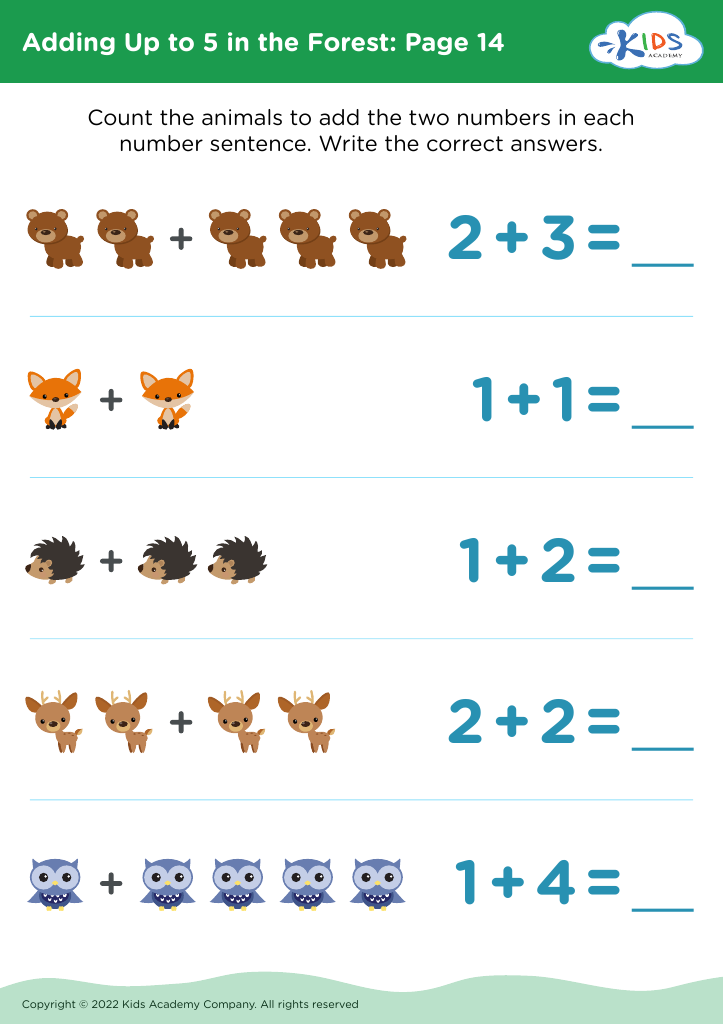
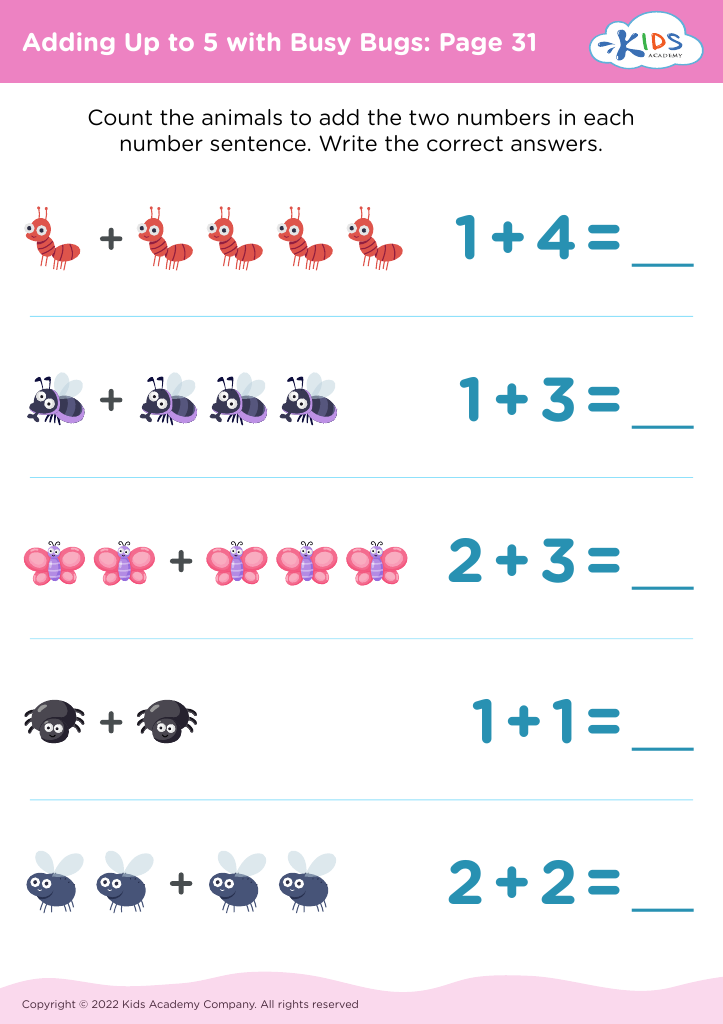
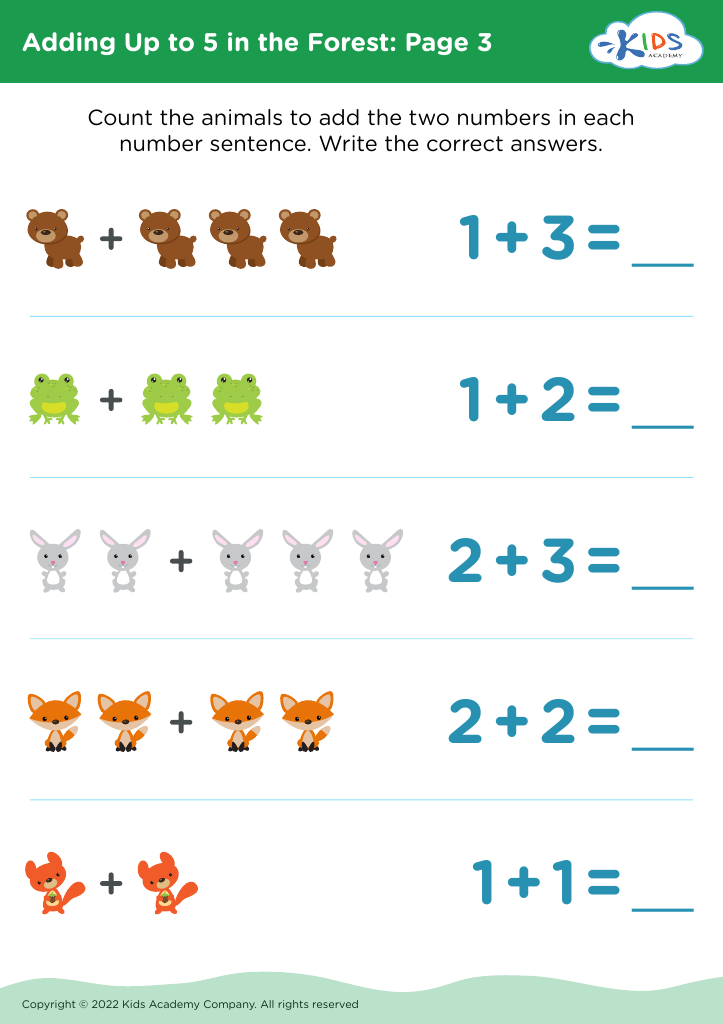
Discover engaging "Fine Motor Skills (Drawing Lines) Addition Worksheets for 5-Year-Olds" on our page! Our worksheets are designed to develop early math skills while strengthening fine motor coordination by encouraging children to draw lines and make connections. Each activity combines fun addition exercises with line tracing and drawing, making learning interactive and enjoyable. Perfect for kindergarteners, these worksheets help kids build a solid foundation in math and improve their drawing abilities. Ideal for parents and educators looking for effective and entertaining resources. Browse our collection and support your child's learning journey today!
Favorites
With answer key
Interactive
Join Kids Academy for Free
Who is primarily going to use this learning content?








Fine motor skills are crucial for the overall development of 5-year-olds and are reason enough for parents and teachers to prioritize activities like drawing lines and basic addition. At this age, children are honing their hand-eye coordination, finger dexterity, and control over small muscle movements, all of which are foundational for everyday tasks. Drawing lines might seem simple, but it's an essential way for children to not only express creativity but also develop the skill needed for handwriting, which is pivotal for communication and academic success.
Integrating basic addition into these activities boosts cognitive development, reinforcing number recognition, counting skills, and arithmetic confidence. When children draw lines to represent quantities or order numbers, they build an early understanding of mathematical concepts. Combining both fine motor skills and arithmetic practice lays the groundwork for more advanced tasks and problem-solving abilities in the future.
An emphasis on these activities also serves an emotional and social function; as children gain competence, they build self-esteem and learn patience and perseverance. Through interactive plays and guided practices, fine motor skills like drawing lines combined with elementary addition prepare children not only academically but also emotionally and socially, offering them a well-rounded developmental boost.








