Improving concentration Addition Worksheets for 5-Year-Olds
14 filtered results
-
From - To
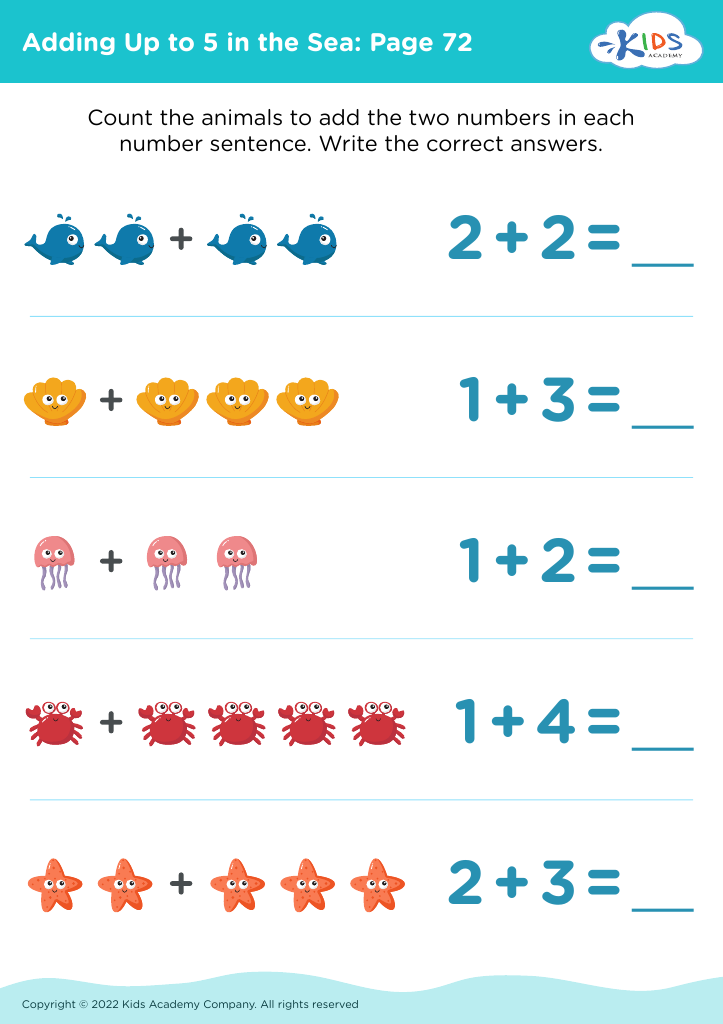
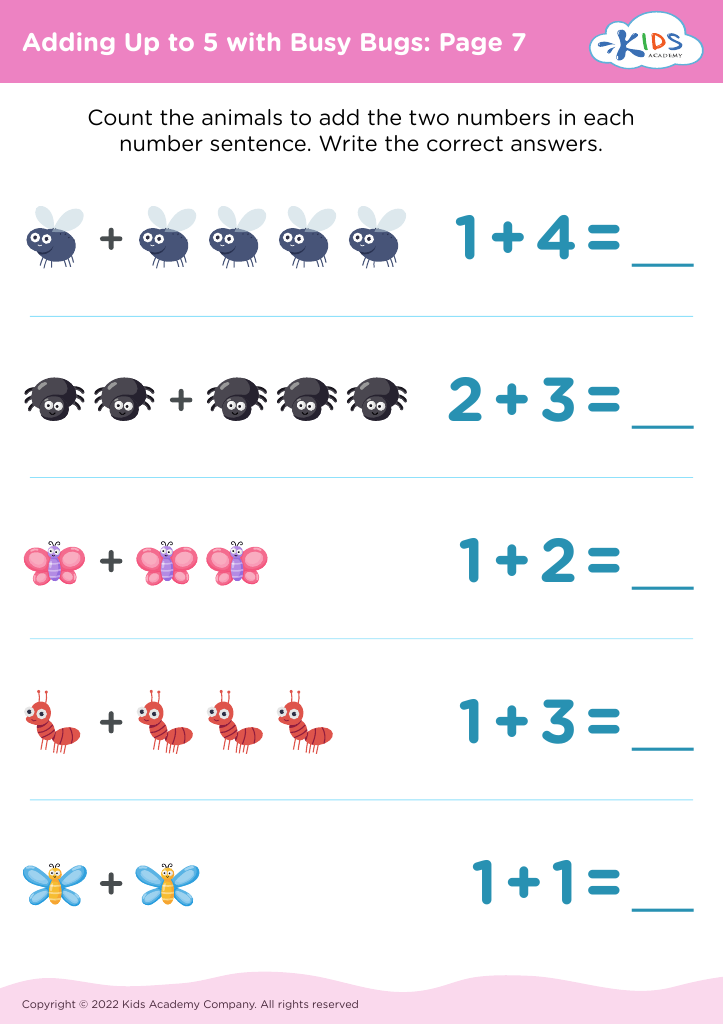
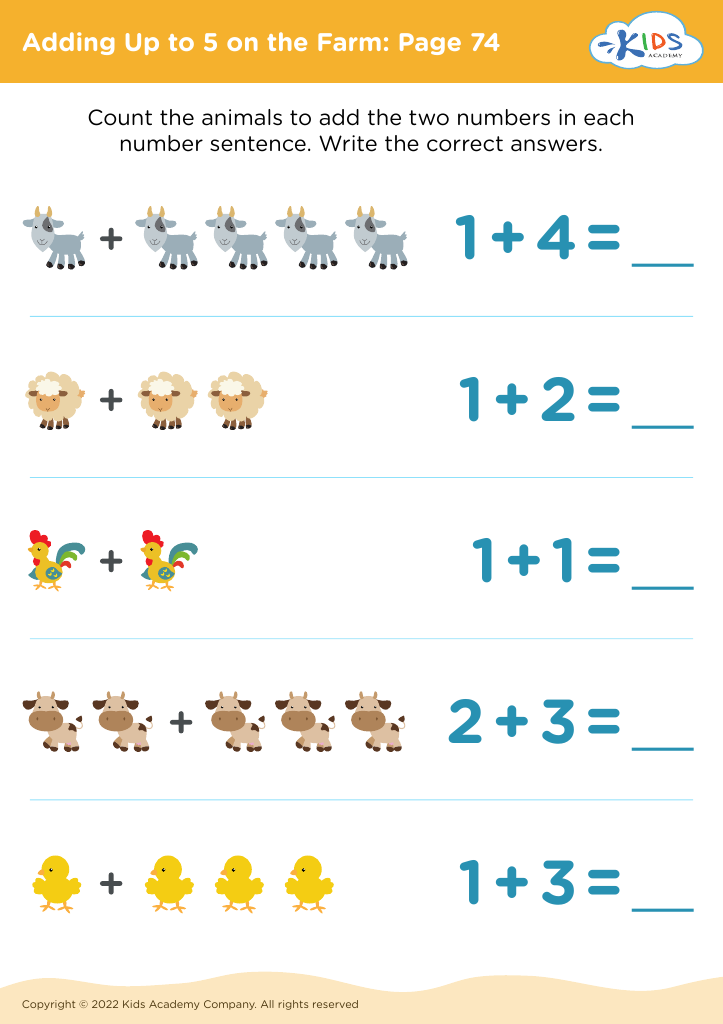
Enhance your child's ability to focus with our engaging Improving Concentration Addition Worksheets designed specifically for 5-year-olds. These interactive worksheets blend fun activities with fundamental math skills, allowing young learners to practice addition while sharpening their concentration. Each worksheet is thoughtfully crafted to captivate children's attention, featuring colorful visuals and age-appropriate problems. As children work through the addition exercises, they not only improve their math skills but also bolster their ability to concentrate and stay on task. Perfect for home or classroom use, these worksheets provide a comprehensive approach to learning that sets the stage for future academic success.
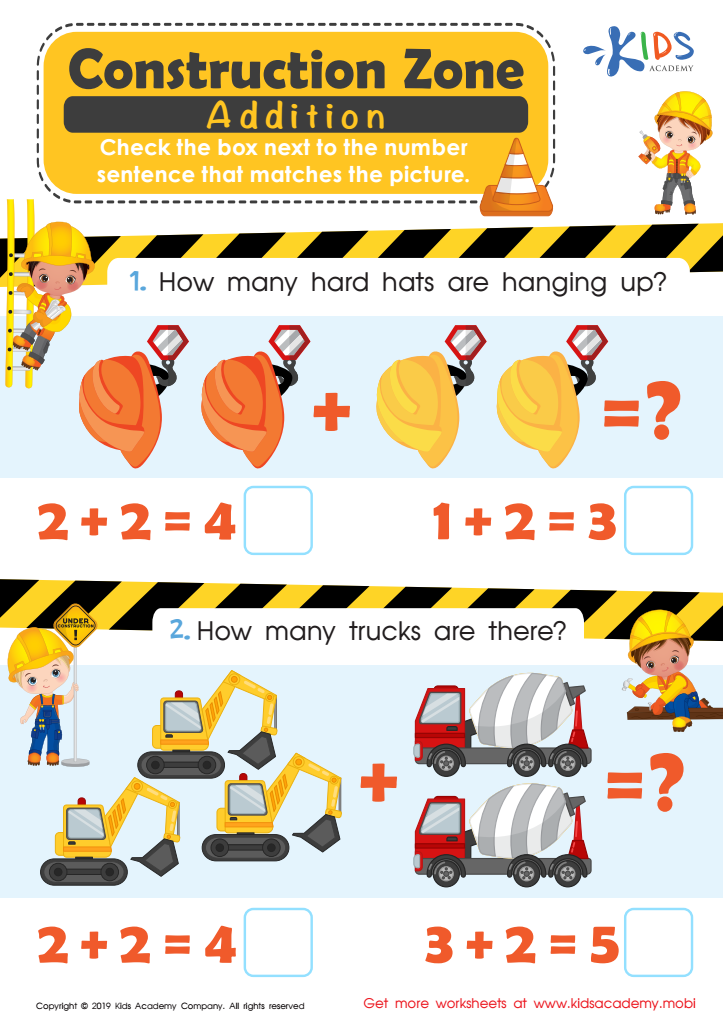
Construction Zone Addition Worksheet
 Assign to My Students
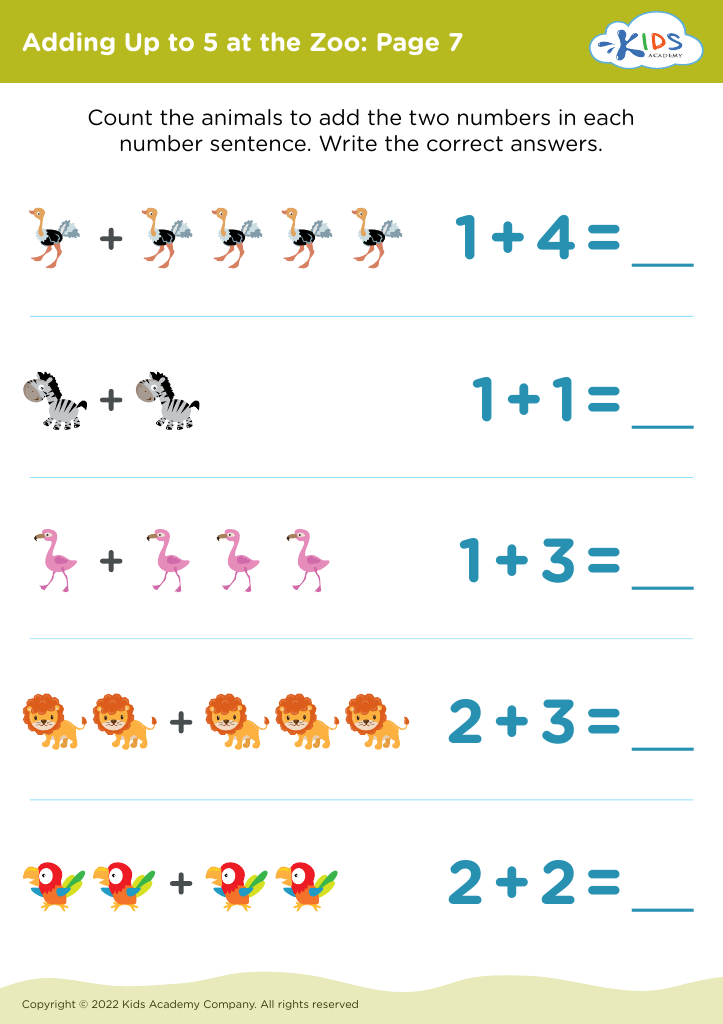
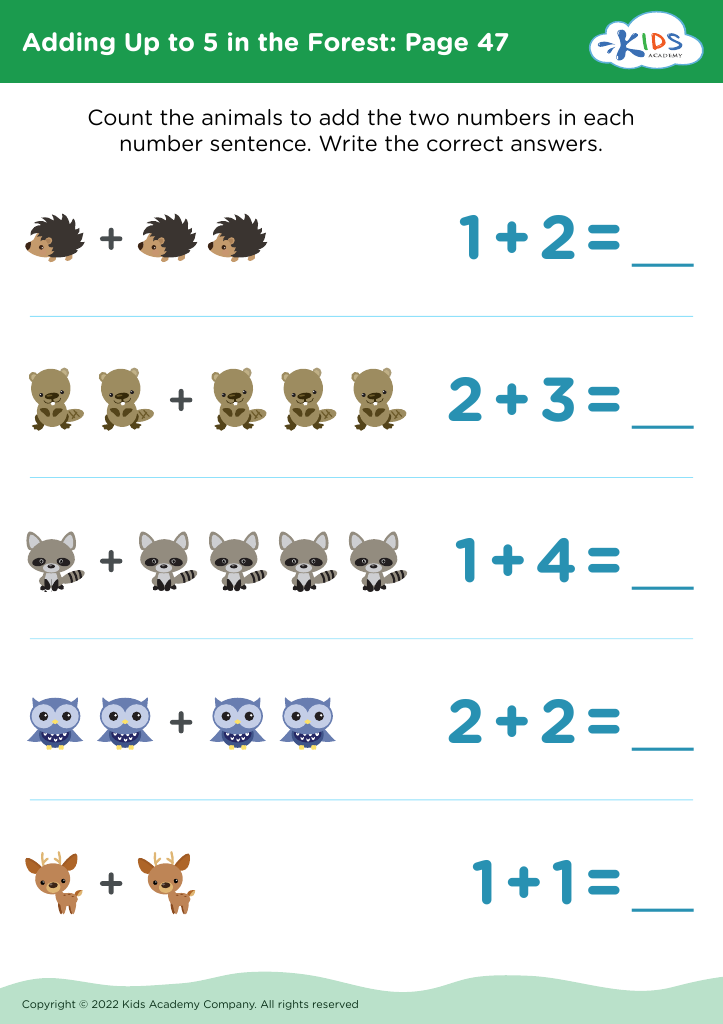
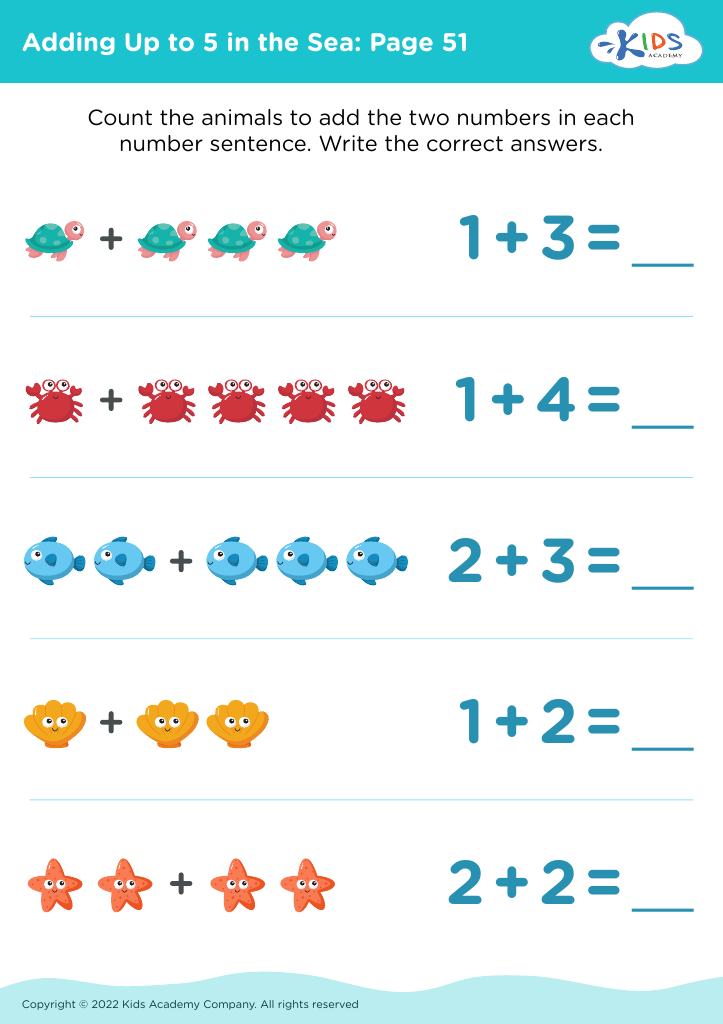
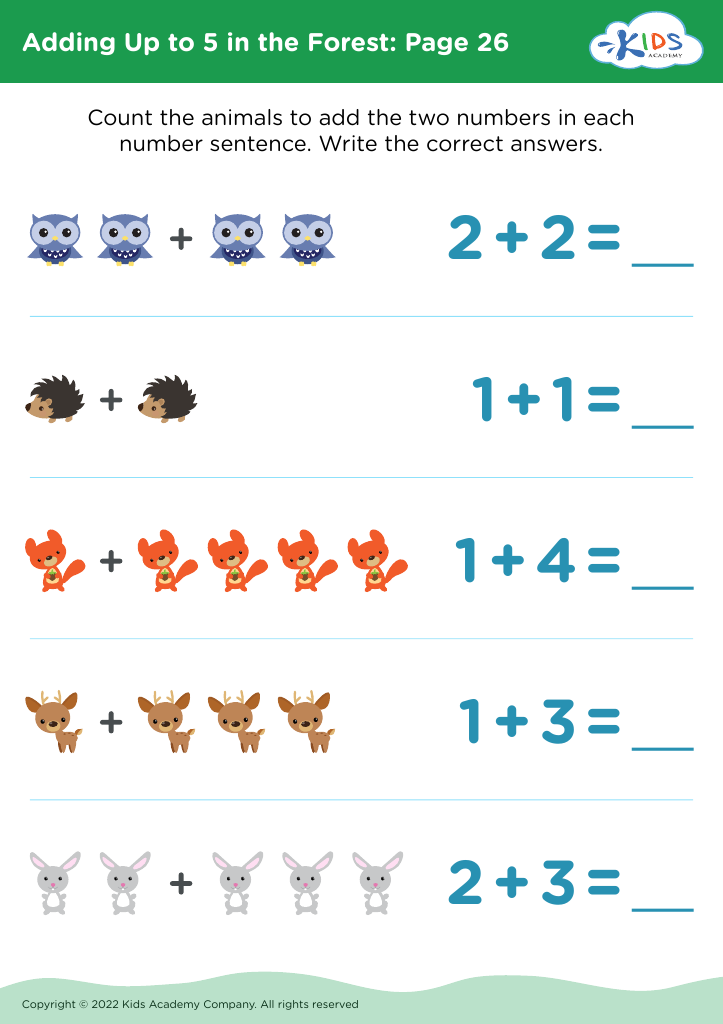
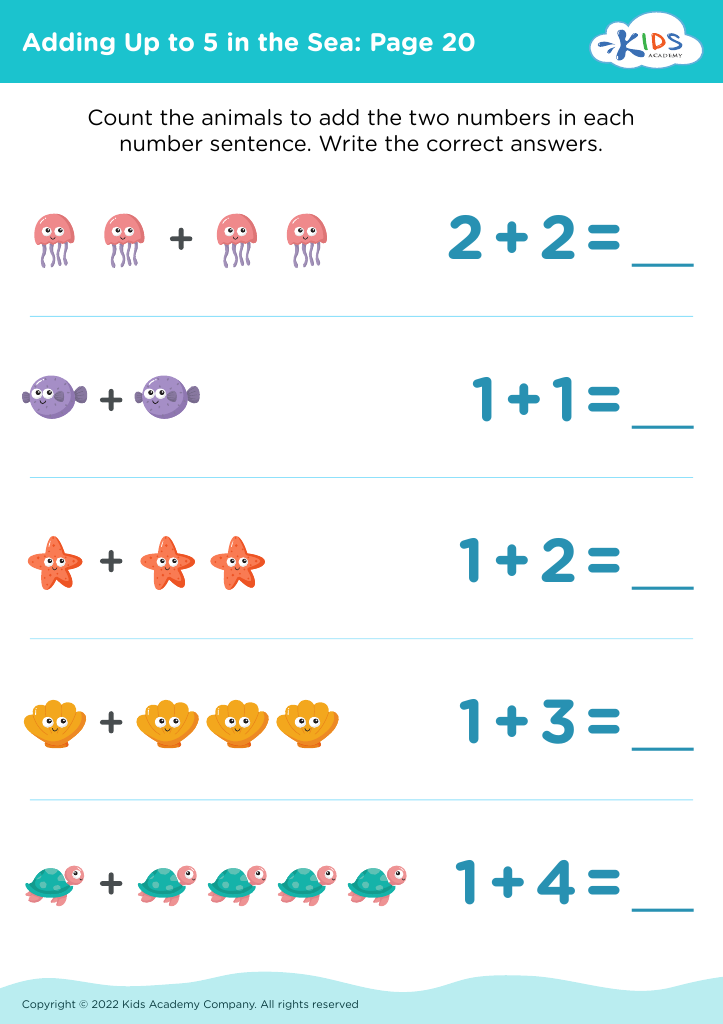
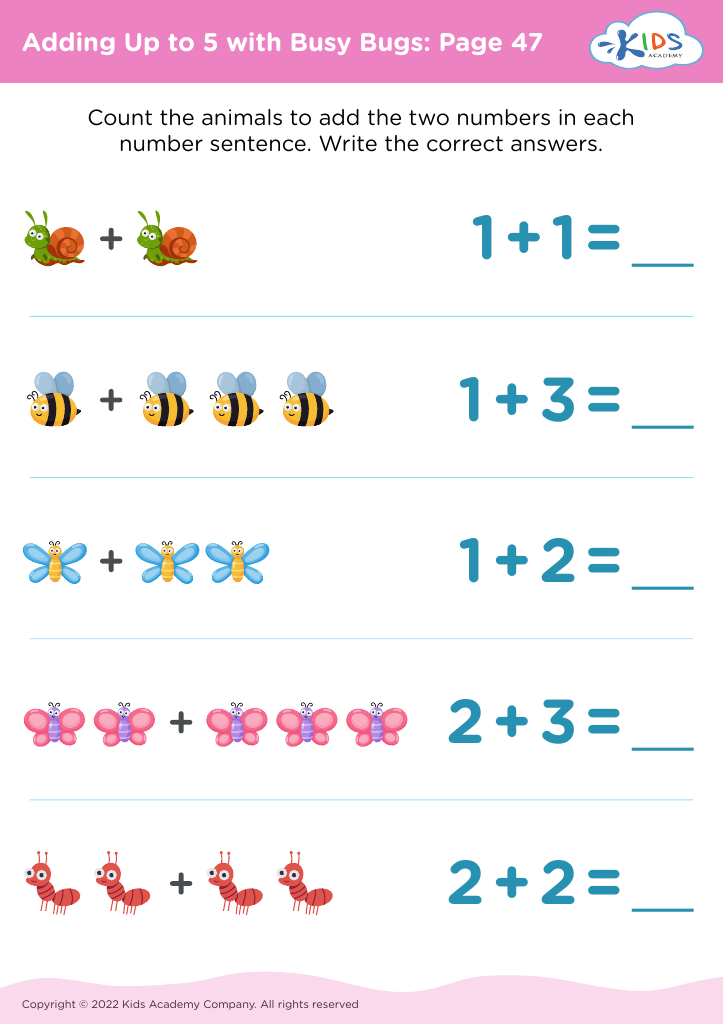
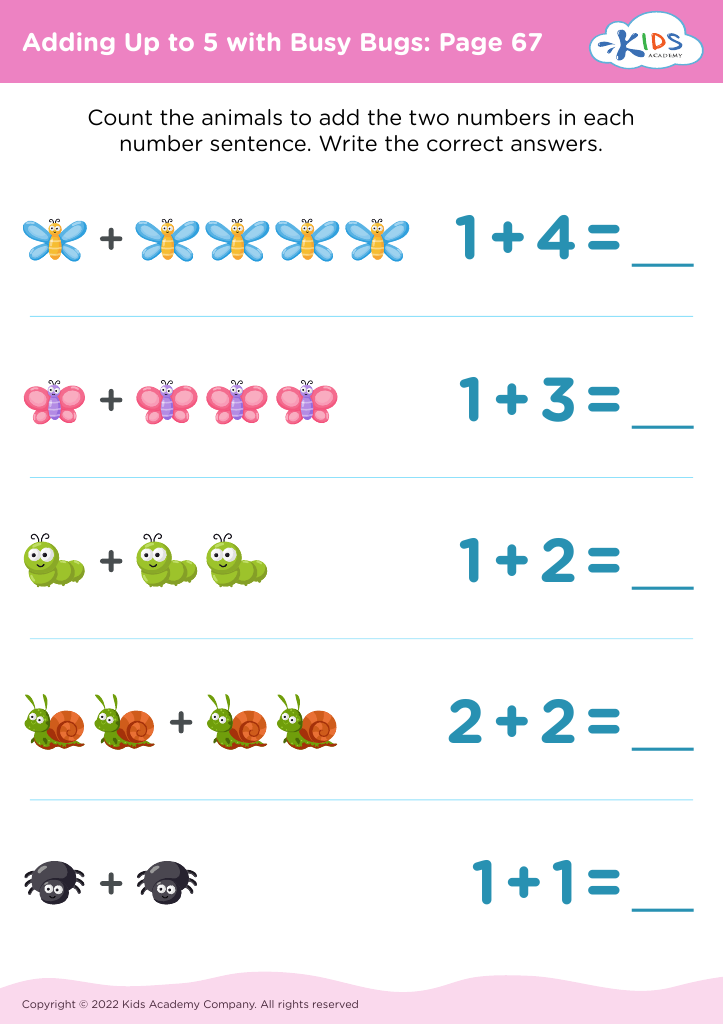
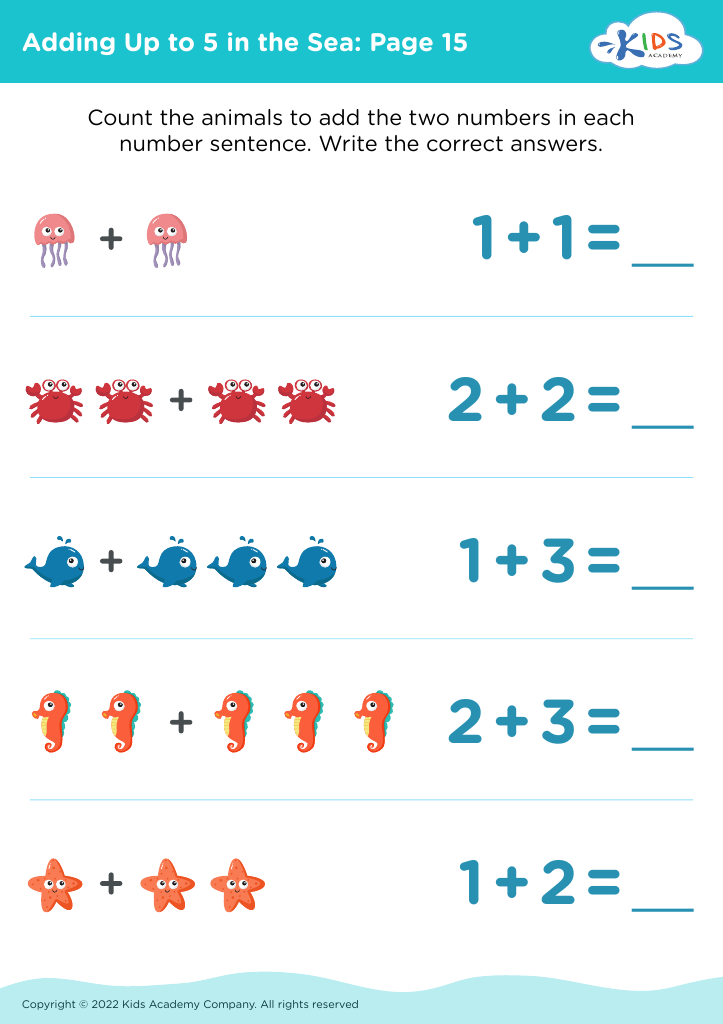
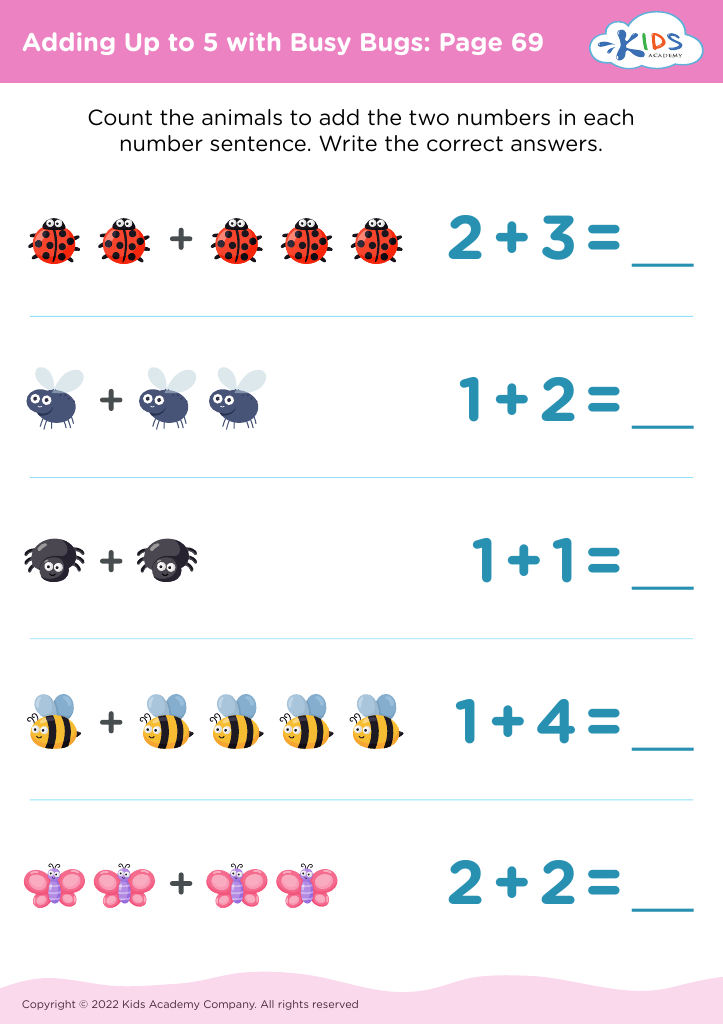
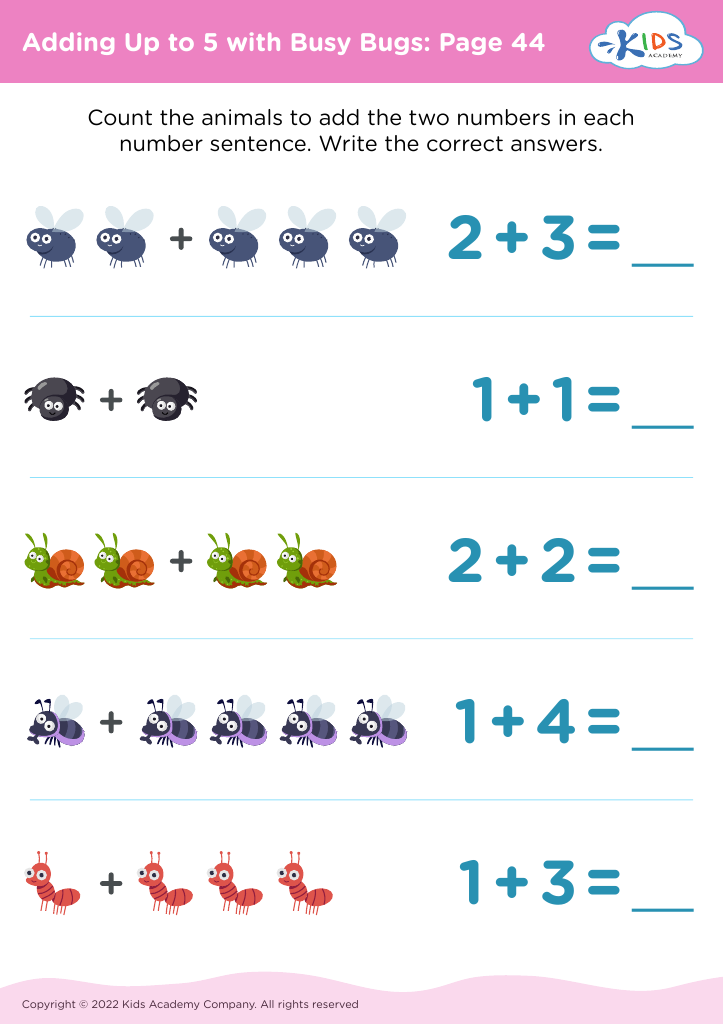








Improving concentration on addition for 5-year-olds is crucial for several reasons. At this age, children are developing foundational math skills that will support their overall academic growth. Mastering basic addition enhances confidence in their abilities and encourages a positive attitude towards learning. Concentration plays a vital role in this process, as focused learning helps children retain information more effectively and understand new concepts.
Furthermore, teaching concentration alongside addition cultivates essential life skills, such as patience, persistence, and problem-solving. Children who can concentrate better are more likely to thrive in classroom settings, engage in collaborative learning with peers, and stay on task during activities. This skill also sets the stage for future complex subjects, helping students transition smoothly into higher-grade curricula with increased cognitive demands.
From a broader perspective, fostering concentration skills in young learners can translate to better classroom behavior and social interactions. When children learn to focus, they tend to exhibit better self-regulation and fewer behavioral challenges. Ultimately, parents and teachers should prioritize improving concentration in addition to fundamental math skills to promote holistic development and lay a strong academic foundation for 5-year-olds.








