Understanding number relationships Addition Worksheets for 5-Year-Olds
3 filtered results
-
From - To
Uncover the joy of math with our "Understanding Number Relationships: Addition Worksheets for 5-Year-Olds." Designed to foster foundational skills, these engaging worksheets help young learners grasp the concept of addition through fun, relatable exercises. Each activity is crafted to enhance number recognition, mental math abilities, and problem-solving skills, laying a solid groundwork for future math success. With colorful illustrations and easy-to-follow instructions, these printables turn learning into an adventure, motivating kids to practice and master the fundamentals of addition. Ideal for at-home practice or classroom enrichment, these worksheets make early math education enjoyable and effective.
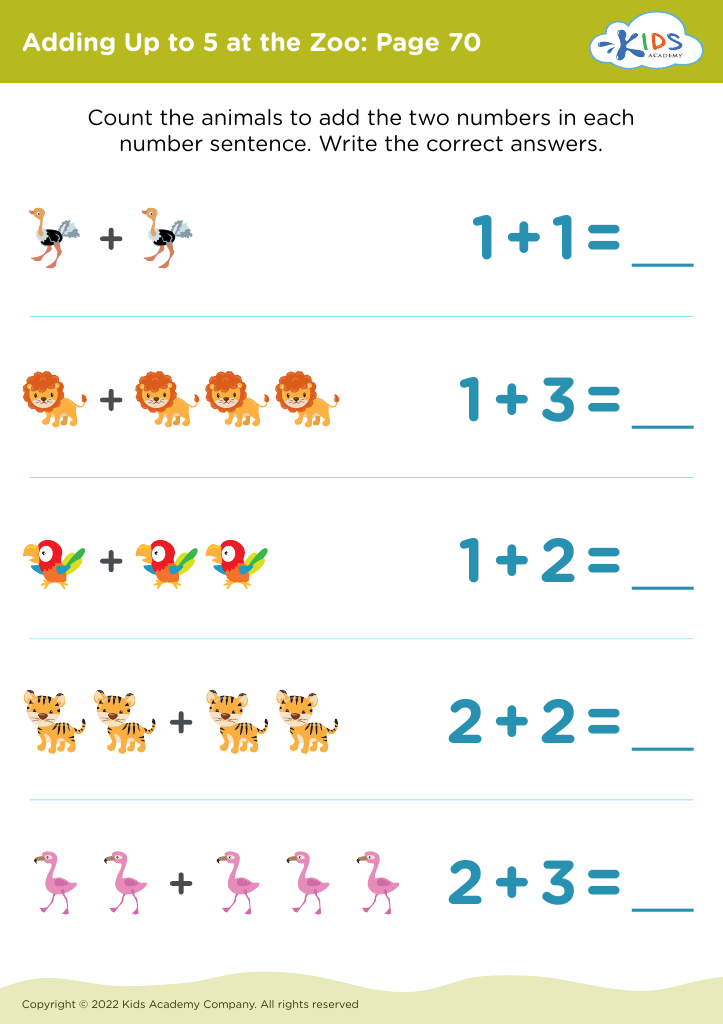
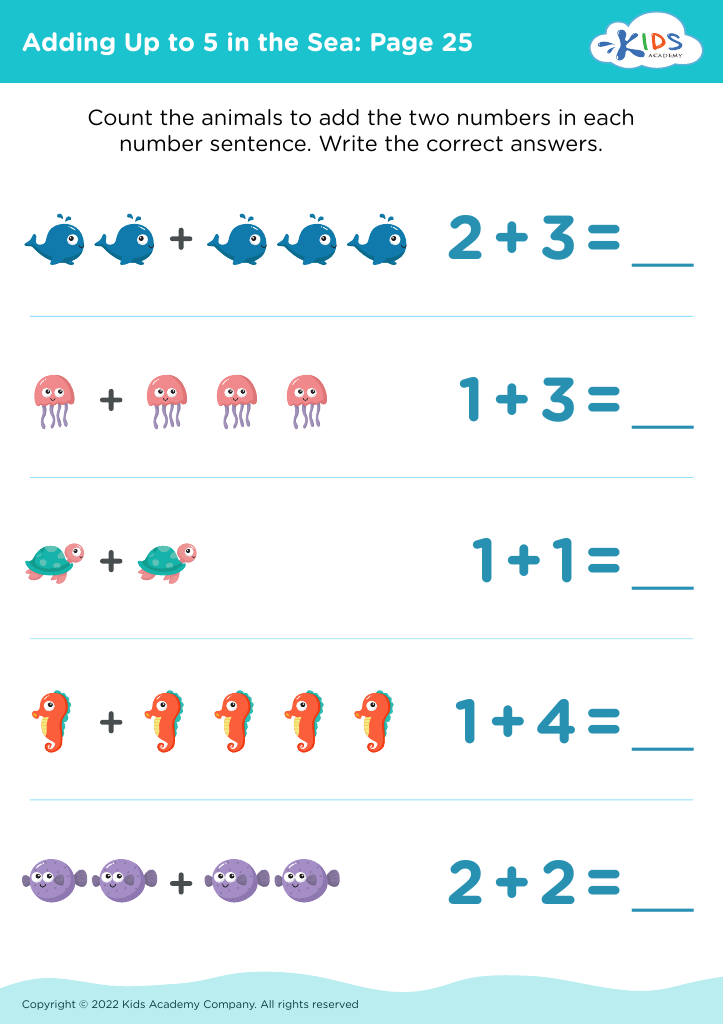
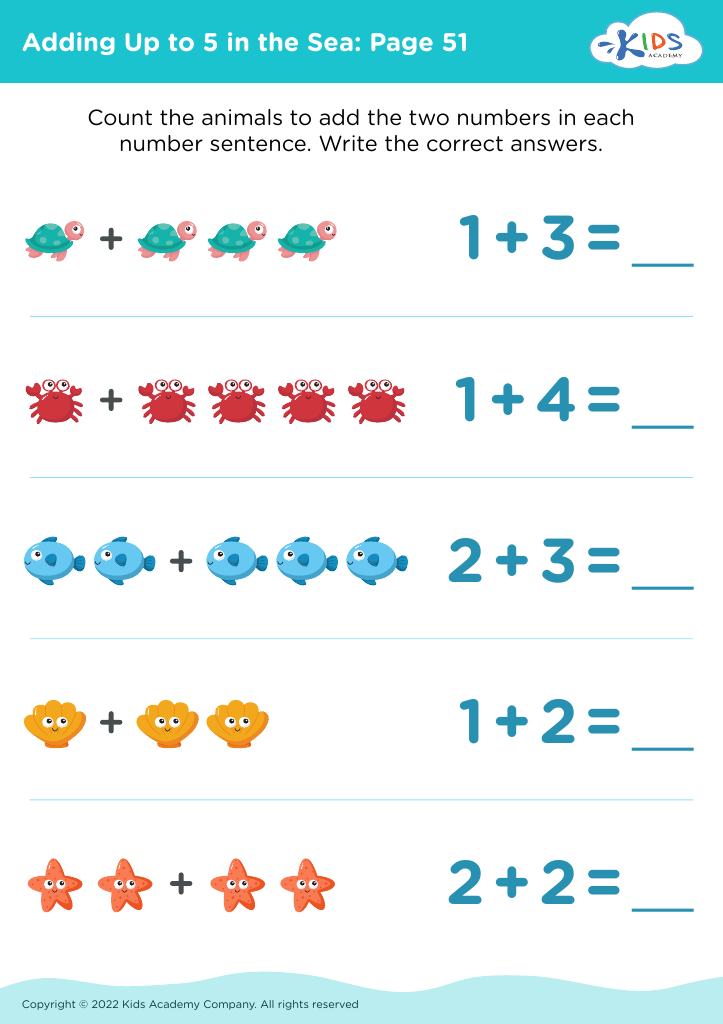








Understanding number relationships and addition for 5-year-olds is crucial because it lays the foundation for future mathematical learning and cognitive development. At this age, children's brains are particularly receptive to new concepts, and grasping basic math principles can set the stage for success in more complex math topics later in school.
Firstly, understanding number relationships helps children develop a sense of number sense, which is the ability to recognize, relate, and work with numbers easily. This foundational skill extends beyond just knowing how to count; it includes comprehending how numbers interact with each other through addition. For instance, realizing that 2 and 3 together make 5 is a building block for understanding that numbers can be combined, broken apart, and manipulated in various ways.
Secondly, learning addition instills problem-solving and logical thinking skills. When kids learn to add, they figure out how to approach a problem, understand it, and find a solution. This fosters critical thinking, a skill that is beneficial not just in math but across all subject areas and in real-life scenarios.
Finally, early success in understanding these concepts boosts a child's confidence and interest in math, making them more likely to engage positively with the subject as they grow. This positive attitude towards math can have long-lasting effects on their academic trajectory and career choices. Therefore, parents and teachers should focus on cultivating these early math skills to support overall development and lifelong learning.








