Understanding Sequences Addition Worksheets for 5-Year-Olds
3 filtered results
-
From - To
Discover our "Understanding Sequences Addition Worksheets" designed specifically for 5-year-olds! These engaging worksheets help young learners grasp the fundamentals of addition by exploring number patterns and sequences. With fun visuals and interactive exercises, children will enhance their counting skills and learn to recognize how numbers come together to form larger values. Our thoughtfully crafted activities promote critical thinking and foster a love for mathematics from an early age. Empower your child’s mathematical journey with these essential tools that turn learning into an exciting adventure. Explore our worksheets today and watch your little one thrive in understanding sequences and addition!
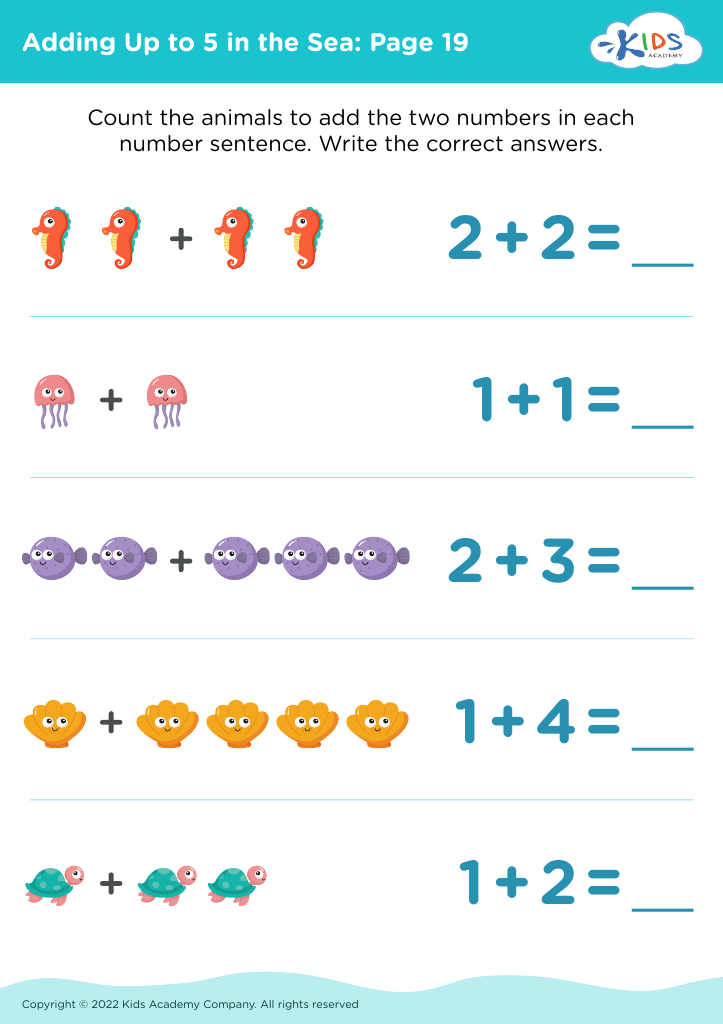
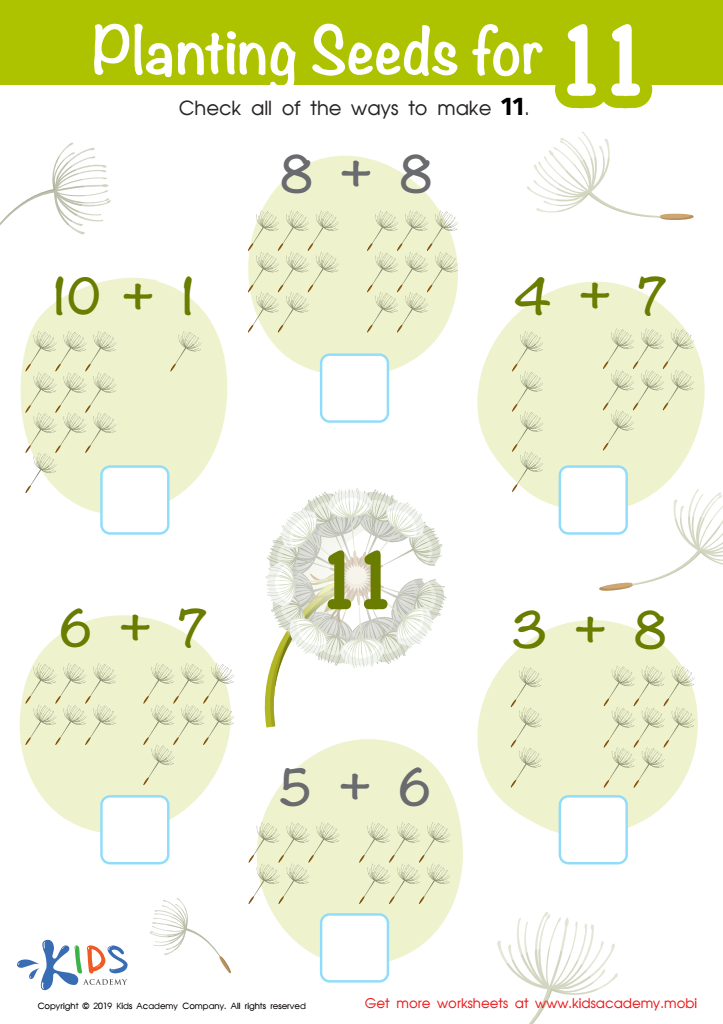
Planting Seeds for 11 Worksheet
 Assign to My Students
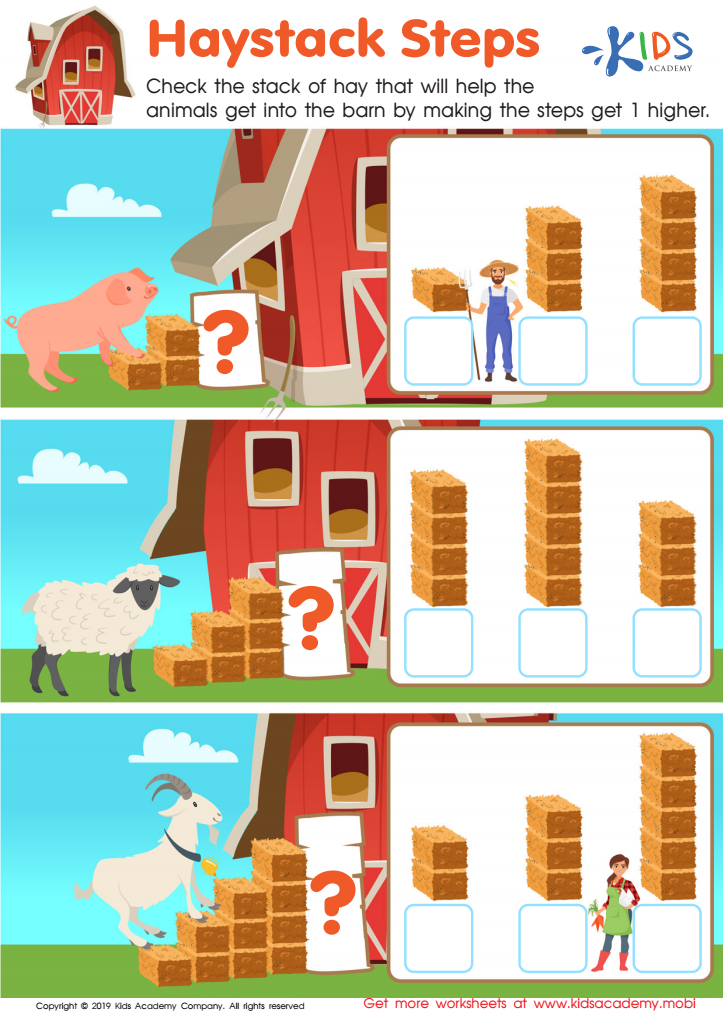
Haystack Steps Worksheet








Understanding sequences in addition is crucial for 5-year-olds as it lays the foundation for their mathematical development. At this age, children begin to grasp the concepts of numbers and basic operations. When they learn about sequences, they develop a logical progression of how numbers relate to each other, which is essential for more complex arithmetic later on. For example, recognizing that adding 1 to a number will yield the next number in line reinforces their counting skills.
Additionally, mastering sequences boosts children’s problem-solving abilities and critical thinking skills. By understanding patterns in addition, kids can reduce reliance on memorization and enhance their ability to approach math intuitively. This leads to healthier mathematical minds, as they foster confidence and reduce anxiety about numbers.
Moreover, teaching sequences can be engaging and fun, encouraging family and classroom interaction through games and visual aids. Parents and teachers play a key role in making this learning experience enjoyable, thereby nurturing a positive attitude toward math. When children are encouraged to explore and understand sequences in addition, they not only excel academically but also engage in a lifelong appreciation for learning. Thus, supporting early mathematical skills like sequencing becomes an invaluable investment in a child’s future.








