Visual comprehension Addition Worksheets for 5-Year-Olds
7 filtered results
-
From - To
Welcome to our Visual Comprehension Addition Worksheets for 5-Year-Olds! These engaging worksheets are specially designed to enhance your child’s visual comprehension skills while introducing them to the basics of addition. Each activity features vibrant illustrations and simplistic problems that help young learners understand numerical concepts through visual aids. By connecting images with numbers, children gain confidence in their math abilities while developing critical thinking skills. Perfect for home or classroom use, our worksheets not only make learning fun but also promote lasting educational foundations. Join us in encouraging a love for math through playful and effective visual learning tools!
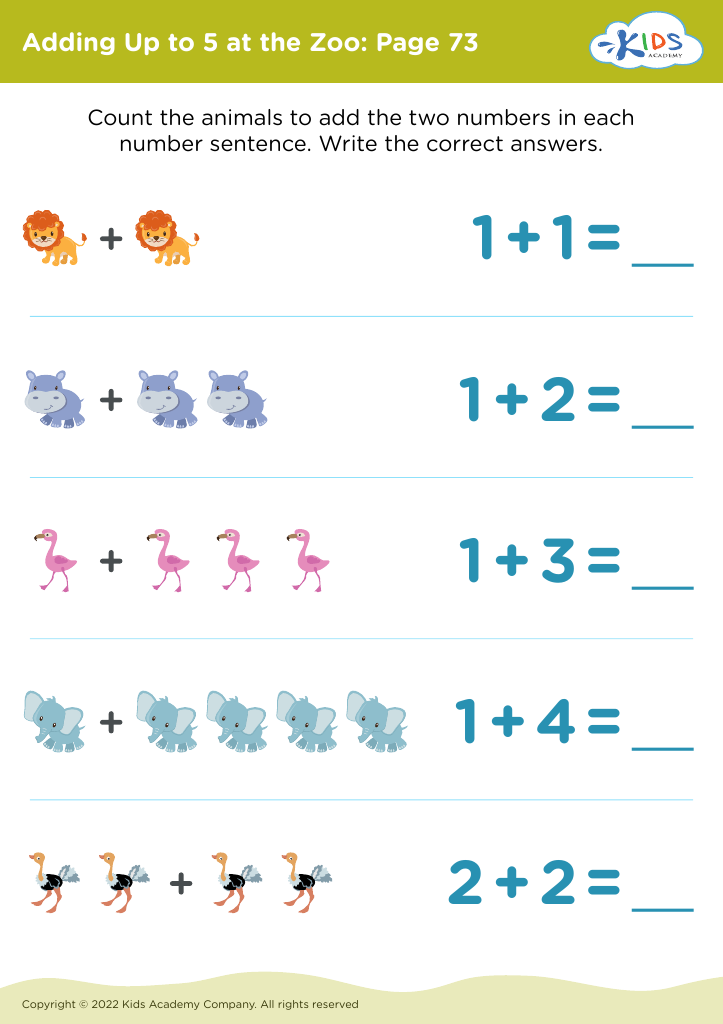
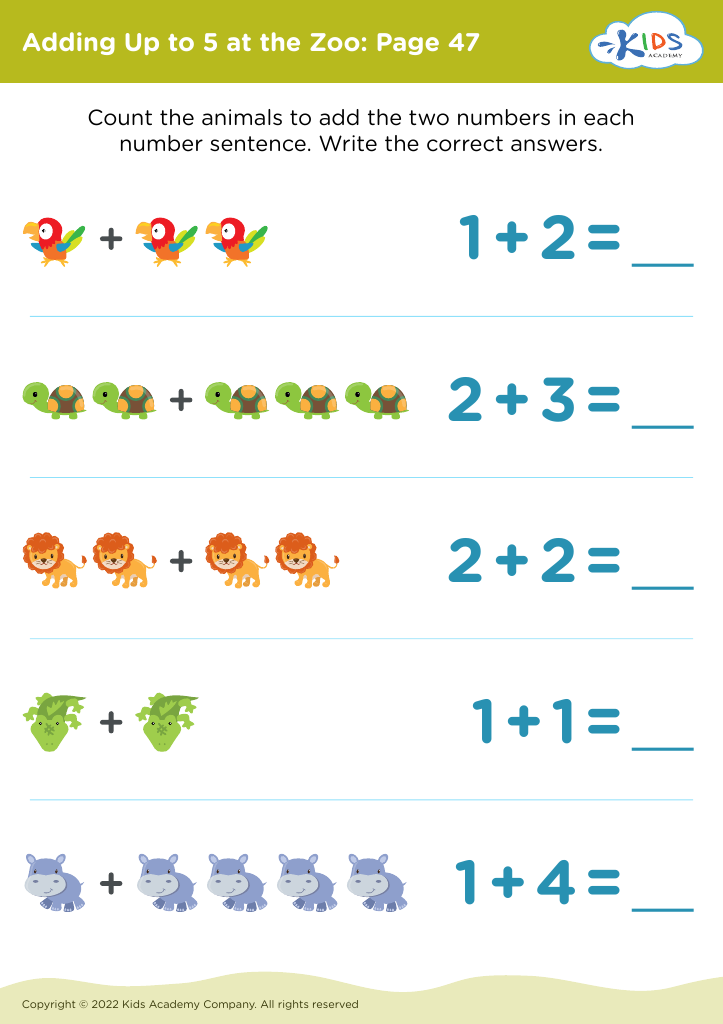
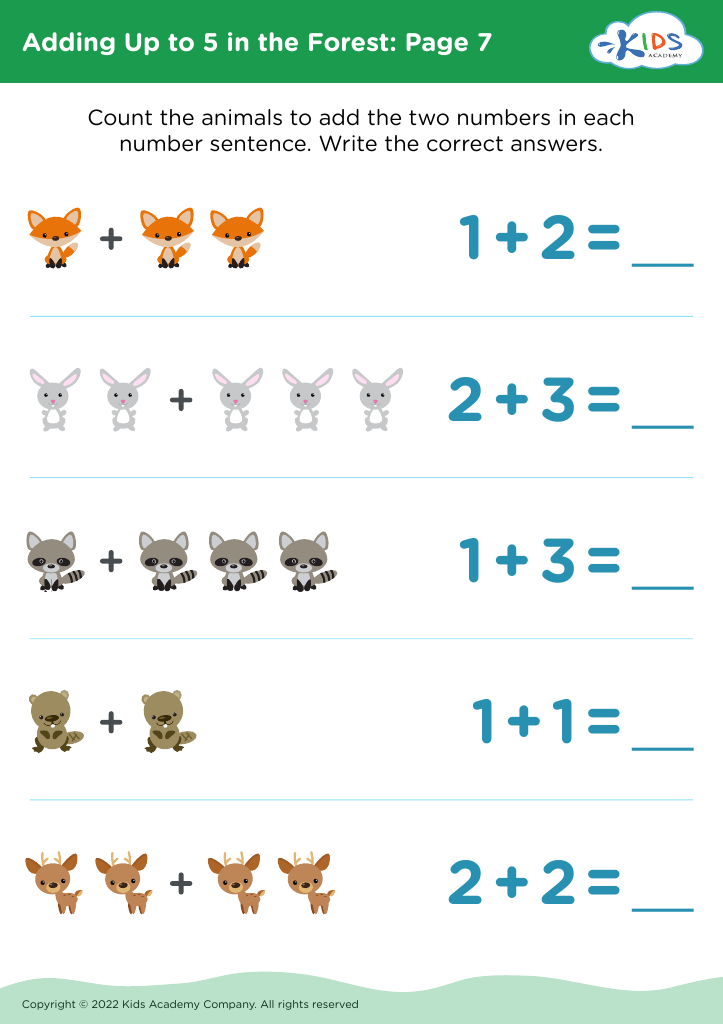
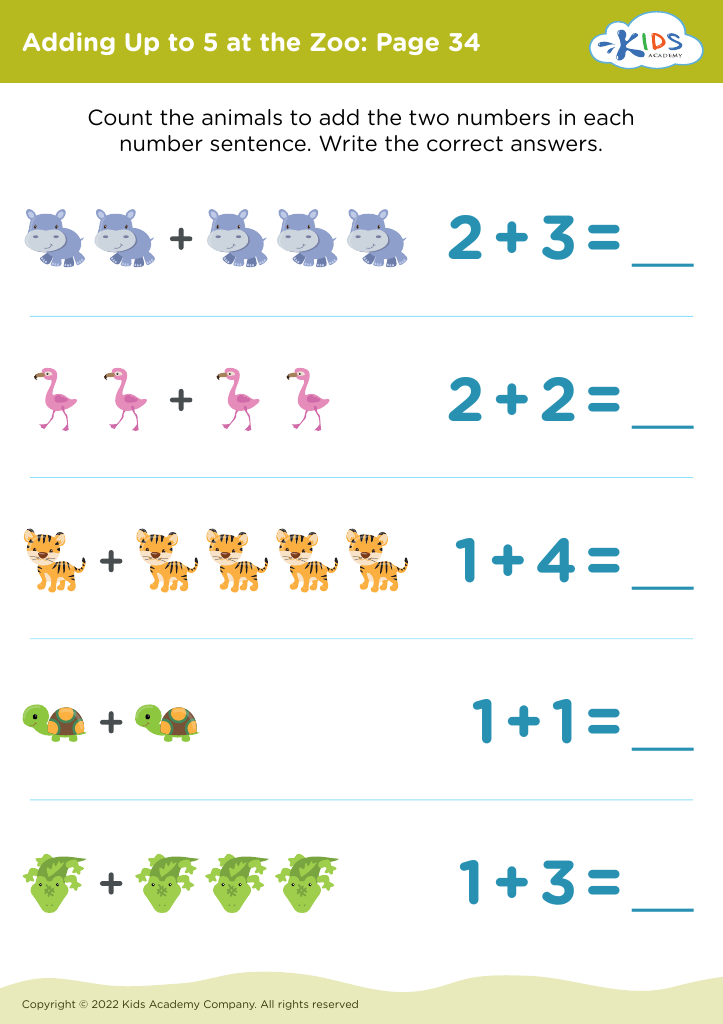
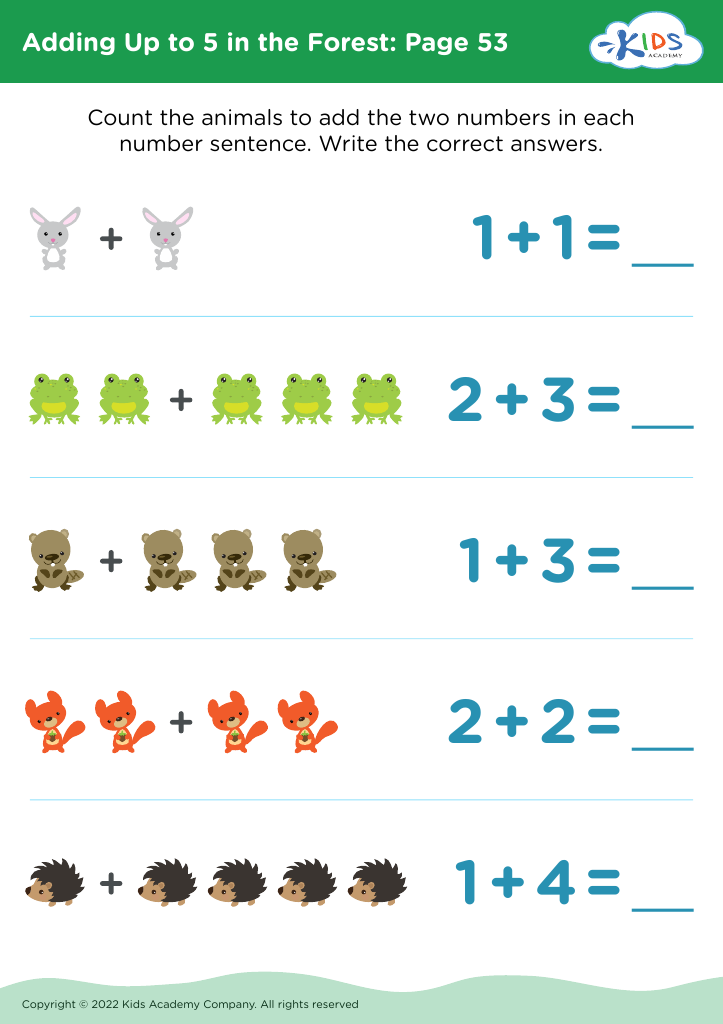
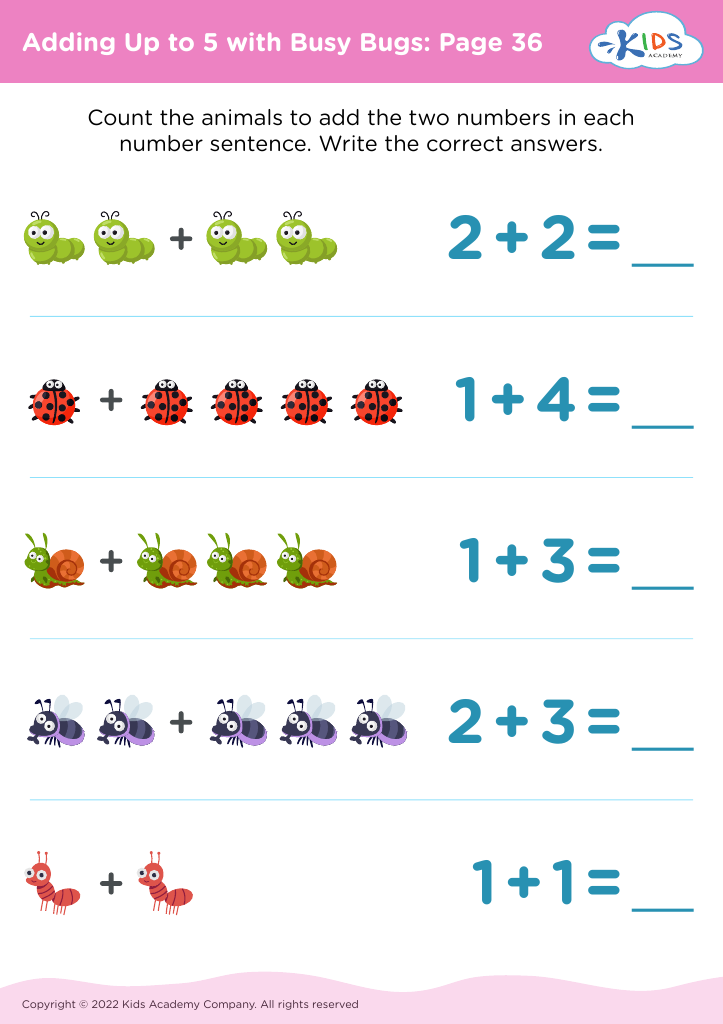
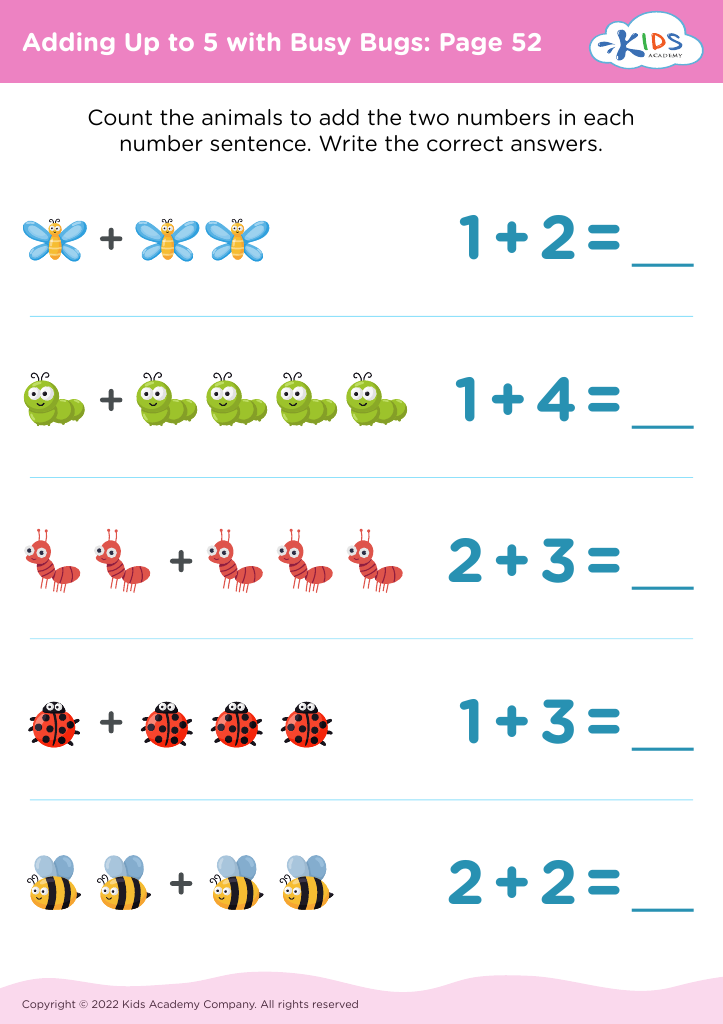








Visual comprehension in addition for 5-year-olds is crucial for several reasons. First, at this developmental stage, children are beginning to understand abstract concepts, and visual aids can make complex ideas more accessible. By using pictures, objects, or drawings, children can see how quantities combine, which helps them grasp the foundational concept of addition as joining groups together.
Furthermore, visual comprehension tools can cater to varied learning styles. Some children learn best through visual means, and using these methods can enhance engagement and reinforce their understanding of mathematics. This skill also lays the groundwork for more advanced math concepts that will come later in their education.
In addition, early mastery of addition through visual comprehension aids in developing critical thinking and problem-solving skills. Children learn to analyze and interpret visual information, a fundamental skill not only in math, but across all subjects and real-life situations.
For parents and teachers, supporting visual comprehension in math fosters confidence and enthusiasm in learners, promoting a positive attitude toward future math-related tasks. By nurturing these early foundational skills, adults can help children form a solid base for lifelong learning.








