
Basic Addition Counting Worksheets for 5-Year-Olds
3 filtered results
Difficulty Level
Grade
Age
-
From - To
Subject
Activity
Standards
Introduce your little mathematician to the world of numbers with our Basic Addition Counting Worksheets designed specially for 5-year-olds. Engaging and visually appealing, these worksheets feature simple, easy-to-understand exercises that make learning basic addition a breeze for preschoolers. Bright images and fun activities help young learners grasp the concept of counting and adding numbers in no time. Perfect for at-home practice or classroom use, our worksheets are crafted to lay a strong mathematical foundation while promoting enthusiasm and confidence. Equip your child with the skills they need for future success with our expertly designed resources!
Favorites
With answer key
Interactive
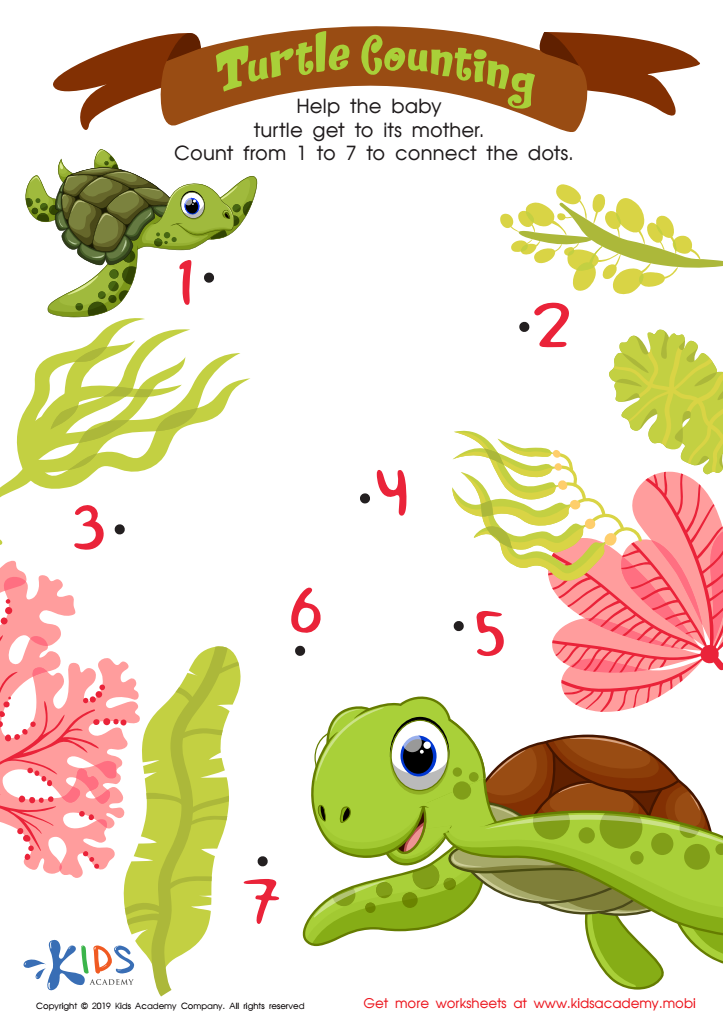
Turtle Counting Worksheet
Help your child identify the turtle in the picture and teach them about turtles. From their diet to the life cycle, they'll learn a lot. Now, help the baby turtle return to its mother. Count from 1 to 7, then connect the dots on the printout.
 Assign to My Students
Turtle Counting Worksheet
Worksheet


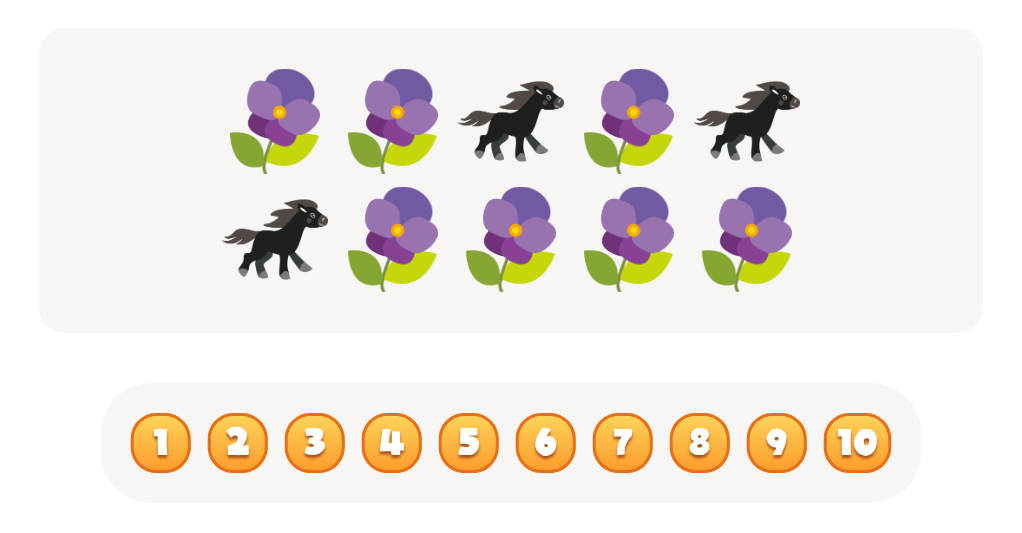
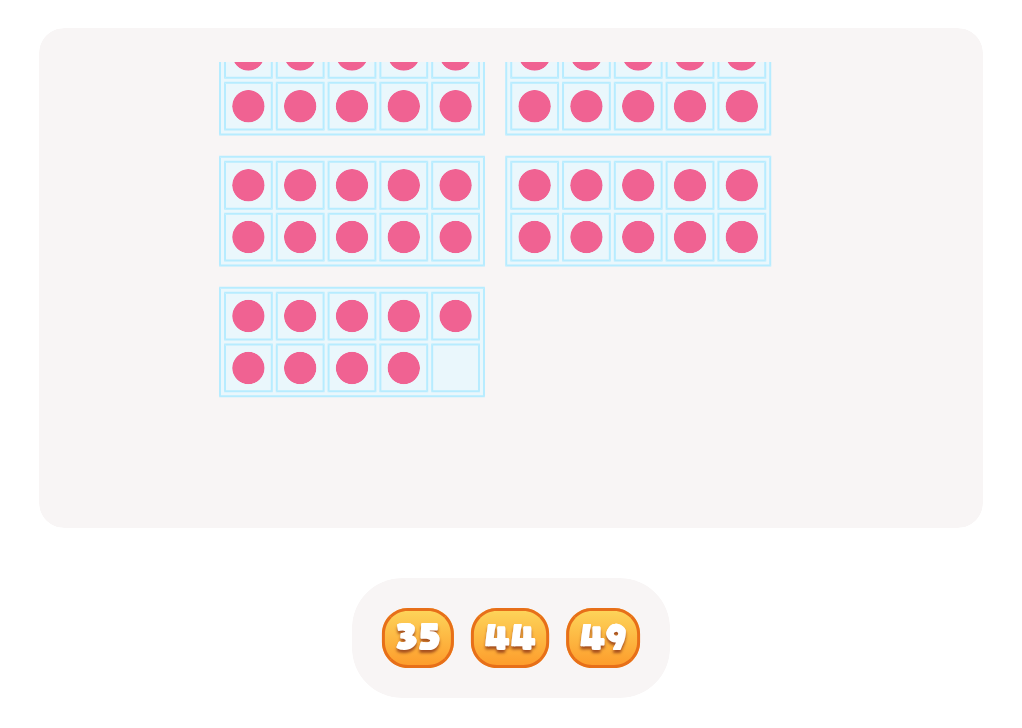
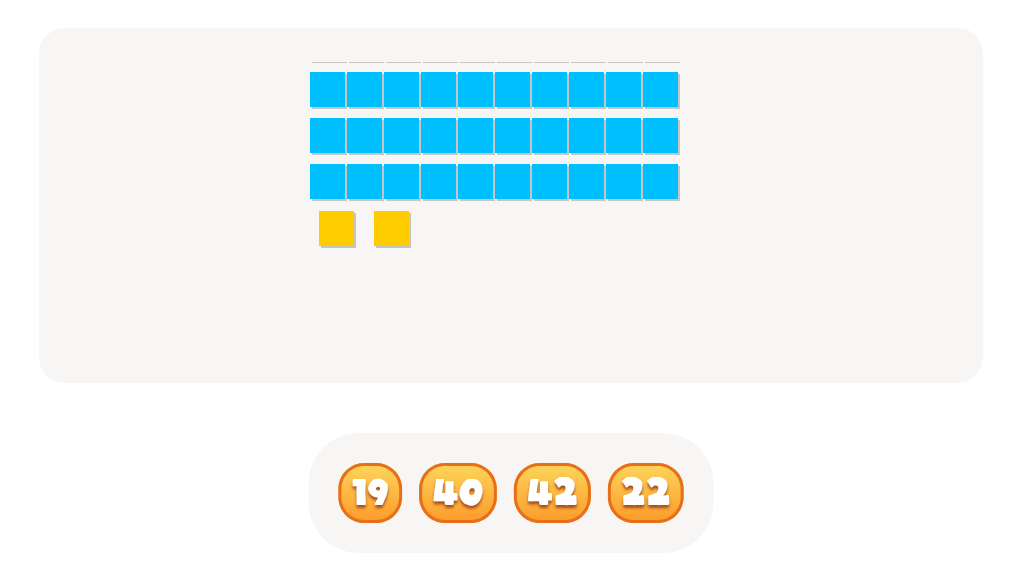
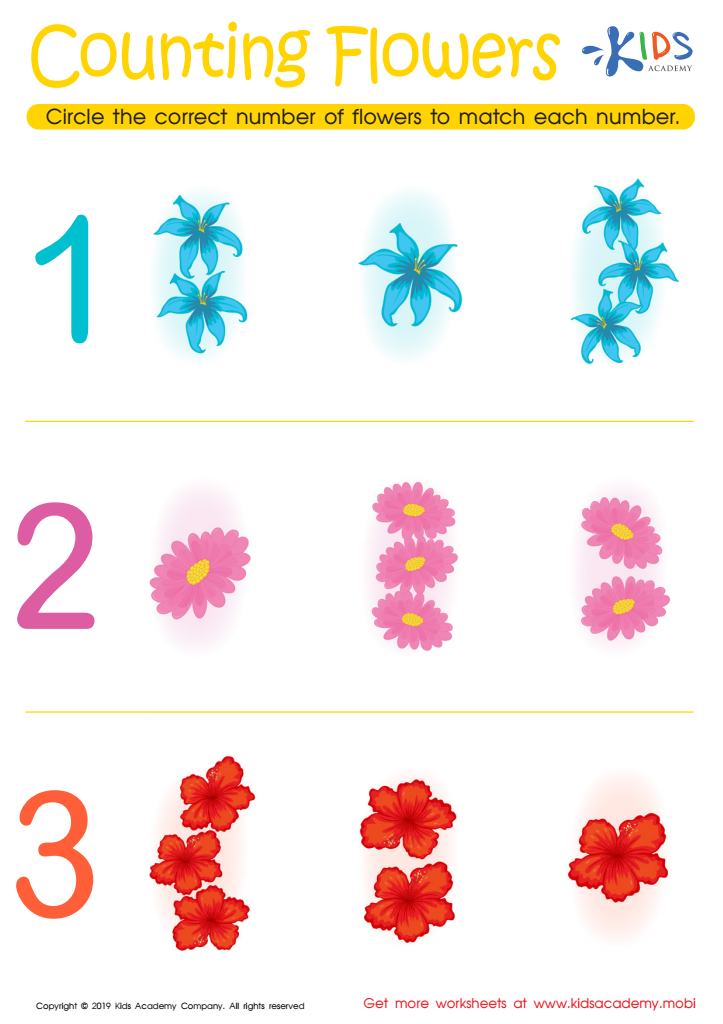
Counting Flowers Worksheet
Kids love Flower Power! This free PDF helps kids practice basic number sense and counting. They match the correct number of colorful flowers to the corresponding numeral. An enjoyable game that improves basic number sense - perfect!
Counting Flowers Worksheet
Worksheet
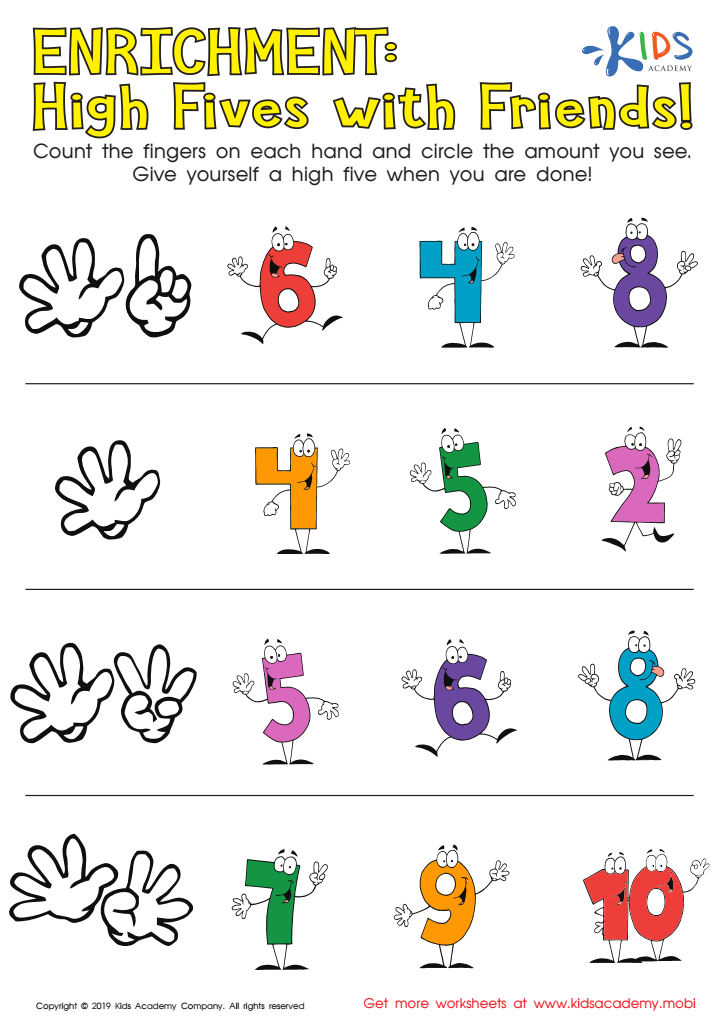
Enrichment: High Fives with Friends! Worksheet
Get your kids learning and having fun with this coloring worksheet! Kids can get practice counting and identifying numbers by looking at the fingers on each hand. Help them circle the amount they see, then reward them with a high five for getting the answers right - learning has never been so much fun!
Enrichment: High Fives with Friends! Worksheet
Worksheet
Join Kids Academy for Free
Who is primarily going to use this learning content?








Basic addition counting for 5-year-olds is crucial because it lays the foundational stones for all future mathematical skills. At this age, children are beginning to develop logical thinking and problem-solving abilities. By mastering addition, they learn to handle basic numerical operations, which are essential for understanding more complex mathematical concepts later on, such as subtraction, multiplication, and division.
Fostering these skills early also promotes confidence in a child's academic abilities. When young learners grasp addition through counting, they experience accomplishment and are more likely to take on new challenges eagerly. This positive academic self-image can lead to higher motivation and persistence in tasks outside of math as well.
Moreover, basic addition counting strengthens cognitive development. Counting exercises enhance memory, attention span, and the ability to recognize patterns and sequences. These skills are not confined to math but are transferrable across various academic subjects, enriching overall learning.
From a social perspective, collaborative counting activities boost communication and cooperation skills. Children often work together to count objects, discuss their findings, and learn from each other, fostering a spirit of teamwork.
In conclusion, basic addition counting at age 5 supports not just mathematical proficiency, but cognitive development, academic confidence, and social skills, creating a well-rounded foundation for lifelong learning.








