Basic Math Skills Numbers Worksheets for 5-Year-Olds - Page 2
25 filtered results
-
From - To
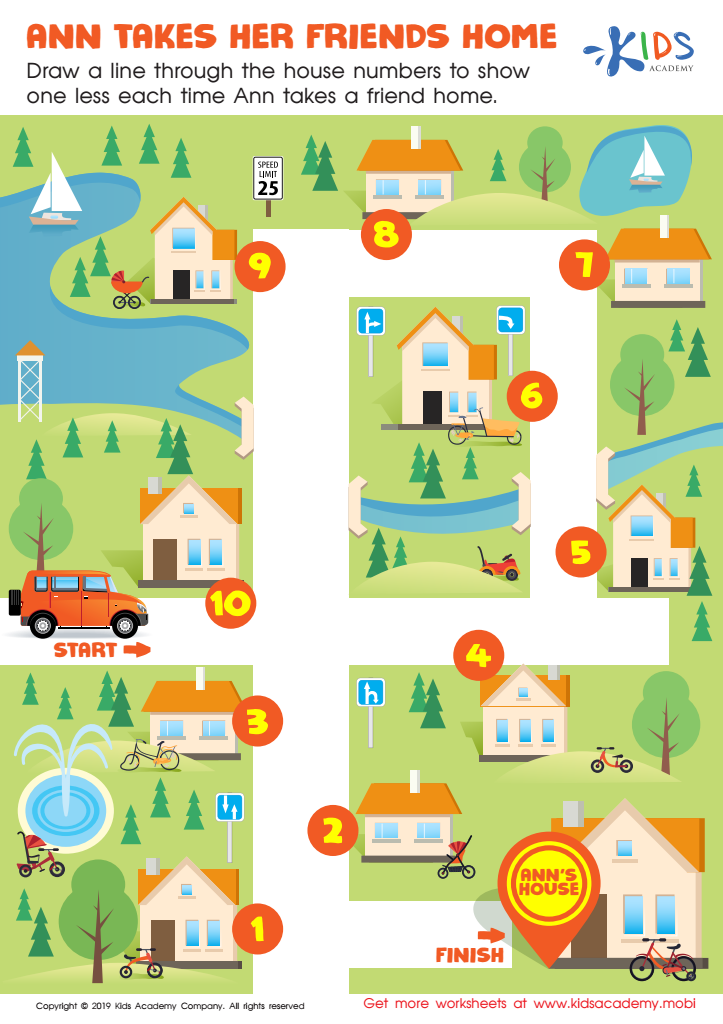
Ann Takes her Friends Home Worksheet
 Assign to My Students








Parents and teachers should prioritize basic math skills for 5-year-olds because these foundational abilities are essential for academic success and daily life. Early math skills, such as counting, recognizing numbers, and understanding basic concepts of quantity and order, set the stage for more complex mathematical learning in later years. Incorporating fun and interactive activities to teach these skills helps children build confidence and develop a positive attitude toward math.
Moreover, math skills are closely linked to cognitive development. Young children who play with numbers improve their problem-solving, logical thinking, and pattern recognition abilities. These skills are not only crucial in mathematics but also enhance performance in other subjects, fostering a well-rounded educational experience.
Daily life often requires math proficiency, from telling time to handling money to cooking. Teaching children basic math skills early on prepares them for these real-world tasks. Furthermore, children's early exposure to math can influence their future perception of and interest in the subject. Parents' and teachers' active involvement in nurturing these skills ensures that children develop a solid mathematical foundation, fostering lifelong learning and improving long-term educational outcomes. This healthy early relationship with math can lead to greater achievement and well-being all through their schooling years and beyond.








