Enhances concentration Math Worksheets for 5-Year-Olds
4 filtered results
-
From - To
Boost your child's concentration and mathematical skills with our Enhances Concentration Math Worksheets for 5-Year-Olds. Specifically designed to engage young minds, these printable worksheets combine fun activities with focused learning. They target essential early math skills such as number recognition, counting, and basic arithmetic, while simultaneously developing your child’s attention span. Each worksheet is thoughtfully crafted to keep young learners intrigued and motivated. Start your child on the path to math success today with our worksheets that are as enjoyable as they are educational! Perfect for both at-home practice and classroom learning.
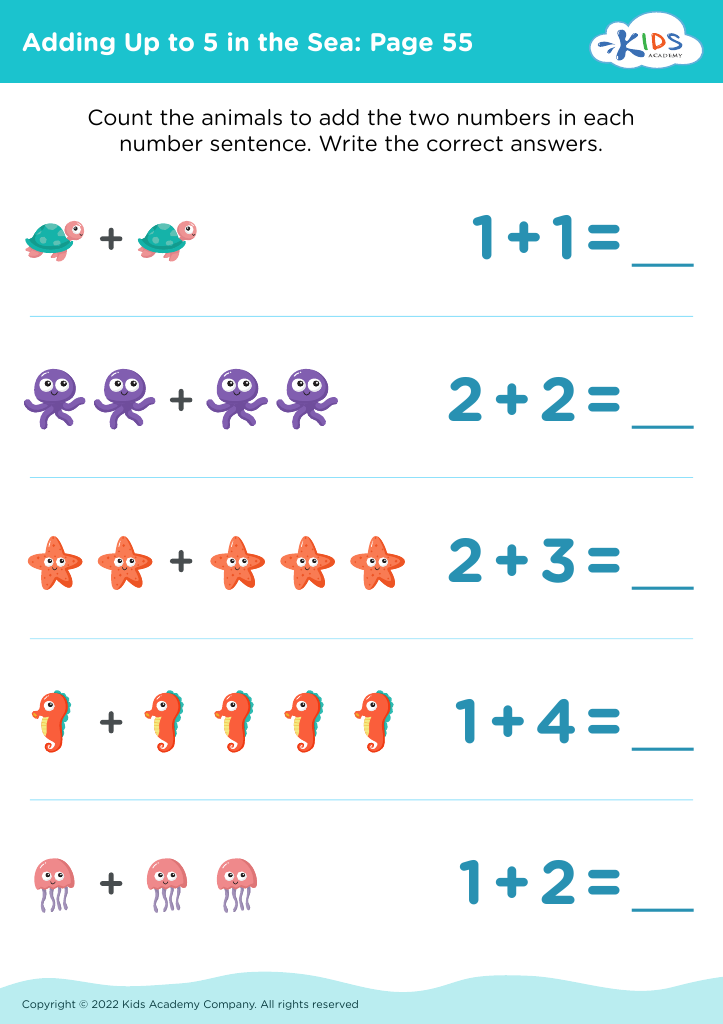
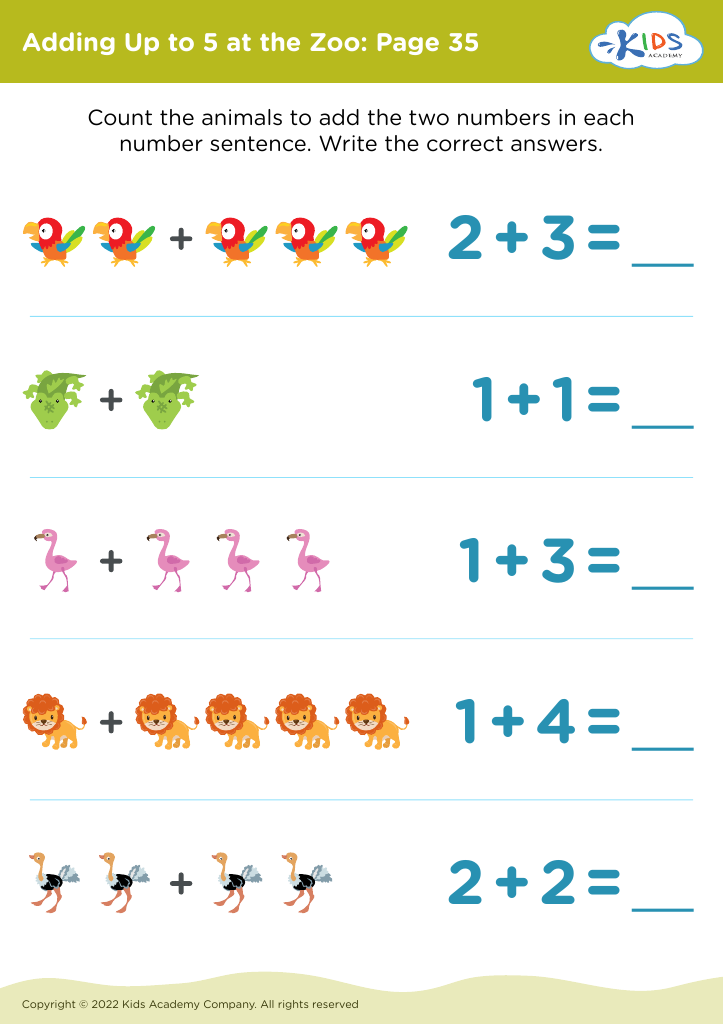
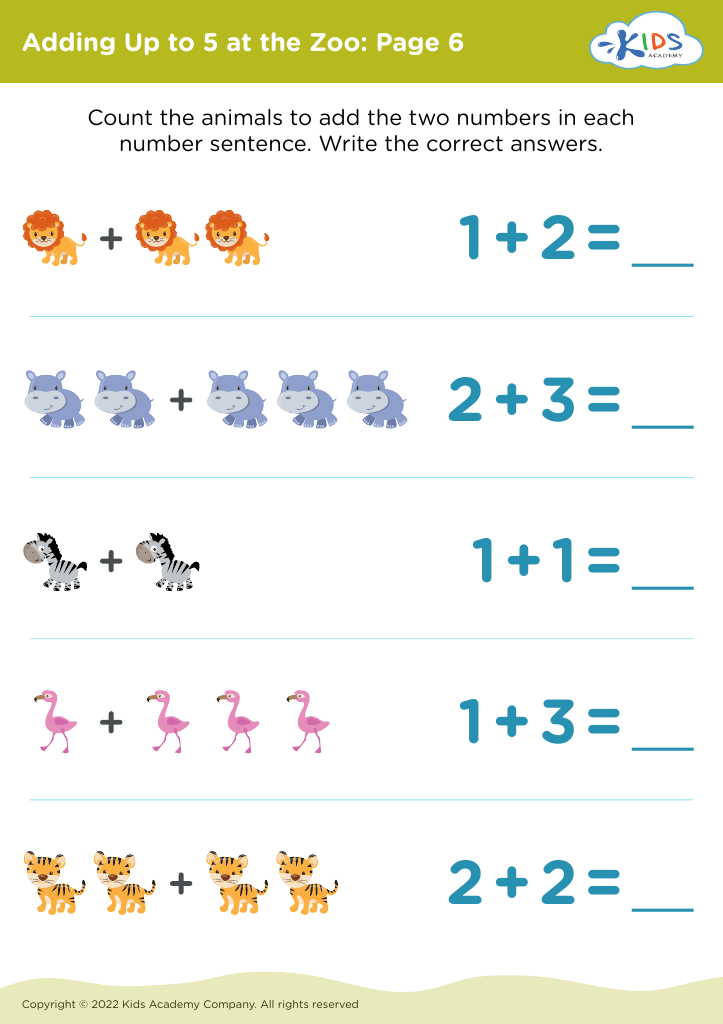
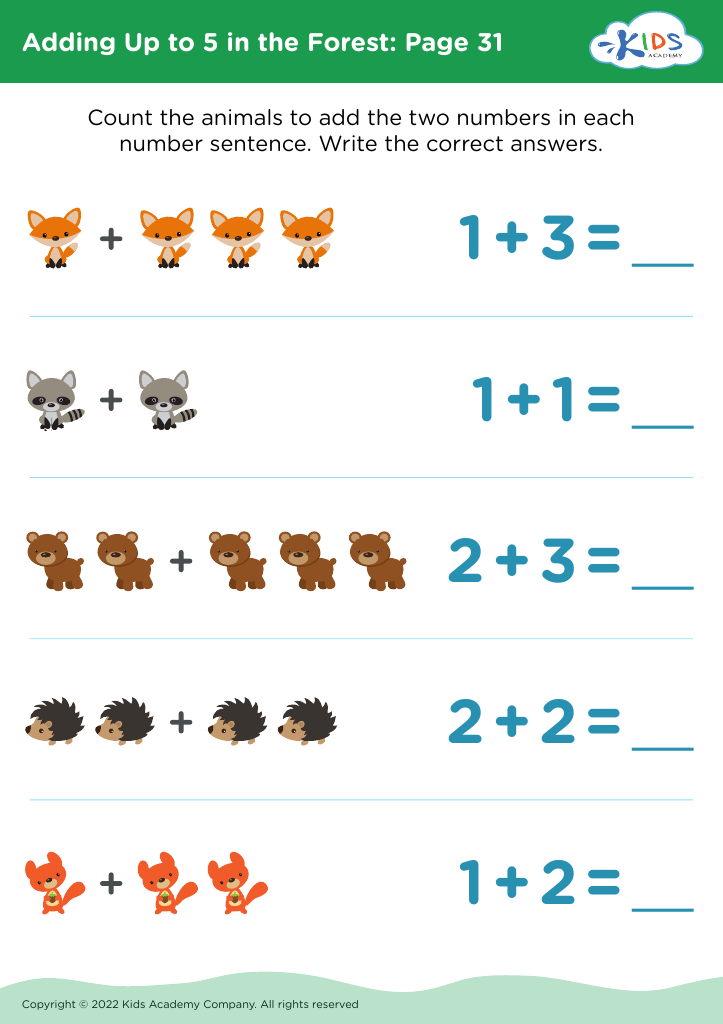








Parents and teachers should prioritize enhancing concentration in math for 5-year-olds because it lays a crucial foundation for future academic success and fosters essential life skills. At this age, children's brains are highly receptive to learning, making it an ideal time to develop both their mathematical skills and their ability to concentrate. Improved concentration helps young children absorb and understand basic math concepts such as counting, recognizing numbers, and simple addition, which are vital for their future learning in both math and other subjects.
Concentration in math also helps enhance critical thinking and problem-solving skills. When children learn to focus, they can better analyze problems, identify patterns, and develop logical reasoning, which are all important beyond the classroom. These skills contribute to their overall cognitive development and can aid them in daily decision-making and problem-solving situations.
Moreover, success and confidence in early math can cultivate a positive attitude towards learning, encouraging children to approach other subjects with enthusiasm and determination. This positive experience can boost their self-esteem and set them on a path for continual academic achievement. Therefore, concentrating on math at this critical stage of development is essential for nurturing well-rounded, capable, and confident learners.








