
Number counting Math Worksheets for 5-Year-Olds
3 filtered results
Difficulty Level
Grade
Age
-
From - To
Subject
Activity
Standards
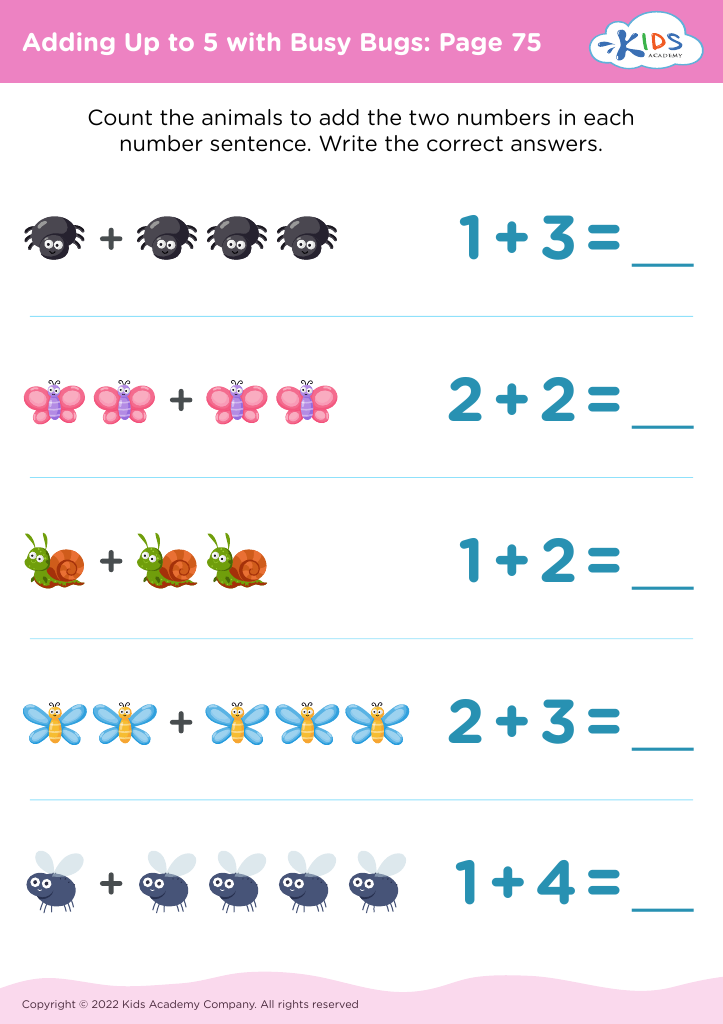
Elevate your 5-year-old's math skills with our engaging Number Counting Math Worksheets! Perfectly designed for young learners, these worksheets offer a fun and interactive way to practice counting, develop number recognition, and build a solid mathematical foundation. Featuring colorful illustrations and a variety of counting exercises, our printable worksheets cater to different learning styles and keep kids motivated. Ideal for both classroom and home use, these resources help reinforce essential math concepts through easy-to-follow activities. Encourage your child’s numerical journey and boost their confidence with our expertly crafted worksheets from Kids Academy!
Favorites
With answer key
Interactive
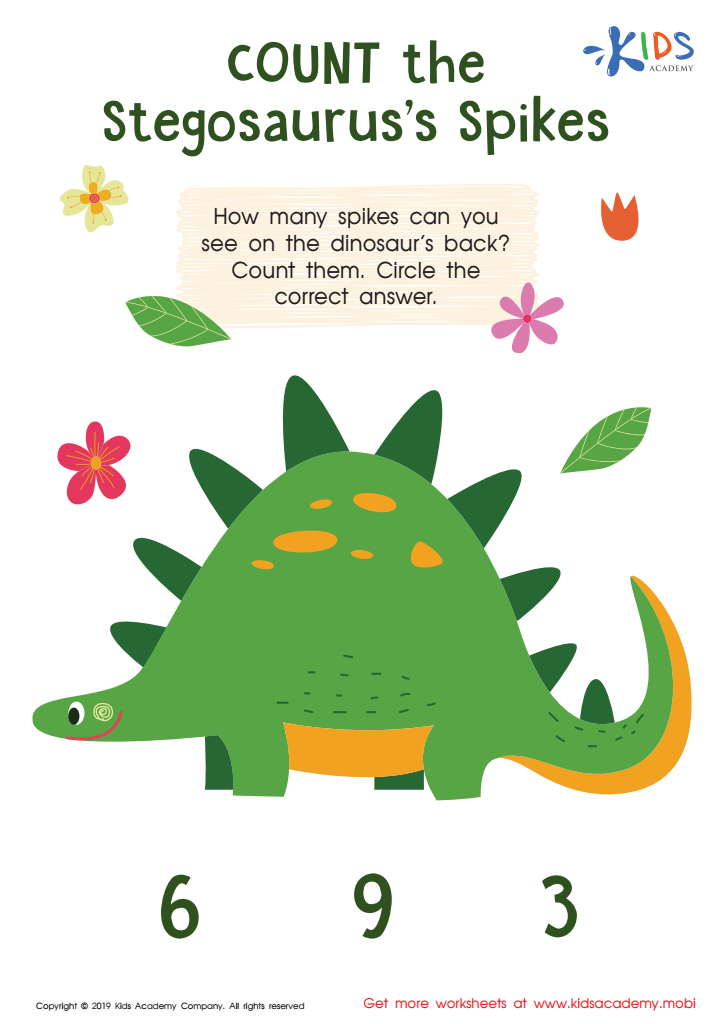
Count the Stegosaurus's Spikes Worksheet
Dinosaurs walked the earth long before humans, meaning no contact was made before they became extinct. Scientists have used research and diggings to find out about these animals, even giving them names. In this worksheet, help your students count the spikes on the stegosaurus and circle the correct answer.
 Assign to My Students
Count the Stegosaurus's Spikes Worksheet
Worksheet
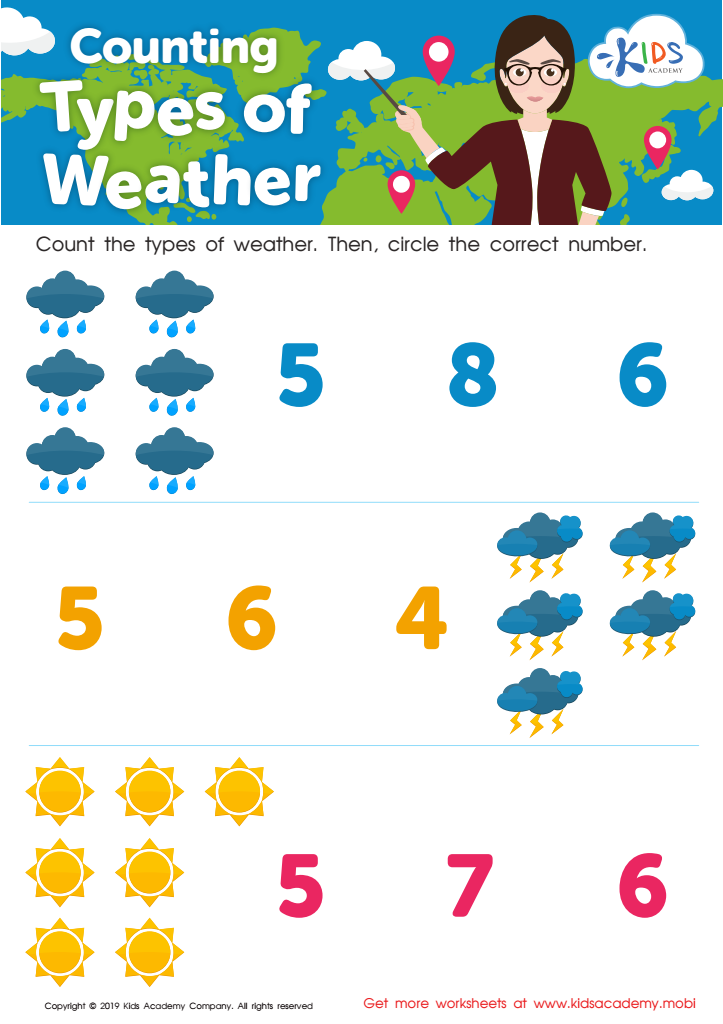
Counting Types of Weather Worksheet
Have your students look outside and tell you the weather today. Get kindergartners thinking by asking them to name different types of weather. Point to each one in the picture and get them to tell you what it is. Then, have them count the types and circle the number.
Counting Types of Weather Worksheet
Worksheet
Join Kids Academy for Free
Who is primarily going to use this learning content?



.jpg)




Early number counting skills in 5-year-olds are pivotal for several reasons, making it essential for parents and teachers to prioritize this aspect of learning. First and foremost, counting lays the groundwork for future math skills. Recognizing and understanding numbers not only help in performing basic arithmetic but also in grasping more complex math concepts later on, such as addition, subtraction, and fractions.
Moreover, counting fosters cognitive development. When children count, they enhance their ability to pay attention, follow sequential patterns, and think logically. These skills are not only vital in math but also in everyday problem-solving and decision-making.
Number counting also has a social dimension. Math is a subject where foundational skills build upon one another. Ensuring a strong base in counting at an early age helps prevent feelings of frustration and inadequacy as the math becomes more complex. This, in turn, can lead to greater confidence and self-esteem.
Additionally, counting integrates with other learning areas. Sorting objects, identifying patterns, and recognizing shapes all involve an element of counting. Therefore, early exposure to counting enhances overall early childhood education and contributes to well-rounded cognitive development.
In essence, nurturing counting skills at age five sets children on a path toward academic success, bolsters their cognitive abilities, and helps them build confidence—all crucial benefits parents and teachers should value.








