Problem-solving practice Math Worksheets for 5-Year-Olds
4 filtered results
-
From - To
Unlock your child's potential with our Problem-Solving Practice Math Worksheets designed specifically for 5-year-olds! These engaging worksheets provide a fun and interactive approach to developing critical thinking skills through math. Each activity is tailored to spark your child's curiosity and encourage independent problem-solving. With colorful illustrations and age-appropriate challenges, these worksheets help kids learn basic math concepts, enhance their reasoning abilities, and build confidence in their skills. Perfect for home or classroom use, our worksheets allow children to explore math in a playful way while laying a strong foundation for future learning. Start their math journey today!
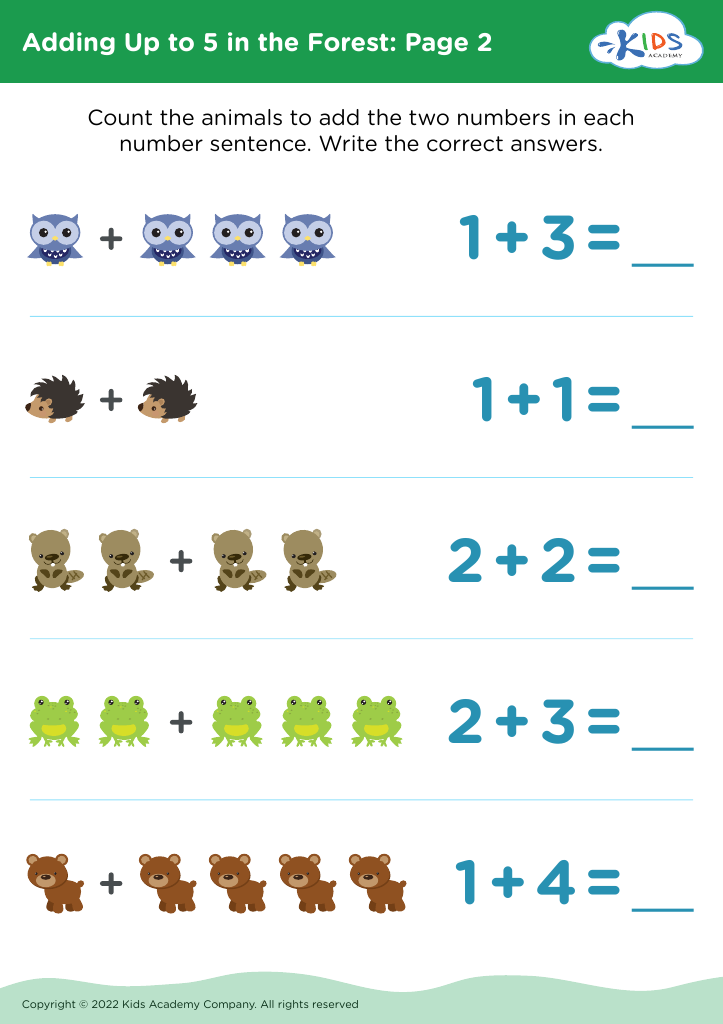
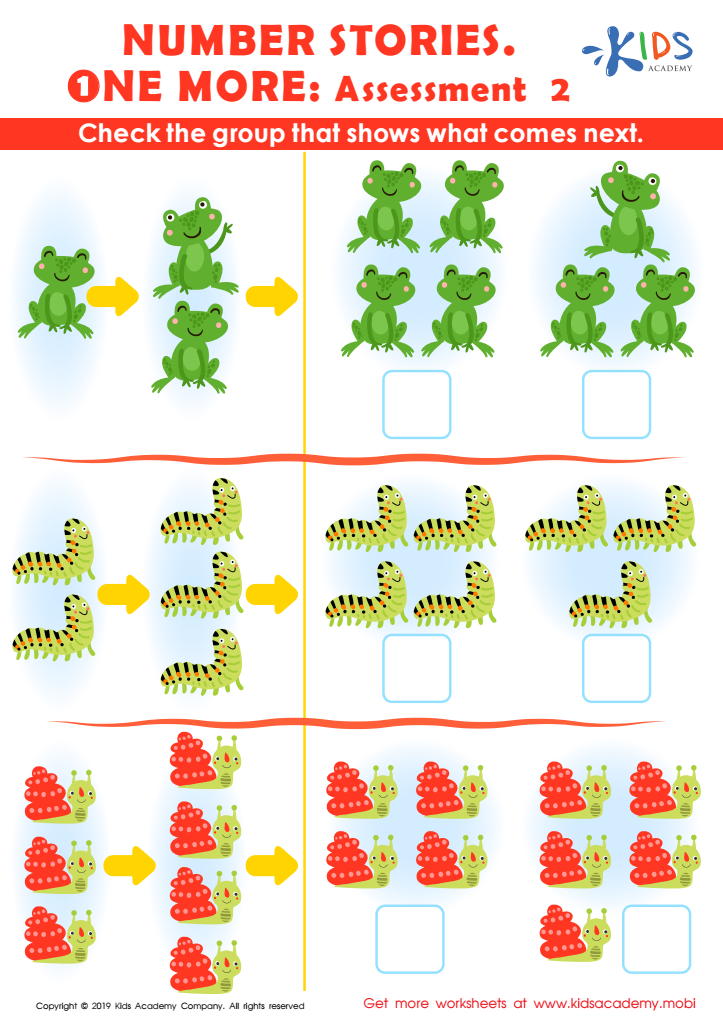
Number Stories One More – Assessment 2 Worksheet
 Assign to My Students
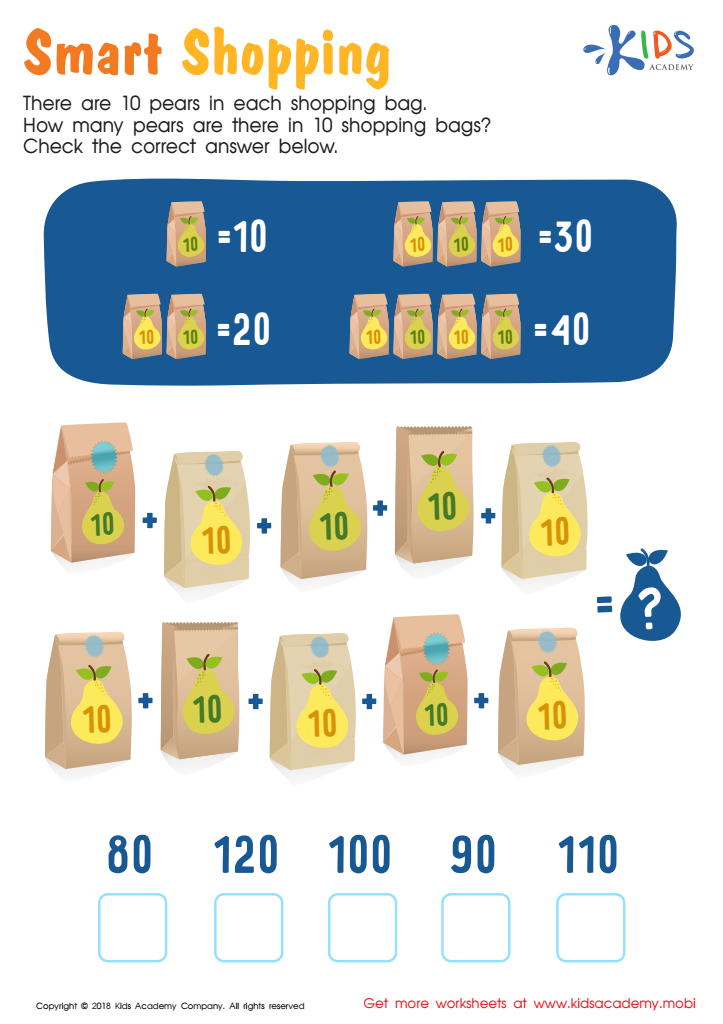
Smart Shopping: Trade Tens for a Hundred Worksheet
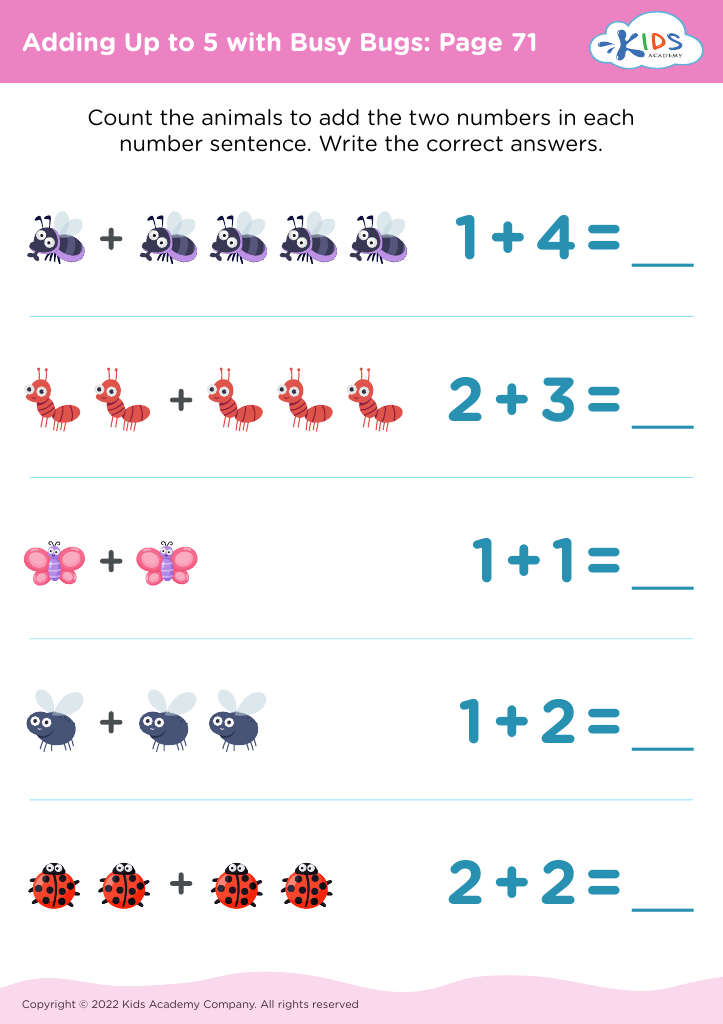








Problem-solving practice in math for 5-year-olds is crucial for their cognitive development and future academic success. At this formative age, children are naturally curious and eager to explore their environment. Engaging them in problem-solving activities helps cultivate essential skills such as logical reasoning, critical thinking, and creativity. These practices not only enhance mathematical understanding but also promote persistence and resilience as children learn to tackle challenges.
Moreover, math is not merely about numbers; it is about understanding relationships and patterns. By introducing problem-solving in a fun, age-appropriate manner, parents and teachers can foster a positive attitude towards math, reducing anxiety and building confidence. This early engagement establishes a strong foundation for later math skills and connects mathematical concepts to real-world situations—preparing children for everyday problem-solving.
Parents and teachers also benefit from developing effective communication around math. By guiding young learners in discussing their thought processes, adults can better understand their unique approaches to problems and provide targeted support. Thus, prioritizing problem-solving practice in early education greatly influences children's cognitive growth and sets them on a path toward lifelong learning and success in mathematics and other disciplines.








