Understanding number values Math Worksheets for 5-Year-Olds
3 filtered results
-
From - To
Discover engaging math worksheets designed to help 5-year-olds master number values! Our carefully crafted activities feature vibrant, kid-friendly images and hands-on problems to make learning numbers fun and effective. These worksheets focus on developing essential early math skills such as counting, number recognition, and understanding number sequences. Perfect for preschoolers and kindergartners, our worksheets provide an excellent foundation, ensuring your child feels confident come school time. With a variety of exercises tailored to young learners' needs, our resources make mastering number values an enjoyable adventure. Start exploring our collection today to boost your child’s math skills with ease!
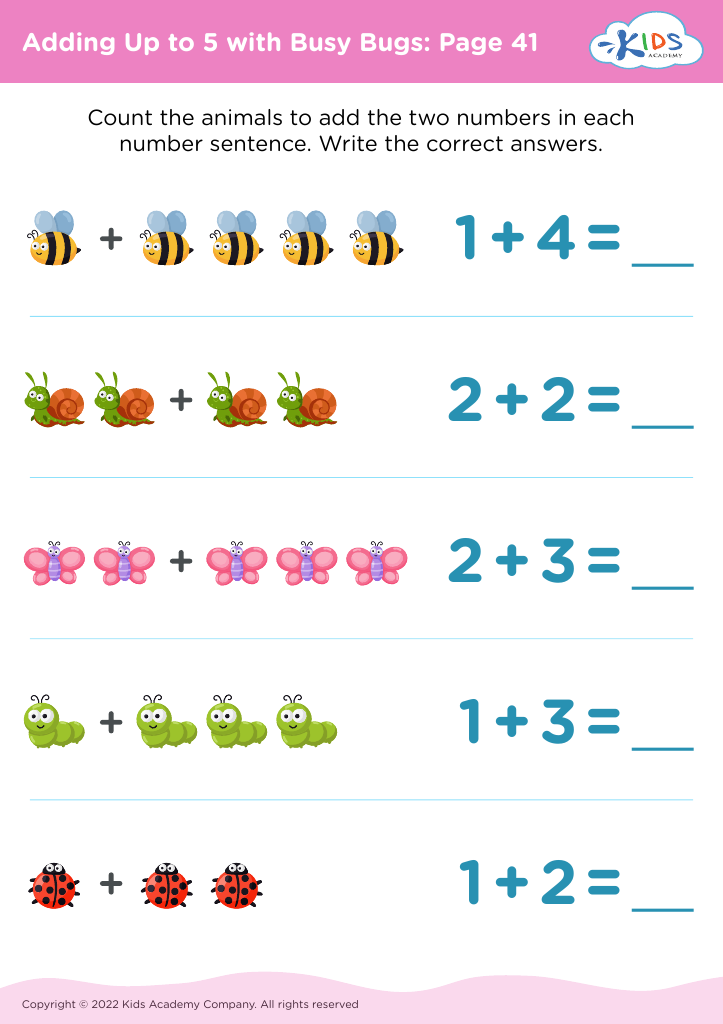
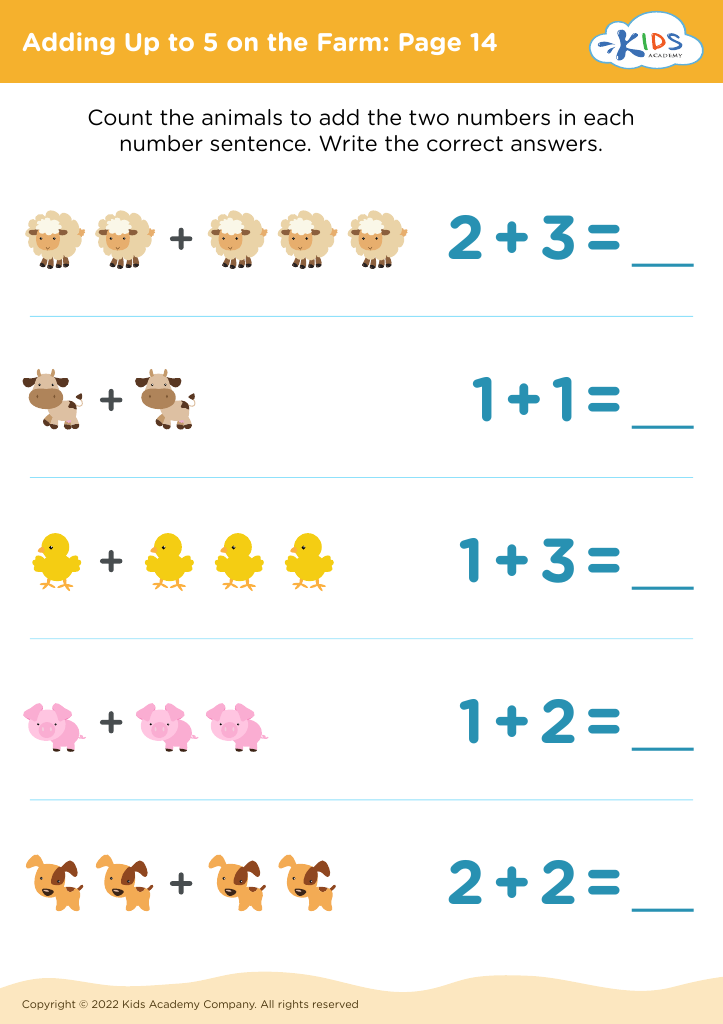
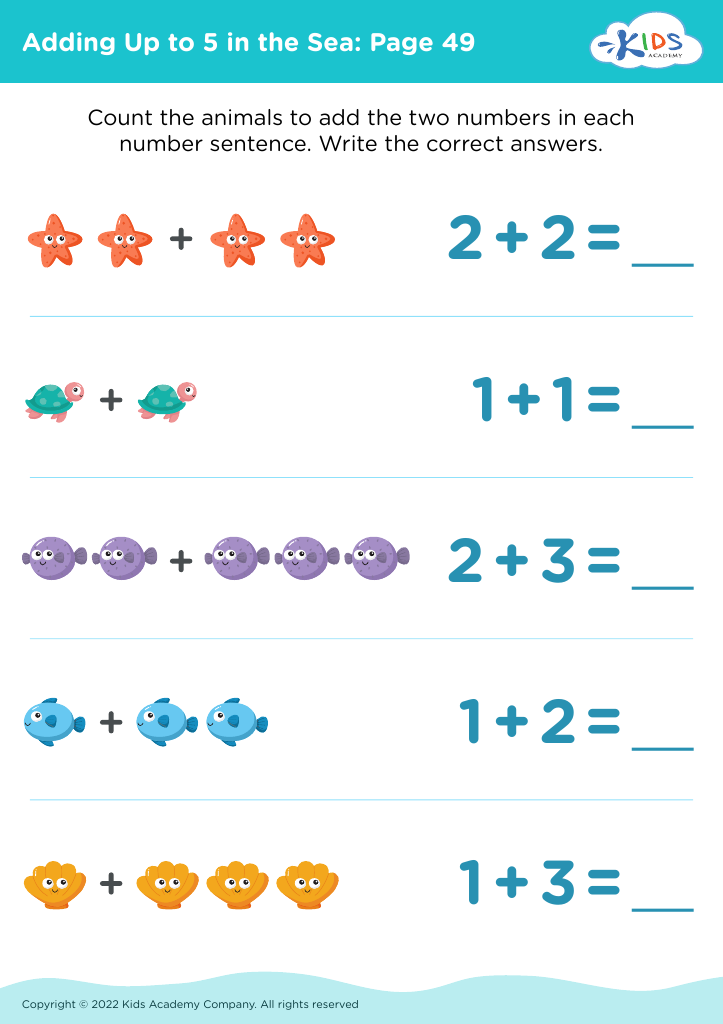








Understanding number values in early childhood is fundamental for a child's cognitive development and future academic success. For 5-year-olds, grasping basic math concepts equips them with essential skills that extend beyond the classroom. Here are a few compelling reasons why parents and teachers should prioritize this learning:
-
Foundational Skills: Numbers are the foundation of many other subjects and life skills. A firm understanding of number values sets the stage for more complex mathematical concepts, such as addition, subtraction, and beyond.
-
Critical Thinking: Interact with numbers enhances problem-solving and logical reasoning. Counting, comparing, and recognizing number patterns help children to develop critical analytical skills early on.
-
Everyday Applications: Recognizable number skills are used daily, from telling time to recognizing money, measuring ingredients, or determining distances. Developing an early comfort with numbers makes these everyday tasks less daunting.
-
Confidence Boost: Successfully understanding numbers instills a sense of achievement and builds self-confidence. This early success, in turn, fosters a positive attitude toward learning other challenging subjects.
-
Academic Preparedness: Mastery of number concepts aligns with early academic standards and sets the tone for future classroom success. It positions children well for formal schooling and conserves future learning time by building a solid knowledge base early on.
Overall, prioritizing number value comprehension at a young age isn't merely about math; it's about grounding children in skills that support holistic, lifelong learning and adaptability.








