Visual perception development Math Worksheets for 5-Year-Olds
3 filtered results
-
From - To
Enhance your child's visual perception skills with our engaging Math Worksheets designed specifically for 5-year-olds. These worksheets provide a fun and interactive approach to learning, helping your child improve their ability to recognize shapes, patterns, and spatial relationships. By incorporating visual perception exercises, young learners will build a strong foundation for future math skills while enjoying activities that stimulate critical thinking and problem-solving. Tailored to suit young minds, our worksheets make it easy for parents and educators to support children's development in a playful and productive manner. Explore our collection to nurture your child's learning journey today!
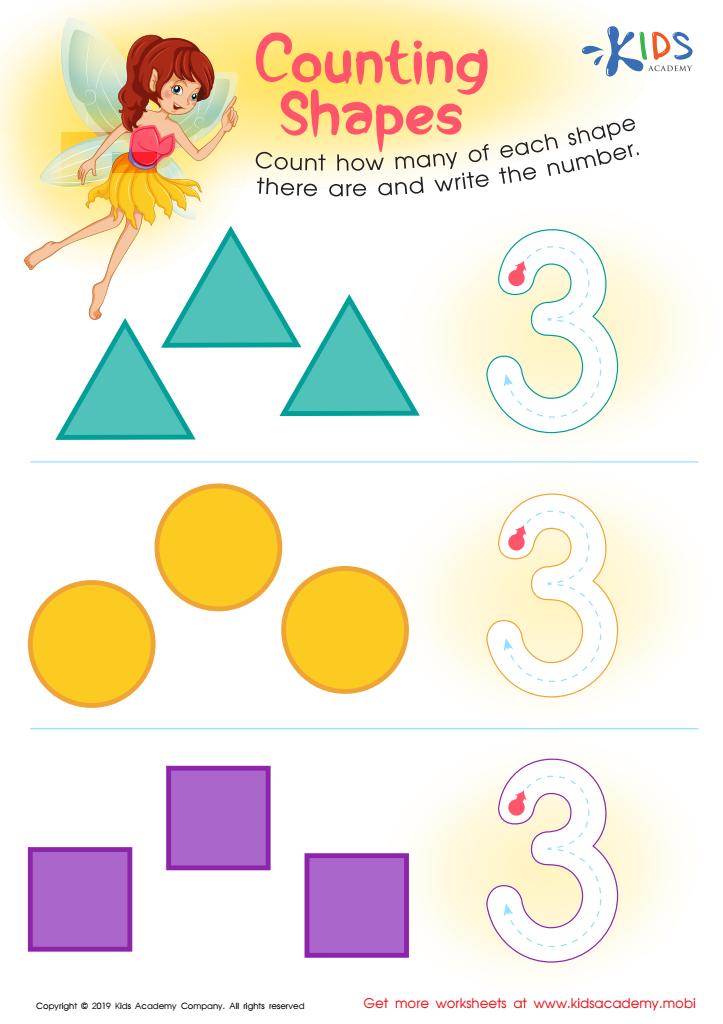
Counting Shapes Worksheet
 Assign to My Students
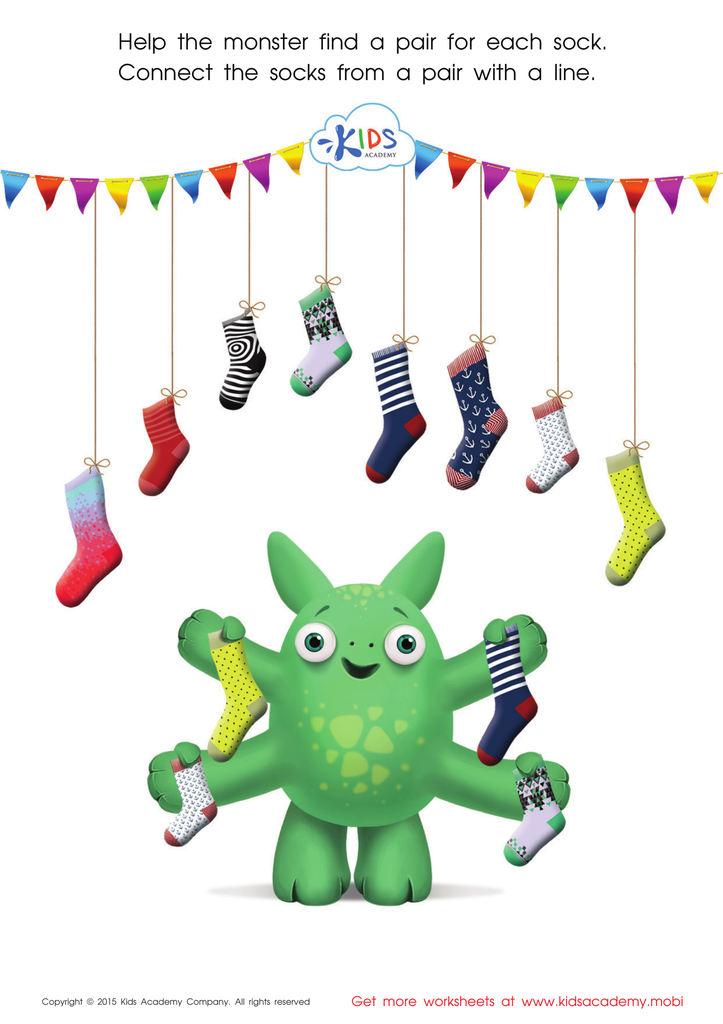
Math Matching Pairs Game: Monsterв's Socks Worksheet
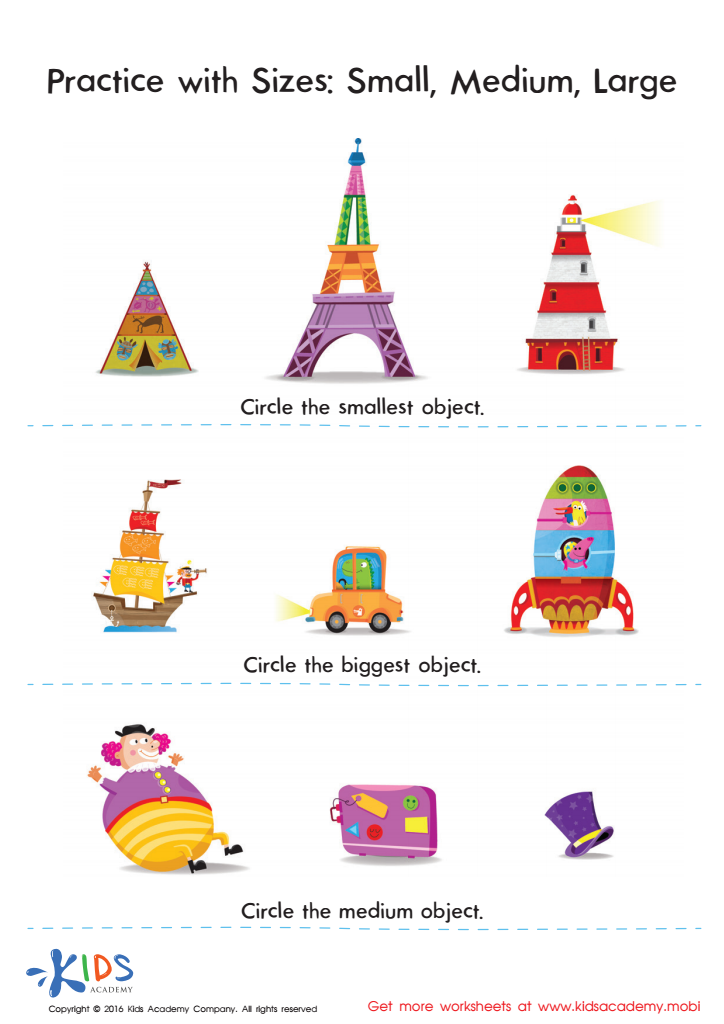








Visual perception development is crucial for 5-year-olds, especially in relation to math skills. At this age, children are building foundational skills that will impact their academic journey. Good visual perception helps children interpret visual information, which is essential for understanding mathematical concepts like shapes, sizes, patterns, and spatial relationships.
When parents and teachers nurture visual perception skills, they enable children to recognize numbers and count objects effectively. For instance, understanding how to differentiate between similar shapes or align objects in space directly influences a child's ability to solve math problems. Additionally, strong visual perception lays the groundwork for measuring, estimating, and predicting, all key components of mathematics.
Moreover, enhancing these skills supports overall cognitive development. Engaging activities like puzzles, block building, and pattern recognition exercises not only foster visual perception but also improve critical thinking and problem-solving skills.
Finally, early investment in visual perception creates confident learners. Children who are proficient in these skills are more likely to enjoy math and participate actively in problem-solving activities, paving the way for continued interest in learning throughout their education. Overall, nurturing visual perception skills in young children is an essential piece of their academic and personal growth.








