Counting skills Subtraction Worksheets for 5-Year-Olds
7 filtered results
-
From - To
Boost your child's early math skills with our engaging Counting Skills Subtraction Worksheets designed specifically for 5-year-olds! These fun, interactive worksheets help youngsters grasp the concept of subtraction through colorful visuals and relatable scenarios. Each activity promotes counting practice, encouraging kids to subtract using hands-on methods. Our materials are tailored to enhance their learning experience, making math enjoyable and accessible. Perfect for home or classroom use, these worksheets foster essential problem-solving abilities while building confidence in young learners. Dive into a world of math fun and support your child’s journey towards mastering subtraction with our thoughtfully crafted resources!
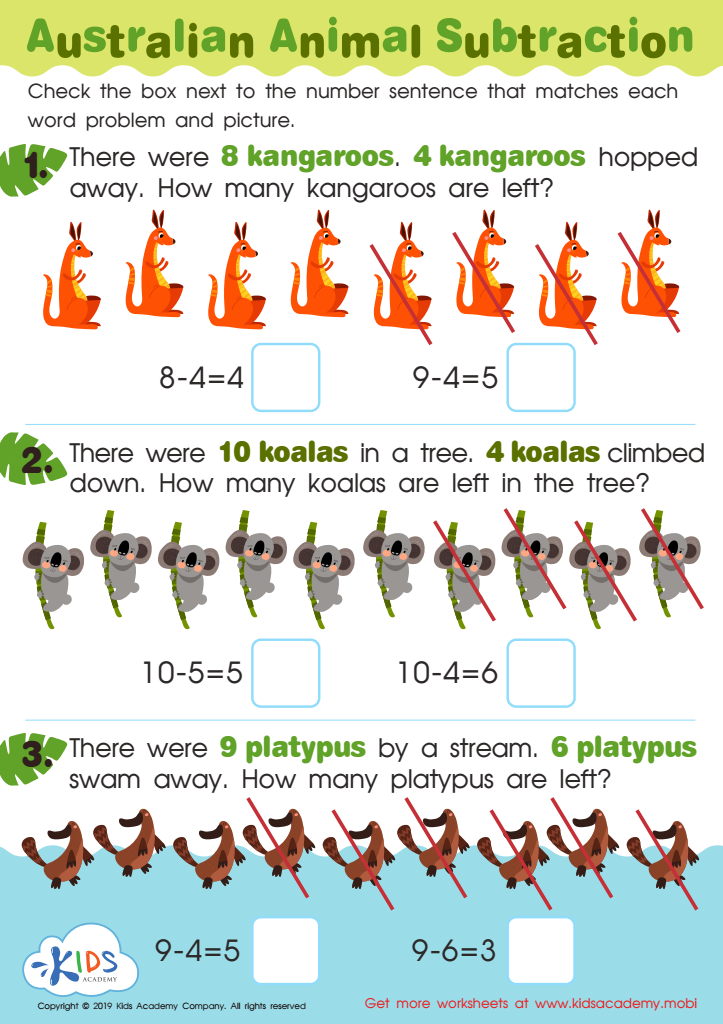
Australian Animal Subtraction Worksheet
 Assign to My Students
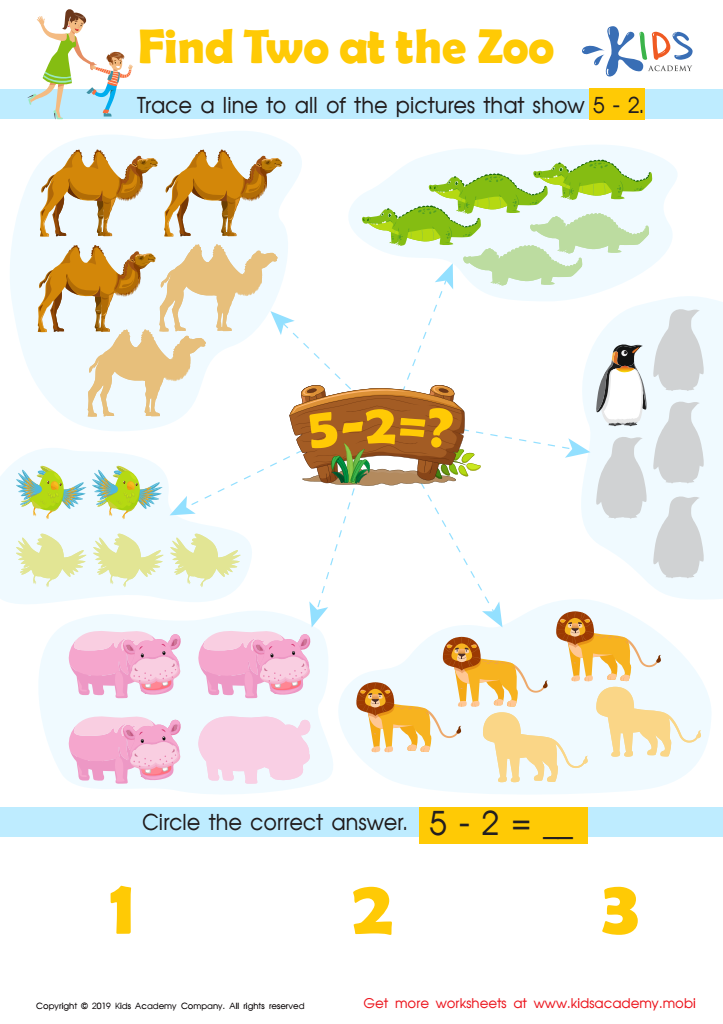
Find Two at the Zoo Worksheet
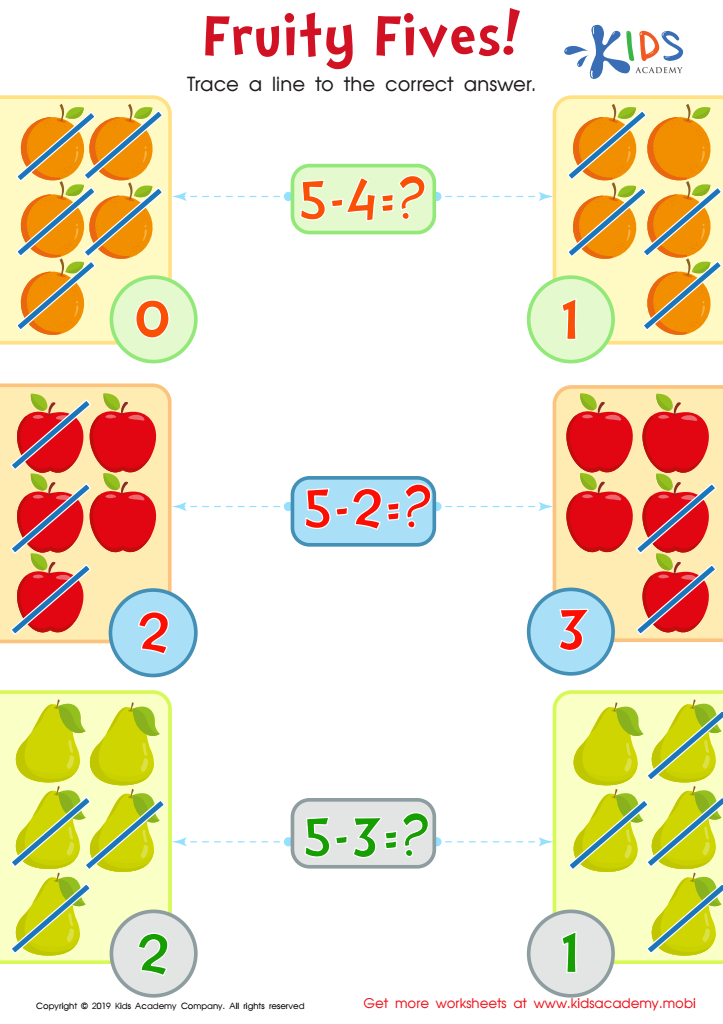
Fruity Fives! Worksheet
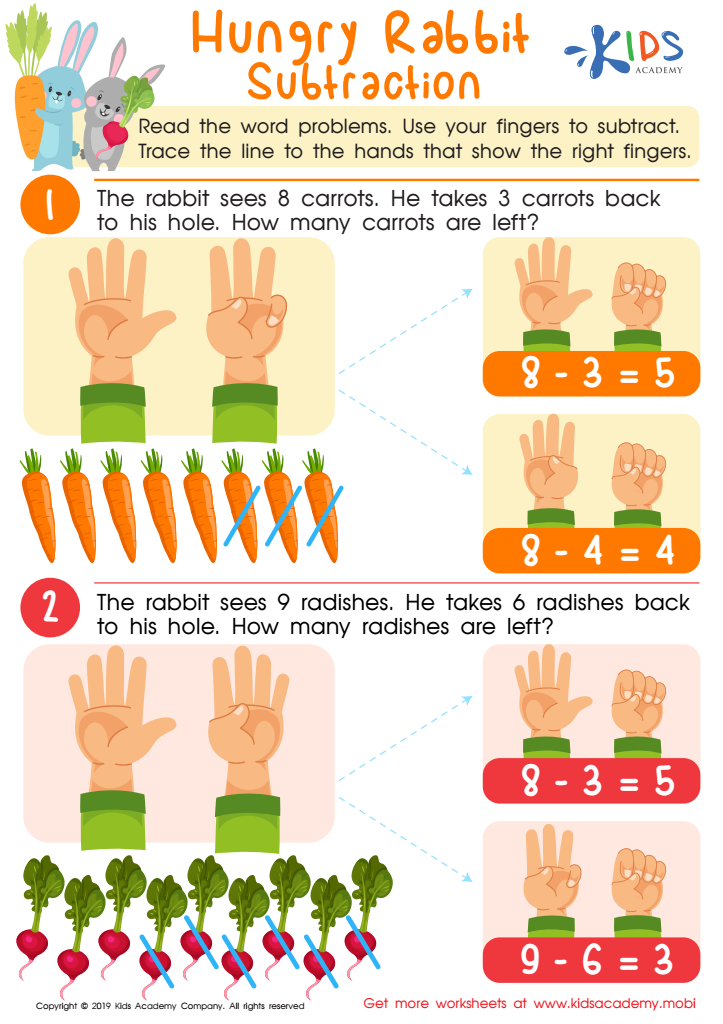
Hungry Rabbit Subtraction Worksheet
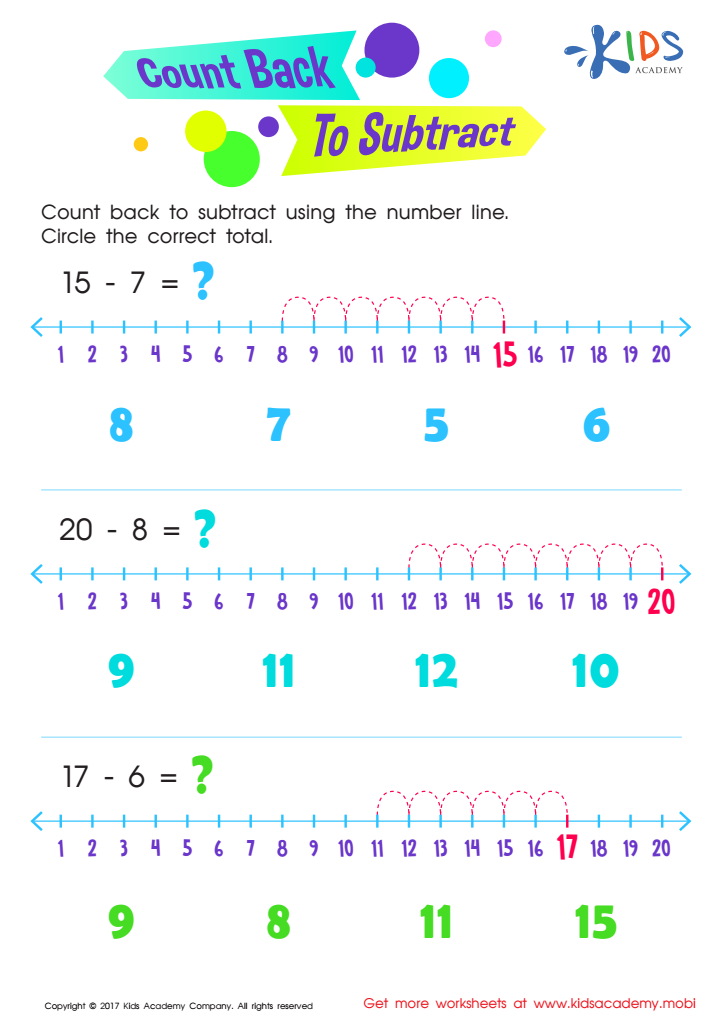
Count Back to Subtract Substraction Worksheet
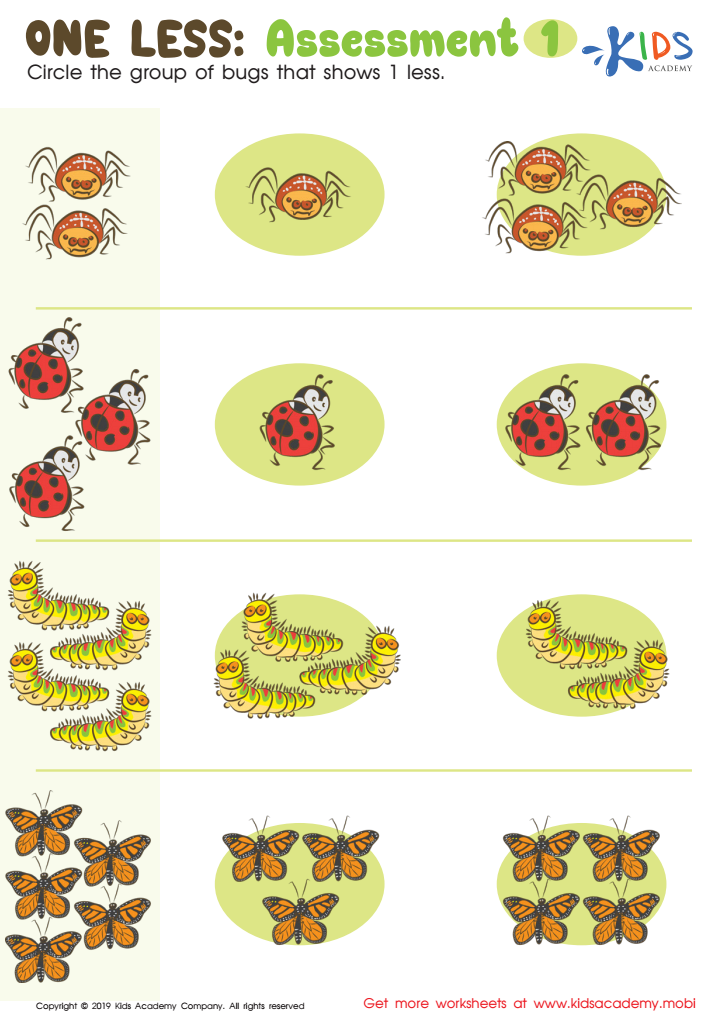
One Less: Assessment 1 Worksheet
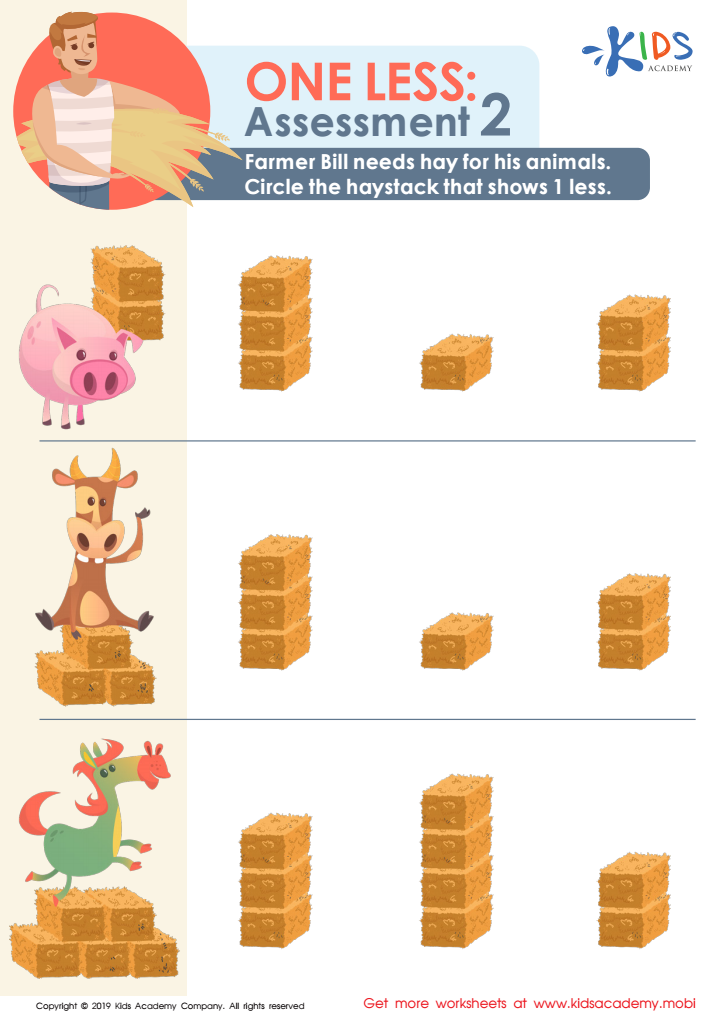
One Less: Assessment 2 Worksheet







.jpg)
Counting skills and subtraction are foundational math concepts that are essential for 5-year-olds, forming the bedrock of their mathematical understanding. Parents and teachers should pay close attention to these skills for several reasons.
Firstly, counting forms the basis of all mathematical operations. It enhances a child’s ability to recognize numbers, develop one-to-one correspondence, and understand quantity, which are critical for everyday problem-solving. These skills also boost confidence and encourage a positive attitude towards math.
Subtraction specifically introduces the concept of taking away, which is fundamental to understanding more complex arithmetic later. At this age, children learn to visualize and manipulate objects to grasp the idea of removing items from a group, aiding comprehension and retention.
Moreover, mastering these skills promotes cognitive development, enhances logical thinking, and fosters critical reasoning. As children practice counting and subtraction through engaging activities, they develop a strong foundation for future learning, enabling them to tackle more challenging concepts in mathematics.
Investing time in fostering these skills sets children up for academic success, supports their social development through cooperative play, and equips them with problem-solving abilities that transcend mathematics and are applicable in real-life situations. Ultimately, these skills contribute to their overall growth and confidence in learning.








