Story analysis Reading Fiction Worksheets for 5-Year-Olds
4 filtered results
-
From - To
Unlock your child's imagination with our engaging Story Analysis Reading Fiction Worksheets for 5-Year-Olds! Designed to enhance comprehension skills, these colorful worksheets guide young learners through the foundations of storytelling. Each activity encourages kids to identify characters, settings, and main events, fostering critical thinking and creativity. By analyzing stories they love, children build connections and enhance their vocabulary. Our worksheets are perfect for at-home learning or classroom activities, ensuring a fun and educational experience. Empower your little ones to become confident readers and storytellers as they explore the world of fiction. Dive into the adventure of reading and watch their skills soar!
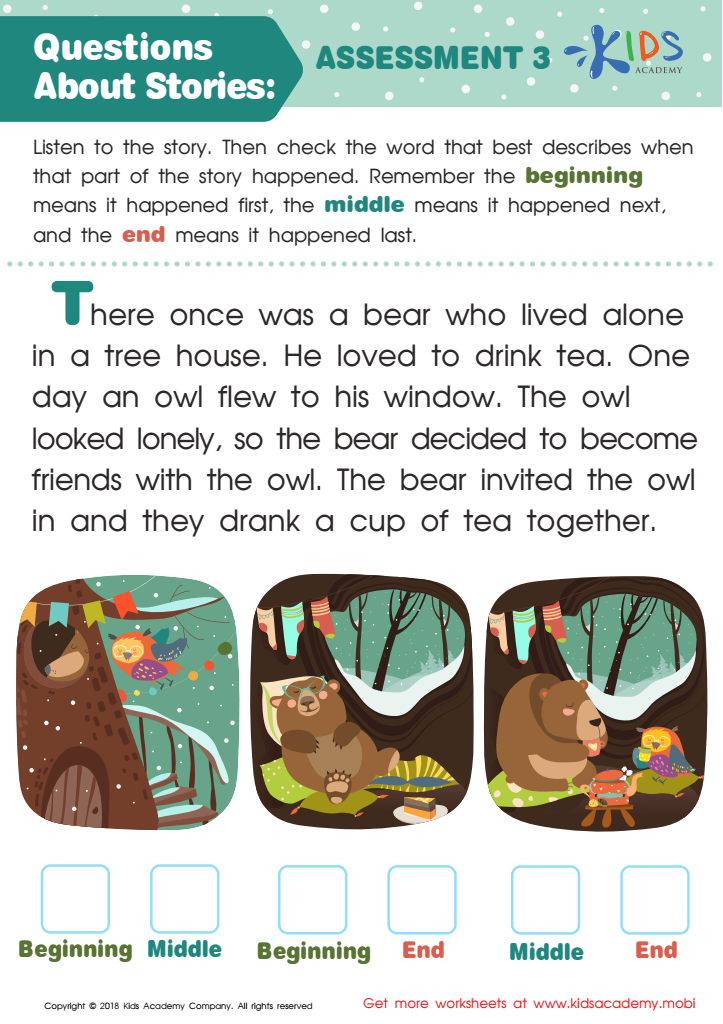
Questions About Stories: Assessment 3 Worksheet
 Assign to My Students
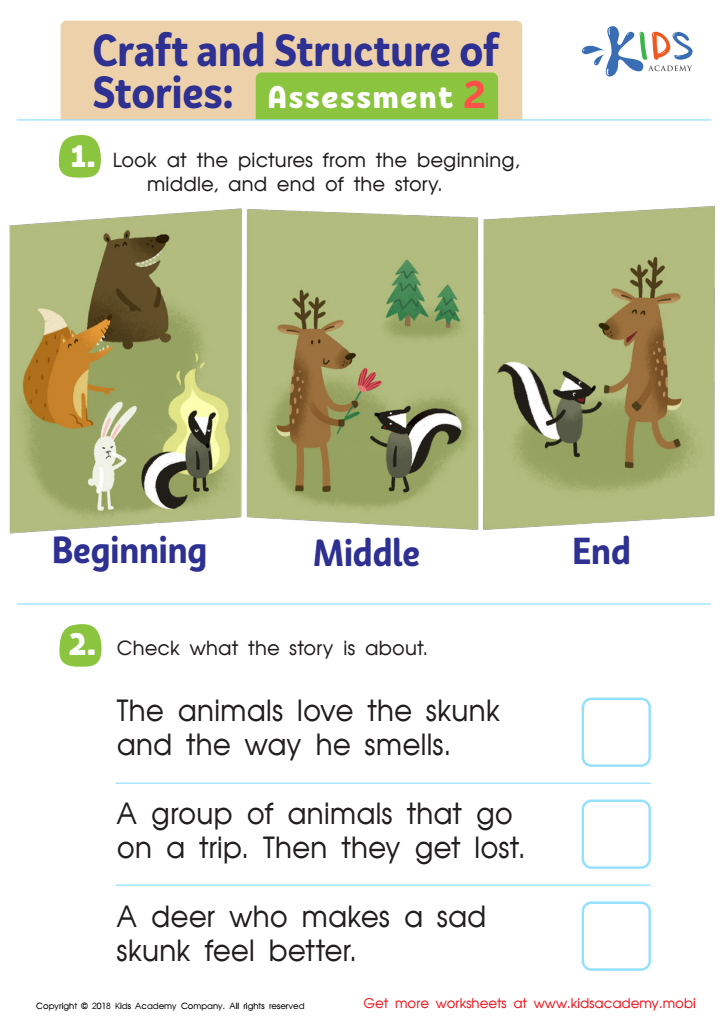
Craft and Structure of Stories: Assessment 2 Worksheet
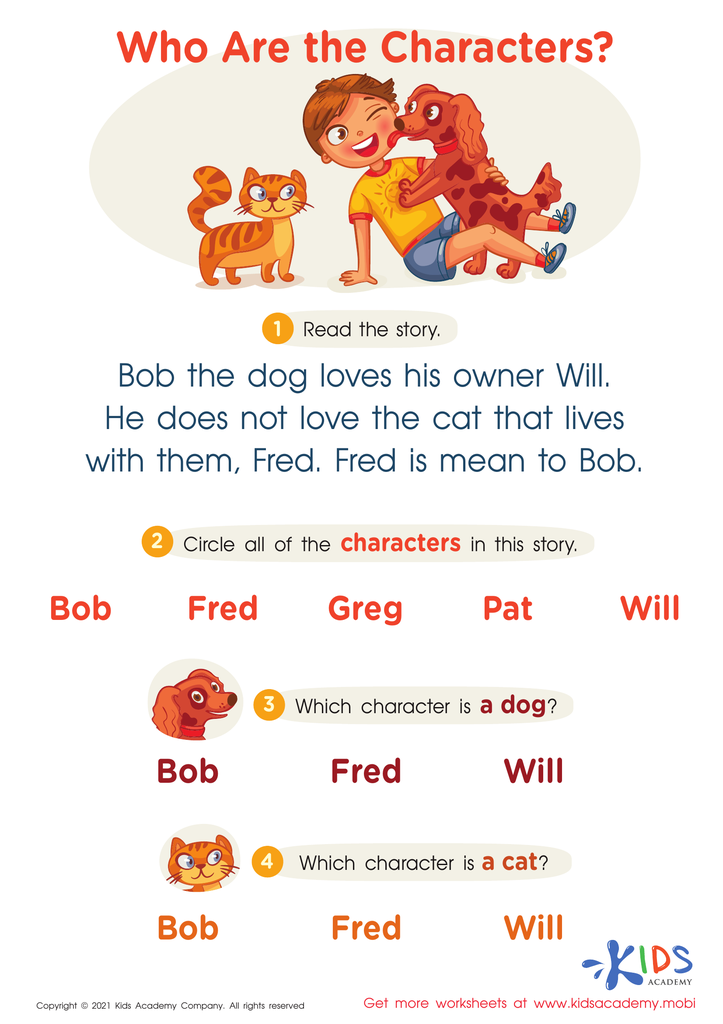
Who Are the Characters? Worksheet
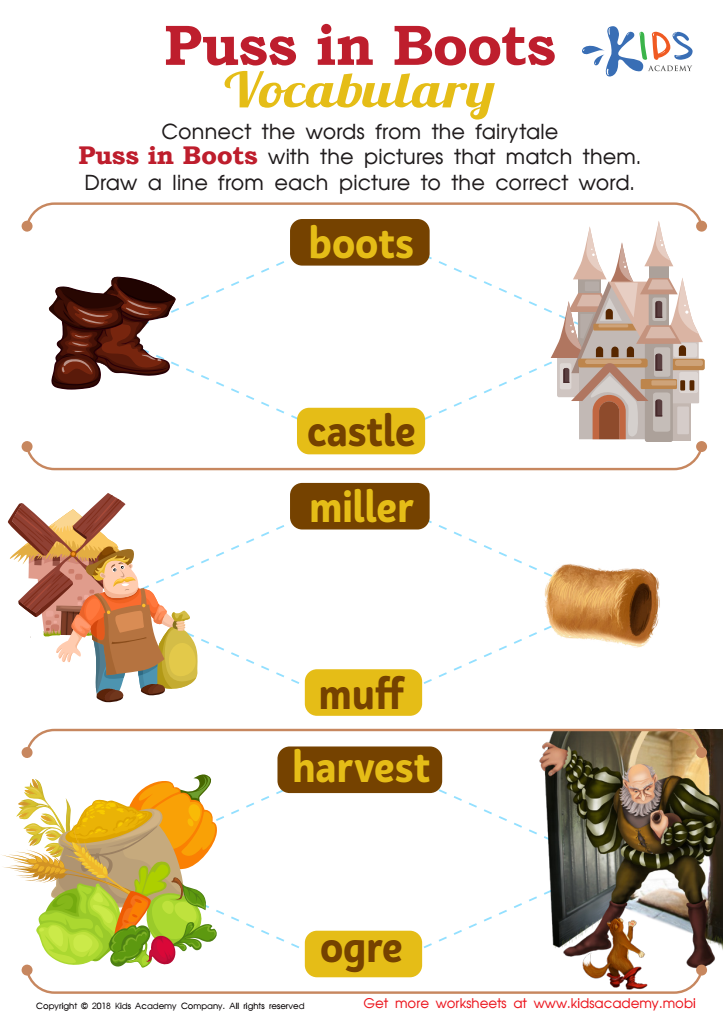
Puss in Boots Vocabulary Worksheet








Story analysis in reading fiction is crucial for 5-year-olds as it fosters essential cognitive and emotional development. At this age, children are like sponges, absorbing information and learning how to interpret the world. Engaging them in story analysis encourages critical thinking and comprehension skills, as they learn to make connections between characters, events, and moral lessons.
Parents and teachers should care about this process as it lays a foundation for literacy skills. Discussing plot points, character motivations, and outcomes helps develop vocabulary and language structure, vital for effective communication. Furthermore, story analysis promotes empathy, as children learn to understand different perspectives through diverse characters and narratives.
Moreover, this practice supports social-emotional growth, allowing children to navigate their feelings and relate to others' experiences. It also encourages imagination and creativity, inspiring them to create their own stories.
By engaging in story analysis, parents and teachers can cultivate a love for reading and a deeper understanding of texts, preparing young learners for academic success and lifelong learning. Emphasizing this skill builds a strong foundation for future literacy endeavors and helps children develop critical life skills.








