
Vocabulary development Reading Fiction Worksheets for 5-Year-Olds
4 filtered results
Difficulty Level
Grade
Age
-
From - To
Subject
Activity
Standards
Boost your child's language skills with our "Vocabulary Development Reading Fiction Worksheets for 5-Year-Olds”! These engaging worksheets are designed to enhance your kindergartener's vocabulary through fun and captivating stories. Each worksheet incorporates captivating fictional tales alongside interactive activities, helping young readers grasp new words and phrases effortlessly. Ideal for both classroom use and home practice, these resources support literacy development and promote a love for reading. With vibrant illustrations and engaging content, our worksheets are crafted to turn every learning session into an adventure. Help your child unlock the magic of words today!
Favorites
With answer key
Interactive
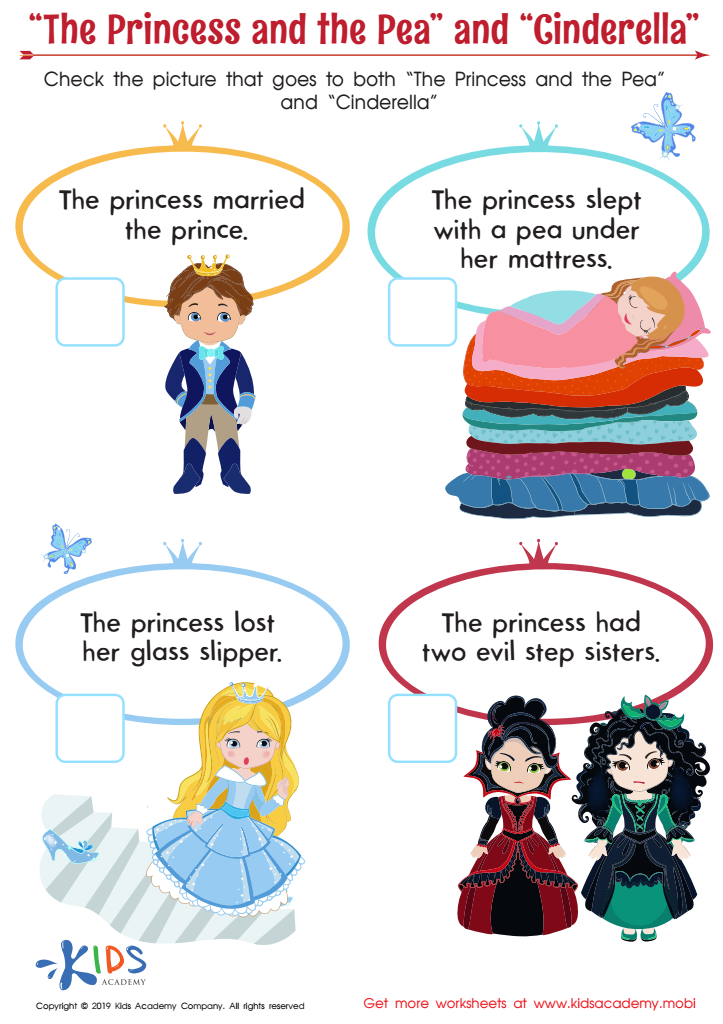
“The Princess and the Pea” and “Cinderella” Worksheet
Read "Cinderella" and "The Princess and the Pea" to your little ones. Ask them what their favorite parts were and what similarities they found in the princesses. This worksheet has four pictures of scenes from the stories. Ask your kids which picture goes with both tales.
 Assign to My Students
“The Princess and the Pea” and “Cinderella” Worksheet
Worksheet
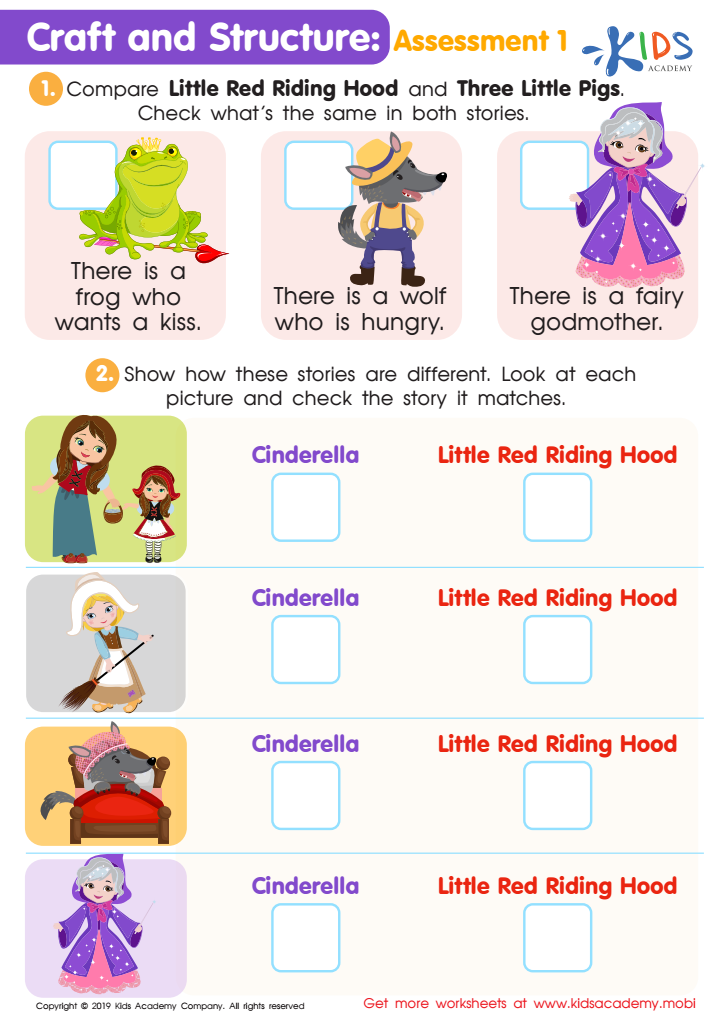
Craft and Structure: Assessment 1 Worksheet
Fairytales are a great way to bond with your kids while teaching them. Popular stories include Little Red Riding Hood and Three Little Pigs. Test how well they understood these two with this assessment worksheet. Ask them to compare the two stories and check what is the same. Doing this will help kids learn new words and sentence construction, as well as teaching them life lessons.
Craft and Structure: Assessment 1 Worksheet
Worksheet
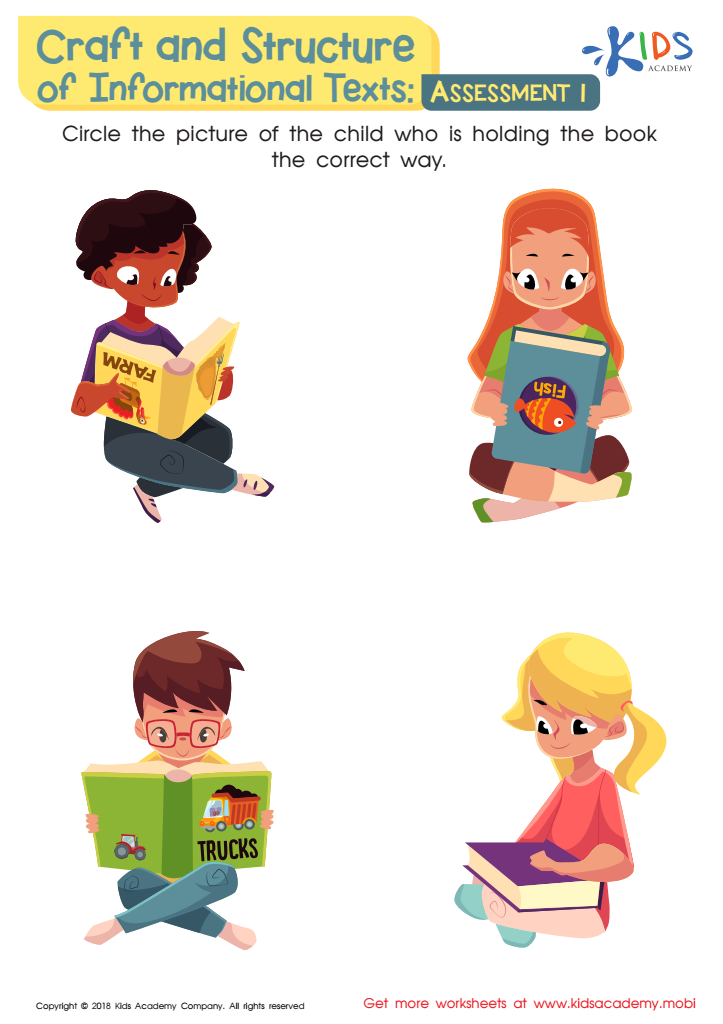
Craft and Structure of Informational Texts: Assessment 1 Worksheet
Young children need to know how to hold books correctly when they start reading. This assessment worksheet helps them show they know what to do. They'll look at the pictures and circle the child who is holding the book correctly. It's a great way to tell they are well on their way to becoming lifetime readers!
Craft and Structure of Informational Texts: Assessment 1 Worksheet
Worksheet
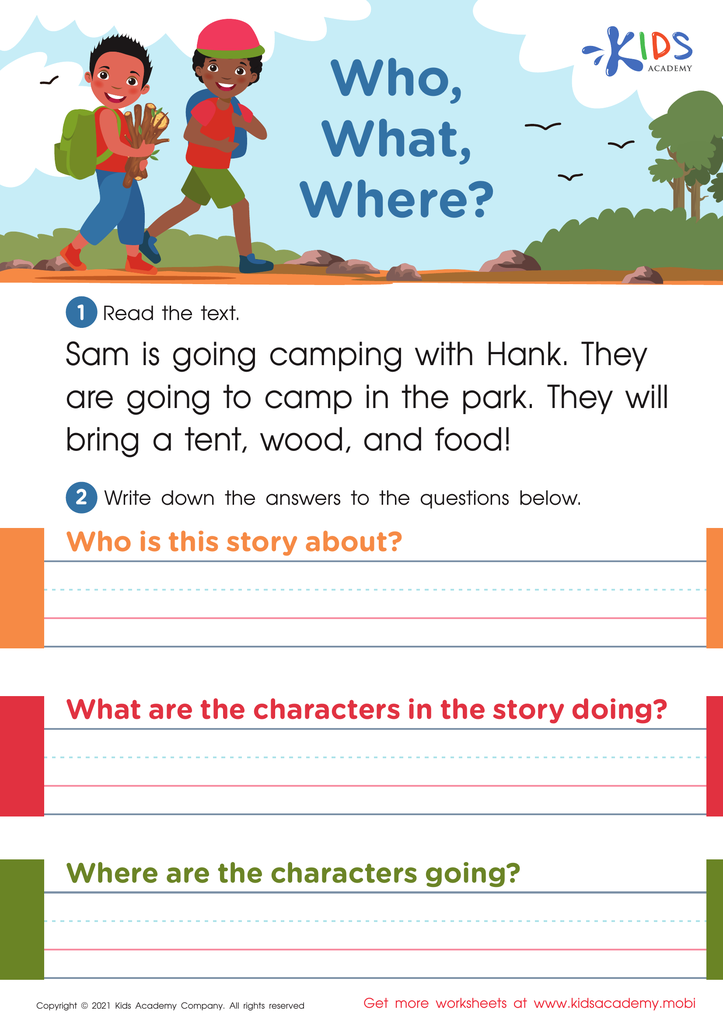
Who, What, Where? Worksheet
The availability of technology has changed the way students learn and interact with their environment in a very meaningful way.
Technology has revolutionized learning and interaction for students. It offers an array of opportunities to engage with their surroundings, leading to a more meaningful educational experience.
Who, What, Where? Worksheet
Worksheet
Join Kids Academy for Free
Who is primarily going to use this learning content?








Engaging 5-year-olds in reading fiction can significantly boost their vocabulary development, a crucial aspect of early literacy that lays the foundation for future academic success. When children encounter diverse and enriched language through stories, they not only learn new words but also understand how those words fit into different contexts. Fiction introduces kids to complex sentence structures and descriptive language that they might not hear in everyday conversation.
At this age, children's brains are particularly receptive to picking up new information, making it an optimal time for vocabulary expansion. Reading books filled with vivid imagery and varied language helps kids grasp abstract concepts, improve their ability to communicate, and stimulates cognitive development.
Moreover, reading fiction enhances listening skills, attention span, and imagination. Interaction between parent/teacher and child during reading sessions creates bonding moments that make learning enjoyable, turning it into a shared adventure. As children express thoughts about stories, they practice using new words and language patterns—solidifying their understanding further.
Ultimately, a robust vocabulary gained through reading fiction doesn’t just aid in reading proficiency itself but also improves understanding in other subjects. An expanded vocabulary enables children to better comprehend instructions, questions, and eventually, more complex texts as they grow. Investing in their vocabulary at a young age pays off throughout their educational journey.








