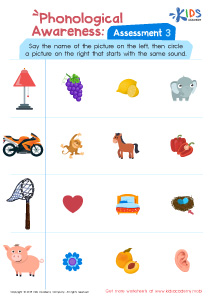
Phonics Skills Beginning Sounds Worksheets for Ages 6-9
4 filtered results
-
From - To
Discover our engaging "Phonics Skills Beginning Sounds Worksheets" designed for children aged 6-9. These worksheets are perfect for reinforcing foundational literacy skills by focusing on identifying beginning sounds in words. Each activity encourages learners to match pictures with the corresponding starting letters, fostering phonemic awareness and vocabulary development. Ideal for both classroom and home use, these resources make learning joyful and interactive. Our thoughtfully crafted worksheets cater to various learning styles, ensuring a comprehensive understanding of phonics. Enhance your child’s reading readiness and confidence while making phonics practice fun and effective! Explore our collection and watch your child thrive in their literacy journey.
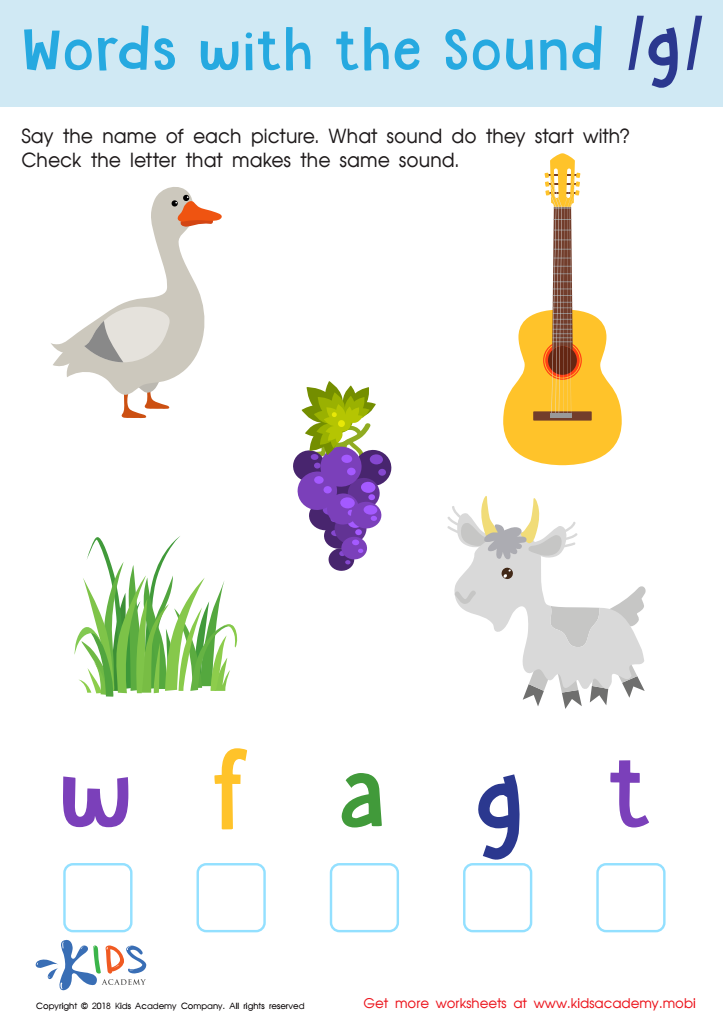
Words with sound g Reading Worksheet
 Assign to My Students
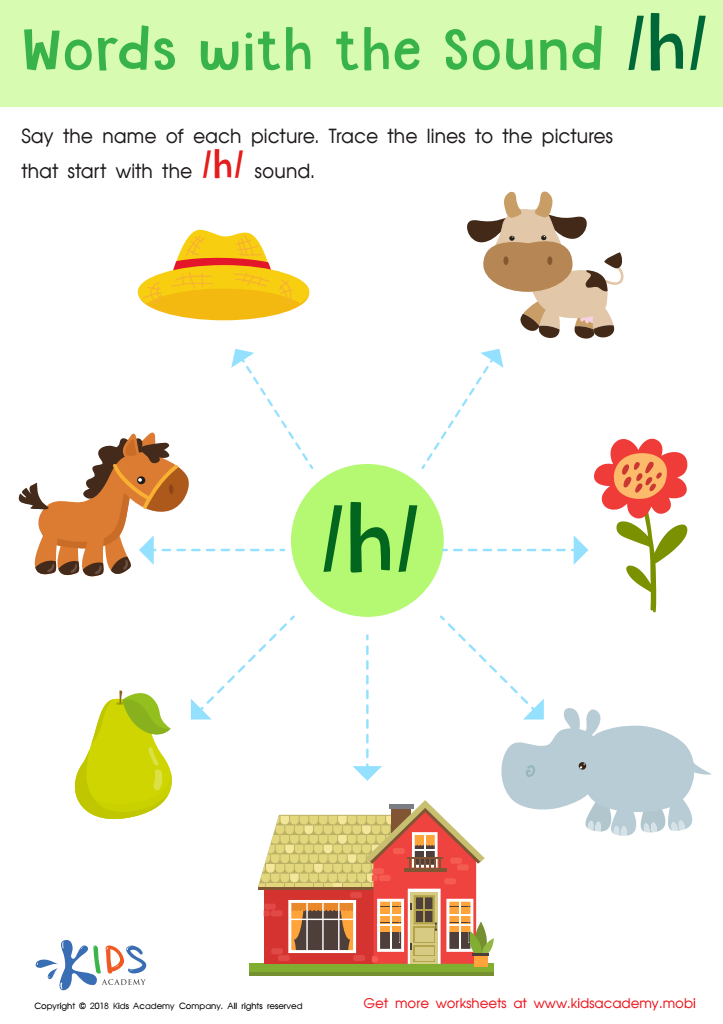
Words with sound h Reading Worksheet
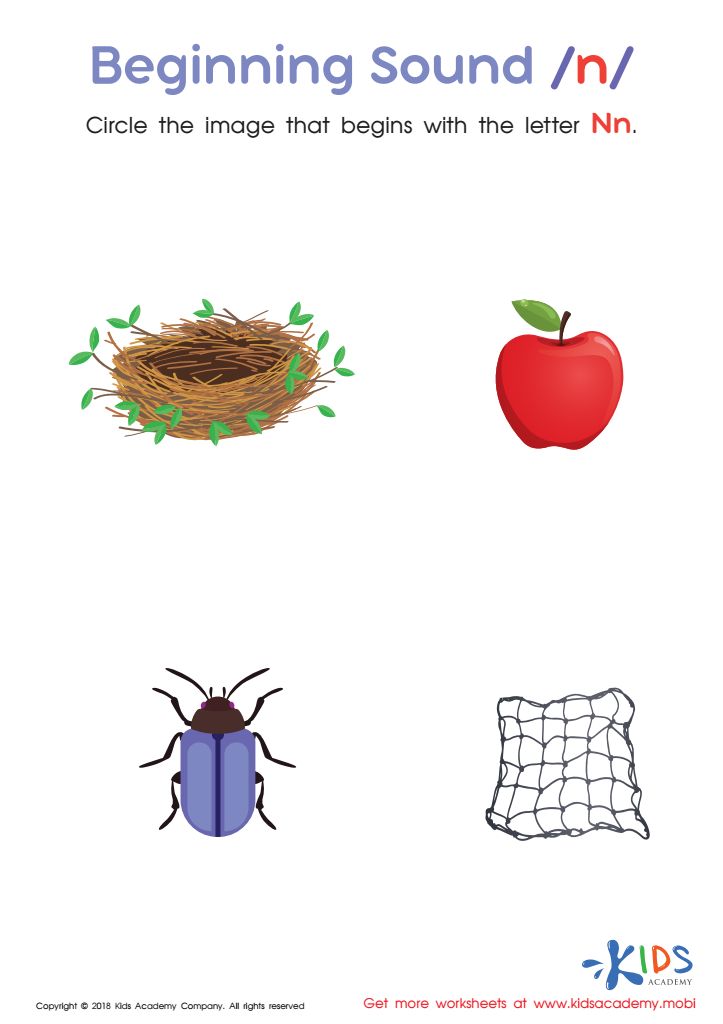
Beginning Sound «n» Worksheet
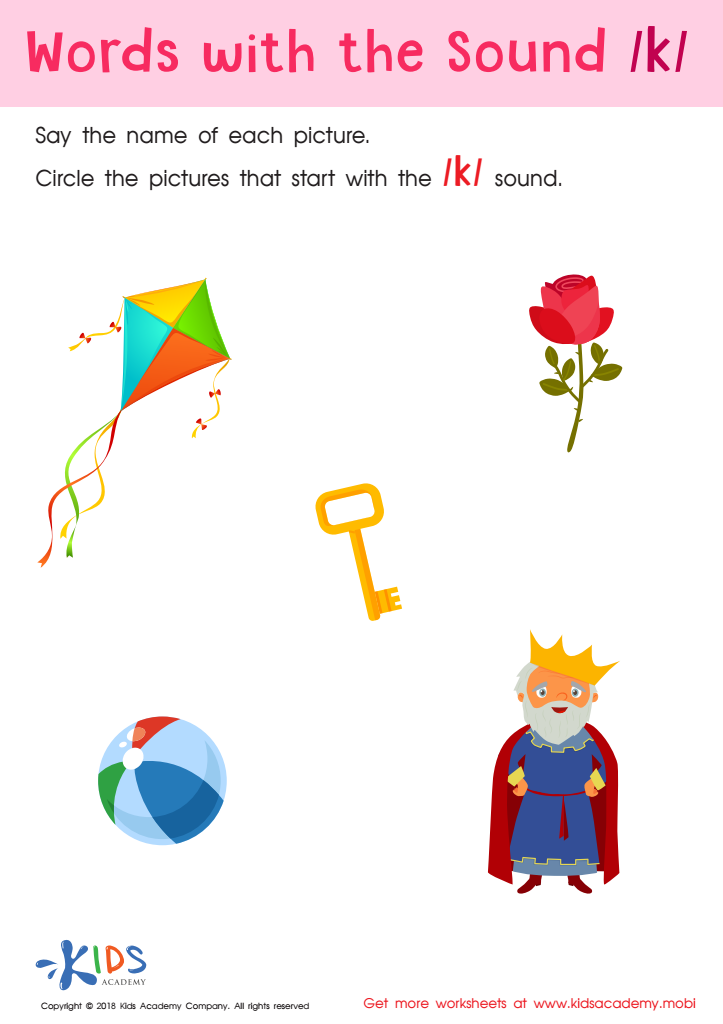
Words with sound k Reading Worksheet








Phonics skills, particularly focusing on beginning sounds, are crucial for children aged 6-9 as they lay the foundation for reading development. At this age, children are transitioning from simple phonemic awareness to more complex reading tasks. Understanding beginning sounds helps children decode words, recognize familiar words quickly, and develop spelling proficiency.
When parents and teachers emphasize these skills, they enhance children's ability to segment words, a vital skill for both reading and writing. Detecting beginning sounds helps children to read unfamiliar words through phonetic strategies, fostering their confidence as emerging readers.
Moreover, mastering phonics contributes to overall literacy development, enabling children to comprehend texts more efficiently. This is particularly important for building vocabulary and enhancing communication skills, which are essential for success in both academic settings and daily life.
Fostering phonics skills also makes learning more engaging for children. Fun activities that focus on sounds, like rhyming games or sound-matching exercises, instill a love of language. By prioritizing phonics beginning sounds, caregivers support children not just in reading, but in developing critical thinking and problem-solving capabilities that last a lifetime. Thus, investing time and effort in these skills benefits both children and their educators significantly.