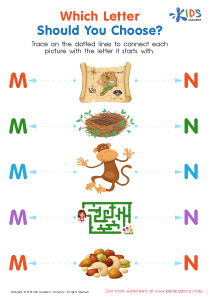
Alphabet sequencing Lowercase/Small Letters Worksheets for Ages 6-9
3 filtered results
-
From - To
Explore our engaging "Alphabet Sequencing Lowercase/Small Letters Worksheets" designed for ages 6-9! These printable activities empower young learners to master letter recognition and sequencing through fun exercises. Each worksheet features colorful visuals and interactive tasks that encourage kids to arrange lowercase letters in the correct order while enhancing their understanding of the alphabet. Perfect for in-home learning or in-class activities, these worksheets help develop fine motor skills and boost confidence. Foster a love for reading and writing while your child enjoys hours of educational fun! Start your journey toward alphabet mastery today!
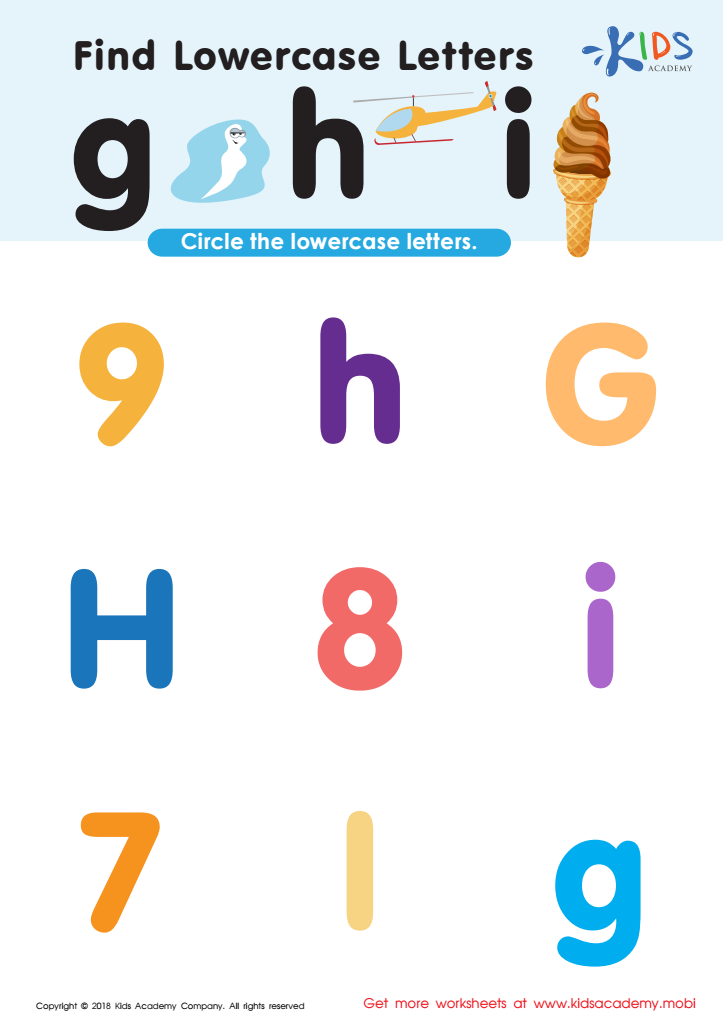
Find Lowercase Letters g h i Worksheet
 Assign to My Students
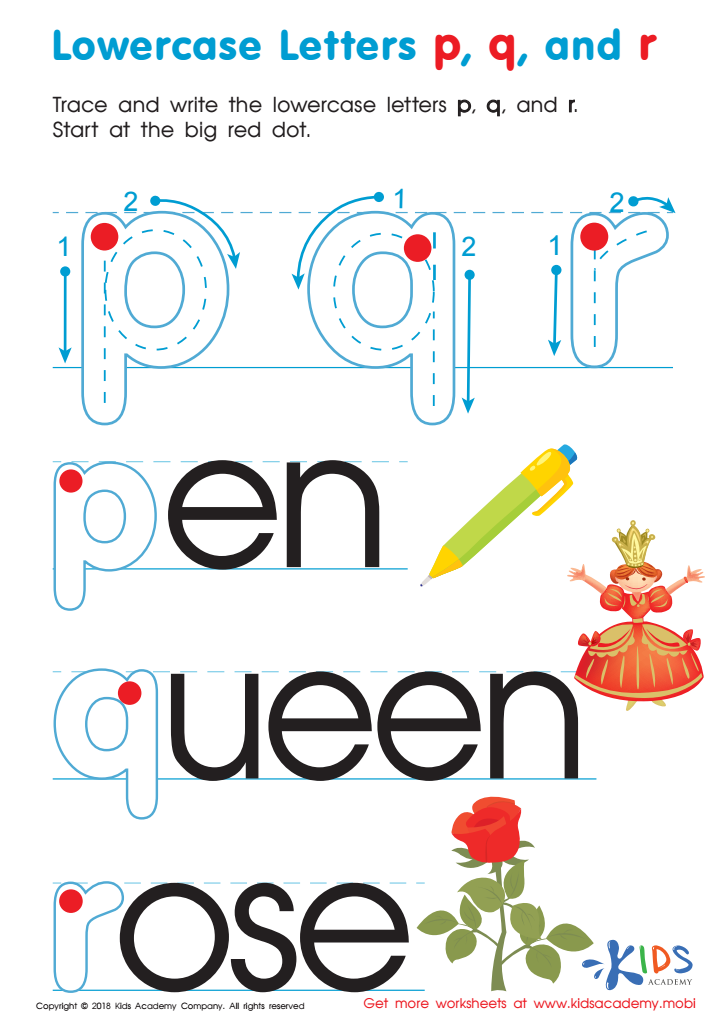
Lowercase Letters p q r Worksheet
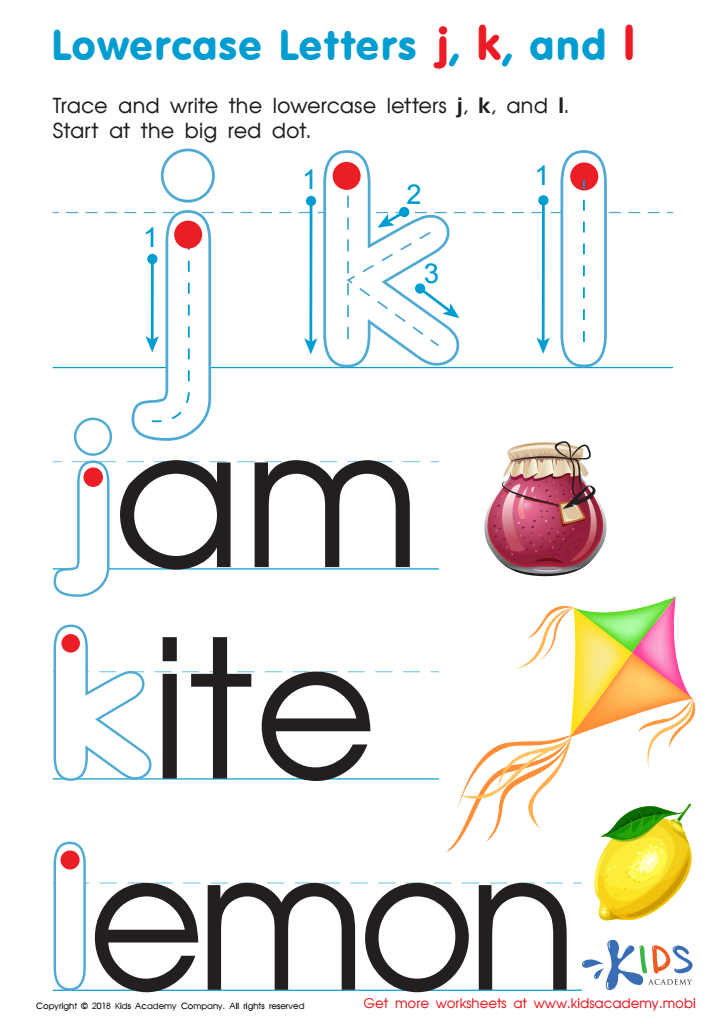
Lowercase Letters j k l Worksheet


Alphabet sequencing of lowercase letters is crucial for children aged 6-9, as it lays the foundation for reading and writing skills. Understanding the proper order of letters not only aids in phonics and spelling but also enhances children's ability to decipher and organize information. At this age, children are developing their grasp of language and literacy, and integrating lowercase letters into their learning is essential since this form is commonly used in everyday writing.
Teachers and parents should prioritize alphabet sequencing as it encourages cognitive development and improves fine motor skills necessary for writing. When children learn to recognize and sequence the alphabet, they can improve their word recognition, which is vital for fluent reading. Moreover, children often encounter words, titles, and lists that require efficient navigation of lowercase letters; knowing their sequence helps instill confidence in their literacy abilities.
Furthermore, consistent practice with letter sequencing fosters routines in academic settings, making learning systematic and engaging. Ultimately, predeterminate exposure to lowercase letter sequencing will create a strong literacy framework, equipping children with the skills necessary for academic success and everyday communication in their formative years.