Rhyming skills Rhyming Worksheets for Ages 6-9
3 filtered results
-
From - To
Unlock the joy of learning with our Rhyming Skills Worksheets designed for children aged 6-9! These engaging activities help young learners explore the world of rhymes, enhancing their phonemic awareness and vocabulary. Through colorful illustrations and fun exercises, students will identify rhyming words, complete rhyming puzzles, and practice sound recognition. Our worksheets are perfect for reinforcing classroom lessons or for use at home, making learning a delightful and interactive experience. Enhance your child’s reading skills while nurturing their creativity. Discover the magic of rhymes and empower your child’s literacy journey today with our thoughtfully crafted resources!
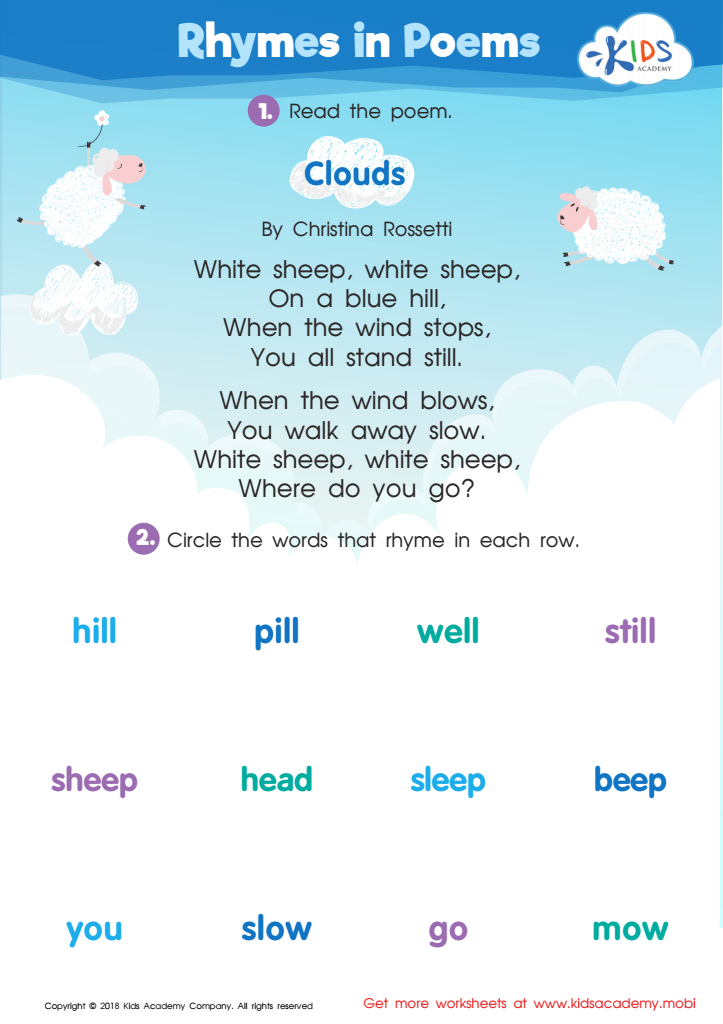
Rhymes in Poems Worksheet
 Assign to My Students
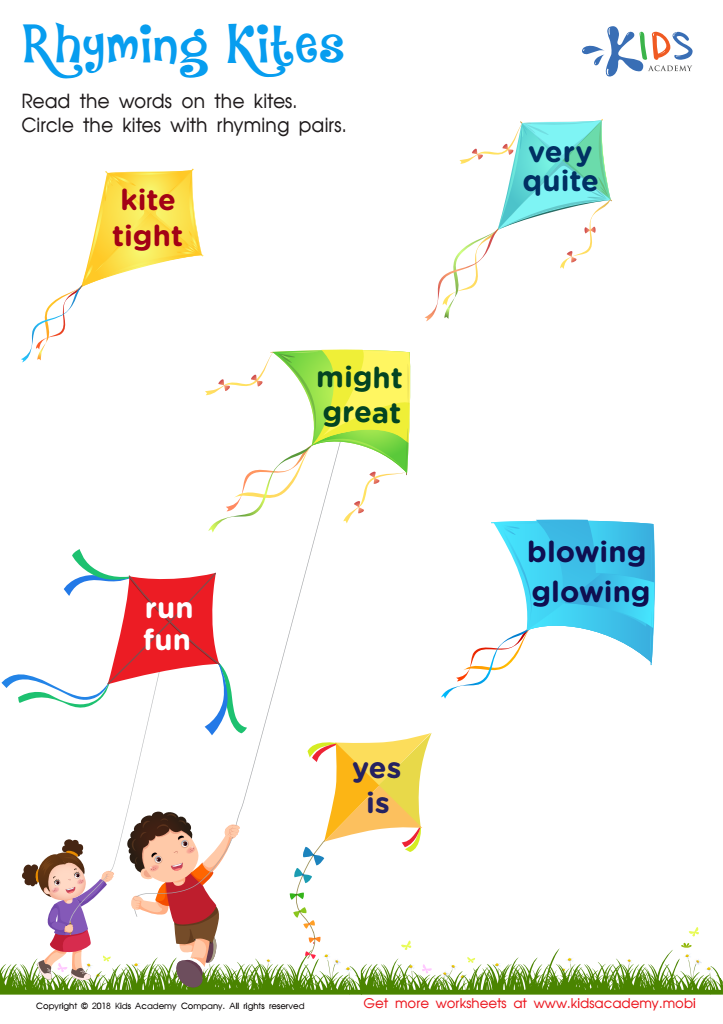
Rhyming Kites Worksheet
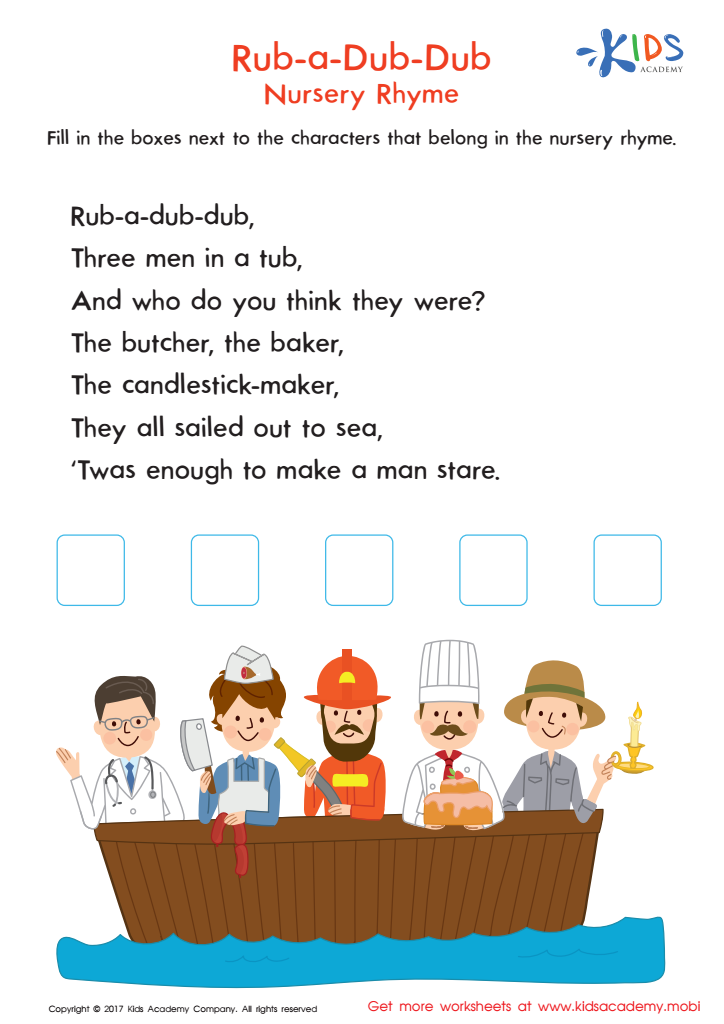
Rub a Dub Dub Printable








Rhyming skills are crucial for children aged 6-9 as they contribute significantly to language development and literacy. At this age, children are developing phonemic awareness, which is the ability to recognize and manipulate the sounds in words. Rhyming helps kids become attuned to similar sounds, making it easier for them to decode words while reading. It builds their vocabulary since they actively engage with language, discovering how words can sound alike while having different meanings.
Furthermore, rhyming promotes memory retention. Children often remember rhyming phrases, which aids in memorization and recall, important for spelling and reading comprehension. When kids experience and enjoy rhyming through songs, poems, and stories, they also develop a love for language and literature, fostering a lifelong interest in reading.
As social and emotional skills grow, rhyming activities can foster cooperation and communication among peers, encouraging collaboration during games and learning sessions. Thus, parents and teachers should prioritize rhyming activities in their teaching strategies, recognizing that rhyming is not just a fun activity—it’s an essential building block for children’s academic success and overall development.







