Vocabulary expansion Rhyming Worksheets for Ages 6-9
5 filtered results
-
From - To
Enhance your child's vocabulary and phonetic skills with our fun-filled Rhyming Worksheets, specifically designed for ages 6-9! These worksheets provide engaging activities that make learning vocabulary enjoyable, fostering both creativity and language development. Children will explore rhyme patterns, identify word families, and build their vocabulary through exciting exercises tailored to their developmental needs. Our meticulously crafted worksheets encourage critical thinking and creativity, all while supporting essential literacy skills. Perfect for classroom or home use, these rhyming activities promote a love for words and boost confidence in young learners. Download now and watch your child's vocabulary thrive through the power of rhyme!
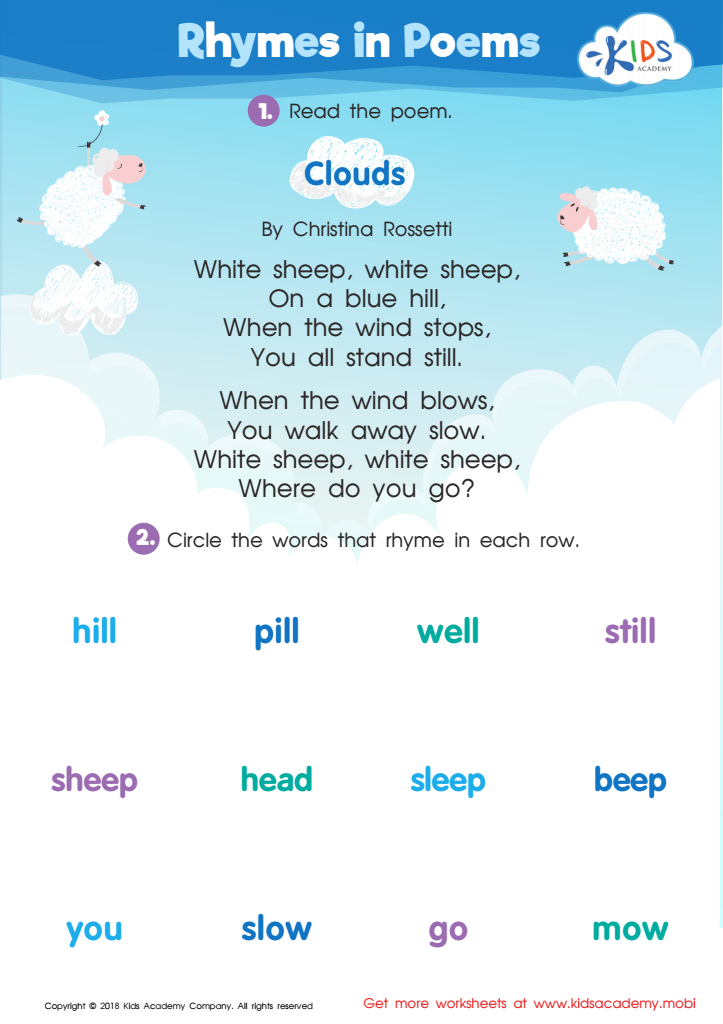
Rhymes in Poems Worksheet
 Assign to My Students
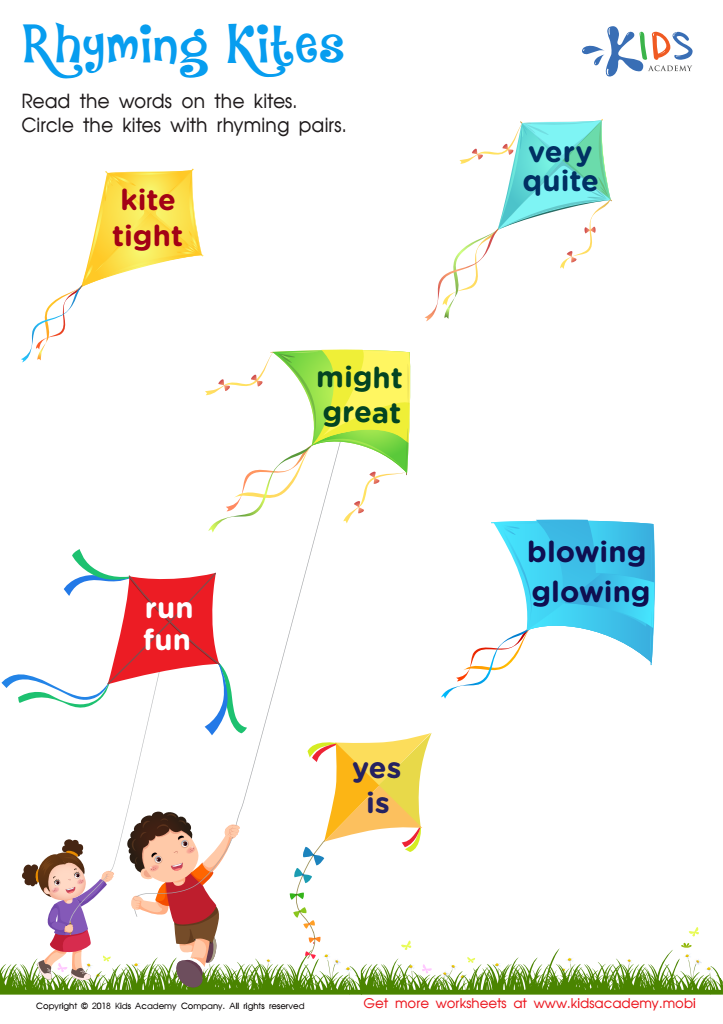
Rhyming Kites Worksheet
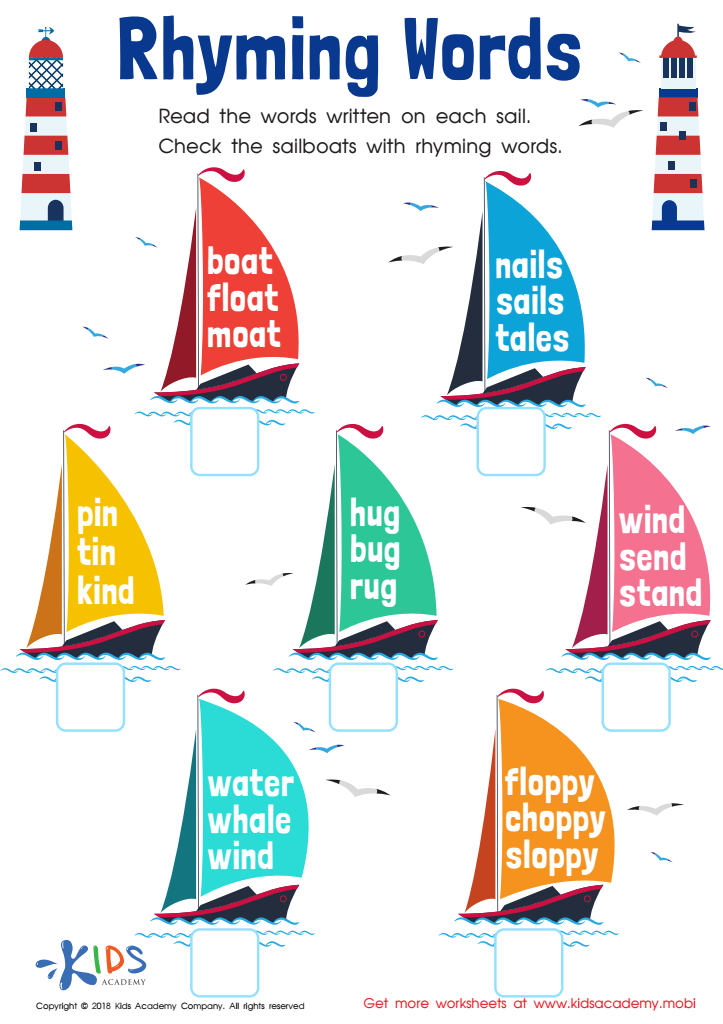
Rhyming Words Worksheet
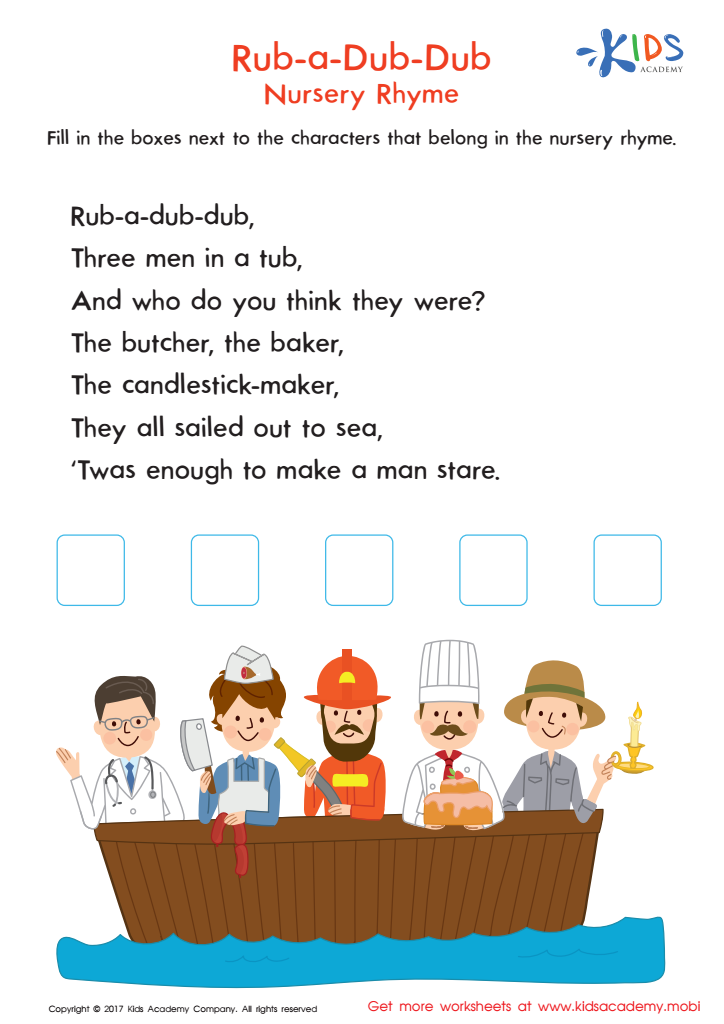
Rub a Dub Dub Printable
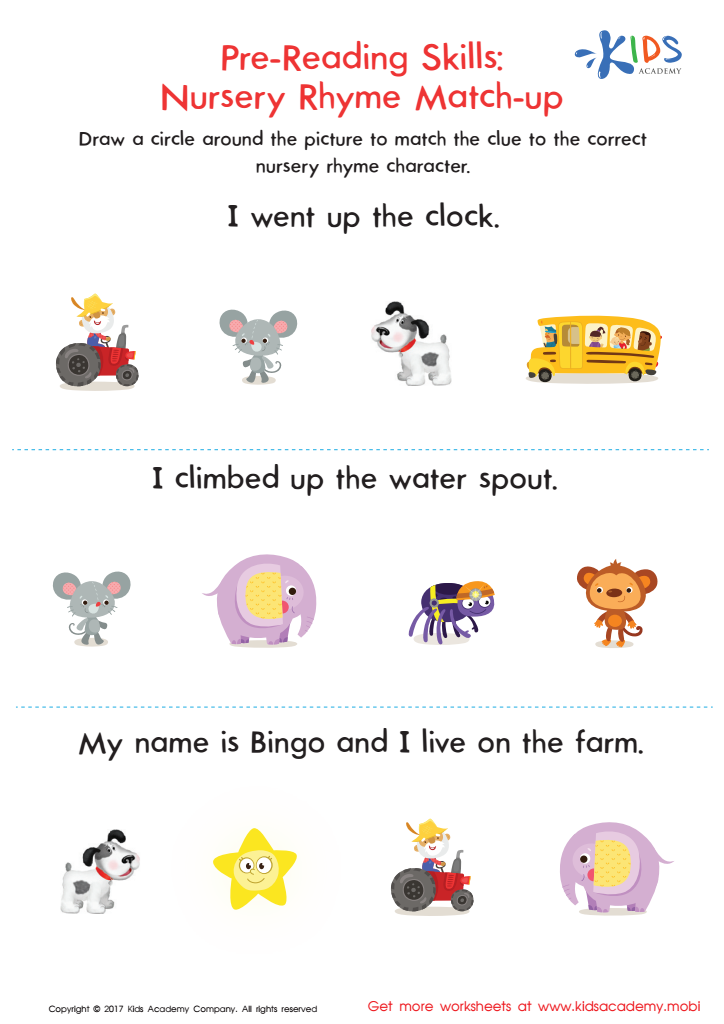
Nursery Rhyme Match–Up Worksheet







Vocabulary expansion through rhyming is crucial for children aged 6-9 as it significantly supports their language development, literacy skills, and phonemic awareness. At this stage, children are refining their understanding of words and their meanings. Engaging with rhymes introduces them to new vocabulary in a fun and memorable way. Rhyming enhances phonological awareness, helping children recognize sounds and patterns in words, which is foundational for reading and writing proficiency.
Additionally, rhyming activities promote creativity and encourage brainstorming, enabling children to play with language. This playful engagement not only builds a richer vocabulary but also fosters a love for words and reading. When children explore rhymes, they learn about word relationships, and meanings, and develop context for their use.
Moreover, parents and teachers can utilize rhyming to enhance classroom interactions and home learning experiences, encouraging participation through songs, poems, and games. The connections made through these activities lead to effective early literacy skills, laying a strong foundation for future academic success. By prioritizing vocabulary expansion through rhyming, caregivers and educators profoundly impact children's communication skills and confidence in their language abilities.







