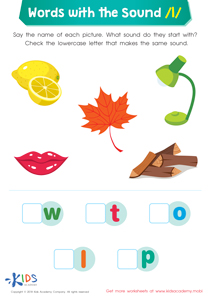
Alphabet familiarity Uppercase Letters Worksheets for Ages 6-9
4 filtered results
-
From - To
Enhance your child's alphabet familiarity with our engaging Uppercase Letters Worksheets, designed for ages 6-9! These interactive activities will help young learners recognize, trace, and master uppercase letters in a fun and stimulating way. Our thoughtfully crafted worksheets feature colorful illustrations and varying exercises tailored to reinforce letter identification skills and improve hand-eye coordination. Children will enjoy practicing their writing while gaining a firm understanding of the importance of uppercase letters. Perfect for both classroom use and home learning, these worksheets are an excellent resource for fostering a love of reading and writing. Start your alphabet adventure today!
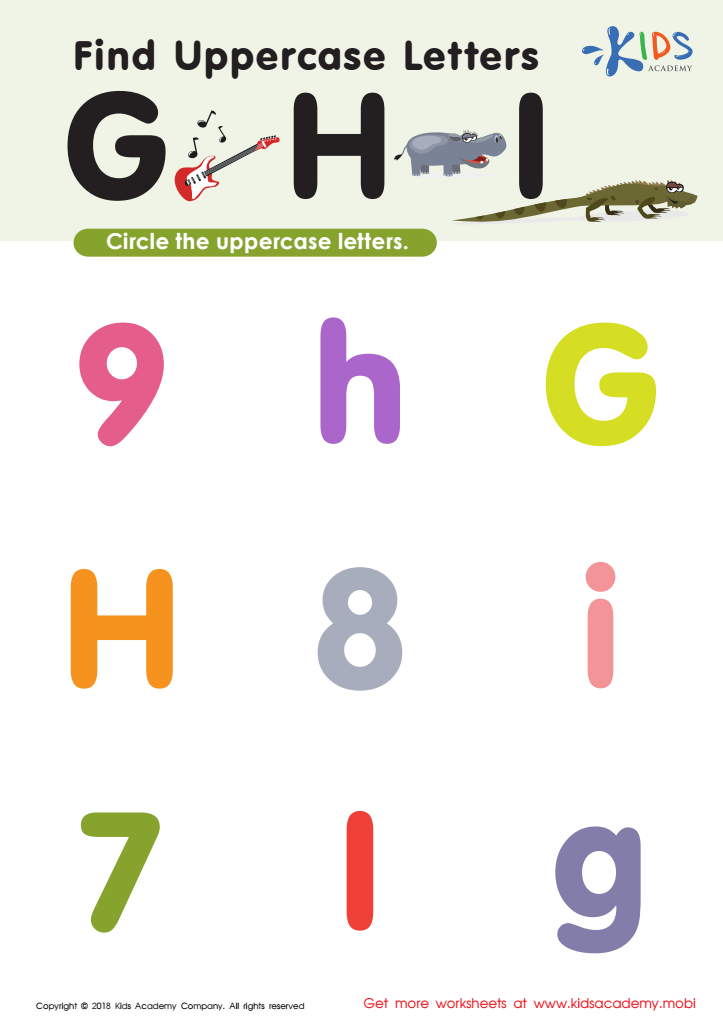
Find Uppercase Letters G, H, and I Worksheet
 Assign to My Students
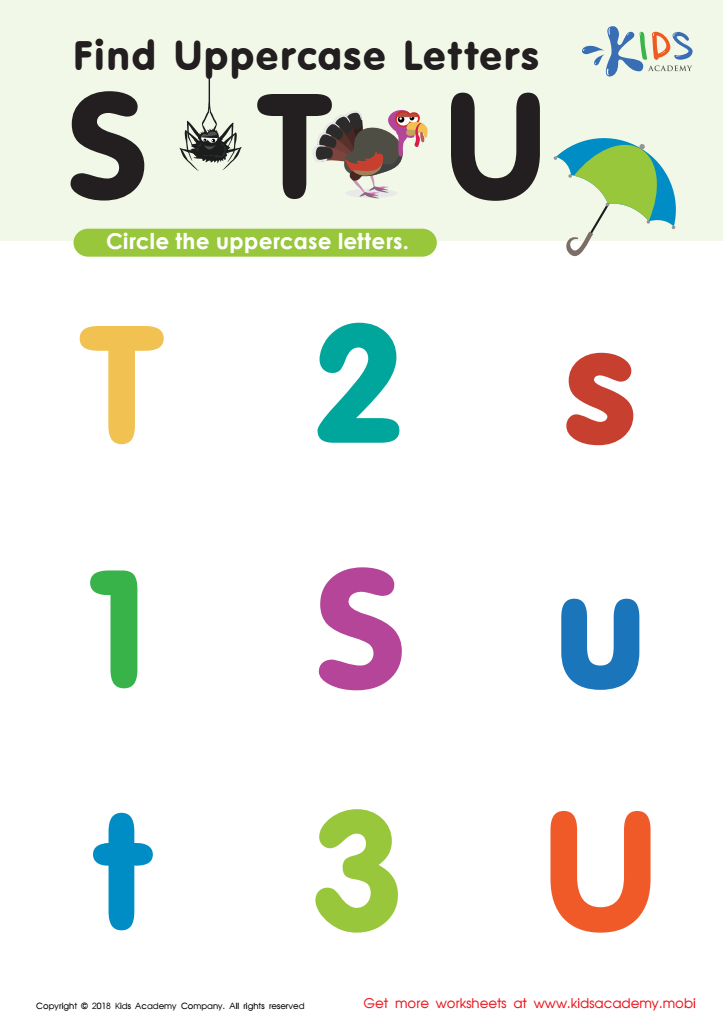
Find Uppercase Letters Worksheet
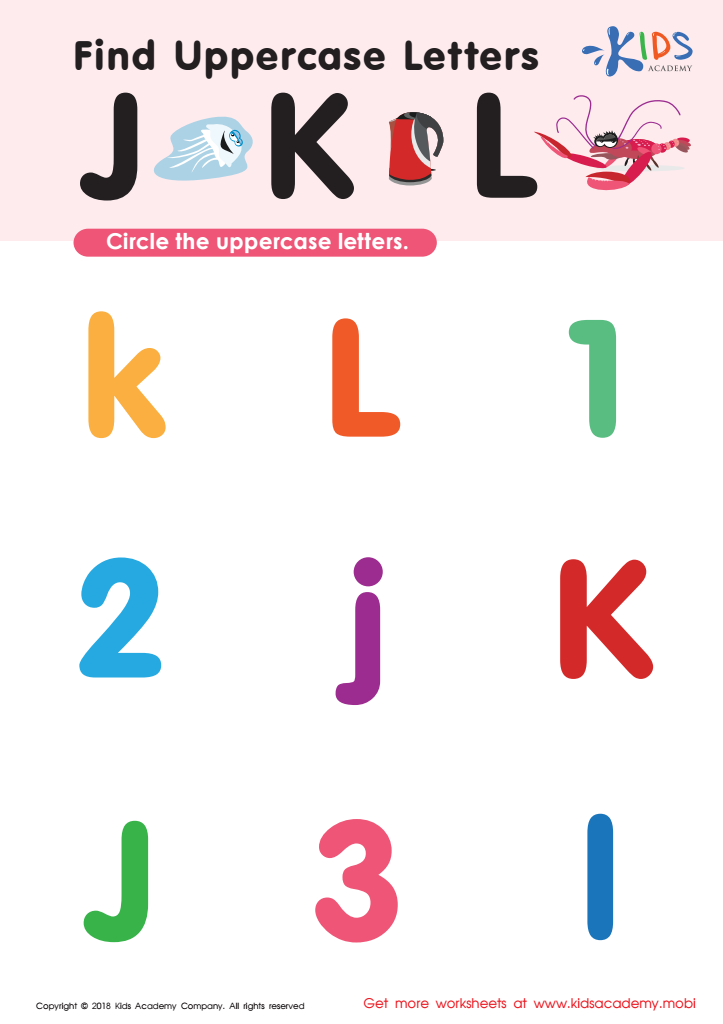
Find Uppercase Letters J, K, and L Worksheet

Find Uppercase Letters A, B, and C Worksheet








Alphabet familiarity, particularly with uppercase letters, is crucial for children aged 6-9 as they begin to refine their reading and writing skills. This stage, often known as the early primary years, lays the foundation for literacy development. Understanding uppercase letters allows children to recognize the beginning of sentences, proper nouns, acronyms, and titles, which are vital for effective communication.
Parents and teachers should prioritize uppercase letter familiarity because it enhances children's phonemic awareness and aids in decoding words. When children can easily identify uppercase letters, they'll find it easier to read and understand textual materials, accelerating their overall literacy progress. Additionally, writing with uppercase letters helps children develop their handwriting skills and encourages proper letter formation.
Moreover, familiarity with uppercase letters supports children's self-confidence in both reading and writing tasks, creating a positive feedback loop for learning. When children feel comfortable with these foundational skills, they're more likely to engage with their education, participate in class discussions, and develop a love for reading. Ultimately, a strong grasp of uppercase letters sets the stage for students’ future academic success and effective communication skills, highlighting the importance of parental and educator support during this critical stage of development.