Uppercase identification Uppercase Letters Worksheets for Ages 6-9
5 filtered results
-
From - To
Welcome to our Uppercase Letters Worksheets for Ages 6-9! Designed to enhance letter recognition, these worksheets engage young learners in fun activities that promote uppercase letter identification. Whether your child is just starting out or needs a little extra practice, our resources offer a variety of engaging exercises tailored to improve their alphabet skills. Kids will enjoy tracing, coloring, and completing interactive games that make learning fun and effective. Perfect for home or classroom use, these worksheets ensure that children build a solid foundation in literacy. Help your child celebrate their progress in a playful and interactive way today!
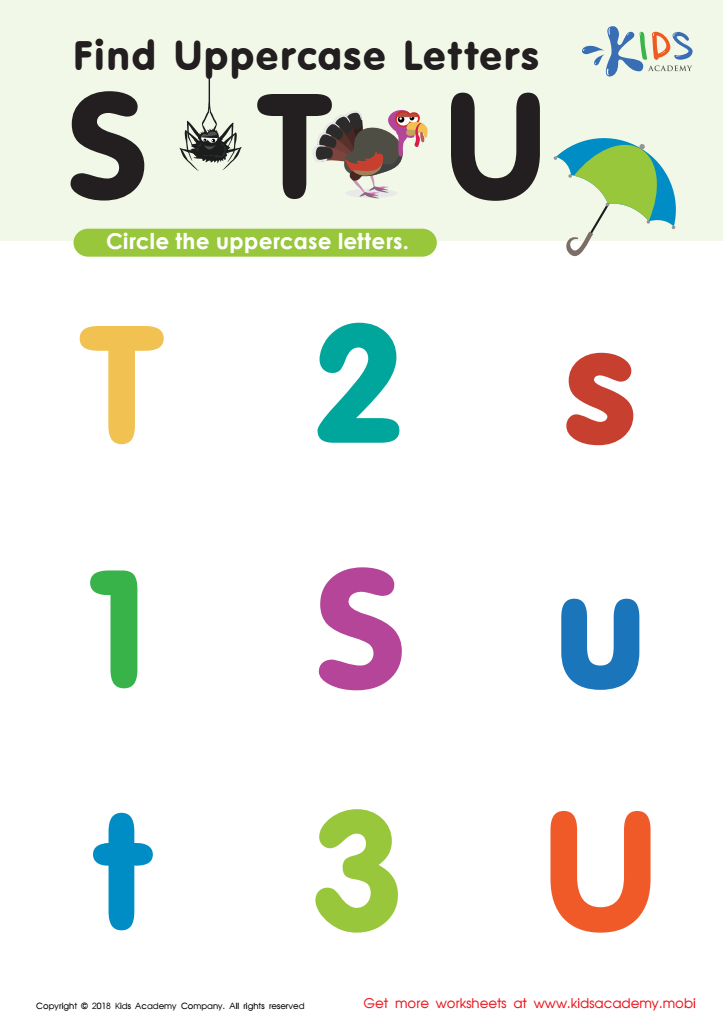
Find Uppercase Letters Worksheet
 Assign to My Students
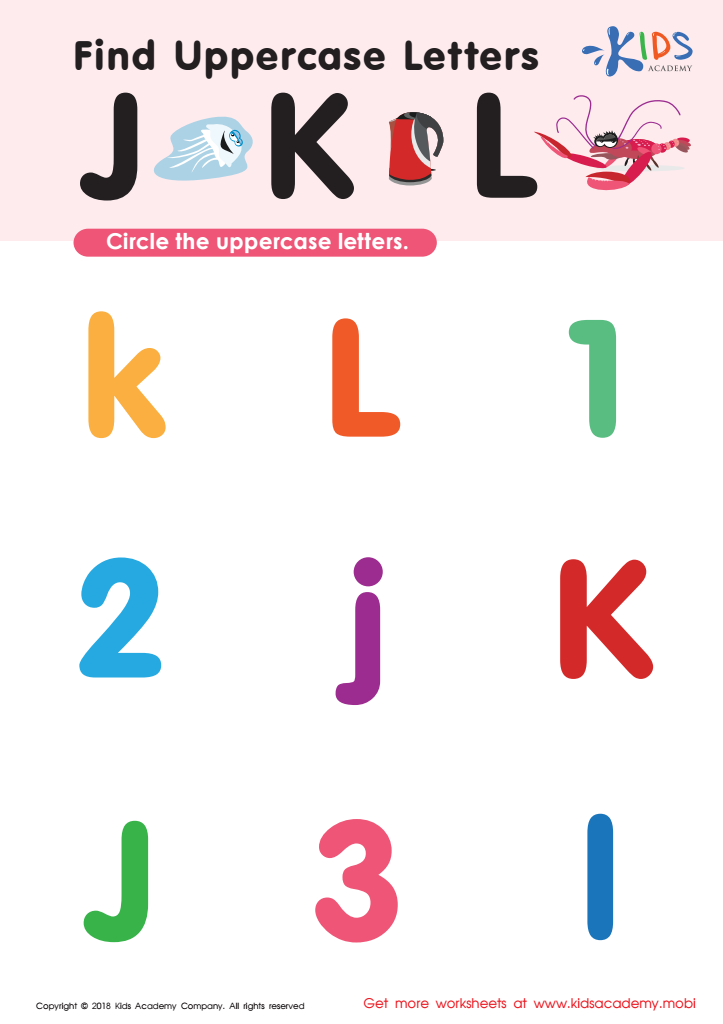
Find Uppercase Letters J, K, and L Worksheet
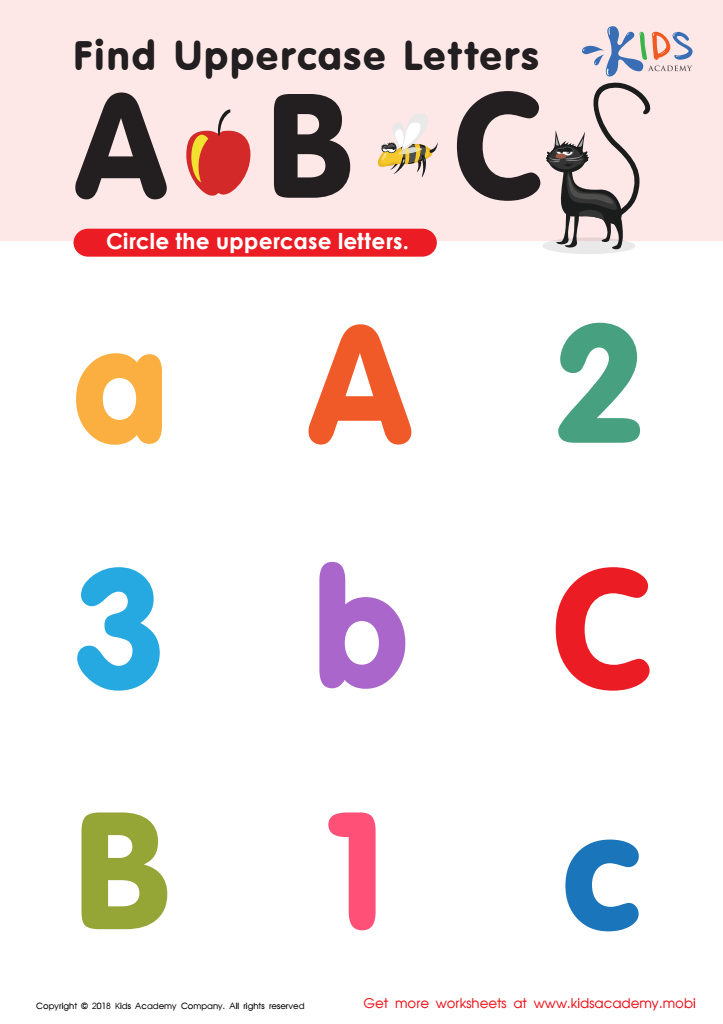
Find Uppercase Letters A, B, and C Worksheet
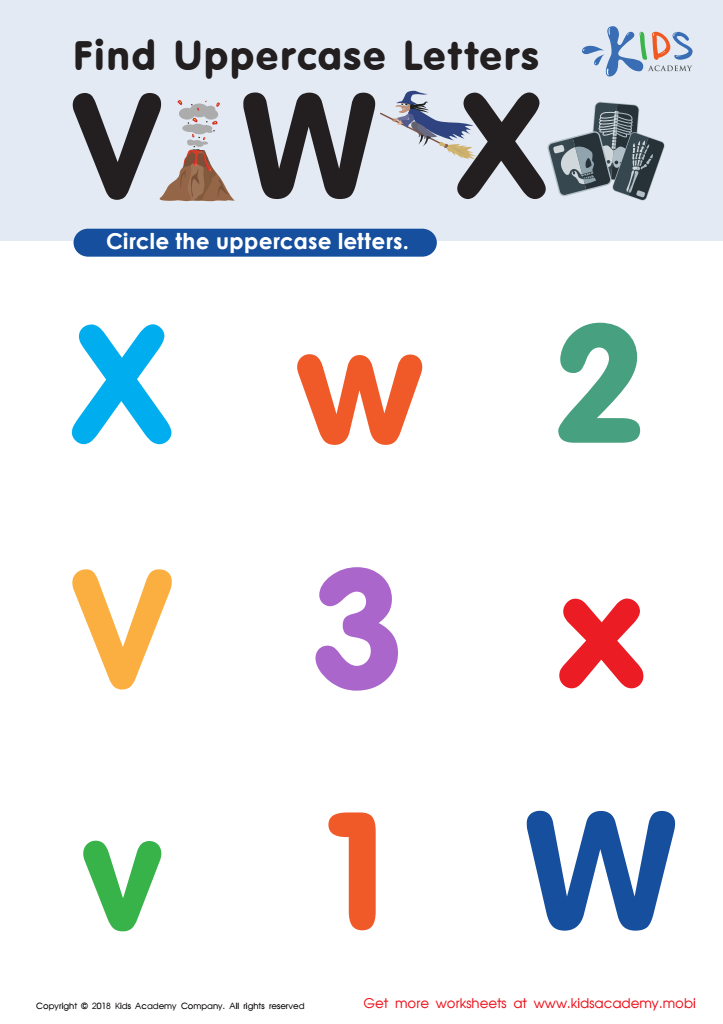
Find Uppercase Letters V, W, X Worksheet
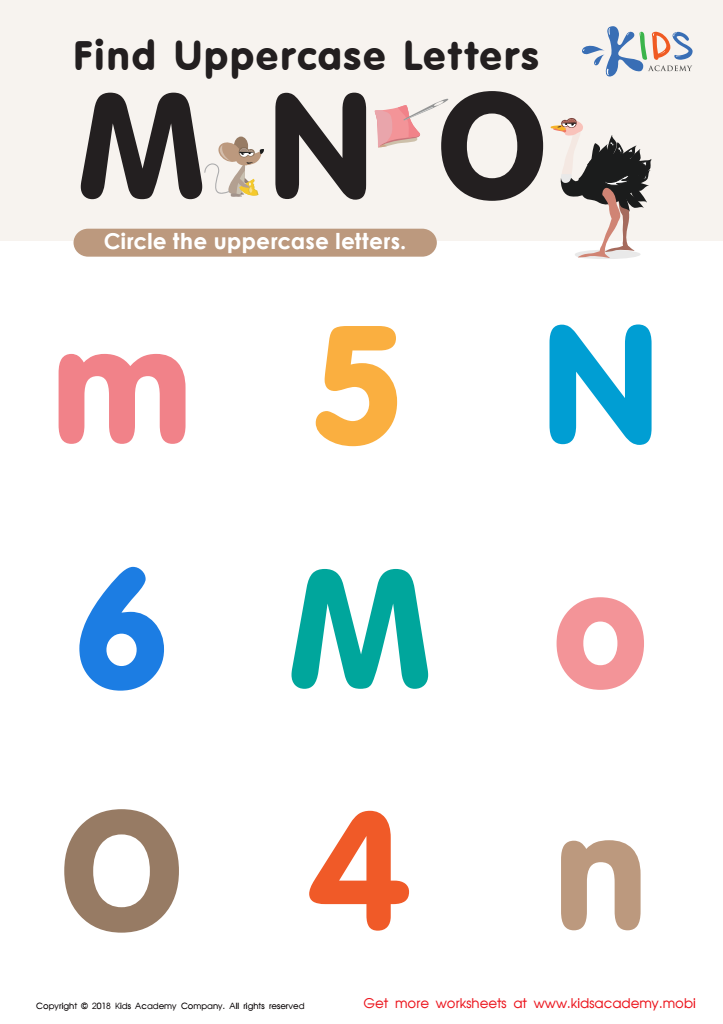
Find Uppercase Letters M, N, and O Worksheet








Uppercase letter identification is essential for children aged 6-9 as it serves as a foundational skill for literacy development. Mastering uppercase letters helps students recognize and differentiate between the shapes and sounds of letters, which in turn enhances their reading and writing abilities. At this age, children are transitioning from learning the basics of letters to reading simple words and sentences, making uppercase identification crucial.
Furthermore, uppercase letters often signify the beginning of sentences and proper nouns, essential components for building grammar skills. Ensuring that children can identify and use uppercase letters correctly fosters strong writing habits and helps them understand the structure of language.
In addition, recognizing uppercase letters is vital for social interactions with written materials, such as names, signs, and important documents. Parents and teachers play a pivotal role in this learning process, creating a supportive environment that encourages practice through games, reading, and engaging activities. By prioritizing uppercase letter identification, adults can help instill confidence in children as they improve their literacy skills, setting a positive trajectory for their future educational experiences and lifelong learning.