Fine Motor Skills 3 Little Pigs Worksheets for Ages 6-9
6 filtered results
-
From - To
Introduce your child to our delightful "Fine Motor Skills 3 Little Pigs Worksheets for Ages 6-9". These engaging activities are designed to enhance your child’s dexterity and hand-eye coordination. Featuring the beloved tale of the three little pigs, these worksheets involve tasks such as tracing, cutting, and coloring. Perfect for children aged 6 to 9, these activities not only develop fine motor skills but also ignite a love for storytelling and creativity. Through fun and interactive exercises, children will build essential early learning skills. Optimize your child's development with our dynamic and educational worksheets today!

The Story of the Three Little Pigs Coloring Worksheet

The Three Little Pigs Coloring Worksheet
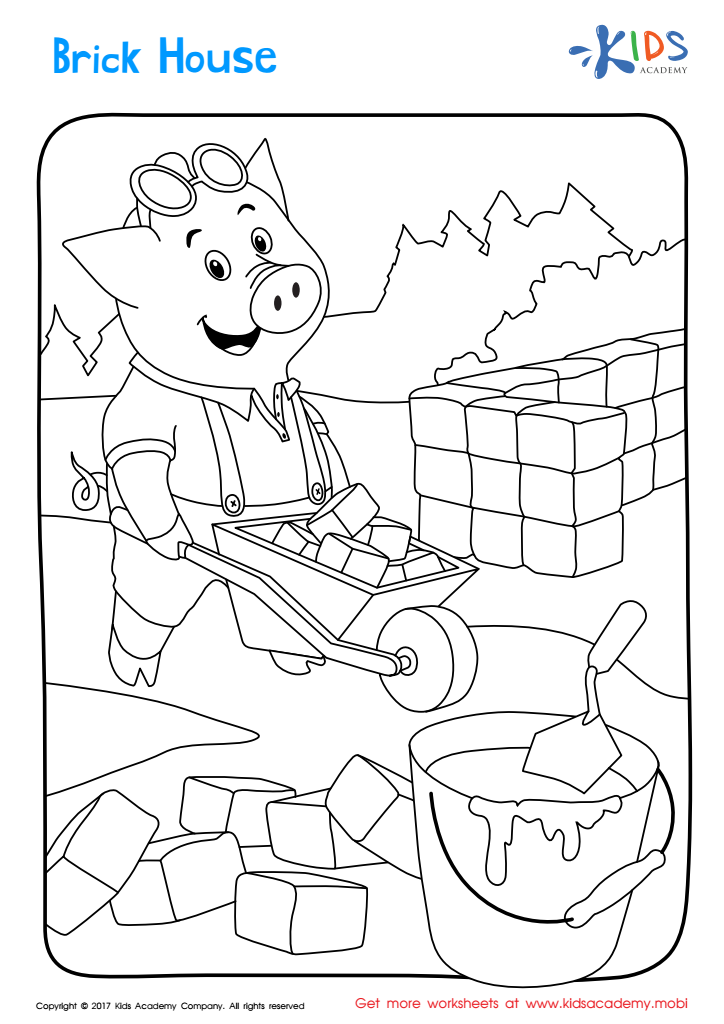
Brick House Printable Coloring Page
 Assign to My Students
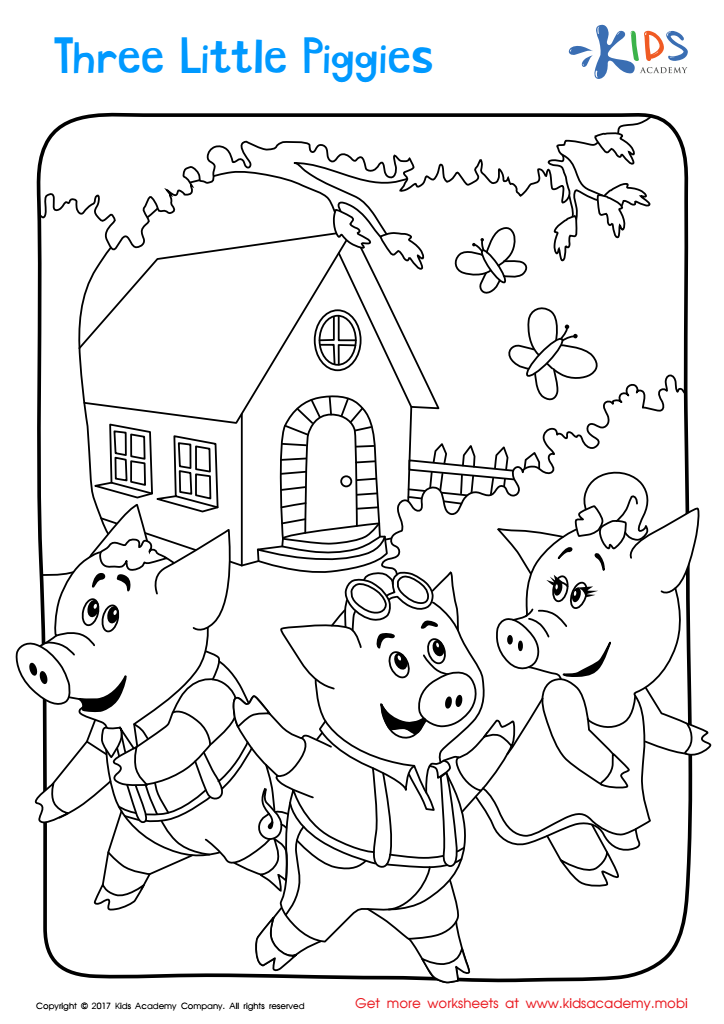
Three Little Piggies Printable Coloring Page
Assign to My Students
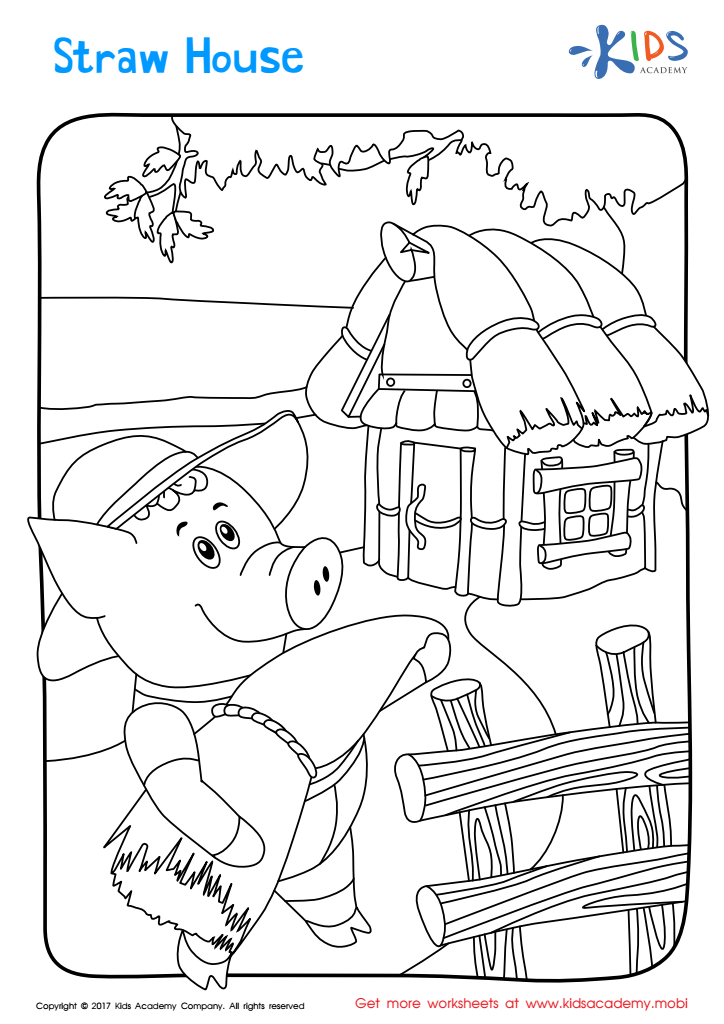
Straw House Printable Coloring Page
Assign to My Students
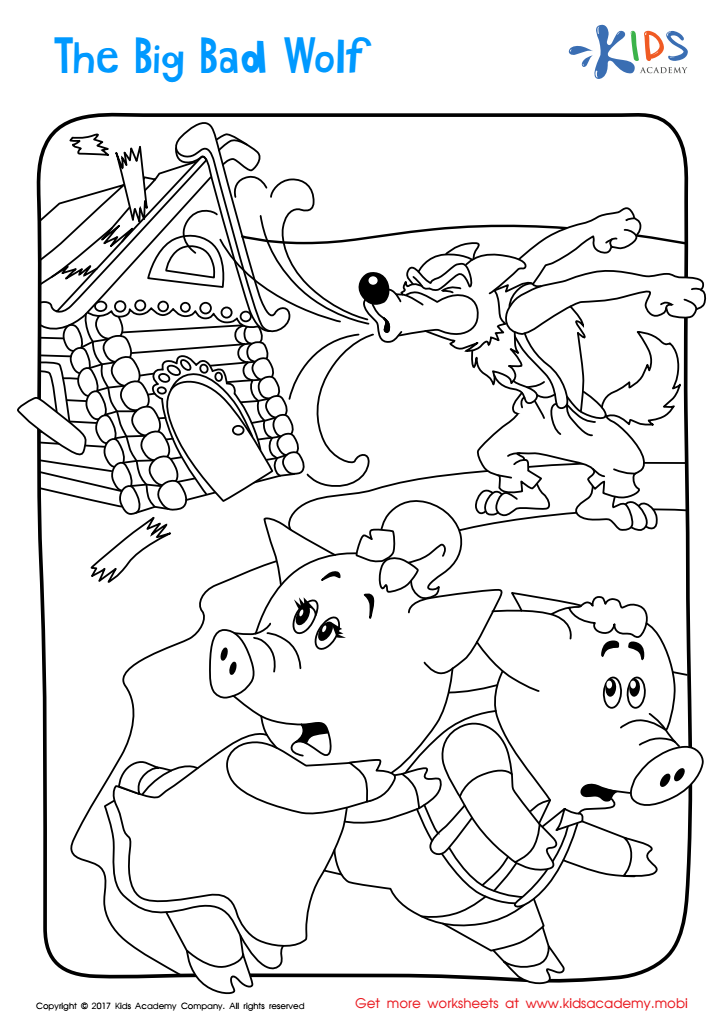
Big Bad Wolf Printable Coloring Page
Assign to My Students


Fine motor skills are crucial for children's development, particularly for those aged 6-9, and integrating these skills through engaging activities like a "3 Little Pigs" project offers substantial benefits. Fine motor skills involve the coordination of small muscles, primarily in the hands and fingers, which are essential for tasks such as writing, cutting, and buttoning clothes. By focusing on these skills during early education, parents and teachers help children gain independence in daily activities and improve academic performance, particularly in writing and art.
Using a well-known story like "The 3 Little Pigs" makes the learning process enjoyable and meaningful. Activities may include building houses with materials like clay, straws, and sticks, which require precision and dexterity. Crafting these items enables children to practice hand-eye coordination and control, all while fostering creativity and problem-solving skills. Additionally, narrating or acting out the story supports language development and public speaking confidence.
Furthermore, enhanced fine motor skills contribute to better coordination, longer attention spans, and a stronger foundation in other important areas, such as math and science, by improving children’s abilities to handle tools and perform detailed work. Therefore, embedding fine motor skill practice in enjoyable story-based activities not only addresses key developmental needs but also enriches children’s learning experiences.