Counting money Worksheets for Ages 6-9
3 filtered results
-
From - To
Welcome to our Counting Money Worksheets for Ages 6-9! These engaging worksheets help young learners master the essential skill of counting money through fun and interactive activities. Designed specifically for children in this age group, our resources incorporate colorful visuals and relatable scenarios to make the learning experience enjoyable. From identifying coins and bills to making change and solving real-life problems, these worksheets are perfect for reinforcing math skills. Ideal for home or classroom use, they provide a comprehensive approach to financial literacy and boost confidence. Start counting money with ease and excitement today! Happy learning!
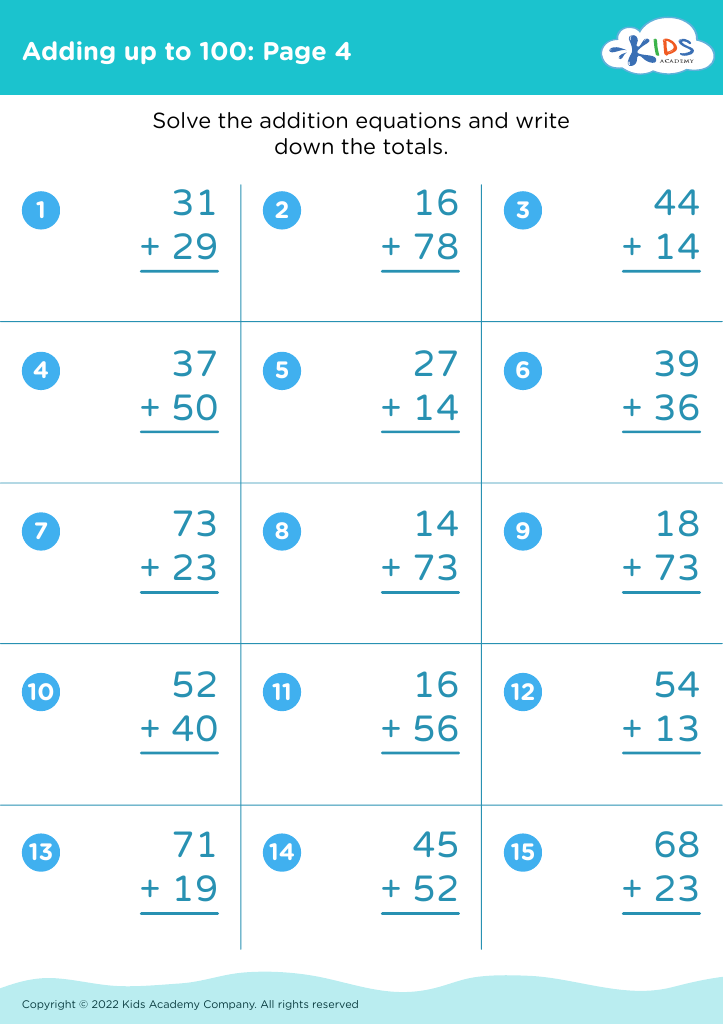

Recognizing Money Money Worksheet
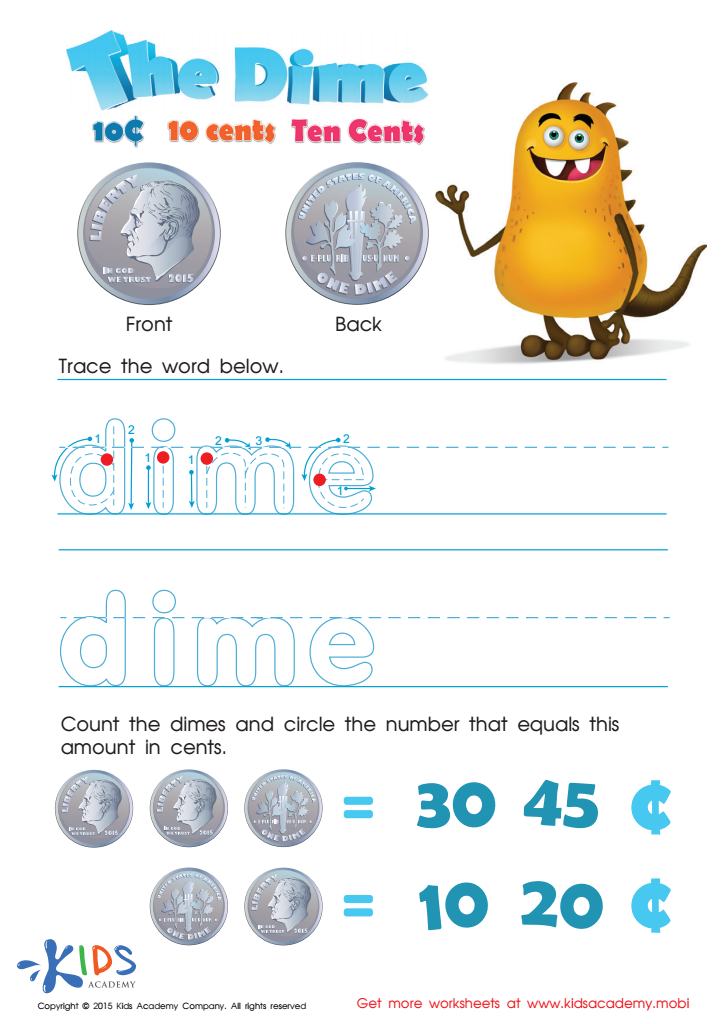
Ten Cents or the Dime Money Worksheet
 Assign to My Students





Parents and teachers should prioritize teaching children aged 6-9 about counting money as it lays the foundation for essential life skills. At this age, children begin to develop numeracy skills, making it an ideal time to integrate practical math concepts with real-world applications. Learning to count money fosters not only arithmetic skills but also critical thinking, problem-solving, and decision-making abilities. It encourages kids to engage with numbers in a tangible way, enhancing their understanding of values and the purpose of currency.
Moreover, the significance of financial literacy cannot be overstated; instilling an understanding of money management early promotes responsible habits that will benefit children as they grow. Being able to accurately count and manage money helps children gain confidence, independence, and a sense of empowerment, equipping them to make informed choices in their everyday lives. Additionally, since financial interactions frequently form the basis for classroom discussions and activities, integrating money counting can enrich social learning experiences. Overall, an early grasp of money basics not only supports academic development but also prepares children for future financial challenges, reinforcing the importance of making sound financial decisions. Thus, shaping a future generation of financially savvy individuals begins with these critical early lessons.








