Differentiating shapes Worksheets for Ages 6-9
5 filtered results
-
From - To
Discover our engaging Differentiating Shapes Worksheets designed specifically for children aged 6-9! These worksheets provide a fun and interactive way for kids to identify, categorize, and differentiate between various geometric shapes. Perfect for enhancing shape recognition skills, the activities range from coloring and tracing to sorting shapes, ensuring diverse learning experiences. Our resources are aligned with educational standards and spark creativity while reinforcing essential math concepts. Whether at home or in the classroom, these worksheets are ideal for young learners to explore shapes visually and critically. Empower your child's learning journey with our stimulating and educational shape worksheets today!
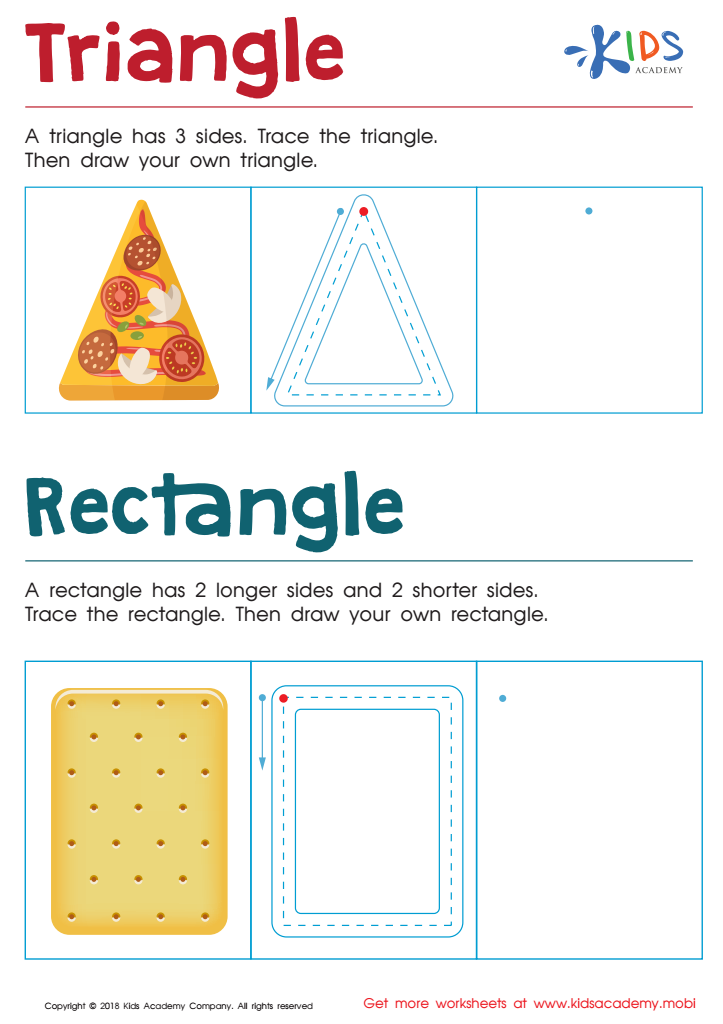
Triangle Rectangle Worksheet
 Assign to My Students
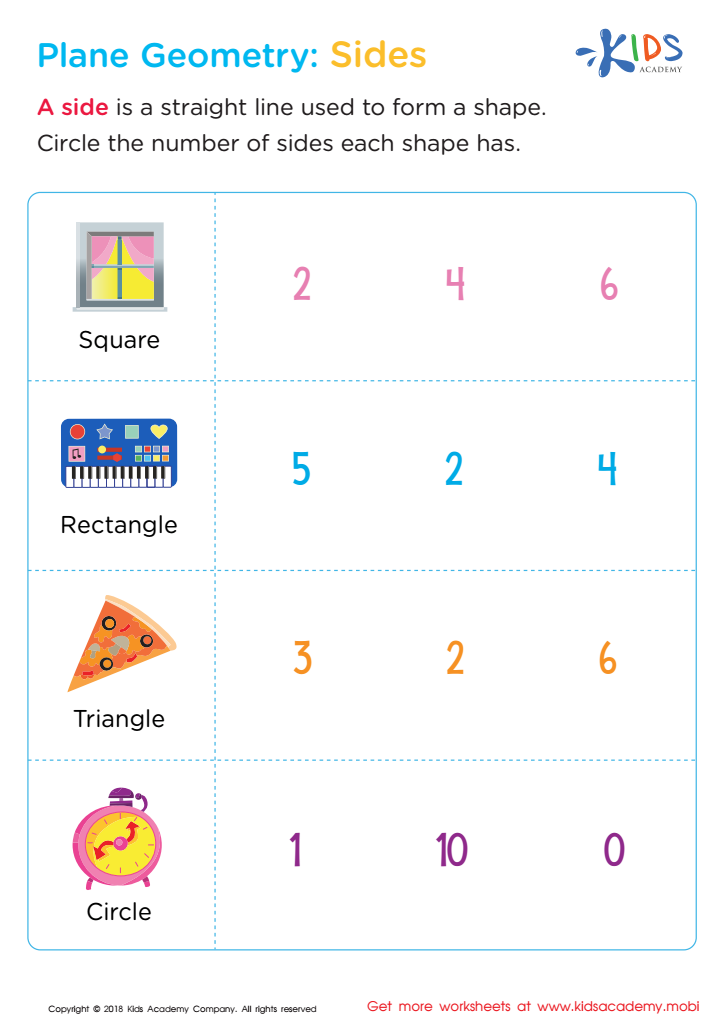
Plane Geometry: Sides Worksheet
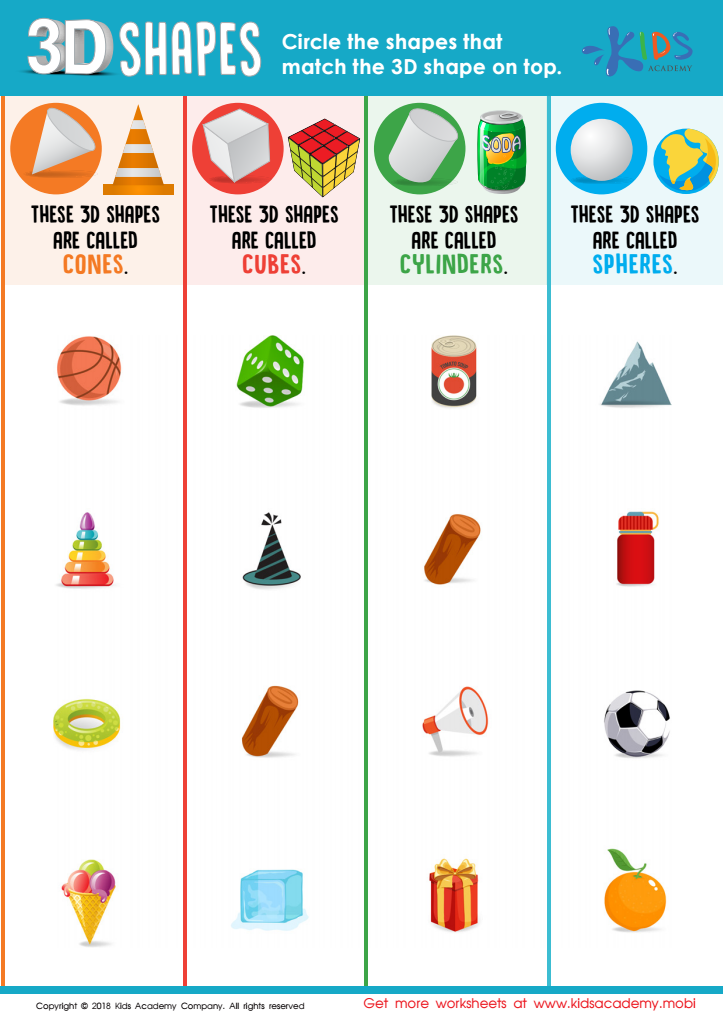
3D Shapes Worksheet





.jpg)

Differentiating shapes for children ages 6-9 is crucial for their cognitive and perceptual development. At this age, children are honing essential spatial reasoning skills, which form the foundation for more advanced mathematical concepts. By introducing various shapes—such as squares, triangles, rectangles, and circles—teachers and parents can cultivate an understanding of geometric properties, aiding children in recognizing patterns and developing classification skills.
Additionally, differentiating shapes provides opportunities for hands-on learning. Engaging children with manipulatives allows them to explore and experiment with concepts in a practical way, deepening their understanding. As they compare and contrast shapes, children enhance their analytical thinking and problem-solving abilities.
Furthermore, learning about shapes fosters creativity. Activities like drawing, crafting, and building using different shapes can inspire imagination and artistic expression. It also aligns with visual learning styles, which are prominent at this age.
Lastly, understanding shapes is vital for real-world applications, from recognizing shapes in the environment to laying the groundwork for future studies in geometry and math. Overall, cultivating shape differentiation skills prepares children for academic success and enriches their daily experiences. Teachers and parents play a key role in guiding this important aspect of early development.








