Graph reading skills Worksheets for Ages 6-9
3 filtered results
-
From - To
Enhance your child's graph reading abilities with our engaging worksheets tailored for ages 6-9! Our collection features a variety of visual aids and hands-on activities designed to make learning fun and effective. From interpreting simple bar graphs to pie charts, these worksheets encourage critical thinking and analytical skills. Each activity is aligned with educational standards, promoting essential math competencies while fostering creativity. Perfect for home or classroom use, our graph reading skills worksheets ensure that your child builds confidence and proficiency in understanding data. Download now to empower your young learner in navigating the world of graphs and charts!
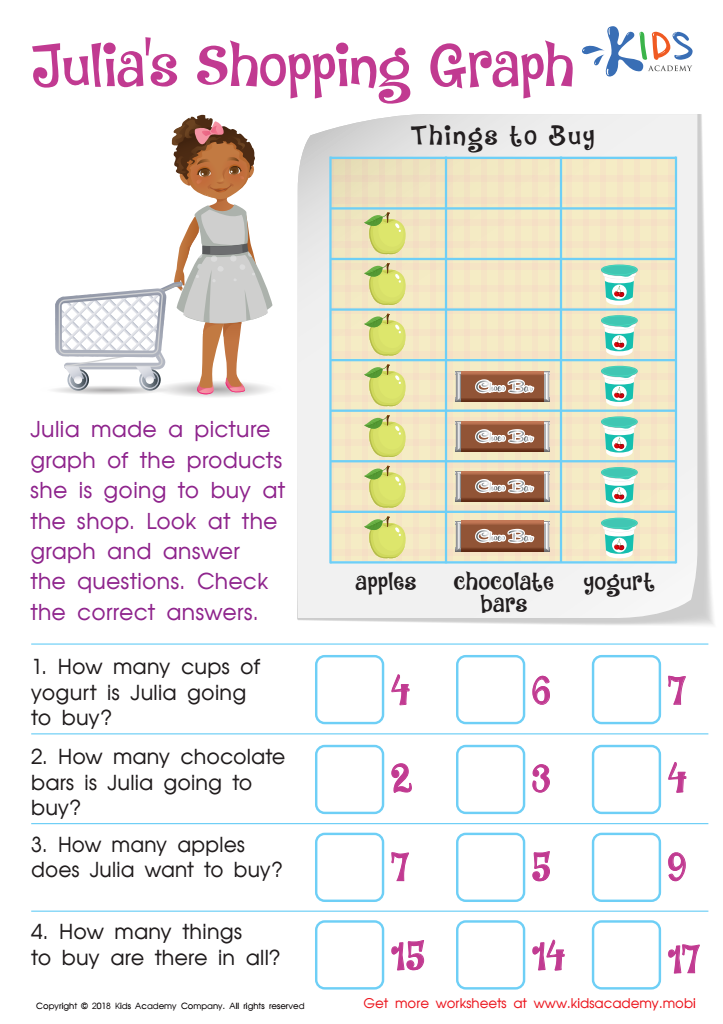
Julia's Shopping Graph Worksheet
 Assign to My Students
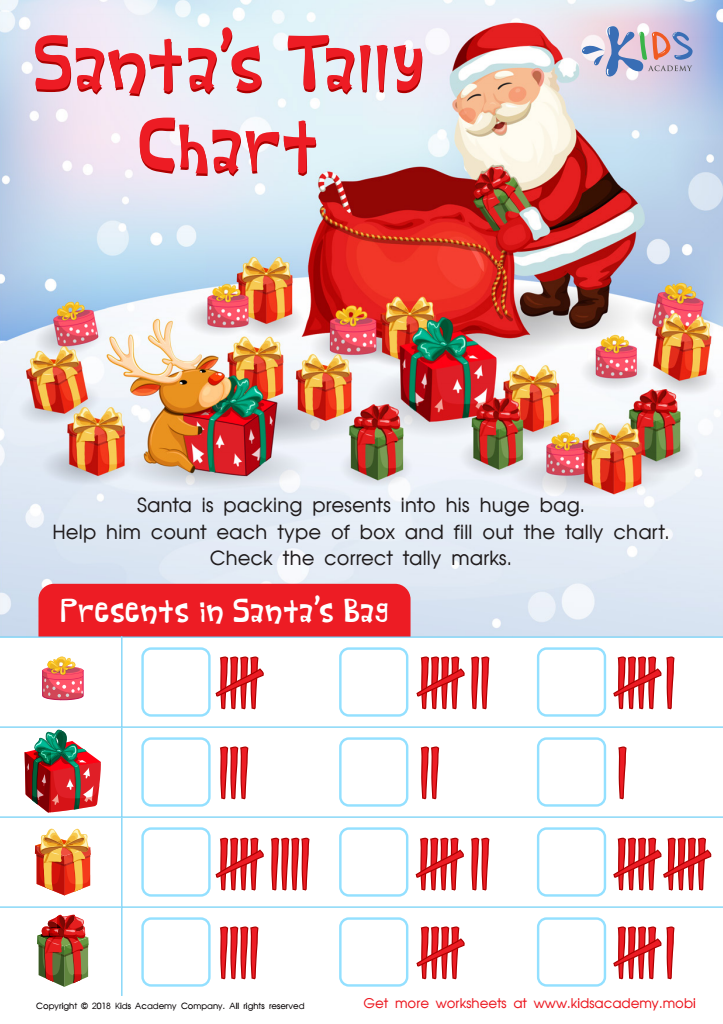
Santa Tally Chart Worksheet
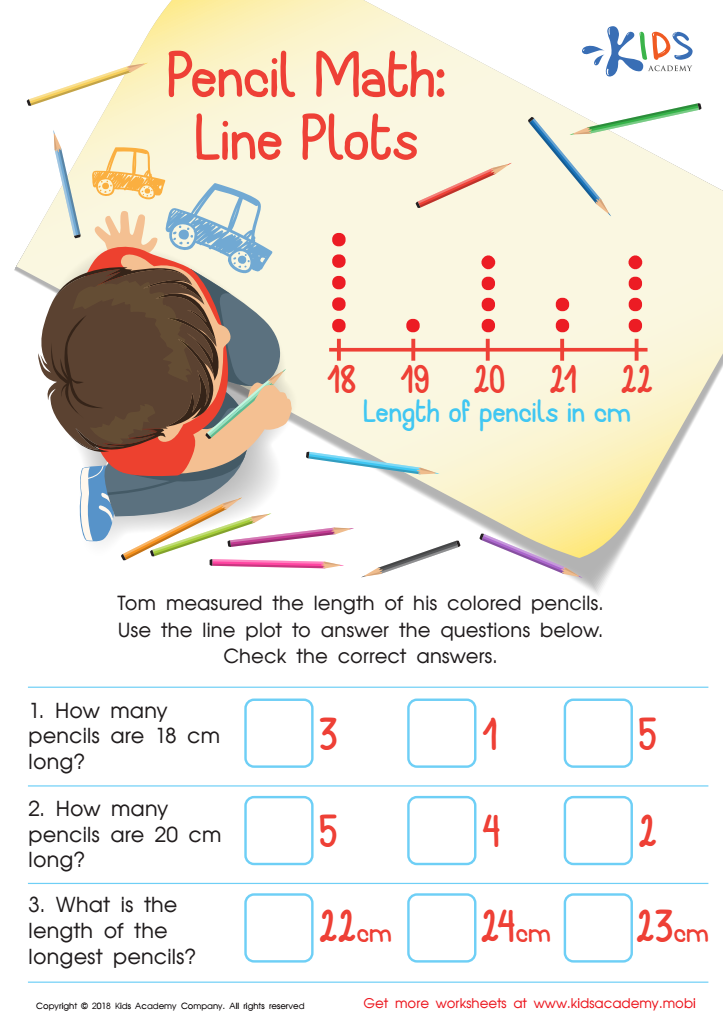
Pencil Math: Line Plots Worksheet







Graph reading skills are crucial for children aged 6-9, as they foster essential analytical thinking and observational skills that can be applied across various subjects. At this developmental stage, children are beginning to understand the world around them, and the ability to read graphs enables them to interpret information visually. By learning to analyze data presented in charts, pictographs, and simple graphs, children become better equipped to make informed decisions based on evidence.
Moreover, graph reading supports the development of mathematical skills, as it encourages children to engage with concepts such as counting, categorizing, and understanding relationships between different sets of data. Skills gained from graph reading extend beyond math; they build critical thinking skills necessary for subjects like science, social studies, and literacy.
For parents and teachers, emphasizing graph reading not only enhances academic learning but also prepares children for real-world application, fostering skills like data analysis essential for informed citizenship. Encouraging children to explore graphs during everyday activities—like analyzing sports statistics or interpreting a family budget—can cultivate a lifelong affinity for learning and inquiry. Ultimately, investing time in developing these skills will yield significant benefits, paving the way for future academic success and informed decision-making.








