
Identifying Animals Worksheets for Ages 6-9
9 filtered results
Difficulty Level
Grade
Age
-
From - To
Subject
Activity
Standards
Discover our engaging "Identifying Animals Worksheets" designed specifically for children ages 6-9! These printable resources help young learners explore and understand different animal species through fun and educational activities. Each worksheet features vibrant illustrations and interactive tasks that encourage kids to recognize and categorize animals, enhancing their observational skills and knowledge about wildlife. Our worksheets promote critical thinking while making learning enjoyable! Perfect for at-home use or as classroom supplements, these resources are aligned with educational standards, providing a solid foundation for lifelong learning. Empower your child's curiosity about the animal kingdom today with our specially crafted worksheets!
Favorites
With answer key
Interactive
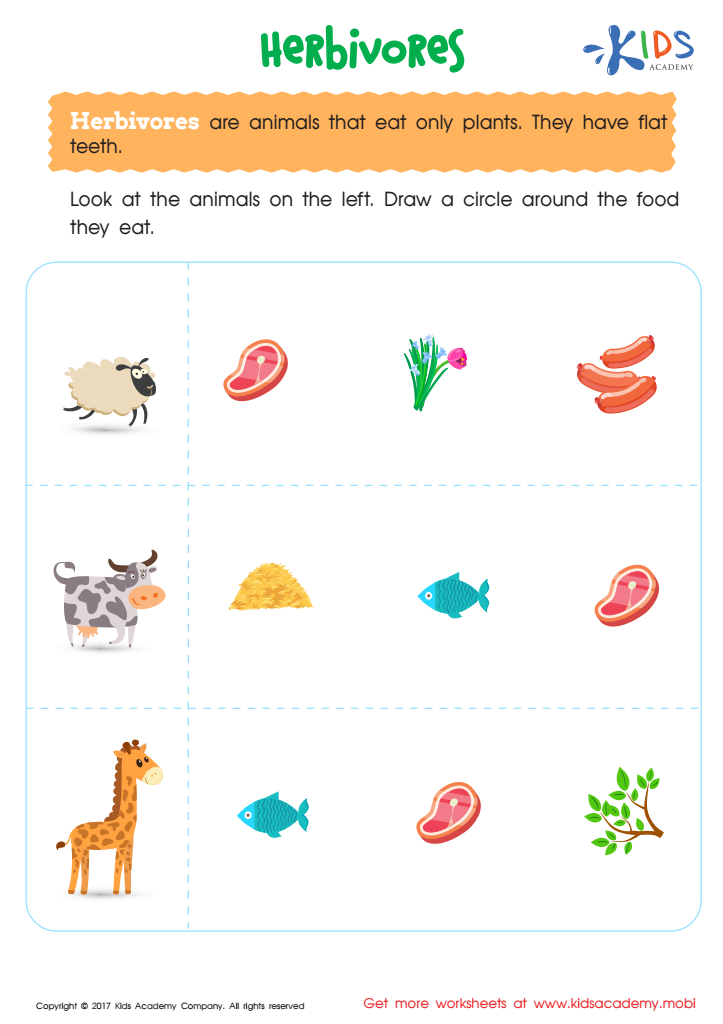
Herbivores Printable
Strengthen their vocab with these fascinating creatures, as they explore an intriguing aspect of beloved animals.
 Assign to My Students
Herbivores Printable
Worksheet
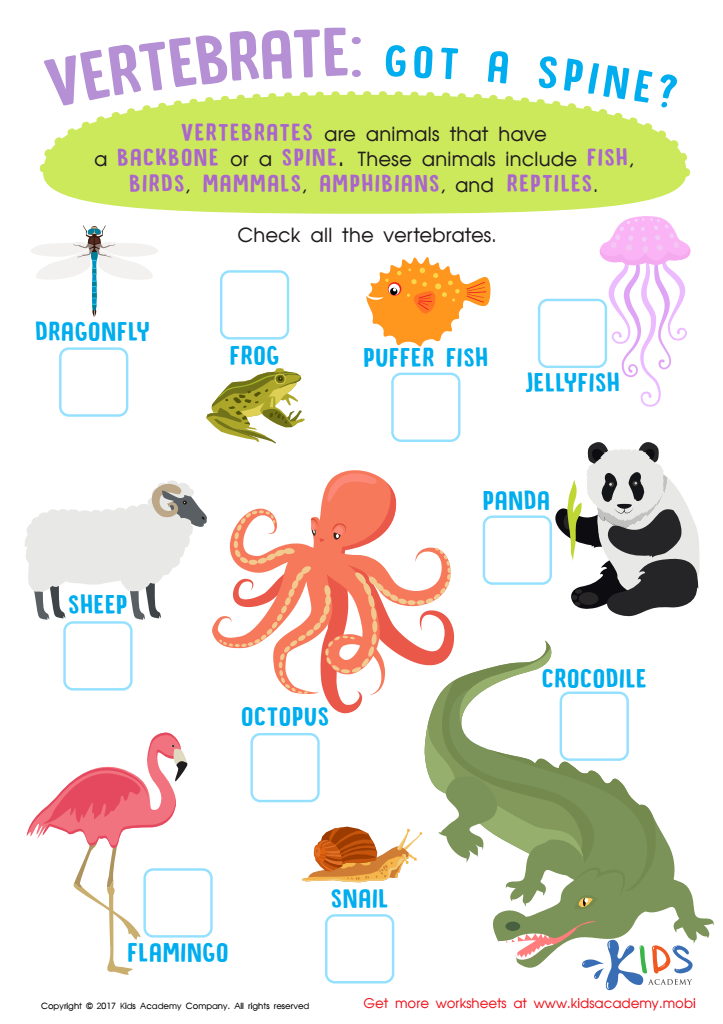
Vertebrates Animals Worksheet for 3rd Grade
This 3rd grade worksheet introduces your child to the wonders of vertebrate animals. They will have fun sorting them from those without a spine, while learning more about the animal kingdom!
Vertebrates Animals Worksheet for 3rd Grade
Worksheet
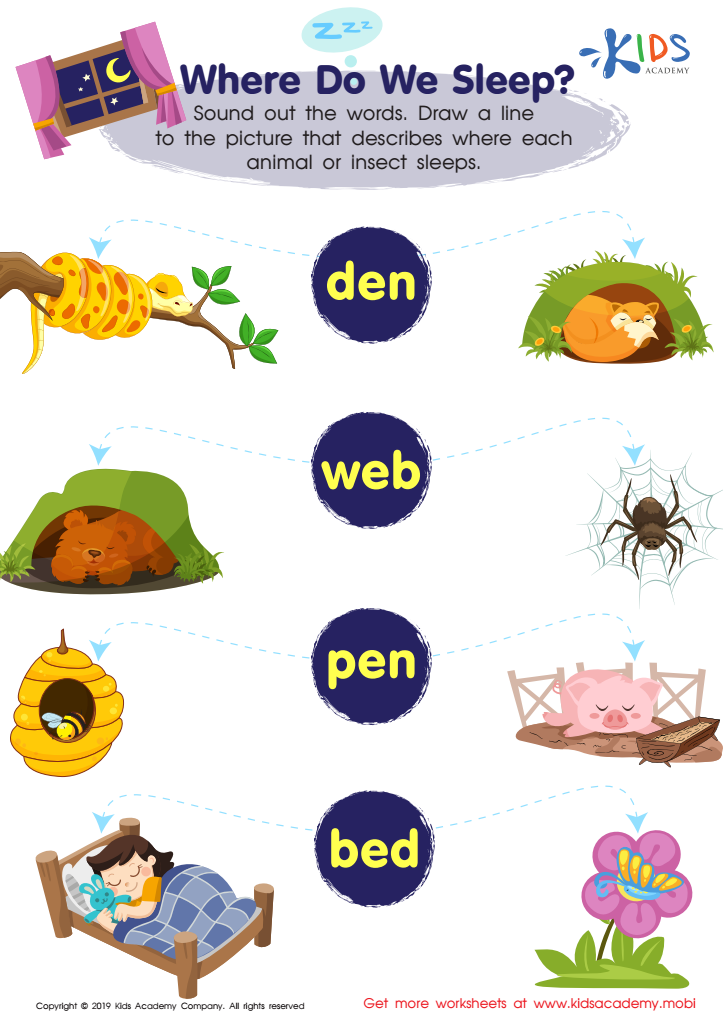
Where Do We Sleep Worksheet
Help your kids understand the importance of a safe space with this activity: Ask them to draw a line connecting the different animals and insects to the words that describe where they sleep. Remind them that everyone needs a sanctuary to rest – like the animals and insects in this printout.
Where Do We Sleep Worksheet
Worksheet
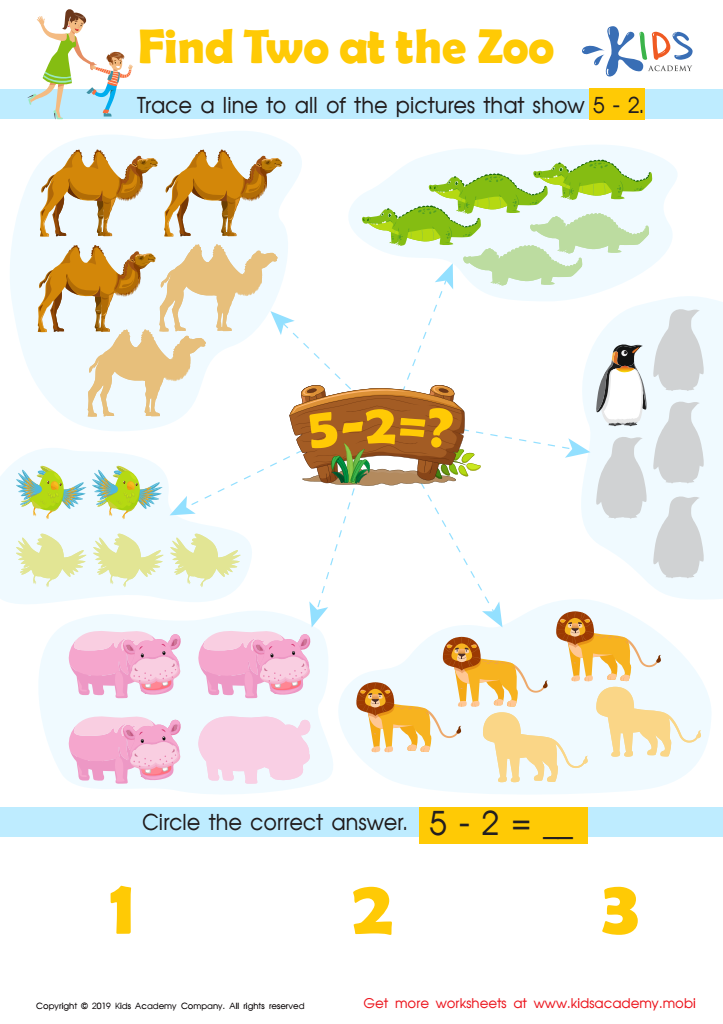
Find Two at the Zoo Worksheet
Help your kids overcome math fears and practice subtracting numbers with this traceable PDF. Ask them to identify the 6 groups of animals in the picture and count the animals in each group. Then, help them trace a line to all of the pictures that illustrate the equation 5-2.
Find Two at the Zoo Worksheet
Worksheet
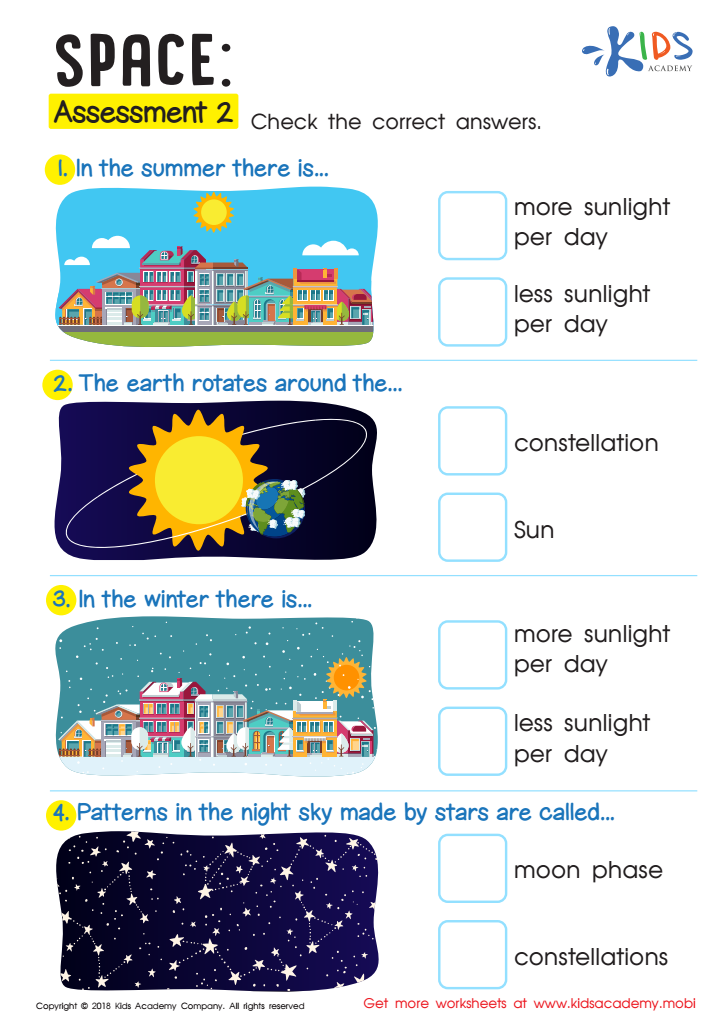
Space: Assessment 2 Worksheet
Test your kids' knowledge of the weather, constellations and Earth with this worksheet. Show them the 4 images and ask what's happening; then read the questions and options and help them pick the right answers. This printout is a helpful and fun way to learn!
Space: Assessment 2 Worksheet
Worksheet
Join Kids Academy for Free
Who is primarily going to use this learning content?






Identifying animals is a crucial part of early education for children aged 6 to 9. At this age, children are naturally curious about the world around them, and learning about animals can enhance their understanding of biodiversity and ecosystems. This knowledge fosters a sense of wonder and responsibility towards nature, encouraging children to respect and protect the environment.
Furthermore, identifying animals aids in the development of critical thinking skills. Children learn to categorize and compare various species, sharpening their observation and analytical abilities. This kind of learning promotes cognitive development and enhances vocabulary as they encounter new terms associated with different animals and their habitats.
For parents and teachers, incorporating animal identification into the curriculum can make learning fun and engaging. Interactive activities, such as nature walks or classroom discussions about animals, can captivate children's attention, transforming academic lessons into memorable experiences.
On a social level, teamwork activities involving animal identification can improve communication skills and foster cooperation among peers. Ultimately, understanding animals helps children form connections with nature and encourages a lifelong appreciation for wildlife, making it essential for parents and teachers to prioritize this educational aspect.








