Mathematics skills Worksheets for Ages 6-9
3 filtered results
-
From - To
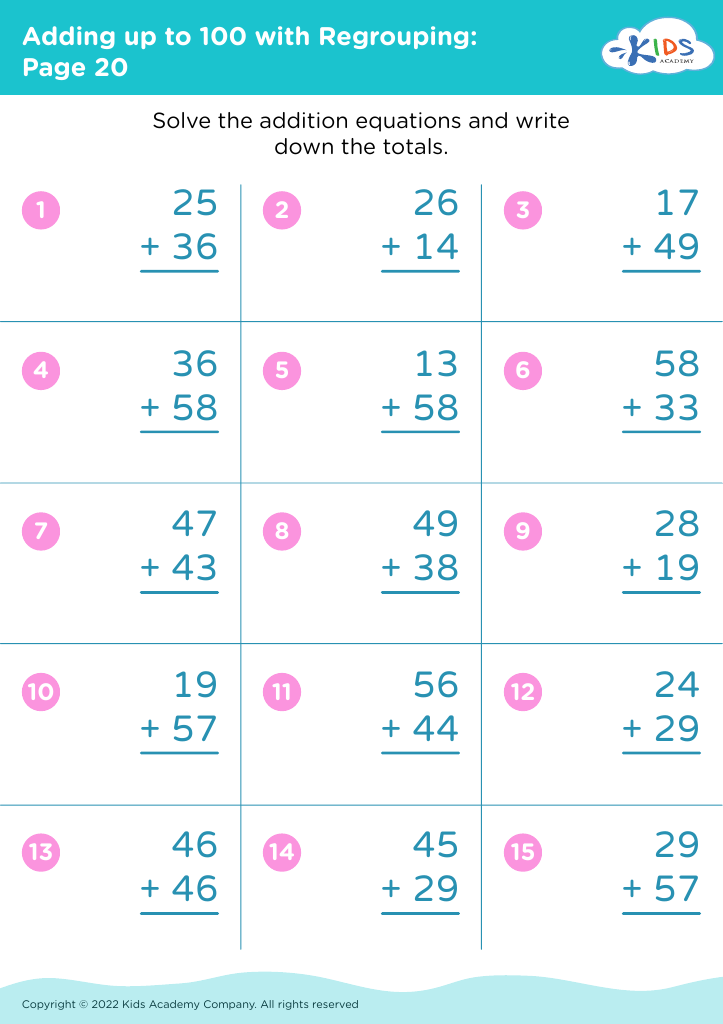
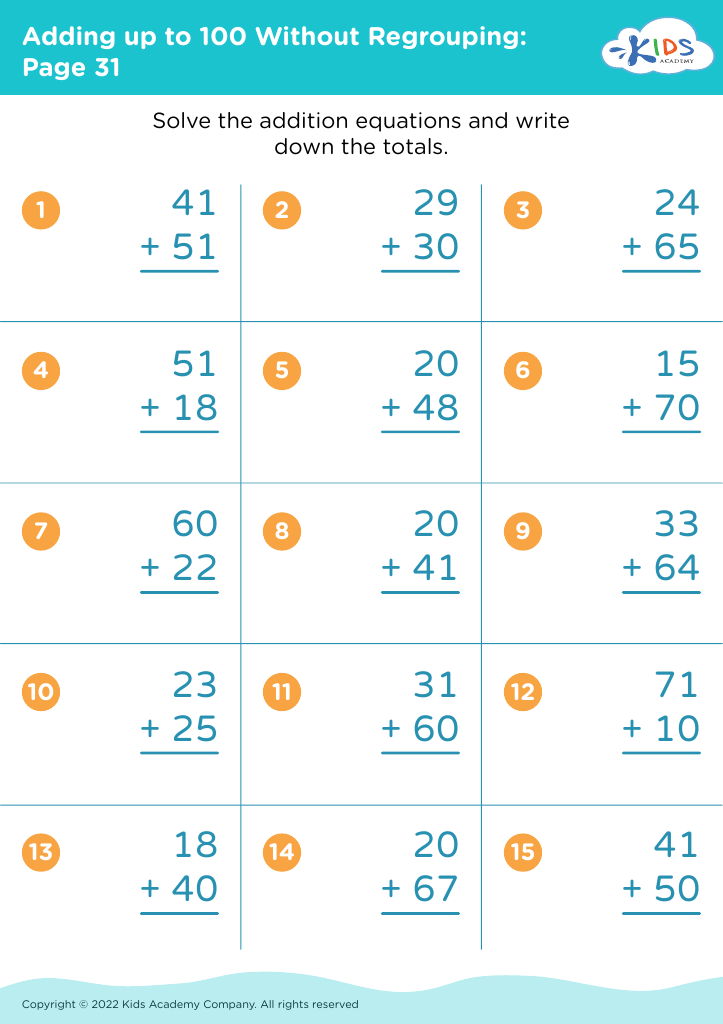
Nurture your child's mathematical abilities with our expertly crafted “Mathematics Skills Worksheets for Ages 6-9”. These engaging and educational resources are designed to build confidence and boost skills in areas such as addition, subtraction, multiplication, fractions, and problem-solving. Each worksheet offers fun, interactive problems that challenge and delight young learners. Perfect for both classroom and at-home learning, our worksheets provide a solid math foundation and keep kids motivated with bright illustrations and engaging content. Trust in our comprehensive collection to develop a love for math in your child and enhance their understanding of fundamental concepts.
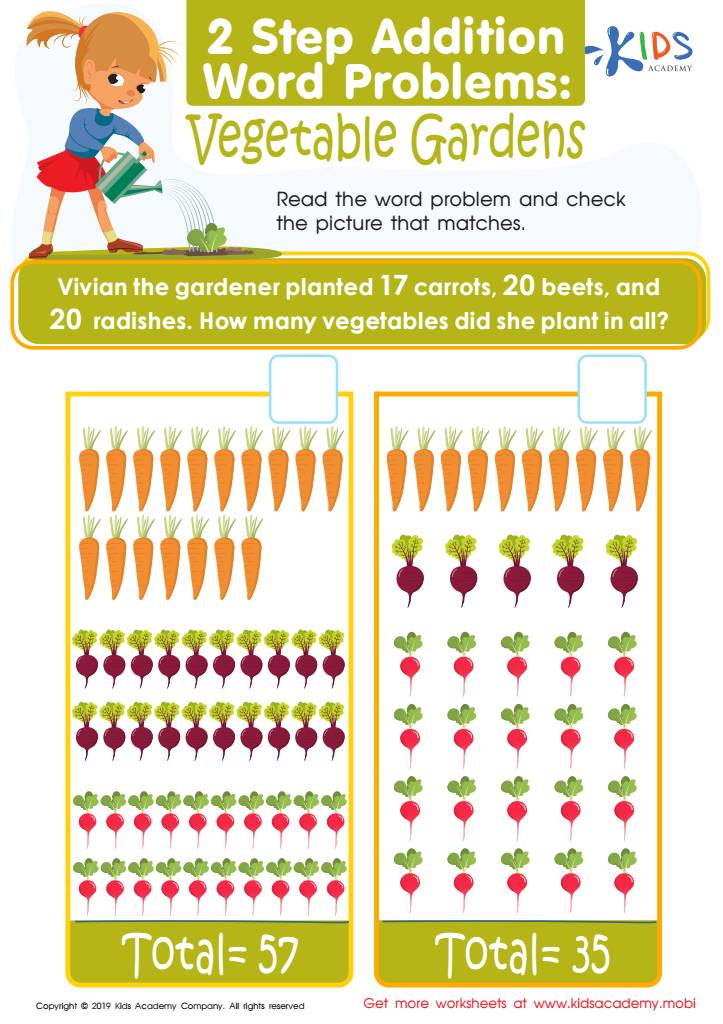
Vegetable Gardens Worksheet
 Assign to My Students








Mathematics skills are essential for children aged 6-9, as they form the foundation for future academic success and everyday life. At this age, kids build their understanding of numbers, shapes, and simple calculations, setting the stage for more complex concepts they will encounter later. For this reason, parents and teachers need to emphasize the importance of math during these formative years.
Firstly, math skills foster critical thinking and problem-solving capabilities. By learning how to approach and solve mathematical problems, children develop logical reasoning skills that are applicable in various life scenarios and subjects beyond math.
Secondly, a strong grasp of basic math concepts boosts a child's confidence and academic performance. Early competence in math makes it easier for children to navigate more advanced topics, leading to a positive cycle of achievement and motivation.
Additionally, mathematical proficiency is linked to better decision-making and financial literacy in adulthood. Understanding concepts like addition, subtraction, division, and multiplication early on prepares children for real-world tasks such as budgeting, shopping, and saving.
Parents and teachers play a crucial role in cultivating a positive attitude toward math. Encouraging curiosity, providing practical examples, and making learning fun can turn mathematical challenges into engaging puzzles that spark a lifelong appreciation for numbers and logic. In essence, prioritizing math skills at ages 6-9 helps ensure future success and practical competency.








