Moral lesson understanding Worksheets for Ages 6-9
5 filtered results
-
From - To
Explore our engaging "Moral Lesson Understanding Worksheets" designed specifically for children ages 6 to 9! These printable resources help young learners grasp essential moral concepts, fostering empathy, respect, and integrity. Each worksheet features age-appropriate scenarios and questions that encourage critical thinking and discussion. Children will learn to identify right from wrong and understand the importance of making wise choices. Our worksheets not only enhance moral reasoning but also support reading comprehension and vocabulary development. Perfect for parents and educators, these fun and interactive activities provide valuable opportunities for growth and understanding in social and emotional learning. Download today to inspire kindness!

King Midas Worksheet
 Assign to My Students
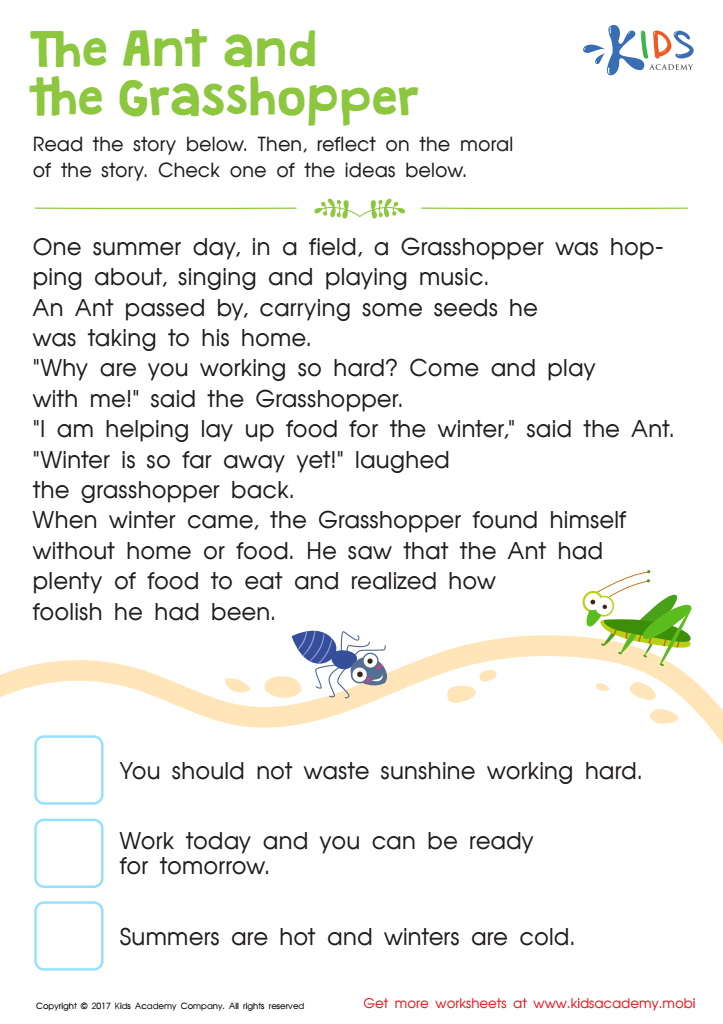
The Ant and The Grasshopper Printable
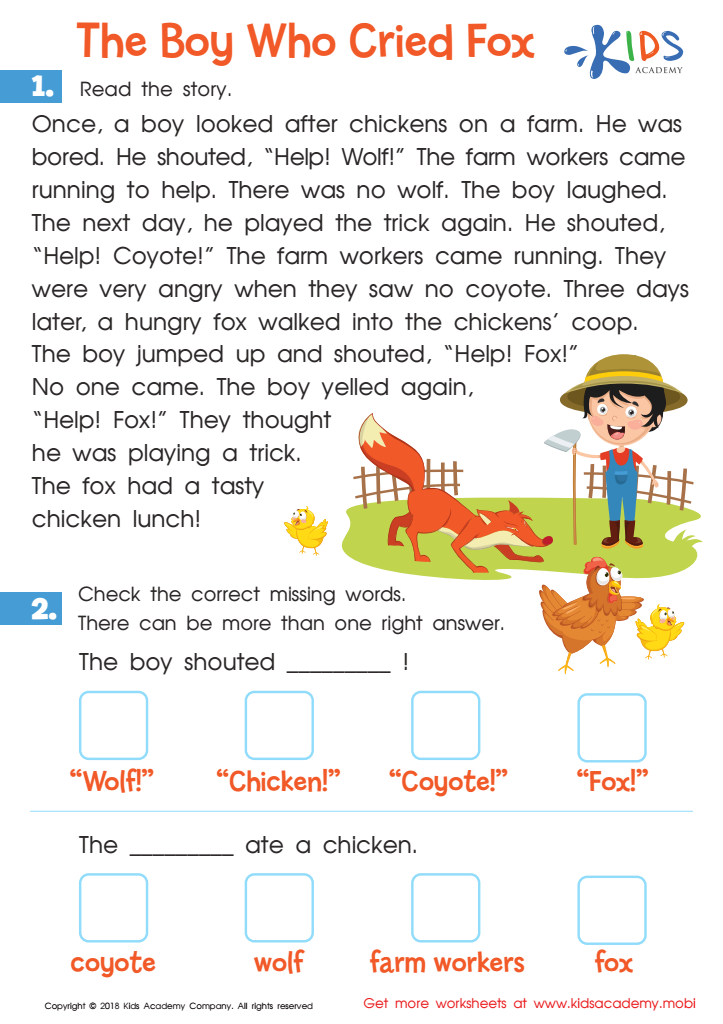
The Boy Who Cried Fox Worksheet
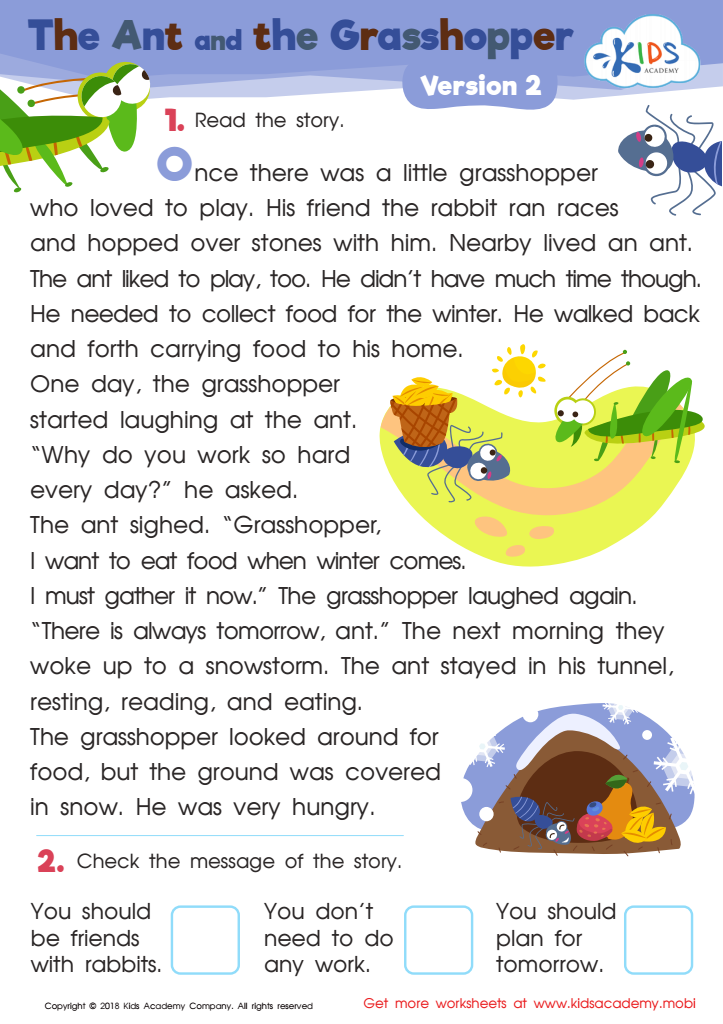
The Ant and The Grasshopper Version 2 Worksheet
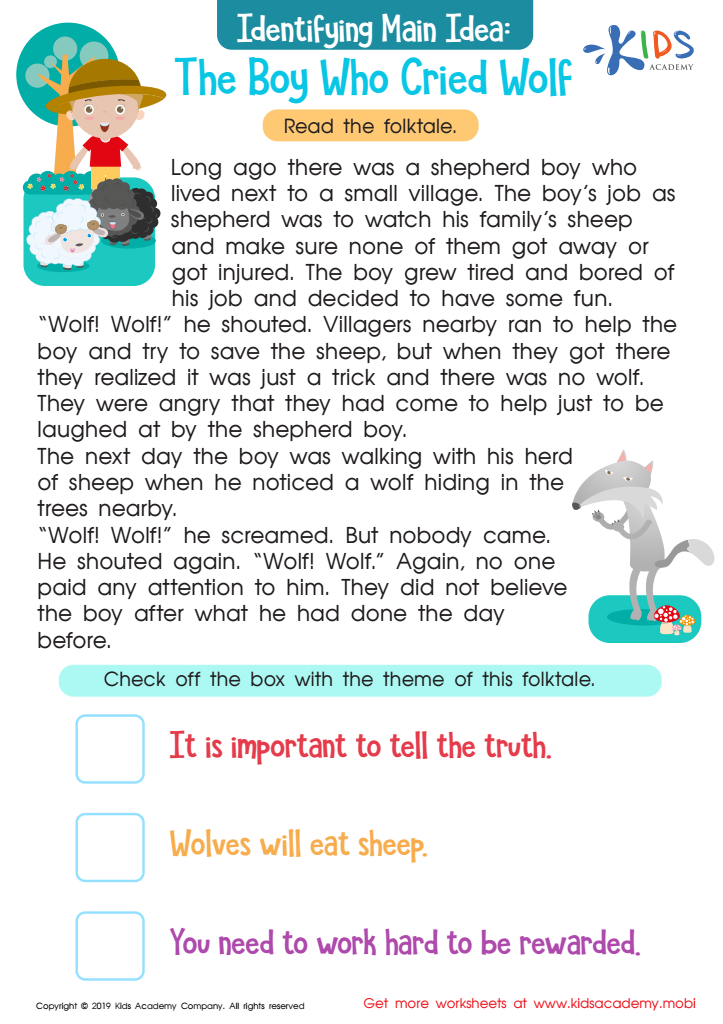
The Boy Who Cried Wolf Part 2 Worksheet







Teaching moral lessons to children ages 6-9 is crucial for several reasons. At this developmental stage, children are forming their understanding of right and wrong, and their capacity for empathy begins to flourish. Introducing moral lessons helps cultivate their character, social skills, and emotional intelligence. By discussing concepts such as honesty, kindness, responsibility, and respect, parents and teachers provide children with a framework for making ethical decisions and navigating social situations.
Furthermore, moral understanding promotes positive behavior and reduces conflicts among peers. As children learn to interpret actions and their consequences, they become more adept at recognizing how their choices affect others, fostering a sense of community and belonging. This sense of moral awareness encourages them to engage in pro-social behaviors and develop strong relationships.
Parents and teachers play a vital role in modeling these values. Through stories, discussions, and everyday situations, adults can reinforce moral lessons, helping children internalize these principles. Ultimately, investing in moral understanding not only shapes children into good citizens but also equips them with essential tools for personal and social growth. In a world increasingly focused on individualism, instilling shared values can create empowered, compassionate individuals who are committed to a greater good.








