
Season identification Worksheets for Ages 6-9
3 filtered results
Difficulty Level
Grade
Age
-
From - To
Subject
Activity
Standards
Unlock the wonders of nature with our engaging Season Identification Worksheets for kids aged 6-9! Designed to enhance observational skills and reinforce knowledge about the changing seasons, these worksheets make learning fun and interactive. Children will explore the unique characteristics of each season through vibrant images and engaging activities that spark curiosity. From winter's snowflakes to spring's blossoms, our resources foster a deeper understanding of the world around them. Perfect for classroom or home use, these worksheets are ideal for enhancing critical thinking and creativity. Join us in celebrating the beauty of every season while igniting a love for learning in young minds!
Favorites
With answer key
Interactive
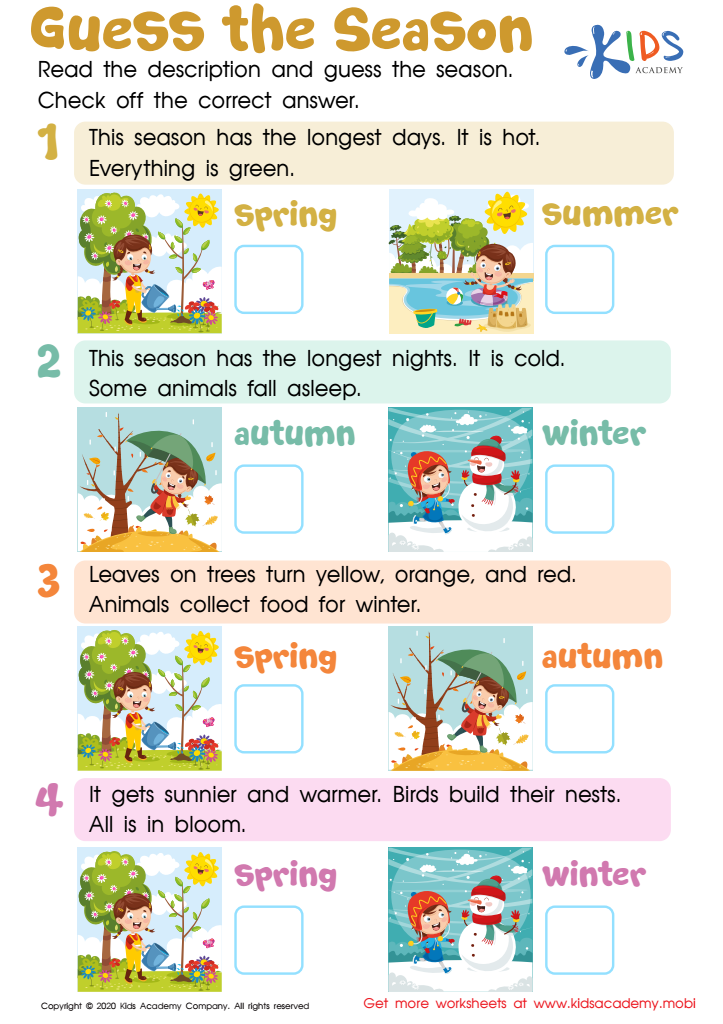
Guess the Season Worksheet
Winter and summer bring different weather! Help kids recognize the changes with this free Kids Academy PDF worksheet. Students read each description, look at the pictures, and check the box next to the season depicted. Make learning fun and easy with interactive activities.
Guess the Season Worksheet
Worksheet
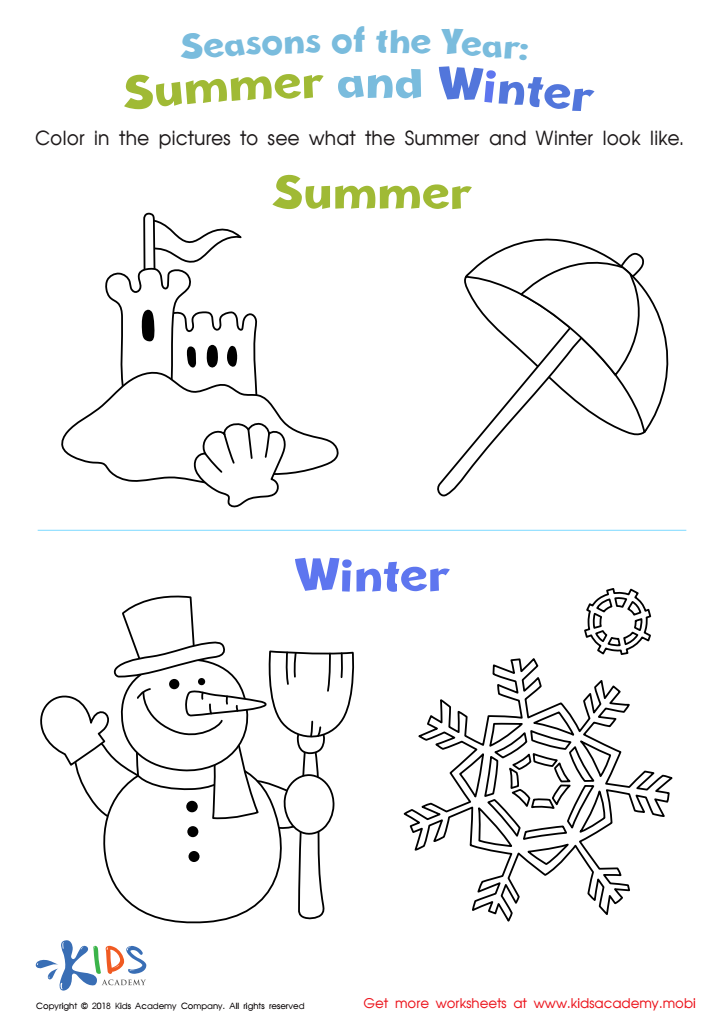
Summer and Winter Worksheet
Ask your child what they associate with winter and summer. What do they look forward to in winter? What colors do they see most? What do they love doing in summer? Help them color in the pictures of winter and summer in the worksheet, choosing the colors they think best represent each season.
Download (PDF)
 Assign to My Students
Assign to My Students
Summer and Winter Worksheet
Worksheet
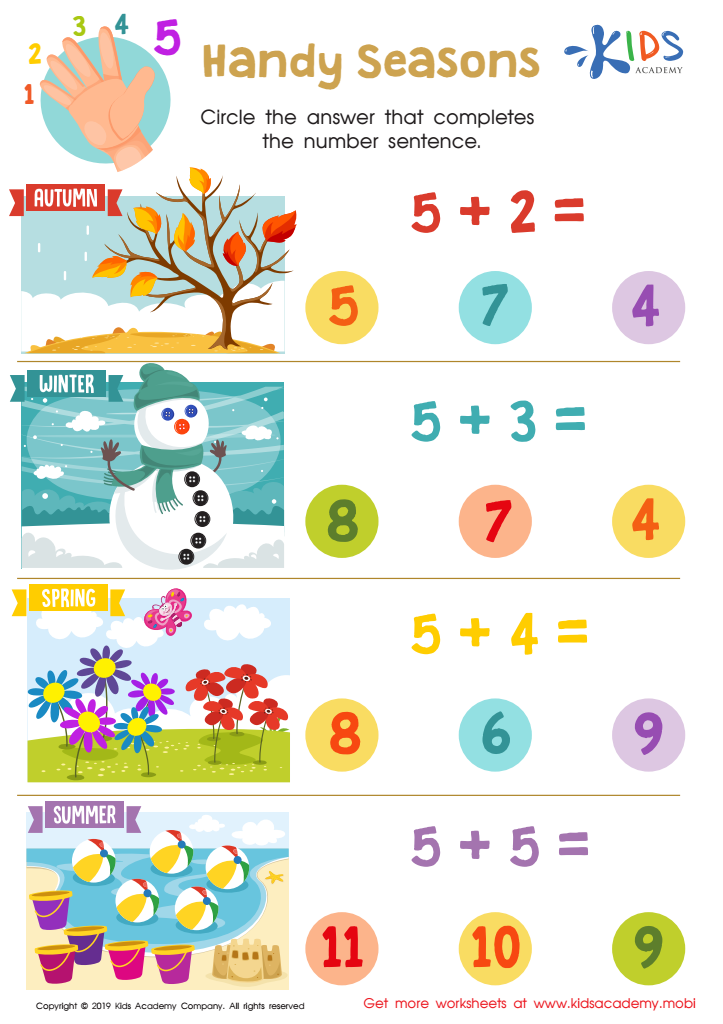
Handy Seasons Worksheet
Help your kids understand number sentences with this fun and colorful worksheet, featuring 4 pictures. Get them to identify each season, then circle the answer that completes the number sentence given. Make math exciting and get your kids excited to learn!
Handy Seasons Worksheet
Worksheet
Join Kids Academy for Free
Who is primarily going to use this learning content?








Understanding season identification is crucial for children aged 6-9 as it enriches their knowledge of the world and supports their cognitive and emotional development. Seasons—spring, summer, fall, and winter—are fundamental concepts that help young learners make sense of natural phenomena, weather changes, and the environment. Recognizing these seasonal shifts fosters a sense of time, allowing children to understand cycles in nature, such as plant growth, animal behavior, and climatic changes.
Additionally, seasonal awareness can enhance creativity and language skills. Children often engage in seasonal-themed activities, stories, and art projects that promote vocabulary development and imaginative thinking. For teachers, integrating seasons into lesson plans encourages interdisciplinary learning, linking science with art and literature.
Moreover, discussing seasons can promote emotional learning. Children associate various seasons with different feelings, traditions, and cultural practices, fostering social skills and empathy. For parents, encouraging seasonal exploration—through nature walks or seasonal celebrations—can strengthen familial bonds and instill a love for the environment.
In summary, seasonal identification is a foundational aspect of early education that benefits cognitive, creative, and emotional growth, making it a critical focus for both parents and teachers.








