Understanding communities Worksheets for Ages 6-9
5 filtered results
-
From - To
Explore the "Understanding Communities" worksheets designed specifically for children aged 6-9. These engaging resources help young learners identify various community roles, including those of essential workers, neighbors, and families. Our meticulously crafted activities promote critical thinking and social awareness by encouraging discussions about responsibilities and community interaction. From coloring pages to matching exercises, these worksheets provide a fun and interactive way for kids to grasp the concept of community and their place within it. Ideal for teachers and parents, these educational tools support the development of civic understanding and foster an appreciation for local culture and cooperation.
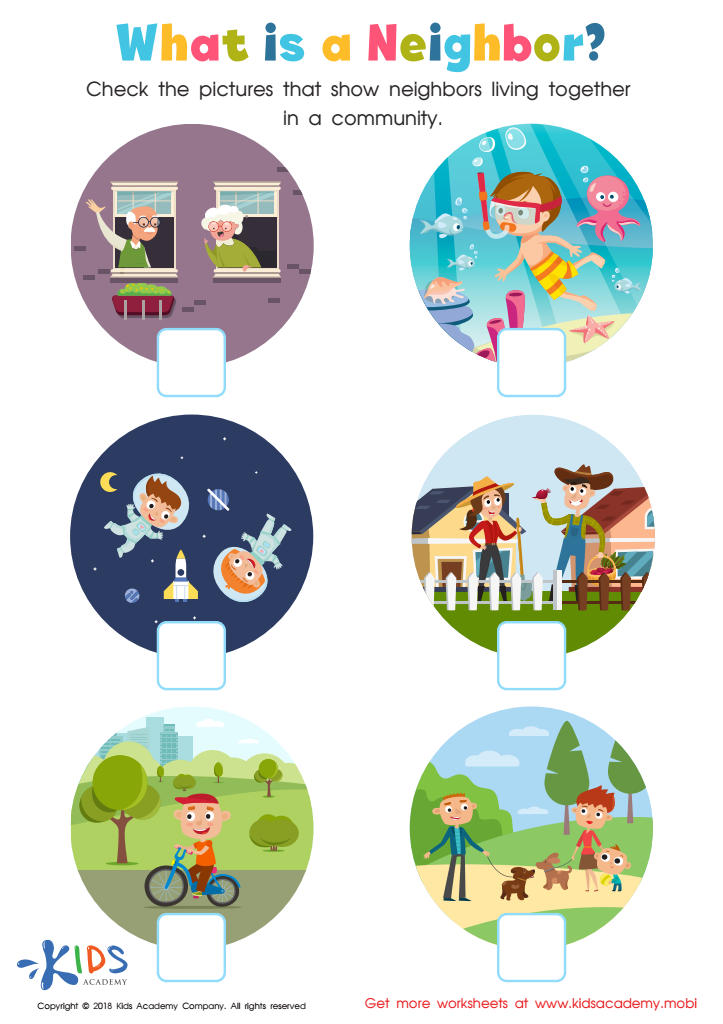
What is a neighbor Worksheet
 Assign to My Students
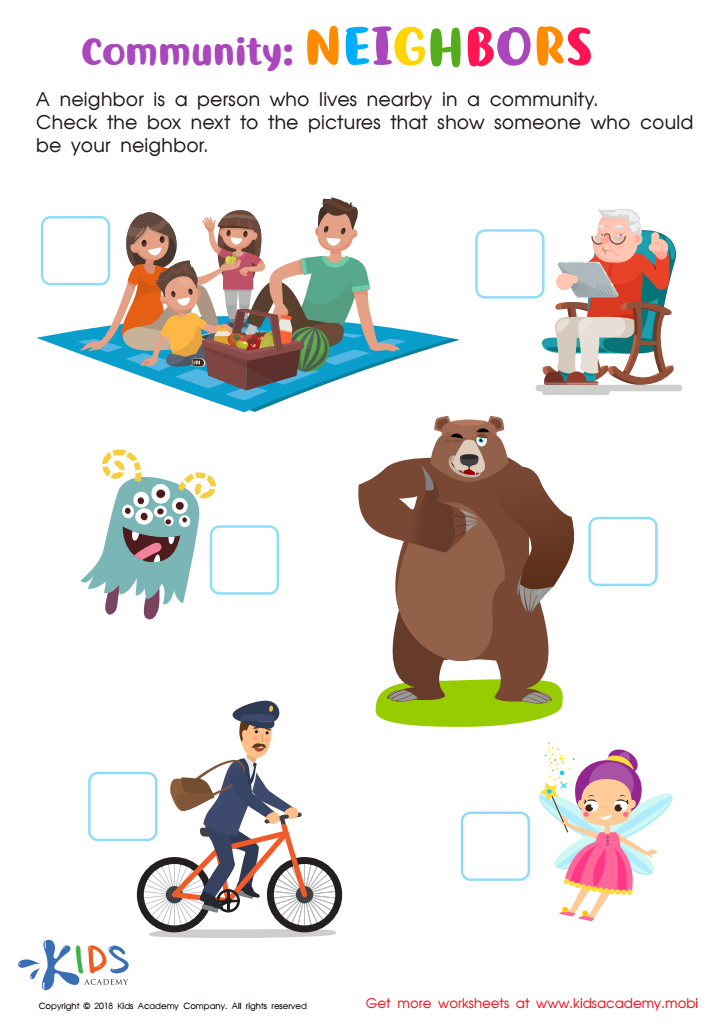
Community: Neighbors Worksheet
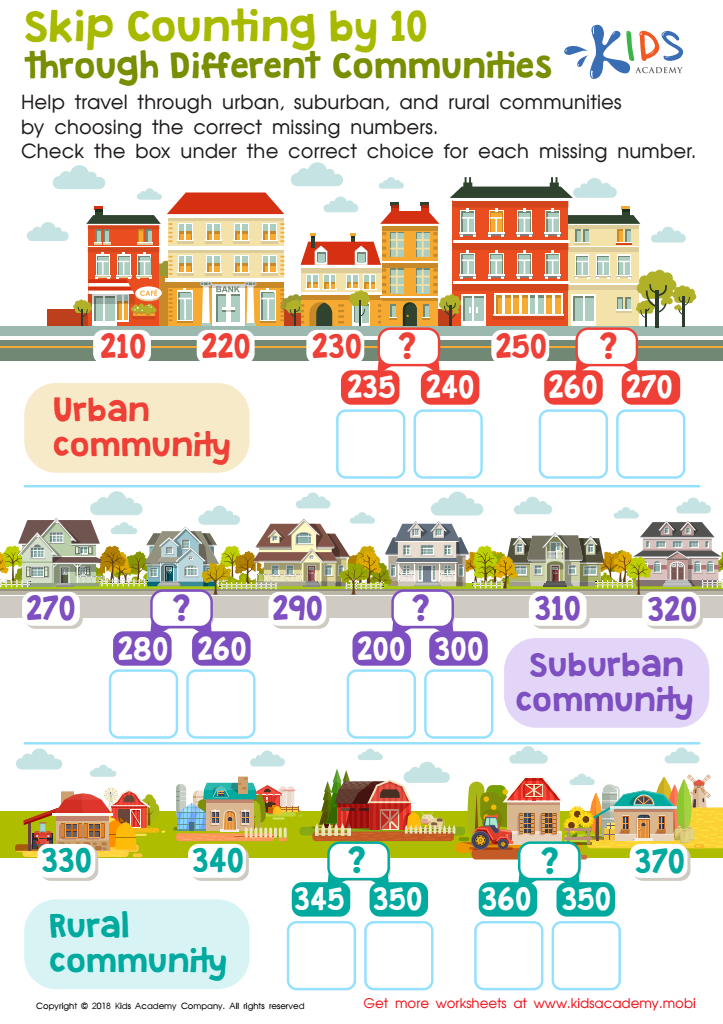
Skip Counting by 10 through Different Communities Worksheet
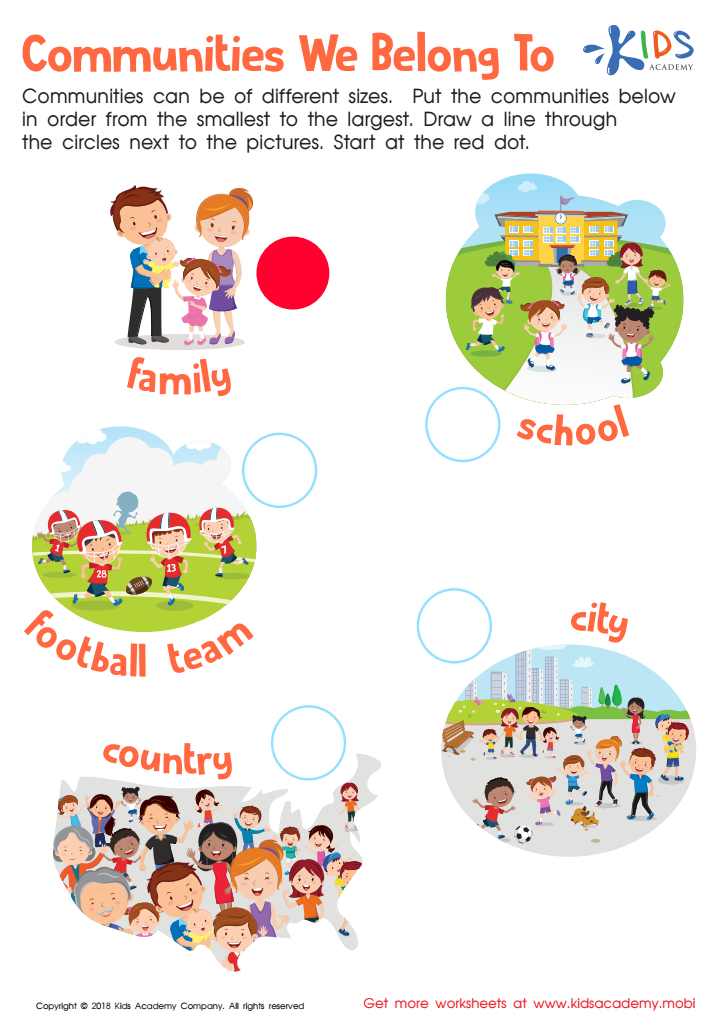
Communities We Belong to Worksheet
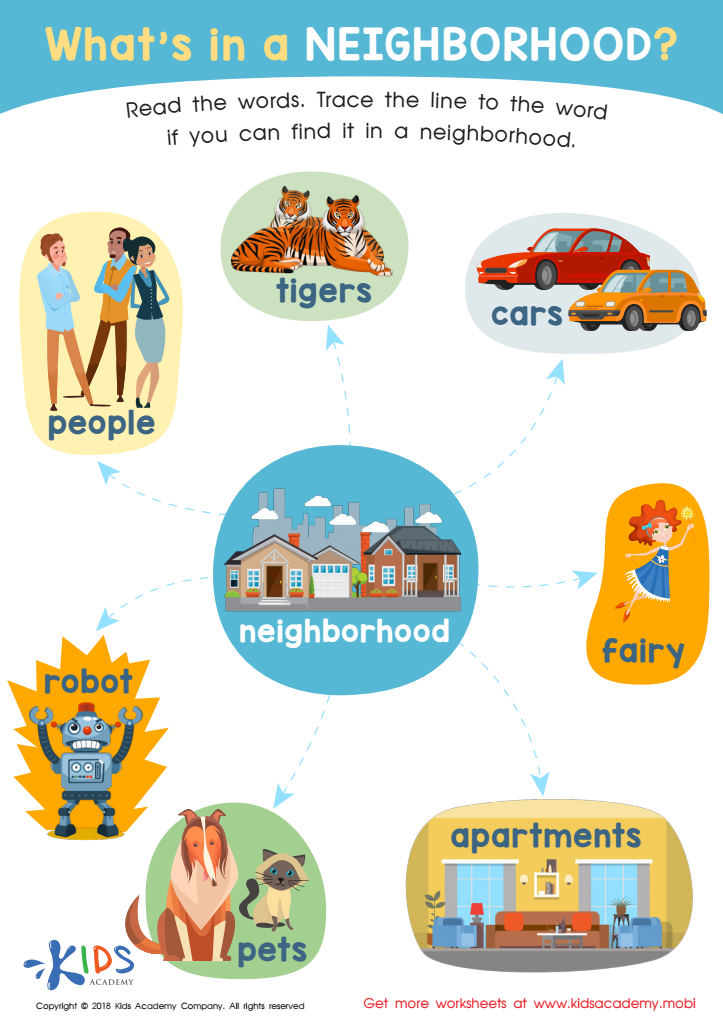
What's in a Neighborhood? Worksheet





Understanding communities is crucial for children aged 6-9 as it fosters their social and emotional development, promoting a sense of belonging and connection. At this age, children are naturally curious about the world around them. By exploring the concept of community, they can learn about diversity, the importance of cooperation, and the roles individuals play within a group. This not only enhances their interpersonal skills but also helps them appreciate different perspectives and cultures, laying the groundwork for empathy and acceptance.
Moreover, engaging with community concepts aids in the development of critical thinking skills. Children begin to understand interdependence, recognizing that their actions impact others, which is vital for instilling a sense of responsibility. Discussions about local history, geography, and community resources encourage them to identify and interact with their environment effectively.
For parents and teachers, nurturing an understanding of communities offers opportunities to reinforce values such as kindness, respect, and shared responsibility. It allows them to guide children in becoming active, informed citizens and inspires them to contribute positively to their communities. Ultimately, helping children grasp community dynamics equips them with the skills they need to thrive socially and emotionally throughout their lives.








