Understanding currency Worksheets for Ages 6-9
4 filtered results
-
From - To
Explore our engaging "Understanding Currency Worksheets" designed for children ages 6-9. These fun and interactive worksheets introduce young learners to basic concepts of money, including the identification of coins and bills, counting money, and making change. Our carefully crafted activities stimulate critical thinking and enhance numerical skills in a playful manner. These resources are ideal for classroom use or at-home learning, providing essential math practice while making currency comprehension enjoyable. Encourage financial literacy in your child early on with our vibrant, easy-to-follow worksheets that promote hands-on learning. Start your journey towards understanding currency today!
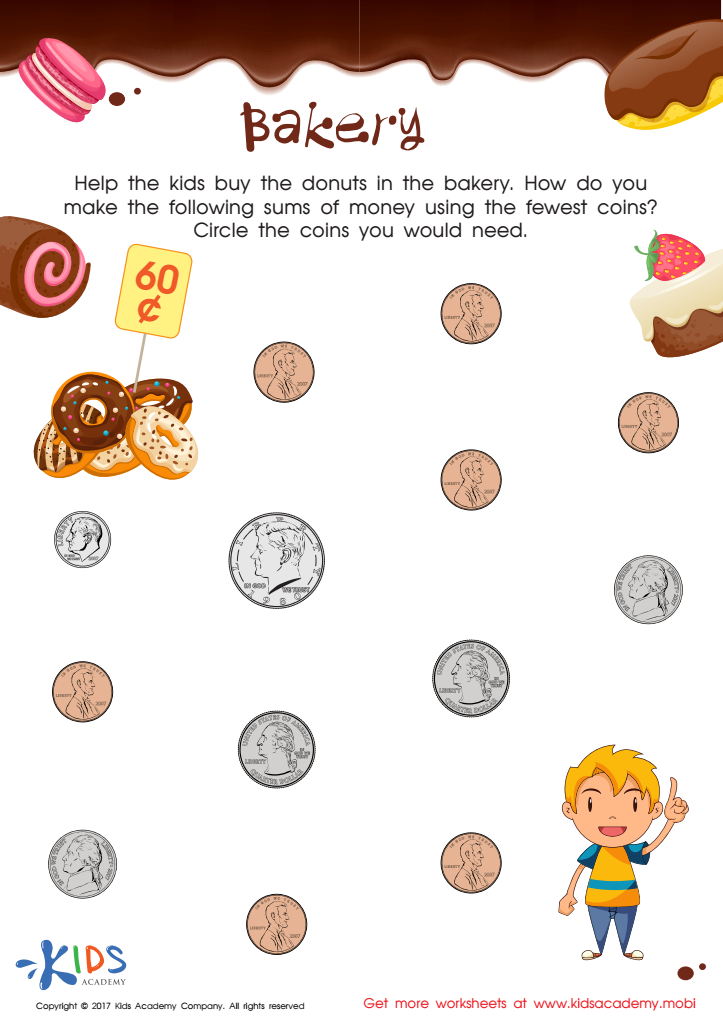
Counting Coins Worksheet
 Assign to My Students
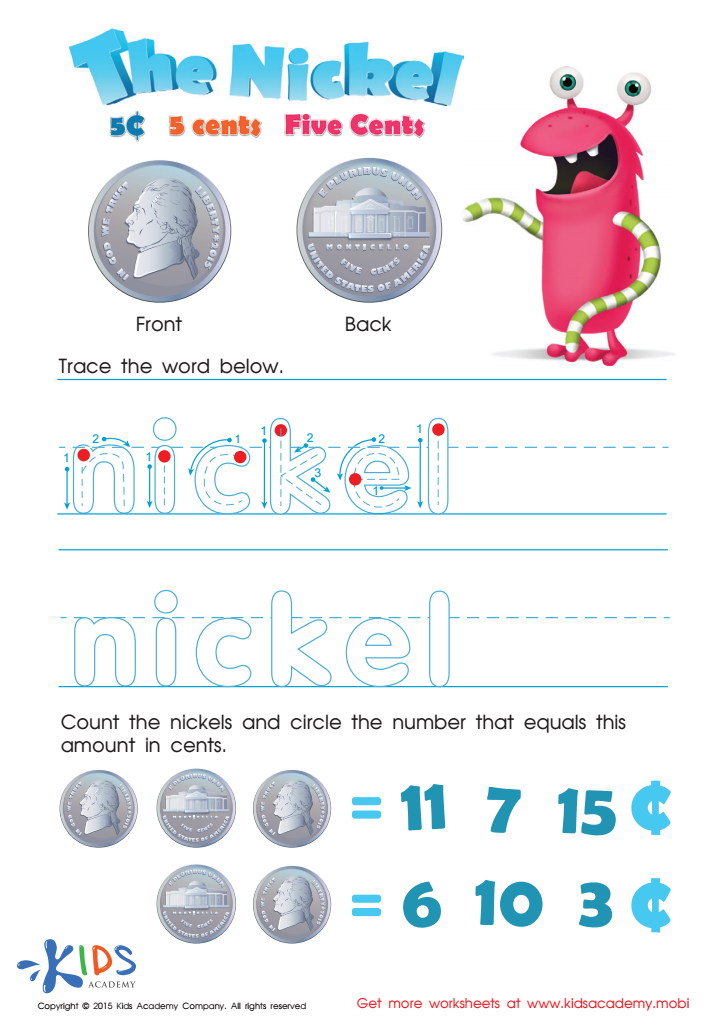
Five Cents or the Nickel Money Worksheet
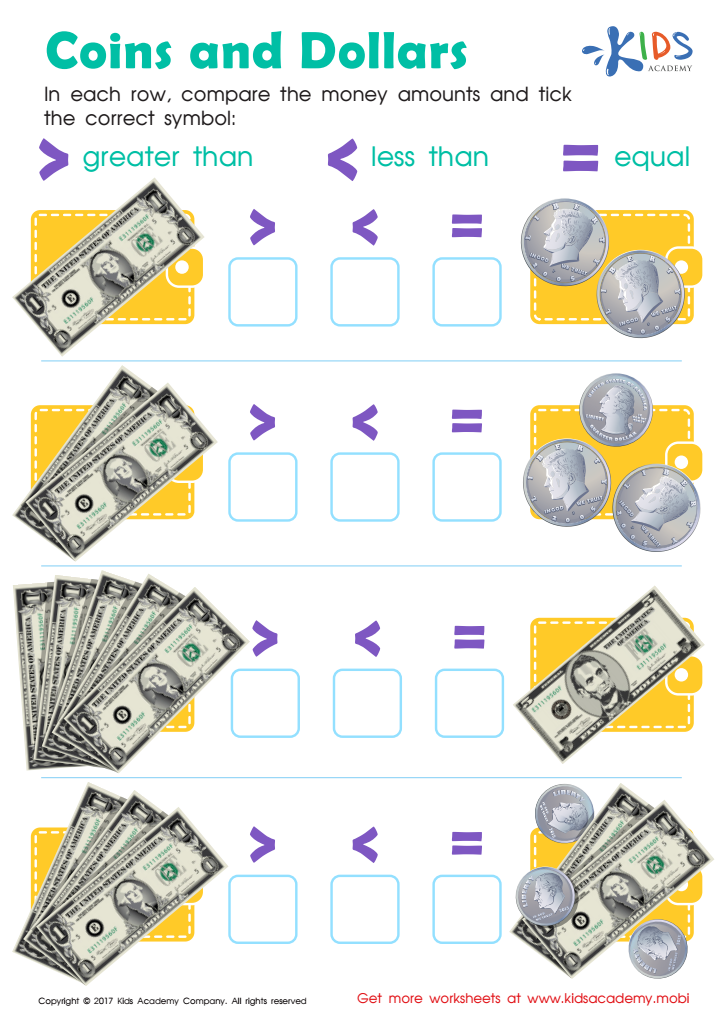
Money: Coins Dollars Printable
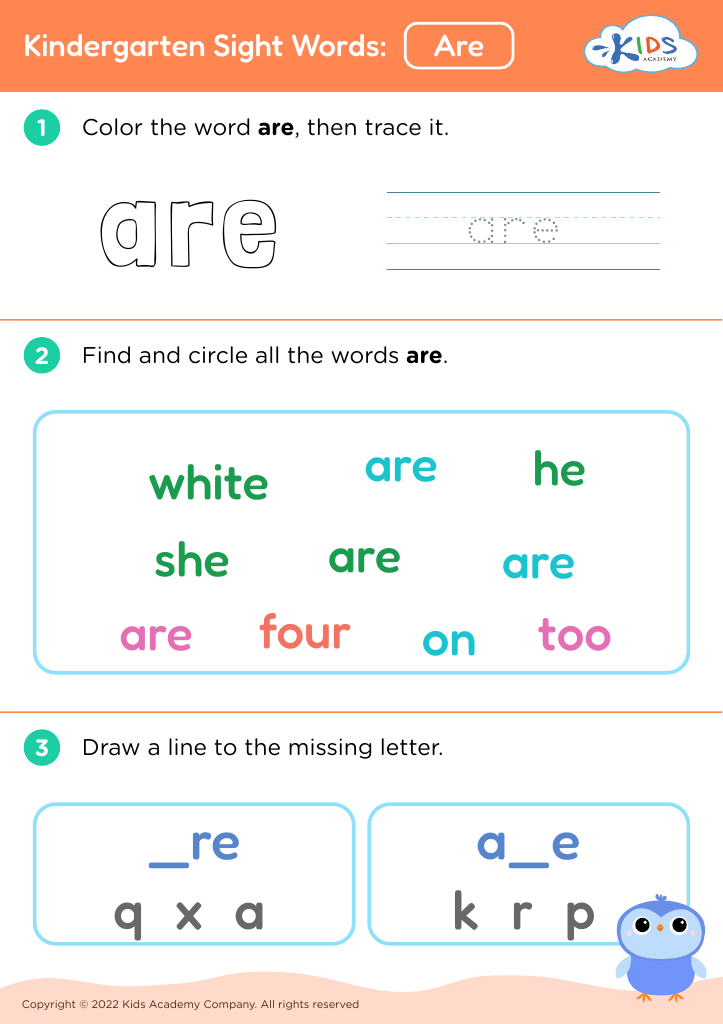






.jpg)
Understanding currency is essential for children aged 6-9, as it lays the foundation for financial literacy and practical life skills. During this developmental stage, children are naturally curious about their surroundings and engaged in learning through hands-on experiences. Introducing concepts of currency—such as recognition of coins and bills, basic value, and the idea of transactions—encourages critical thinking and problem-solving.
Firstly, familiarity with currency helps children comprehend the value of money. This foundational knowledge aids in teaching them how to make smart spending choices, fostering a sense of responsibility. Moreover, understanding currency can spark discussions about saving, sharing, and planning for future purchases, encouraging good habits that will serve them throughout life.
Additionally, learning about currency can tie into various subjects. It offers practical opportunities for engaging with math, such as counting, addition, and subtraction, while simultaneously enhancing their cognitive and social skills through role-playing scenarios or real-world shopping experiences.
Incorporating currency education in early childhood not only builds critical financial competencies but also equips children with the tools they need to navigate everyday situations confidently, setting them up for future fiscal responsibility. Engaging parents and teachers in this dialogue ensures a collaborative approach to developing their children's financial acumen.








