Understanding light sources Worksheets for Ages 6-9
6 filtered results
-
From - To
Discover "Understanding Light Sources Worksheets for Ages 6-9" on Kids Academy, designed to illuminate young minds! These engaging worksheets will guide children through the basics of natural and artificial light sources, fostering their curiosity and comprehension. Perfect for classroom or home use, each worksheet combines vibrant illustrations with interesting facts and interactive activities. Students will identify light sources, understand their importance, and explore how light affects daily life. Tailored for ages 6-9, this resource is ideal for promoting scientific thinking and awareness. Visit Kids Academy to spark your child's interest in the amazing world of light!
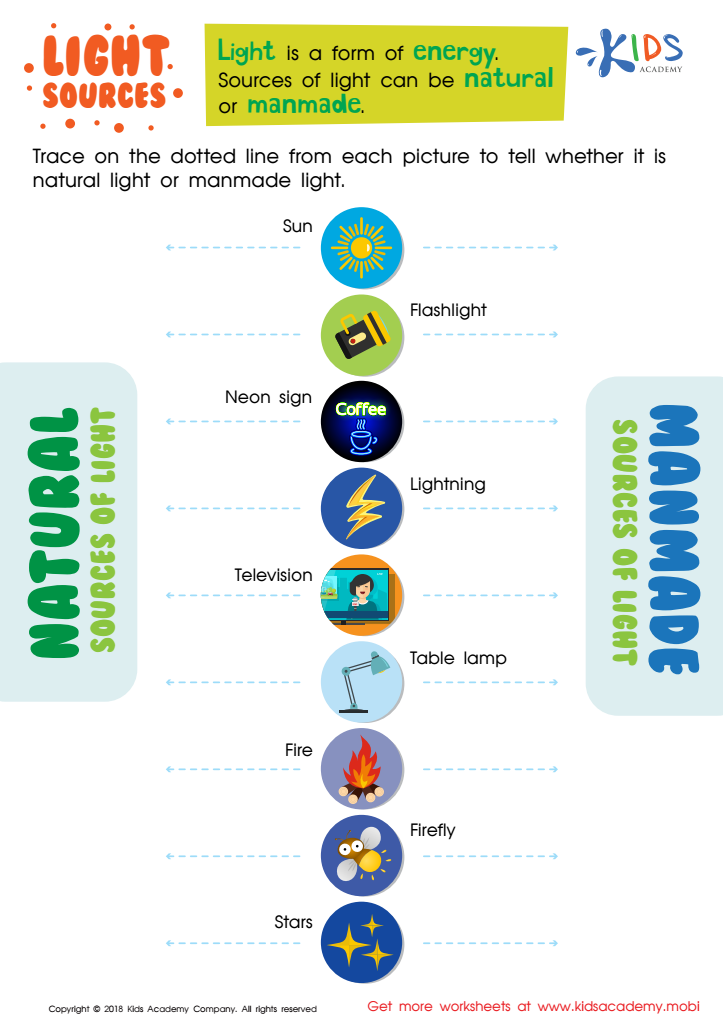
Natural and Manmade Light Sources Worksheet
 Assign to My Students
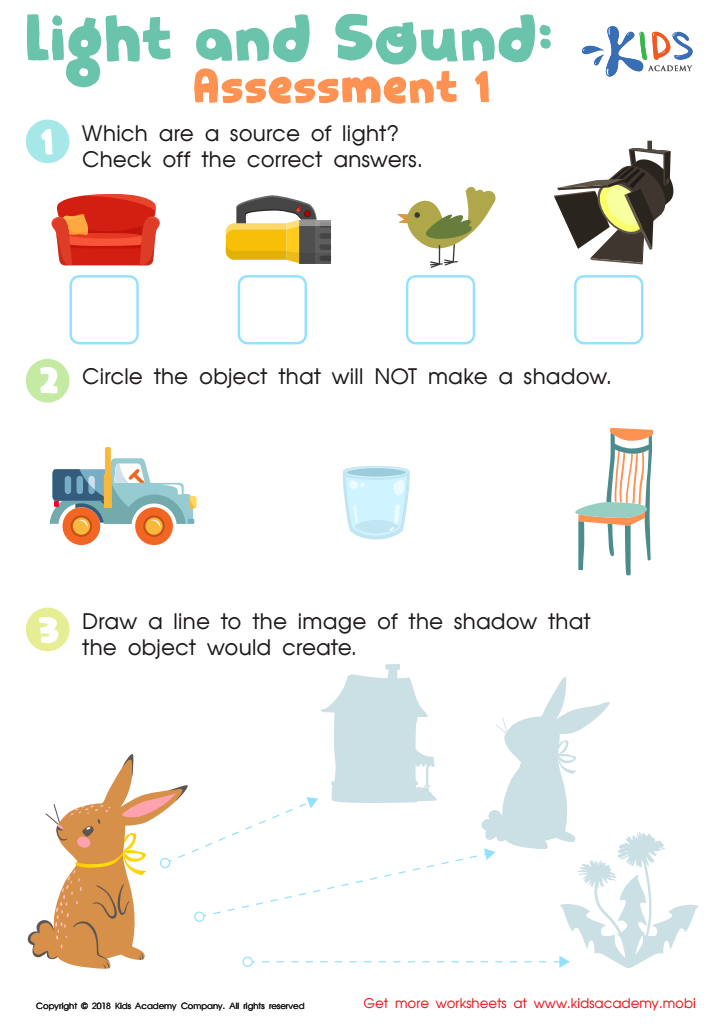
Light and Sound: Assessment 1 Worksheet
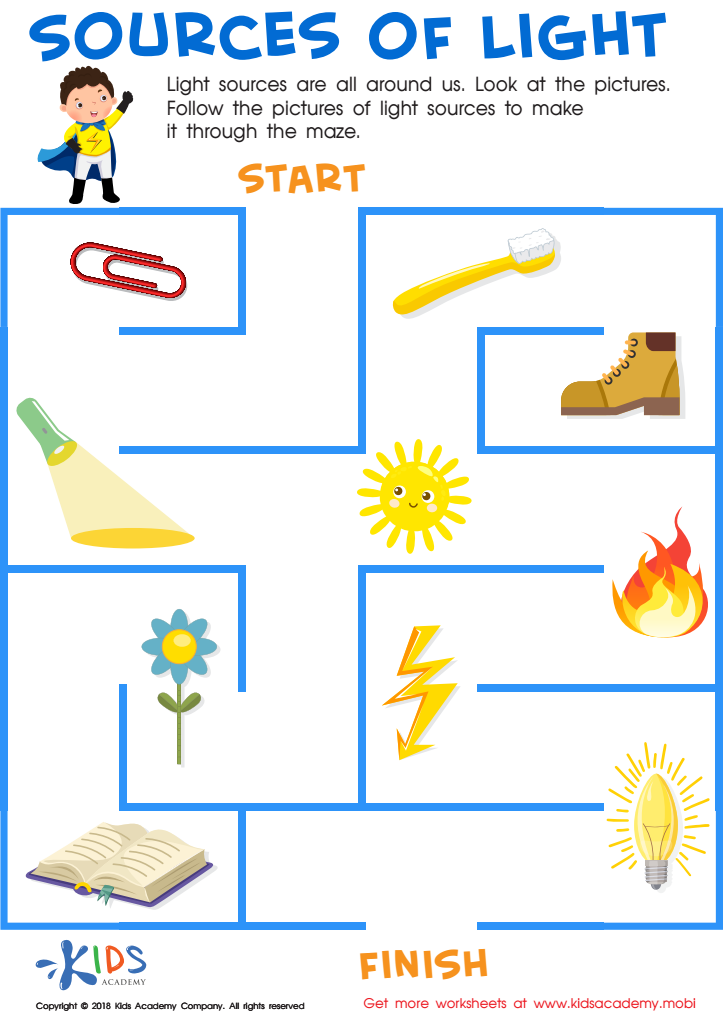
Sources of Light Worksheet
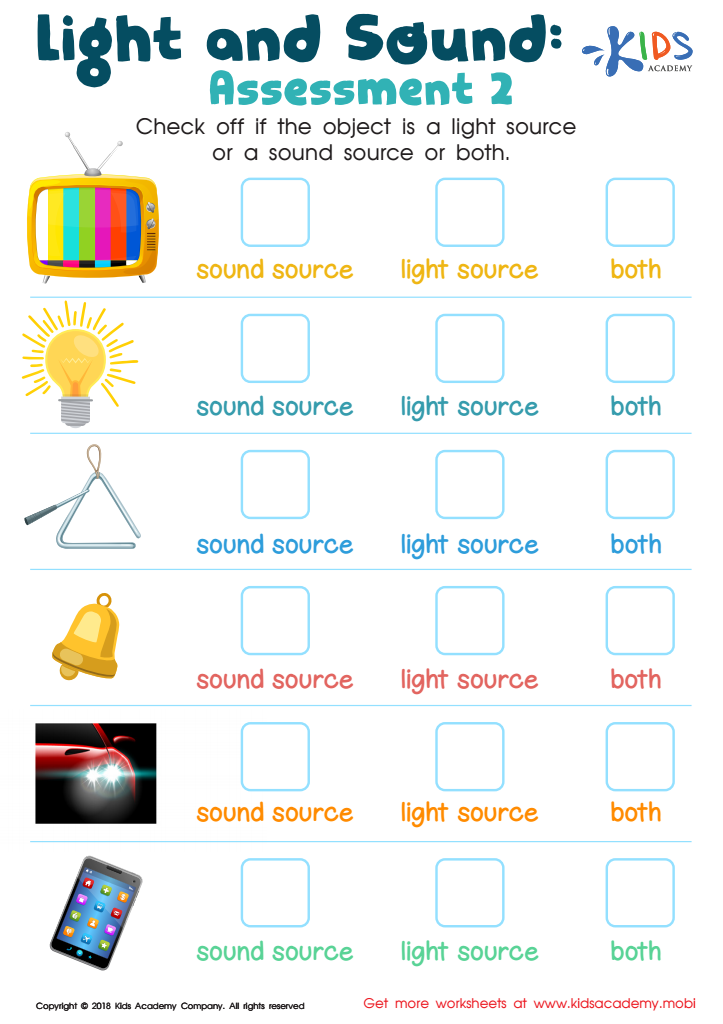
Light and Sound: Assessment 2 Worksheet
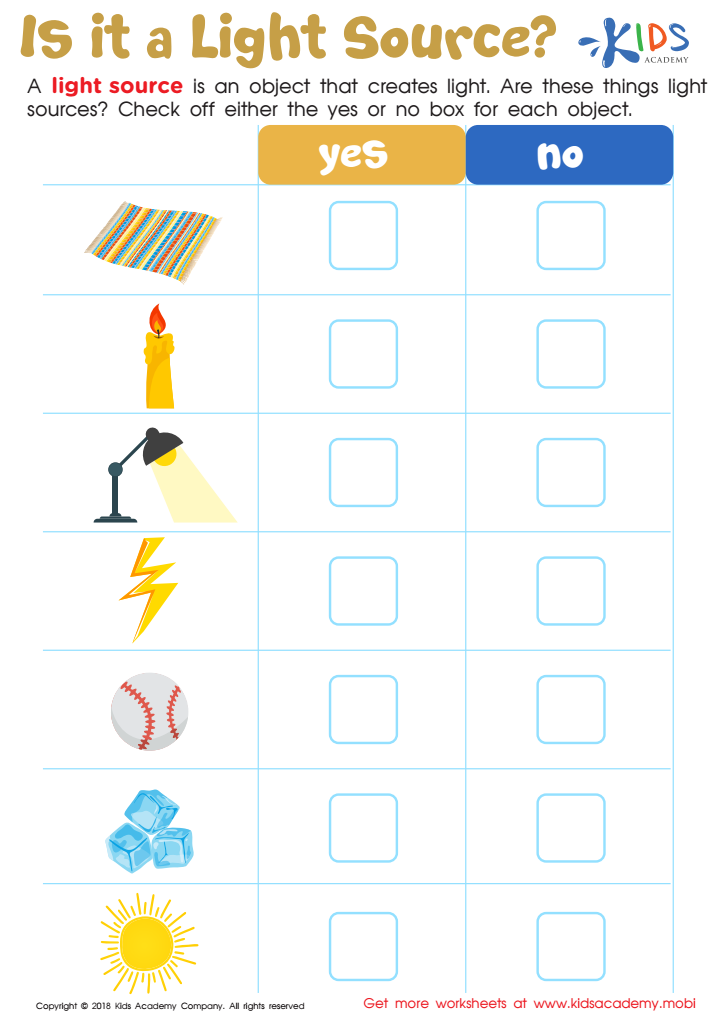
Is It a Light Source? Worksheet
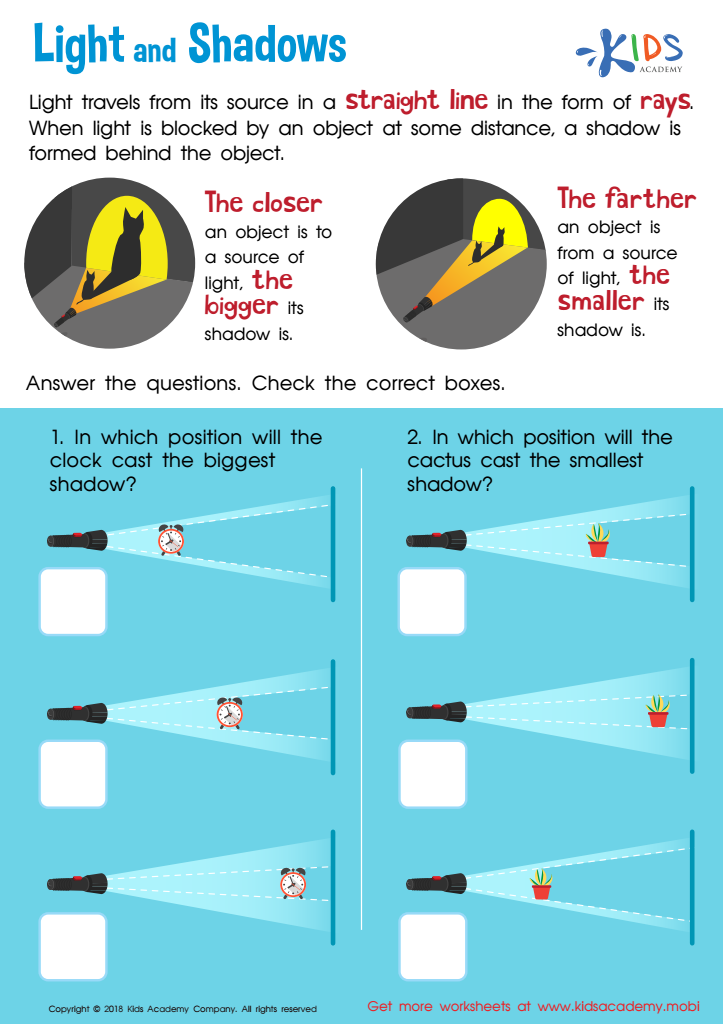
Light and Shadow Worksheet for Grade 3



.jpg)


Understanding light sources is essential for children ages 6-9 as it lays the foundation for their exploration of the natural world and fosters curiosity. At this developmental stage, children are natural inquisitors, constantly asking questions about their surroundings. Learning about light sources helps answer some of these questions and sparks further interest in science.
Knowledge of light sources—such as the sun, lamps, and flashlights—helps children distinguish between natural and artificial light. This understanding is critical as it introduces basic scientific concepts, like how light affects visibility, mood, and safety. For instance, they’ll learn why we can’t see in the dark without lights and how the sun is necessary for our planet’s life processes.
Moreover, comprehending light sources initiates discussions about broader topics, like energy conservation and the importance of sustainability. When children understand where light comes from and how to use it wisely, they are more likely to develop eco-friendly habits early on.
For teachers and parents, this knowledge aids in constructing learning experiences that are engaging and meaningful, encouraging children to perform experiments and make observations that hone their critical thinking and problem-solving skills. Ultimately, grasping such concepts fosters a lifelong love of learning and a nuanced appreciation of the world around them.








