Understanding timelines Worksheets for Ages 6-9
7 filtered results
-
From - To
Introduce your child to the fascinating world of timelines with our "Understanding Timelines Worksheets for Ages 6-9." These printable worksheets are designed to help young learners grasp the concept of chronological order, historical events, and sequencing through engaging activities. Each worksheet offers easy-to-follow exercises, encouraging kids to improve their learning skills while having fun. Perfect for both classroom and home use, these resources are crafted to align with educational standards, ensuring a meaningful and effective learning experience. Help your child build a strong foundation in history and time management with our dynamic and interactive timeline worksheets.
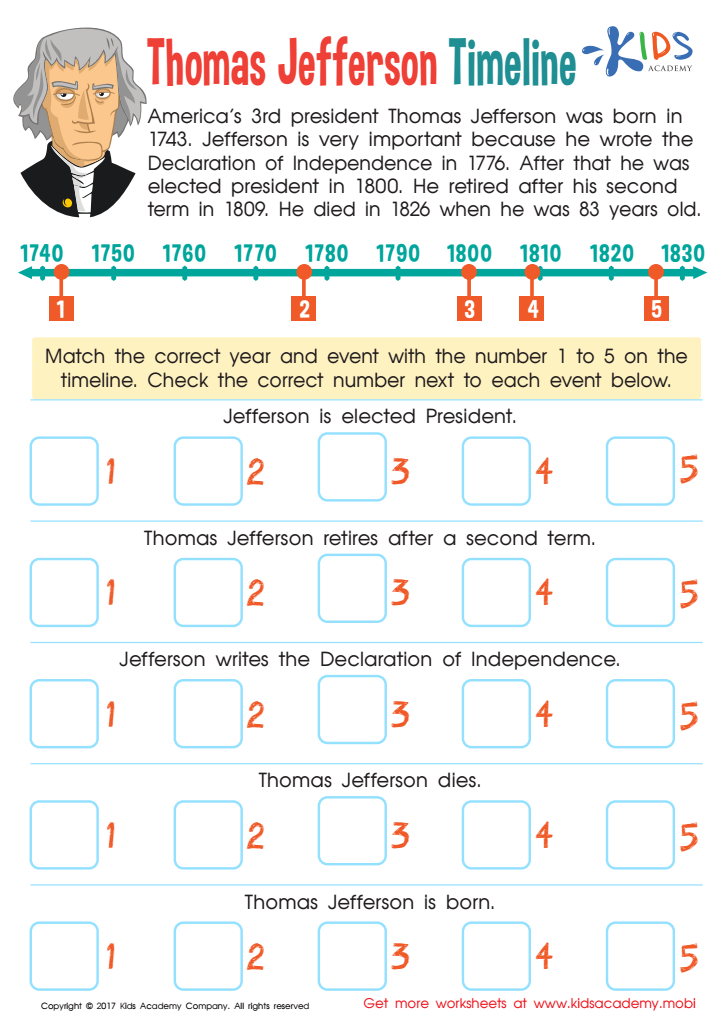
Thomas Jefferson Timeline Worksheet
 Assign to My Students
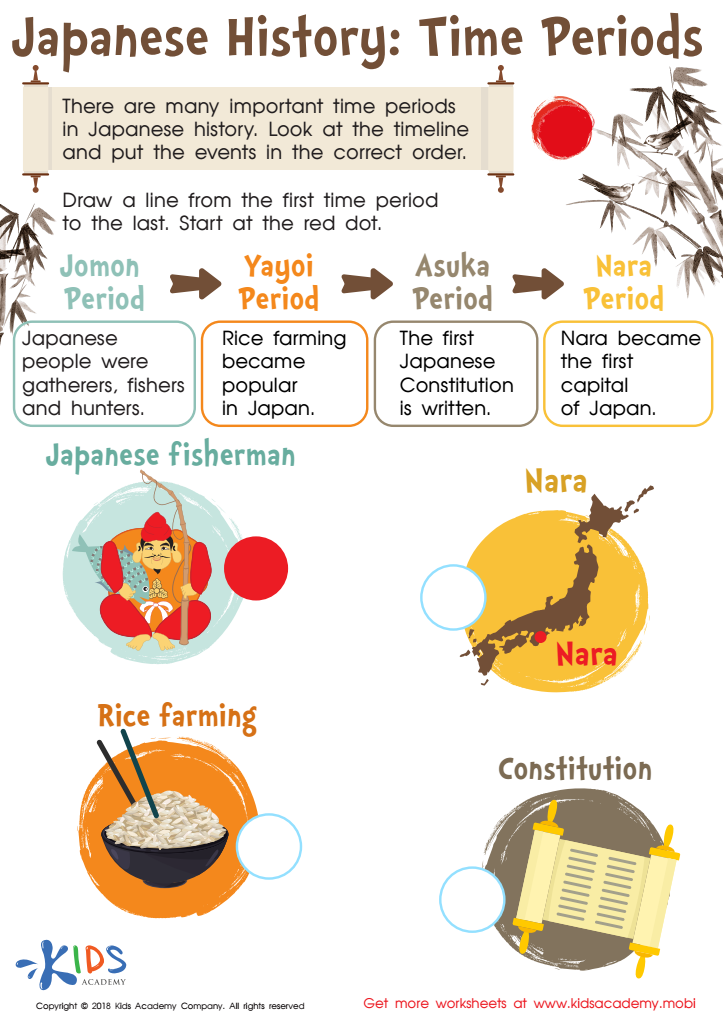
Japanese History: Time Periods Worksheet
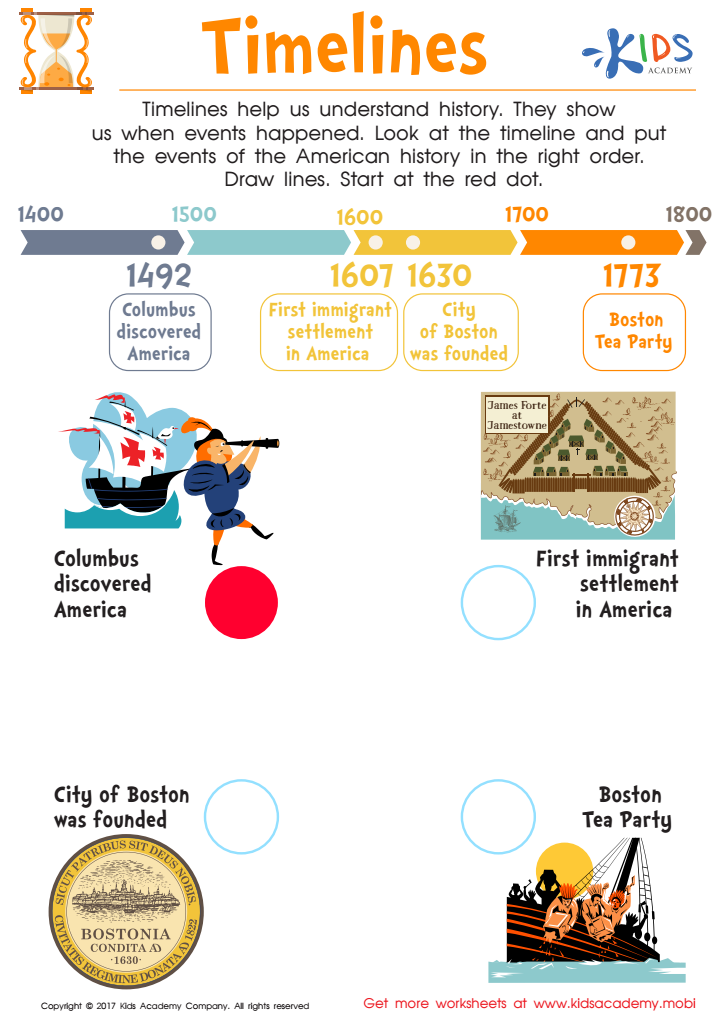
American History Timeline Worksheet
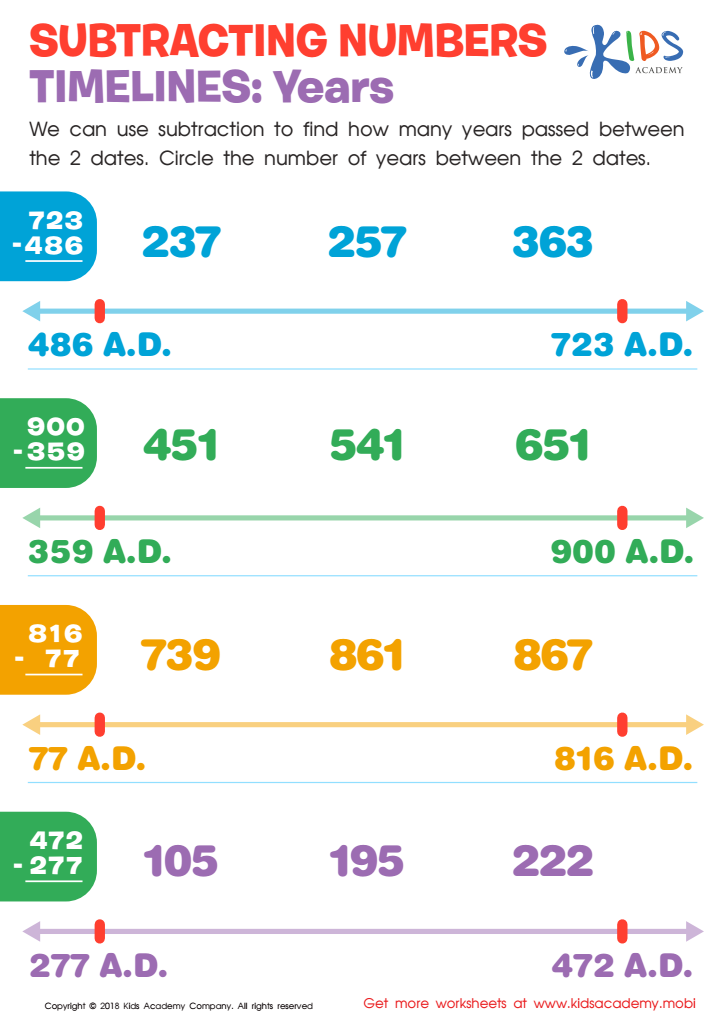
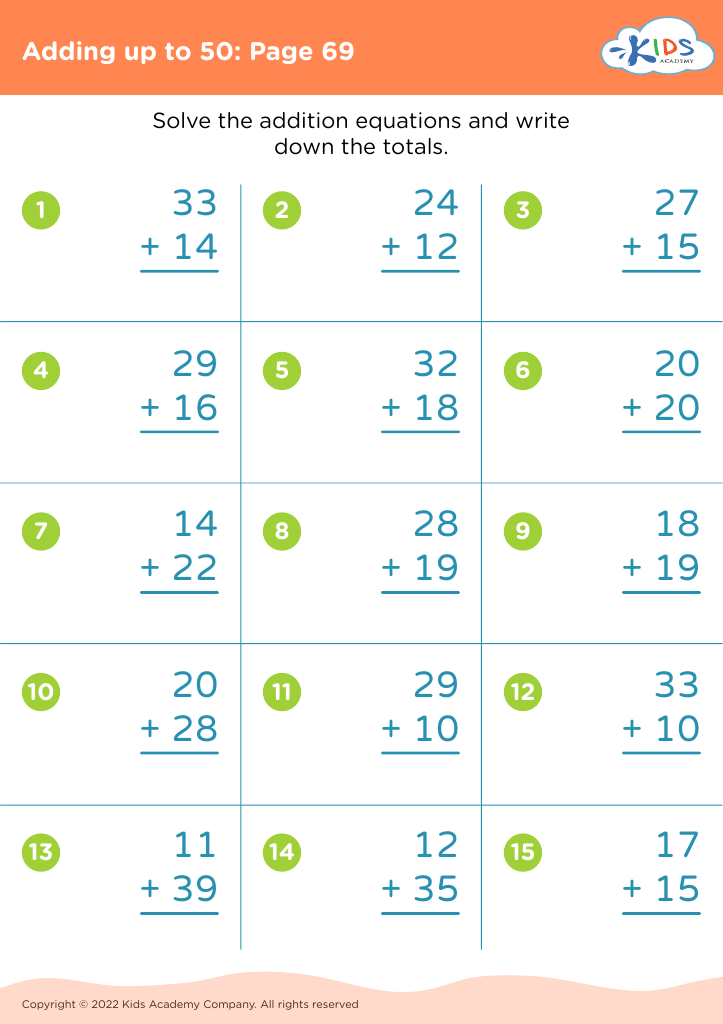
Subtracting Numbers Timelines: Years Worksheet
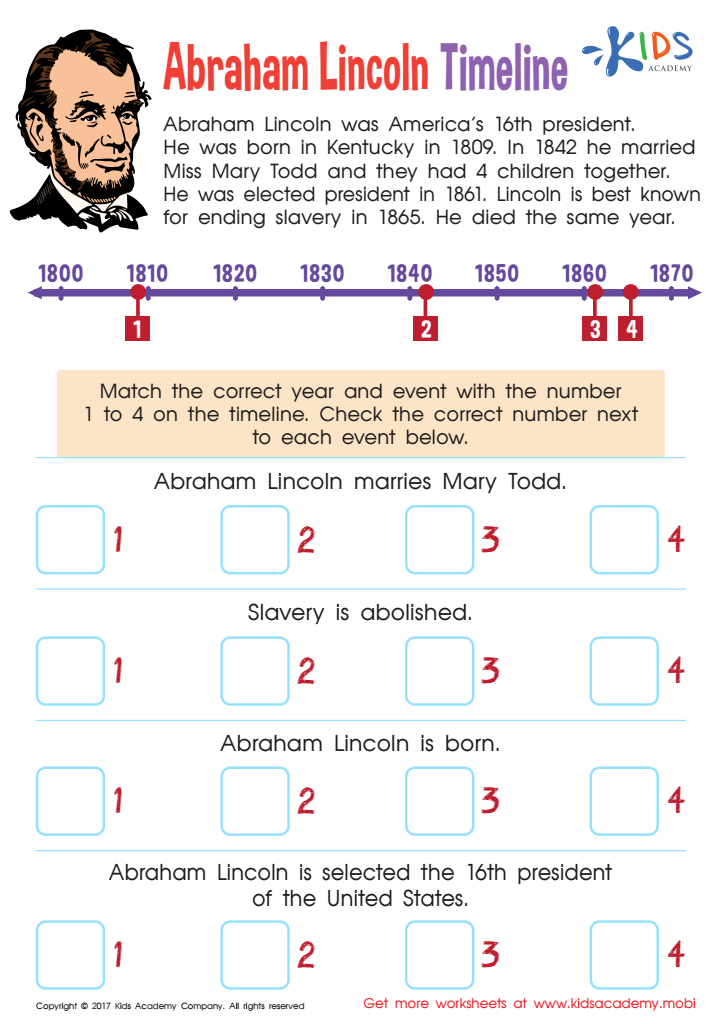
Abraham Lincoln Timeline Worksheet
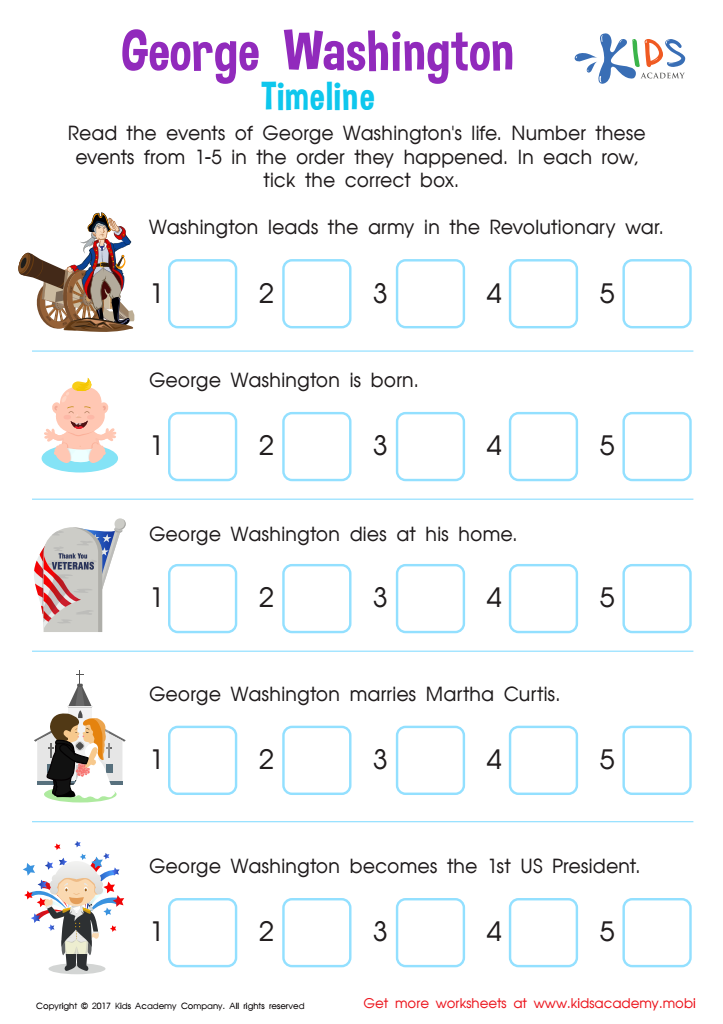
George Washington Timeline Worksheet







Understanding timelines is crucial for children's academic and personal development, particularly for ages 6-9, when foundational learning takes place. First, timelines help develop a child's sense of chronology and time management. They begin to grasp the sequence of events and the concept of past, present, and future, which is fundamental for history and social studies. This skill not only enhances their academic performance but also their ability to organize their day-to-day activities.
Moreover, understanding timelines aids in cognitive development. It strengthens memory by linking events logically, fostering critical thinking. As they practice placing events on a timeline, children also improve their analytical skills as they discern cause-effect relationships and understand progression.
For parents and teachers, teaching timelines offers a structured approach to recount stories, lessons, and historical events, making them easier for young minds to comprehend. It also encourages a visual and interactive learning style which can engage children more deeply than text-based methods.
Timelines integrate learning across various subjects, including math (understanding dates and intervals), literacy (sequencing stories), and art (creating and interpreting visual timelines). By investing in these skills early, parents and teachers set a solid foundation for children to navigate complex concepts efficiently in later years, fostering a lifelong love for learning.








