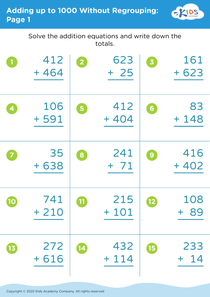
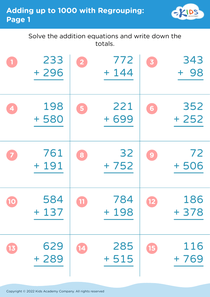
Basic Math Skills Adding up to 1000 Misc Worksheets for Ages 6-9
3 filtered results
-
From - To
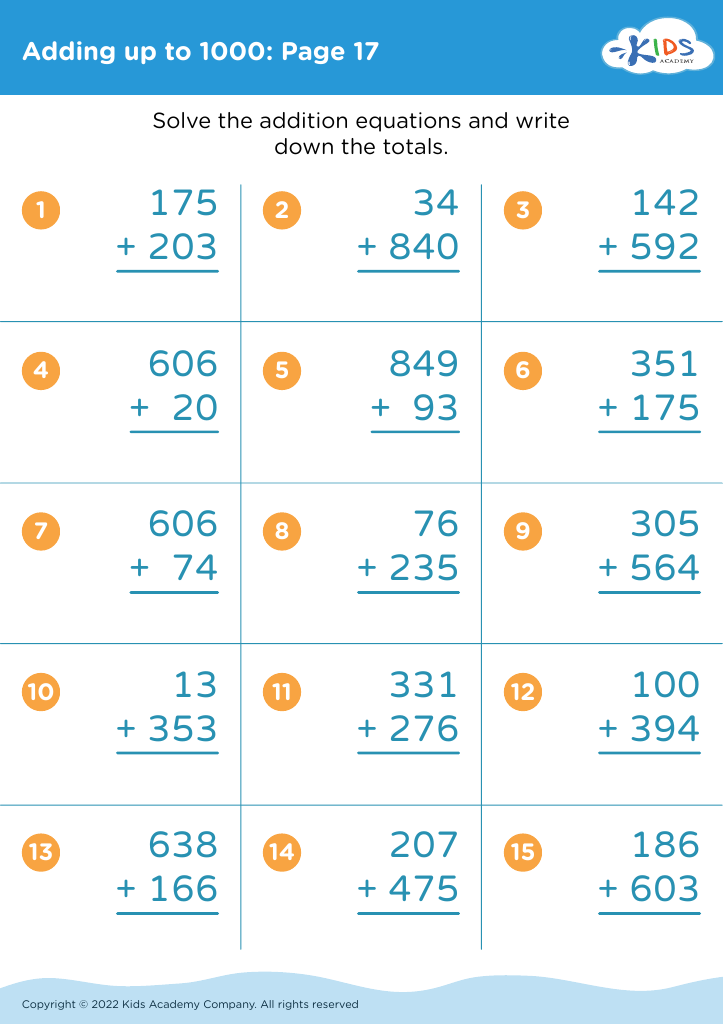
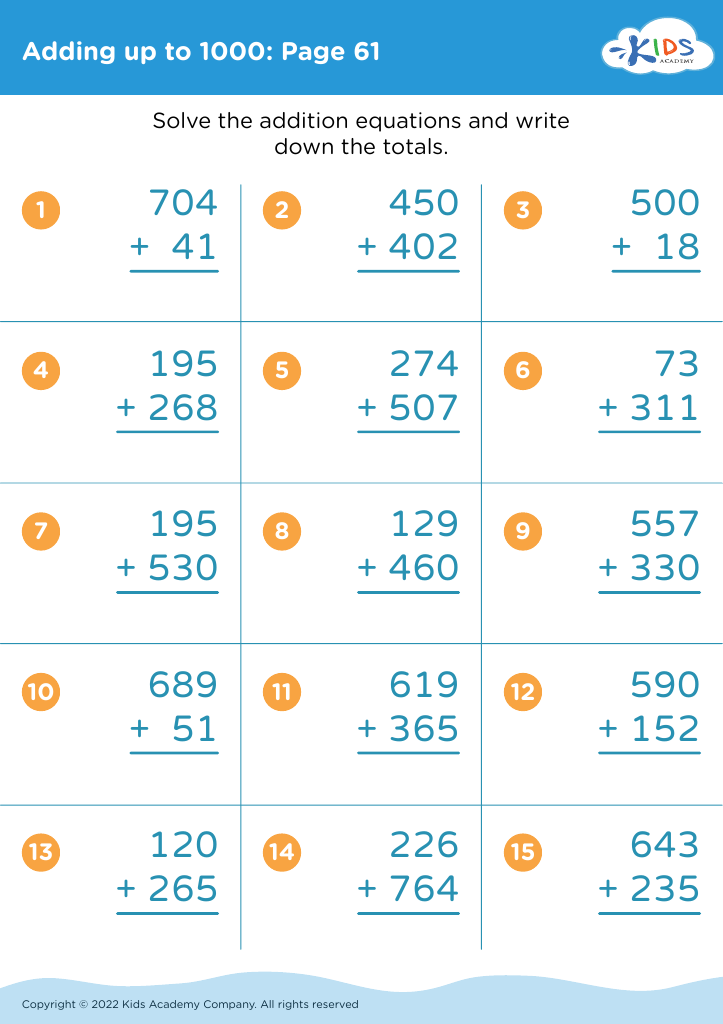
Explore our engaging "Basic Math Skills: Adding up to 1000" worksheets designed specifically for children ages 6 to 9! These delightful resources provide a fun and interactive way for young learners to master essential addition skills, helping them build a strong mathematical foundation. With a variety of colorful and appealing worksheets, your child will enjoy practicing adding numbers up to 1000, enhancing their confidence and competence in math. Packed with diverse exercises, these worksheets are perfect for home or classroom use, making learning enjoyable while catering to varying skill levels. Join us on a math adventure today and boost your child's learning journey!
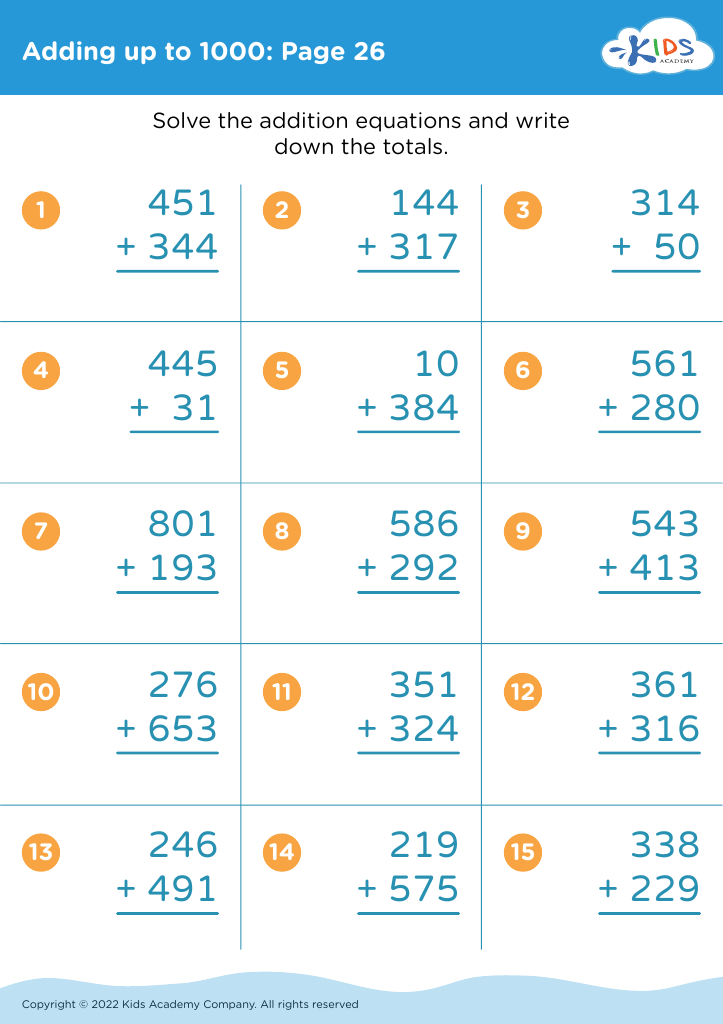


Basic math skills, particularly adding up to 1000, are crucial for children aged 6-9 as they form the foundation for advanced numerical understanding and problem-solving abilities. During these formative years, children are developing their cognitive skills, and mastering addition fosters their logical thinking and reasoning.
Parents and teachers should prioritize these skills because they are not only essential for academic success in higher grades, but they also encourage real-life applications. For instance, understanding how to add numbers up to 1000 enables children to manage money, measure, and understand quantities – skills that are invaluable in everyday life.
Moreover, mastering addition helps build confidence in young learners. When children can confidently solve problems and grasp concepts, they become more engaged learners. This foundational knowledge is vital for moving on to more complex operations such as subtraction, multiplication, and even division.
Lastly, reinforcing basic math skills creates a robust learning environment, enhancing students' overall competence in math-related subjects. As children build their skills, they develop a positive attitude toward learning, ultimately fostering a lifelong love for mathematics. Prioritizing these essential skills prepares them for future academic and life challenges.