Fraction simplification Adding up to 1000 Misc Worksheets for Ages 6-9
5 filtered results
-
From - To
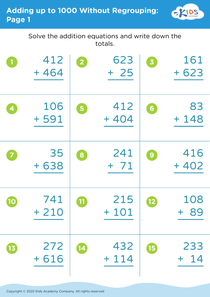
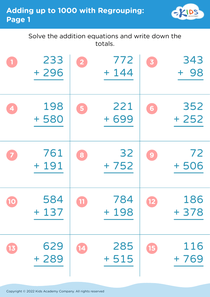
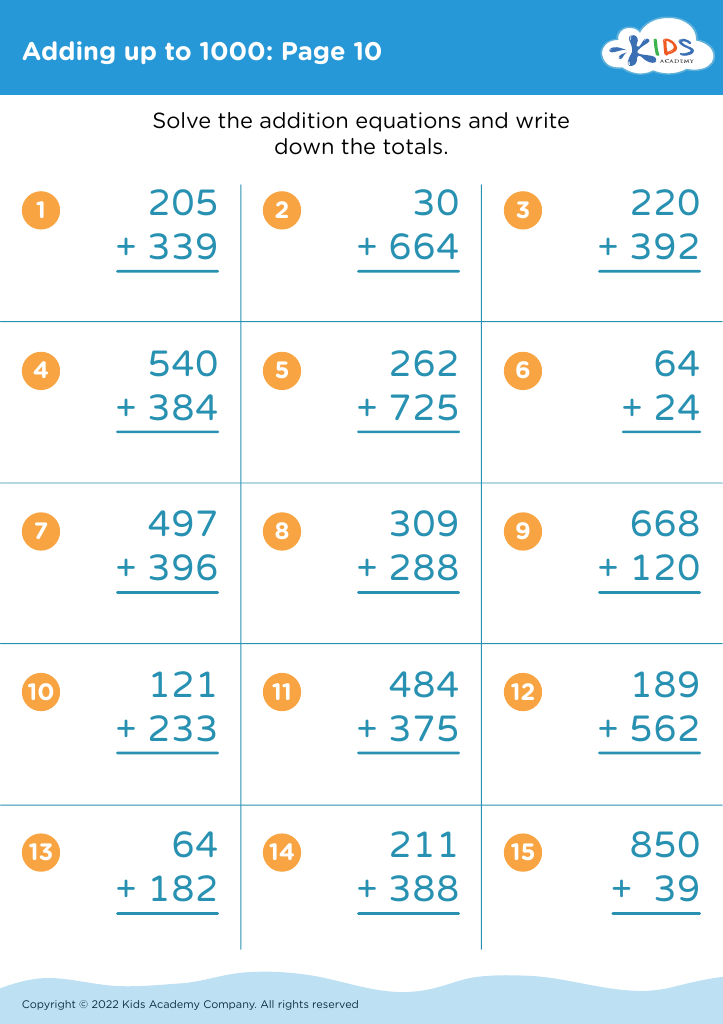
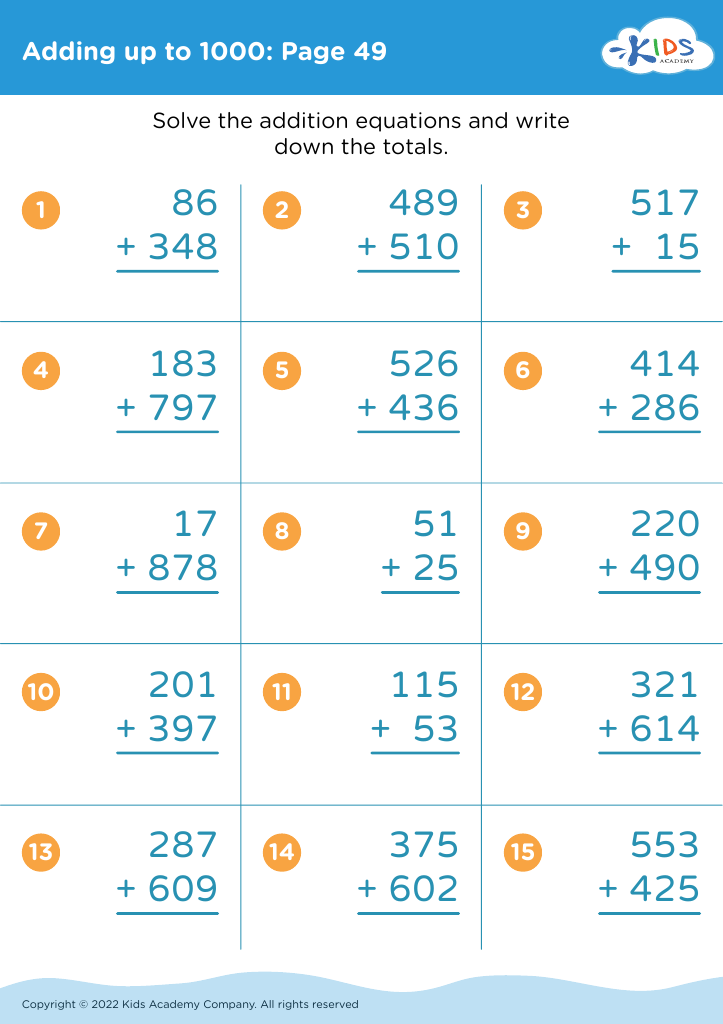
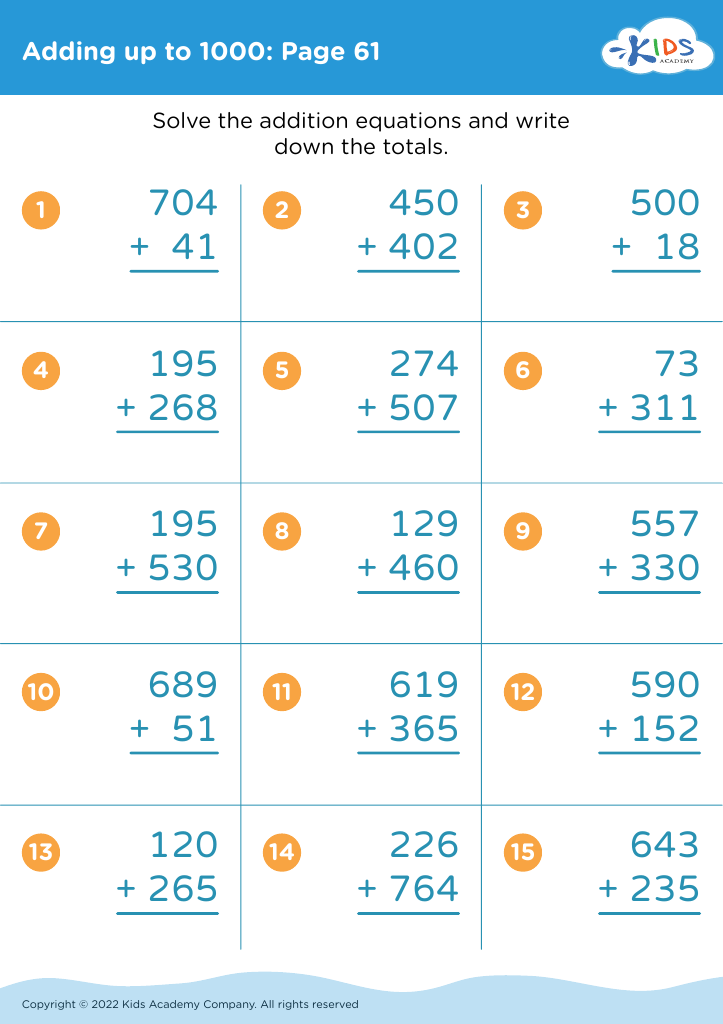
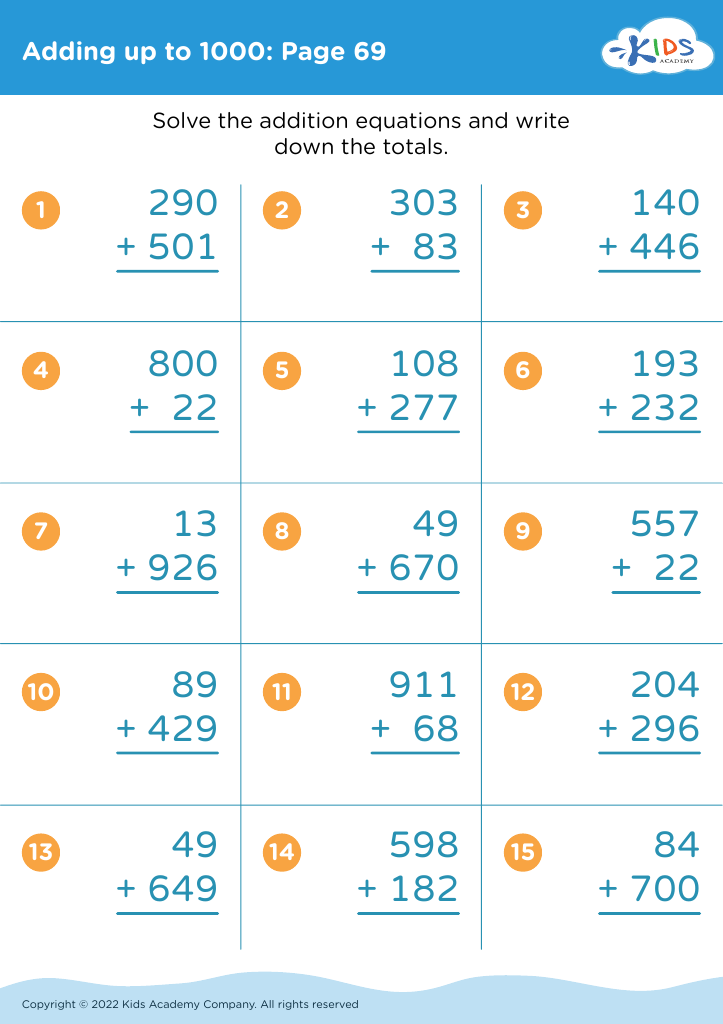
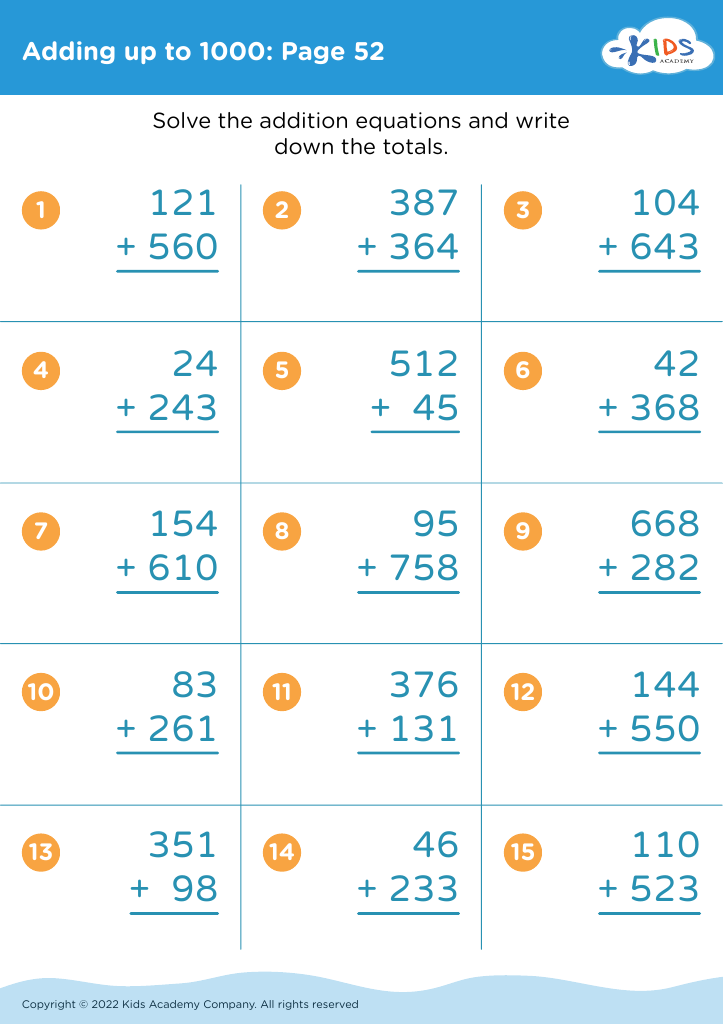
Discover engaging worksheets designed for children ages 6-9 focused on fraction simplification while adding up to 1000! Our specially curated resources help young learners grasp essential math concepts through fun exercises. These worksheets not only reinforce their understanding of fractions but also boost their skills in addition and subtraction. With easy-to-follow instructions and vibrant illustrations, kids will enjoy practicing as they embark on their math journey. Perfect for classroom use or at-home learning, these materials make mastering fractions enjoyable and accessible. Equip your students with the tools they need to succeed in math while having a great time!


Understanding fraction simplification and addition concepts is crucial for children aged 6-9 as it lays the foundation for their overall mathematical proficiency. At this age, students are beginning to grasp the more complex aspects of math which are essential for future learning. Simplifying fractions teaches children how to reduce numbers to their simplest forms, enhancing their problem-solving skills and making math less intimidating.
Moreover, skills in adding fractions or whole numbers up to 1000 foster numerical fluency. The ability to visualize part-whole relationships boosts understanding in geometry and measurement, laying groundwork for higher mathematics. Engaging with these concepts also promotes critical thinking and cognitive development, as children must analyze and manipulate numbers to reach solutions.
From a parental viewpoint, encouraging engagement with fractions not only supports academic success but also builds confidence. It empowers children with practical skills necessary for everyday life—like cooking, shopping, or sharing.
Teachers should emphasize these skills in the classroom as they provide tools for students to tackle more complex subjects later. By solidifying their understanding in these early years, we empower them to approach future mathematical problems with ease and enthusiasm, ensuring a strong foundation for lifelong learning.