Mathematical reasoning Adding up to 1000 Misc Worksheets for Ages 6-9
5 filtered results
-
From - To
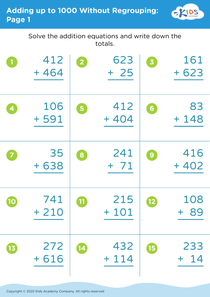
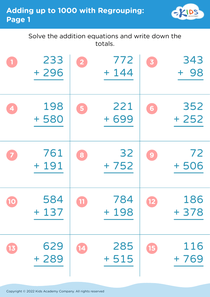
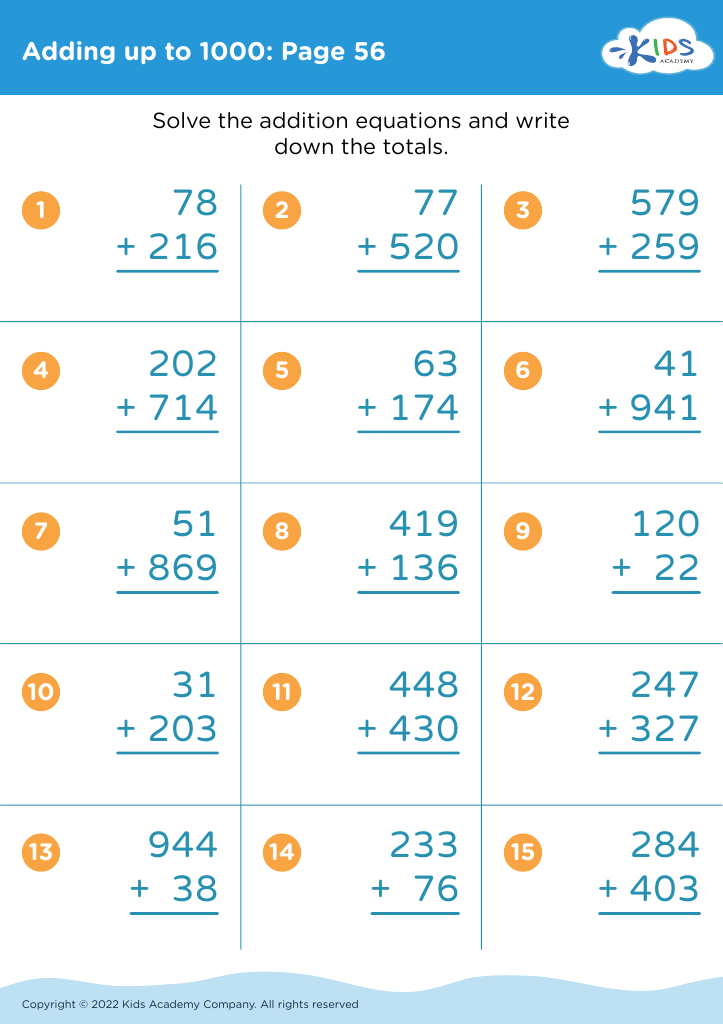
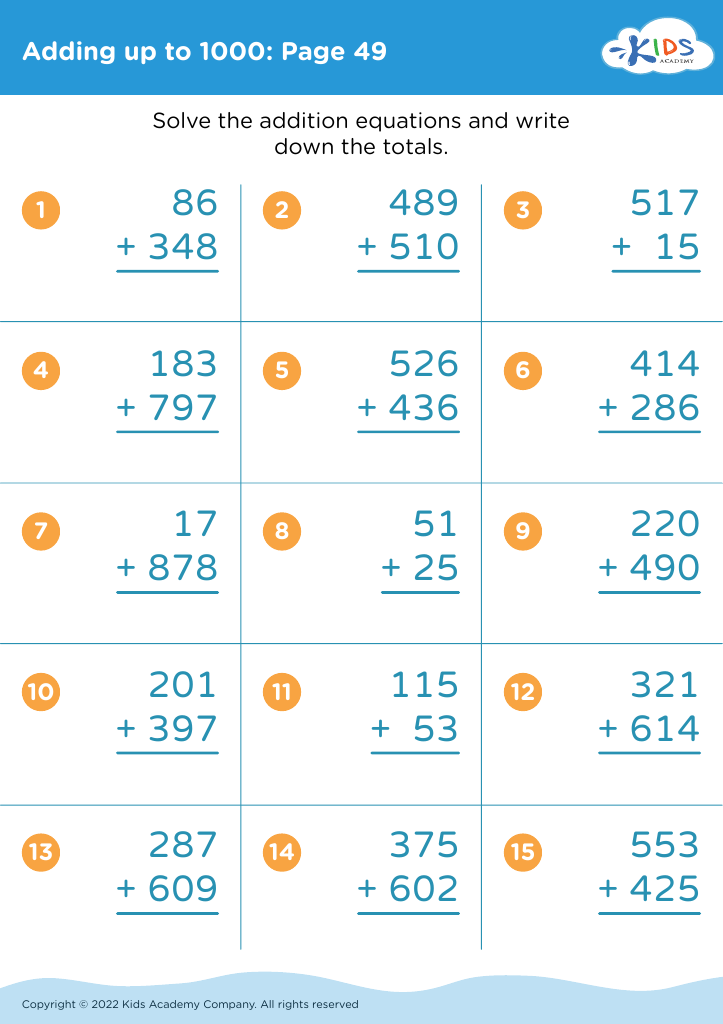
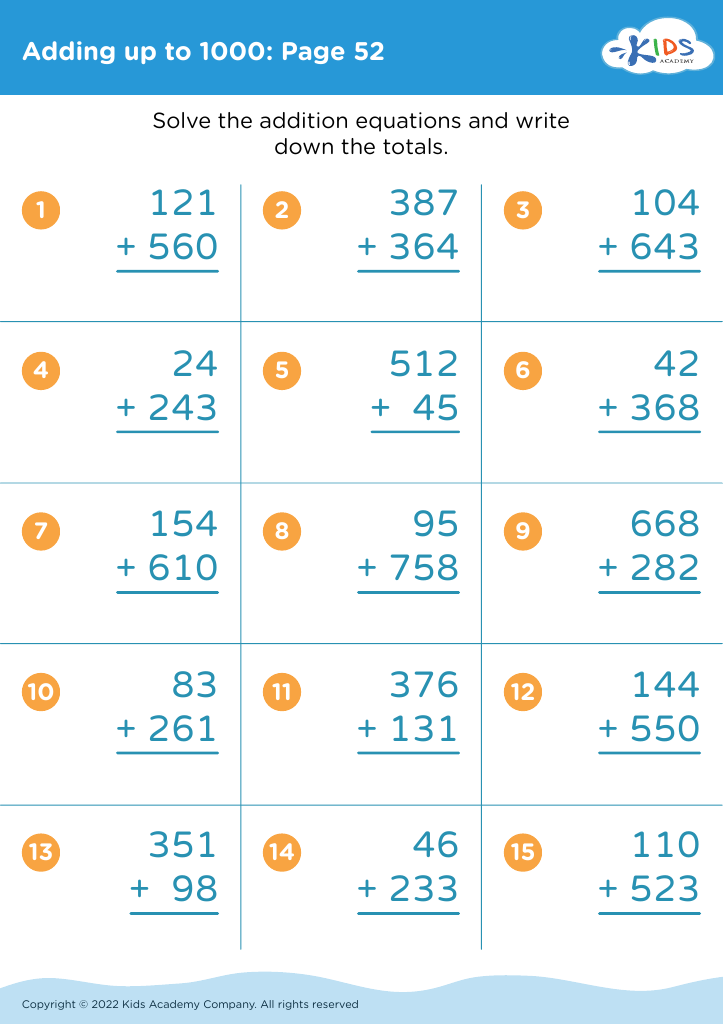
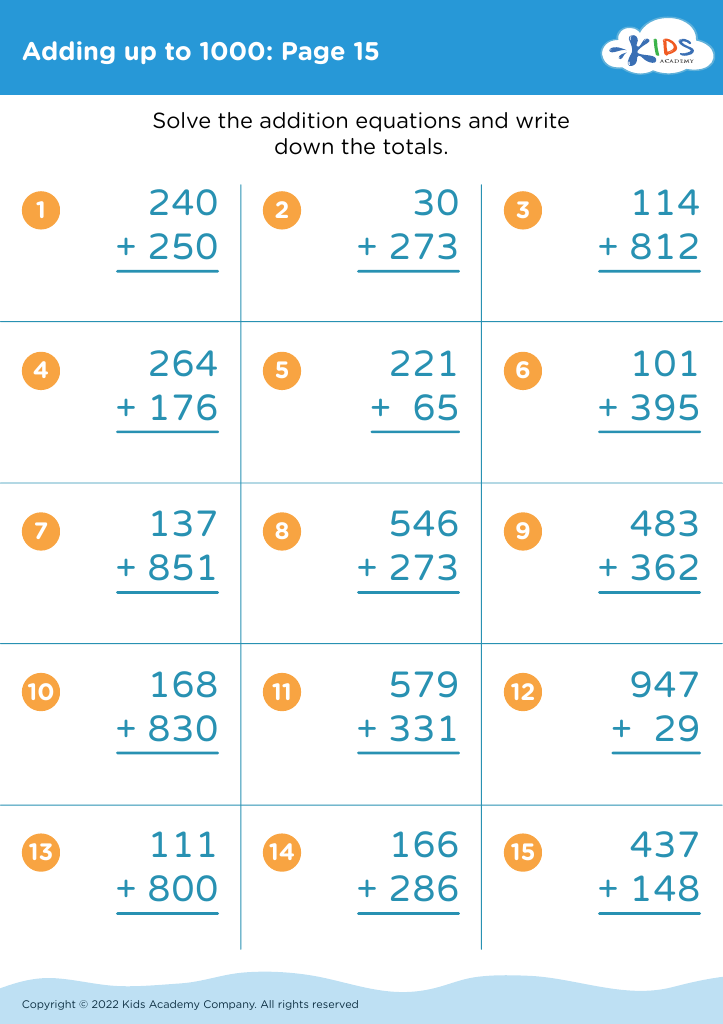
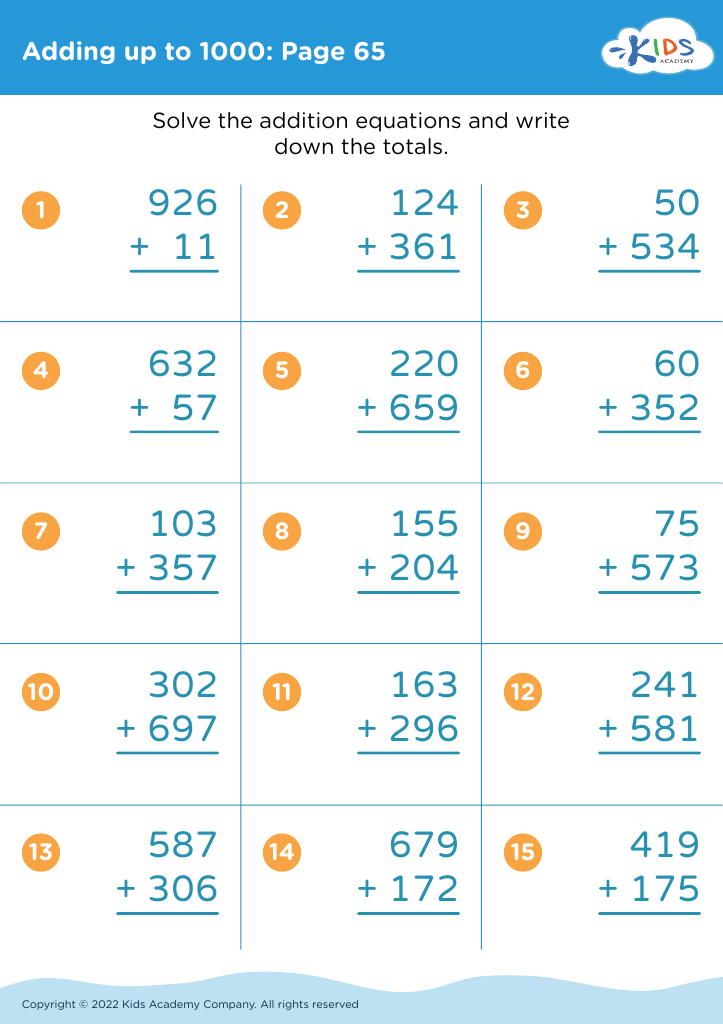
Enhance your child's mathematical reasoning skills with our engaging "Adding Up to 1000" miscellaneous worksheets, designed specifically for ages 6-9. These worksheets provide a variety of fun and educational activities that help young learners practice addition in a structured yet exciting way. With colorful visuals and interactive exercises, children will gain confidence as they solve problems involving numbers up to 1000. Tailored to align with core learning standards, our resources not only support skill development but also foster a love for math. Elevate your teaching and watch young minds flourish as they embark on this mathematical journey!


Mathematical reasoning is a foundational skill that underpins a child's ability to understand and interact with the world. For ages 6-9, honing mathematical reasoning, including concepts like adding up to 1000, is crucial for several reasons.
Firstly, this skill nurtures critical thinking. When children learn to solve problems involving larger numbers, they develop logical reasoning and the ability to analyze and break down complex problems, which are essential skills not just in math, but across all subjects.
Secondly, mastering addition and understanding its properties is vital for future mathematical concepts, including subtraction, multiplication, and division. A solid grasp of these skills builds confidence, enabling them to tackle more complex mathematics as they progress.
Moreover, engaging with math through real-world applications enhances the relevance of these skills in everyday life. This understanding motivates students to learn, helping them see math as a useful tool rather than an abstract concept.
Finally, parents and teachers play a pivotal role in fostering this reasoning by providing supportive environments where children can practice and explore mathematical concepts, ensuring they develop a positive and enduring relationship with math. Cultivating these skills promotes lifelong learning and equips children for future academic and real-world challenges.