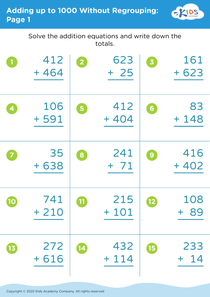
Fraction comparison Adding up to 1000 with Regrouping Worksheets for Ages 6-9
3 filtered results
-
From - To
Introducing our engaging "Fraction Comparison Adding Up to 1000 with Regrouping Worksheets" designed for children aged 6-9! These worksheets not only enhance students’ understanding of fractions but also introduce them to the concept of regrouping. With fun activities and vibrant illustrations, kids will dive into comparing fractions while practicing addition skills that sum up to 1000. Tailored to cater to young learners, our resources foster critical thinking and problem-solving abilities in a playful manner. These worksheets aim to build confidence in mathematical reasoning, ensuring students develop a solid foundation in math. Perfect for classrooms or at-home learning!
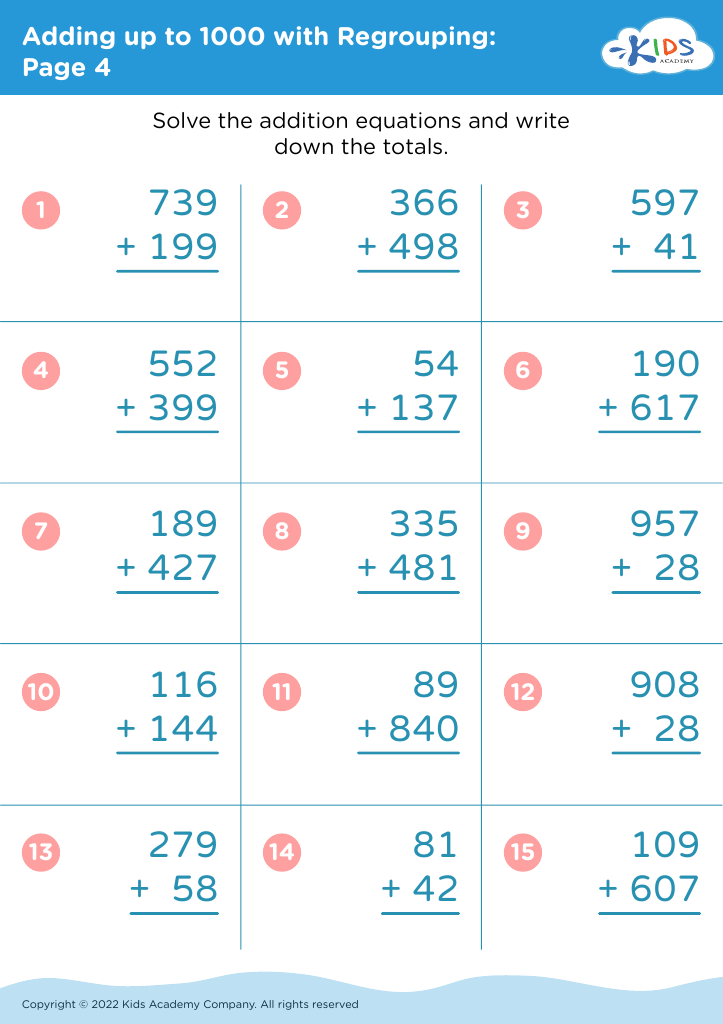
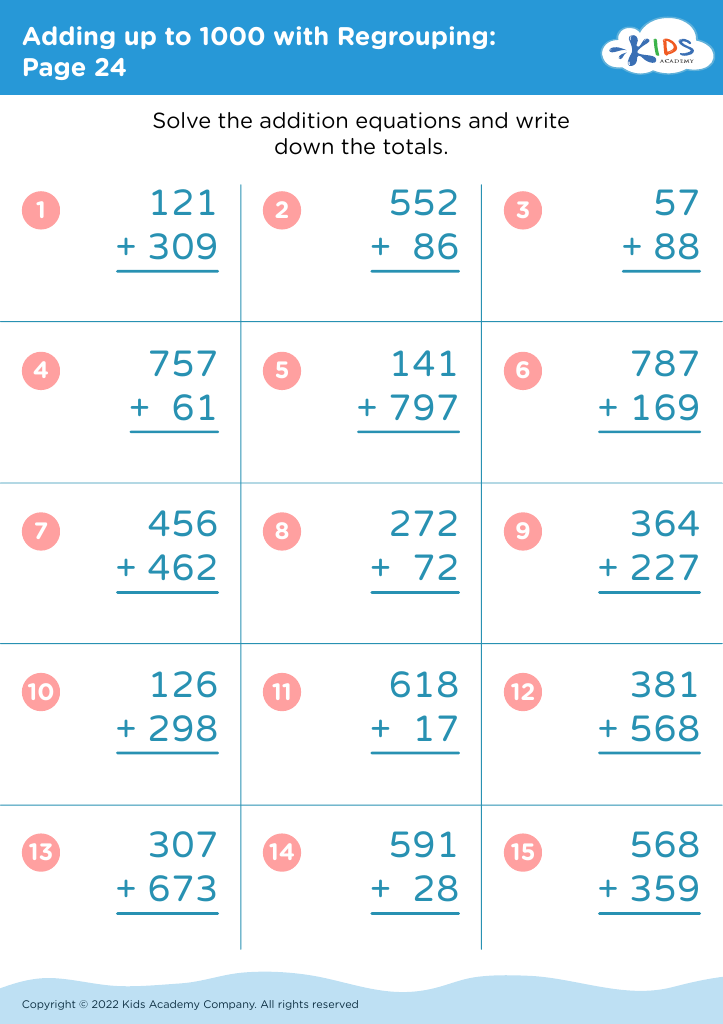
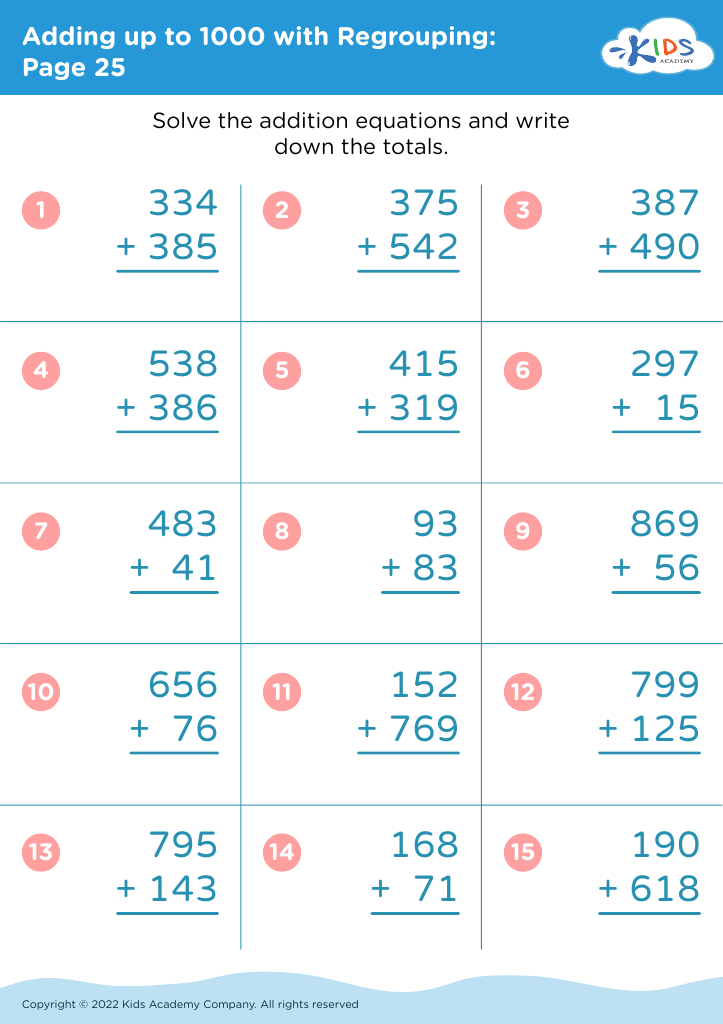


Understanding fraction comparison and addition with regrouping is crucial for children aged 6-9 as it lays the foundation for more advanced mathematics. At this age, children are developing critical thinking and problem-solving skills, making it an ideal time to introduce these concepts. Learning to compare fractions helps students make sense of parts of a whole, which is fundamental in various real-life situations, including cooking and sharing resources.
Moreover, mastering addition with regrouping reinforces their understanding of place value and number relationships. This reinforces their arithmetic skills, allowing for smoother transitions to more complex operations they will encounter in later grades. By grasping these concepts, children build confidence and proficiency in math, which can enhance their overall academic performance.
Parents and teachers play an essential role in this learning process. They can create engaging and practical scenarios that make these concepts relatable and easy to understand. By emphasizing fraction comparisons and regrouping strategies, adults can help students develop resilience and creativity in problem-solving. This not only benefits their math skills but also nurtures a lifelong love for learning, instilling the belief that they can tackle challenges with enthusiasm and perseverance.