Comparing Fractions Adding up to 1000 Without Regrouping Worksheets for Ages 6-9
3 filtered results
-
From - To
Enhance your child's math skills with our "Comparing Fractions Adding up to 1000 Without Regrouping" worksheets designed for ages 6-9. These engaging resources help young learners master the concept of fractions by comparing and understanding their values. As children work through these fun exercises, they will develop essential analytical skills, making math enjoyable and accessible. Our worksheets are carefully crafted to align with educational standards, ensuring a productive learning experience. Perfect for home or classroom use, these resources encourage critical thinking and improve confidence in young mathematicians. Start their journey to math proficiency today with our captivating fraction worksheets!
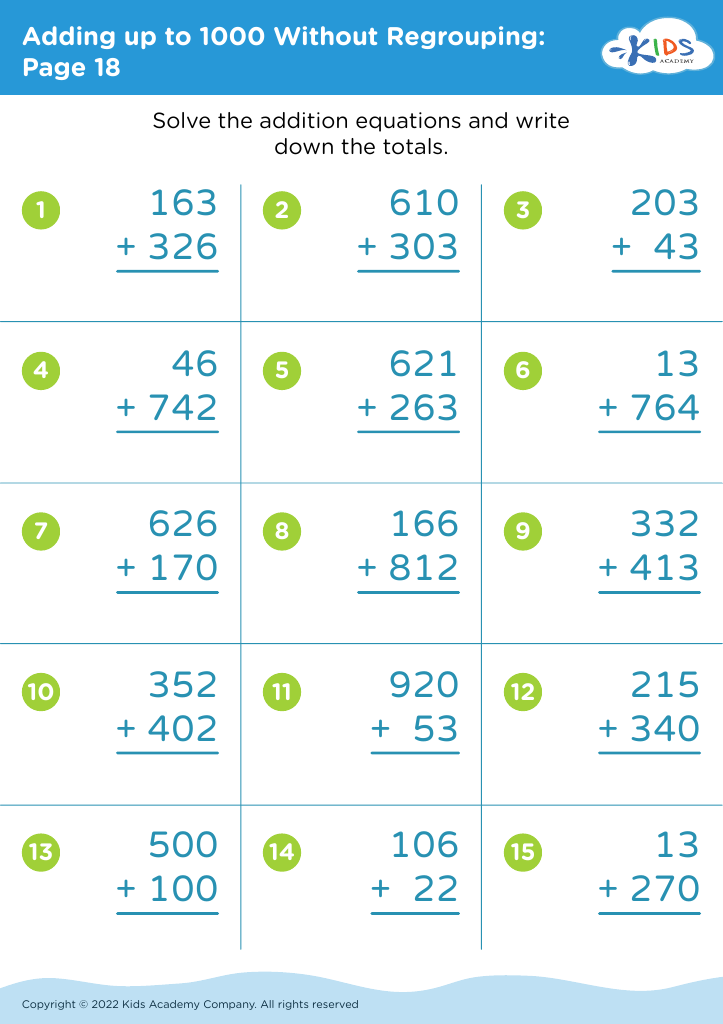
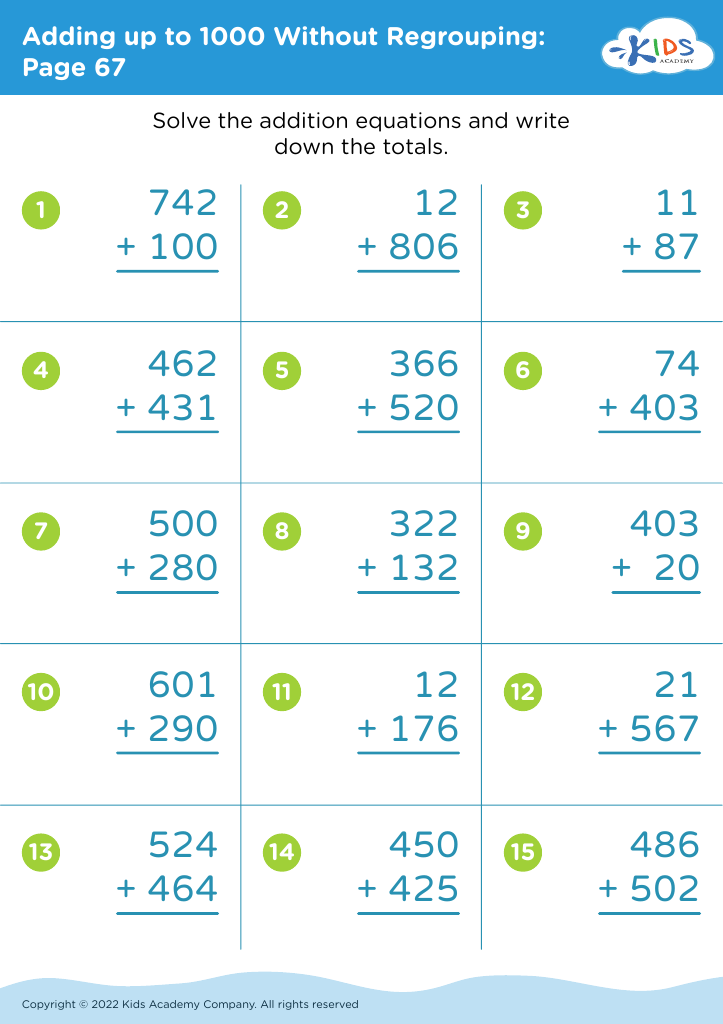
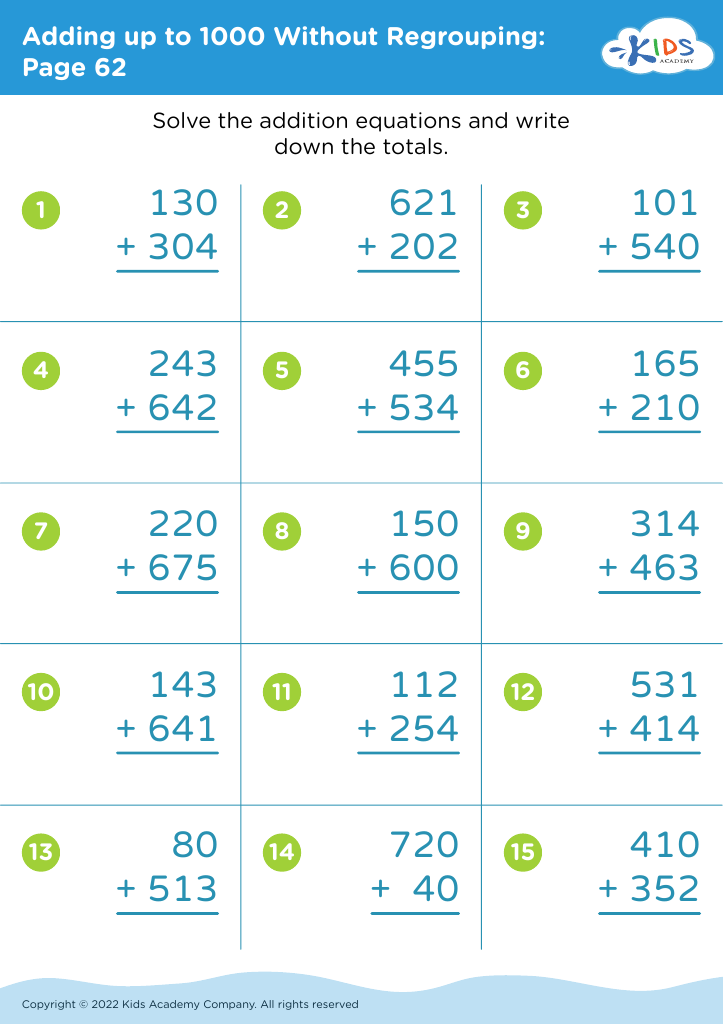


Understanding comparing fractions and adding them up to 1000 without regrouping is crucial for students aged 6-9 as it lays the foundation for future mathematical skills. At this age, children are developing essential number sense and learning to manipulate numerical relationships. By engaging with fractions, they begin to grasp concepts of part-whole relationships, which enhances their ability to think critically and problem-solve.
For parents and teachers, focusing on these skills ensures that students not only learn to compare fractions accurately but also understand their practical applications. This awareness fosters confidence, as children learn to apply mathematical reasoning in everyday situations, from cooking to budgeting allowances. Moreover, mastery in fractions supports further math topics, including word problems and more complex arithmetic.
Additionally, recognizing the importance of achieving mastery without regrouping promotes confidence and fluency in basic operations. Instead of solely relying on rote memorization, students cultivate a deeper understanding of numbers. This early competence encourages a positive attitude toward math, reducing anxiety in later years.
Ultimately, fostering these skills helps equip young learners with a solid mathematical foundation, paving the way for academic success and encouraging a lifelong appreciation for math. Both parents and teachers play significant roles in supporting this journey.