Fraction comparison Adding up to 1000 Without Regrouping Worksheets for Ages 6-9
4 filtered results
-
From - To
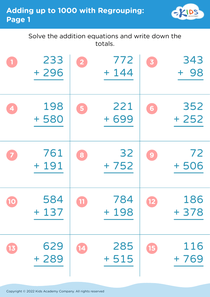
Discover our engaging "Fraction Comparison Worksheets," designed for children ages 6-9. These worksheets focus on the vital skill of comparing fractions, while seamlessly integrating the concept of adding up to 1000 without regrouping. Perfectly tailored for young learners, these activities encourage critical thinking, boost math confidence, and help solidify foundational knowledge. With colorful visuals and age-appropriate challenges, children will enjoy exploring fractions in a fun way! Ideal for classroom use or as at-home practice, these worksheets support diverse learning styles and promote a deeper understanding of ratios and relationships in numbers. Get started today and watch your child's math skills flourish!
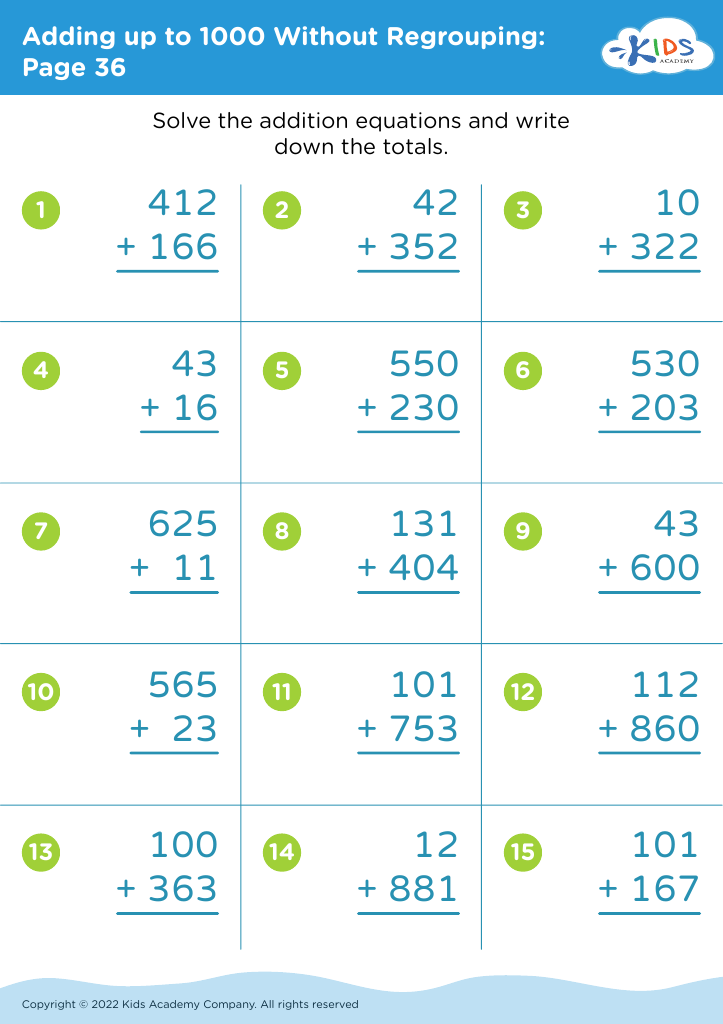
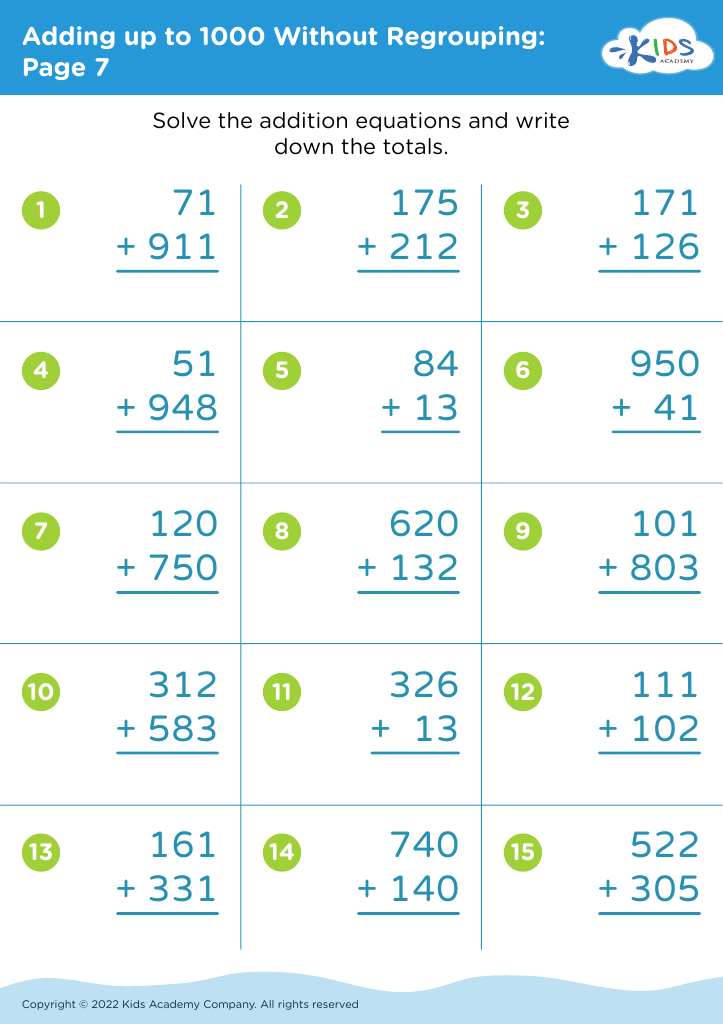
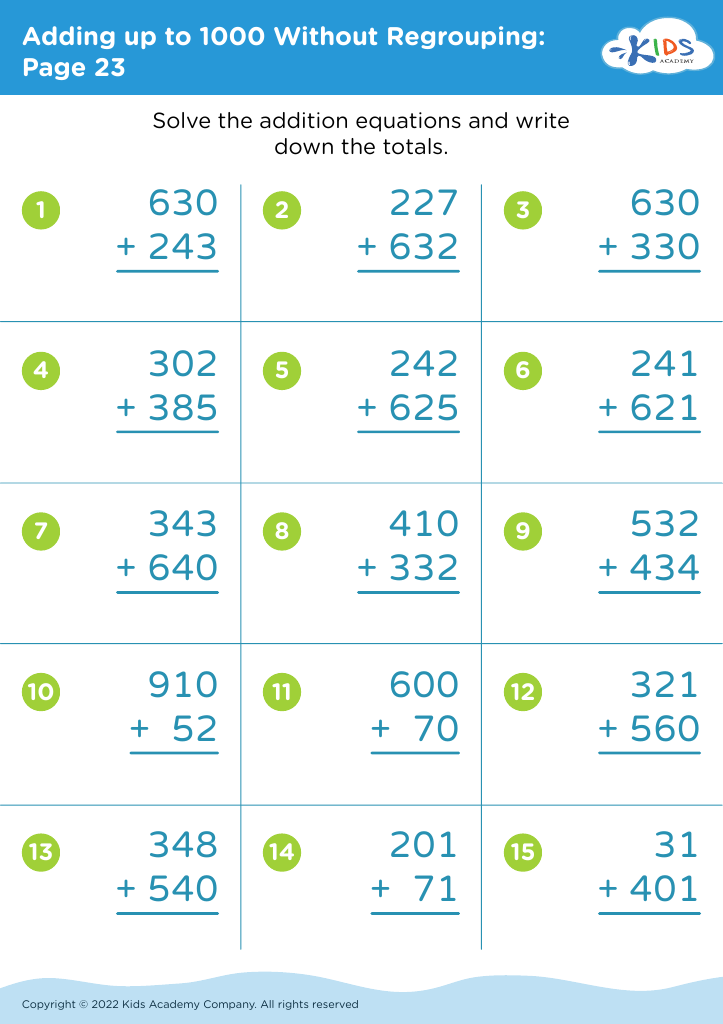
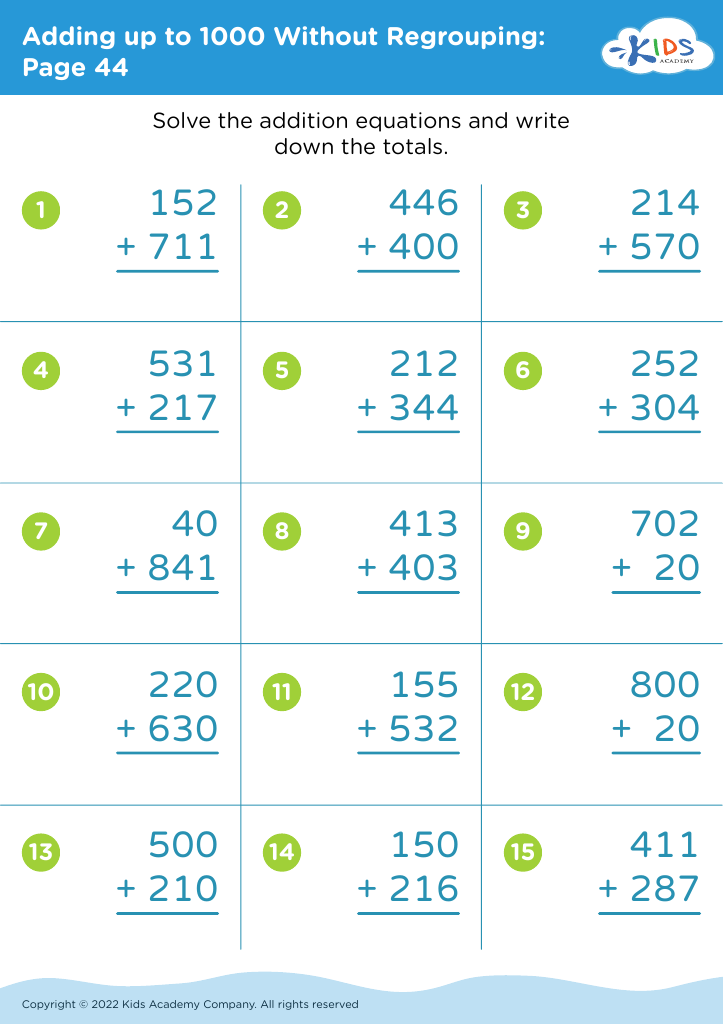


Parents and teachers should prioritize teaching fraction comparison and addition skills, particularly focusing on adding up to 1000 without regrouping, for children aged 6-9 because these foundational skills are integral to future mathematical development. Understanding fractions helps children grasp concepts of part-to-whole relationships, which are critical in everyday situations like cooking, sharing, and understanding measurements.
Moreover, comparing fractions sharpens critical thinking and analytical skills. As children compare sizes of fractions, they develop the ability to evaluate and make decisions, which is applicable across various contexts beyond math. Adding numbers up to 1000 without regrouping supports their basic arithmetic fluency, making further operations smoother as they progress to more complex calculations.
Additionally, fostering numerical competence builds confidence and a positive attitude towards math, which is essential for lifelong learning. Early exposure to these concepts can prevent future math anxiety and reinforce the idea that all children can succeed in mathematics. By laying this groundwork, parents and teachers not only enhance the child's immediate mathematical capabilities but also create a strong foundation for future educational pursuits, cultivating resilient and capable learners ready to tackle higher-level math challenges.