Improving counting skills Adding up to 1000 Without Regrouping Worksheets for Ages 6-9
4 filtered results
-
From - To
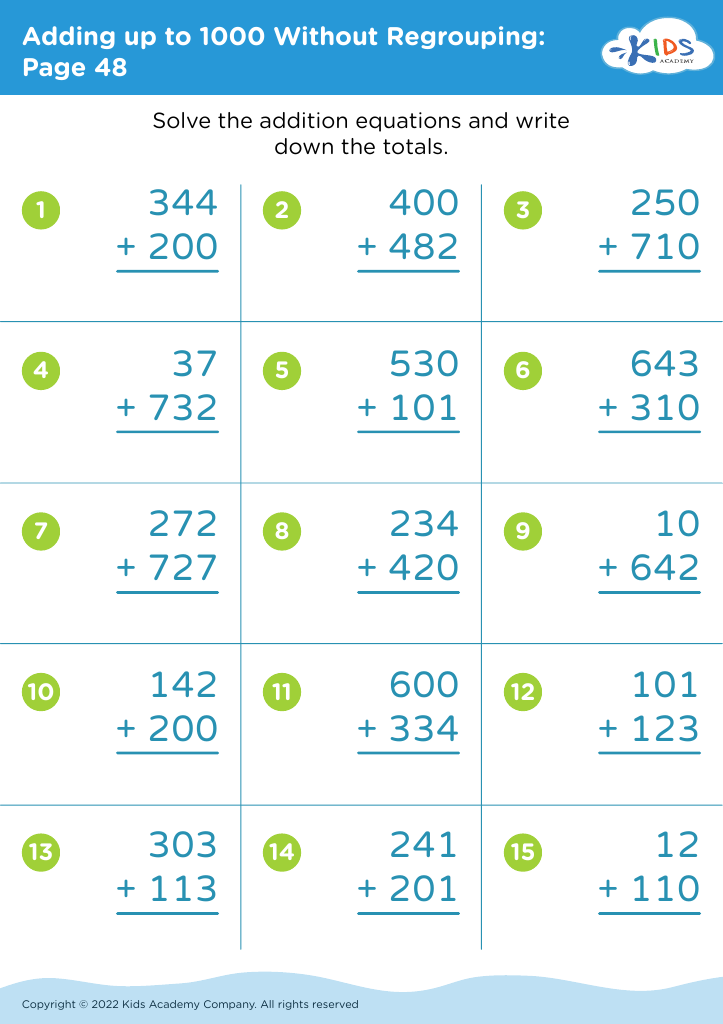
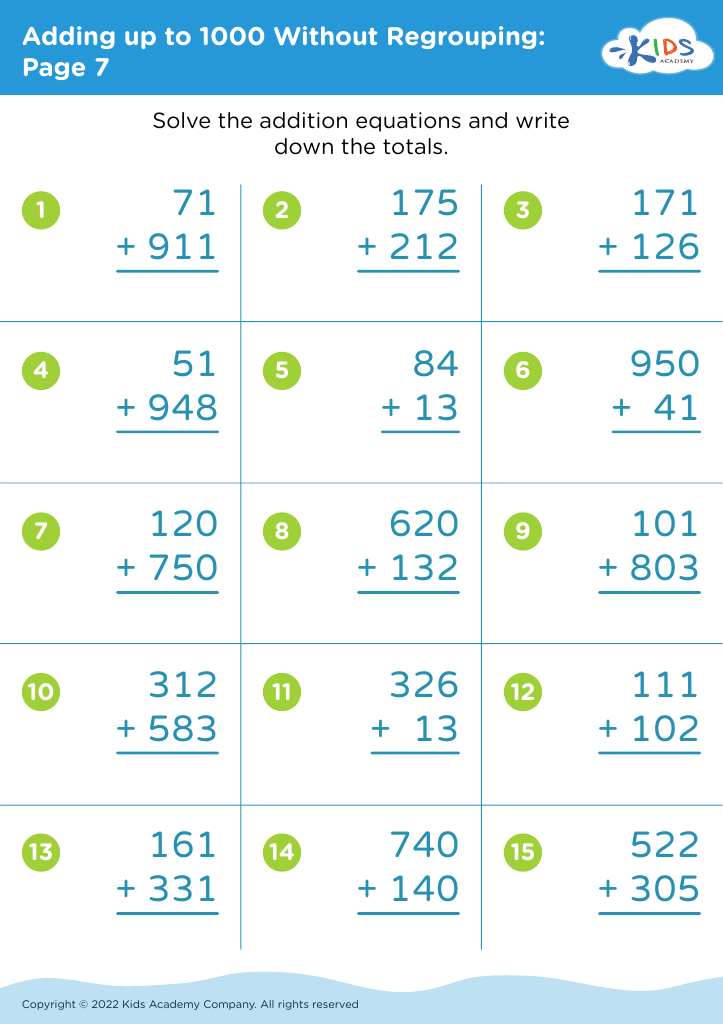
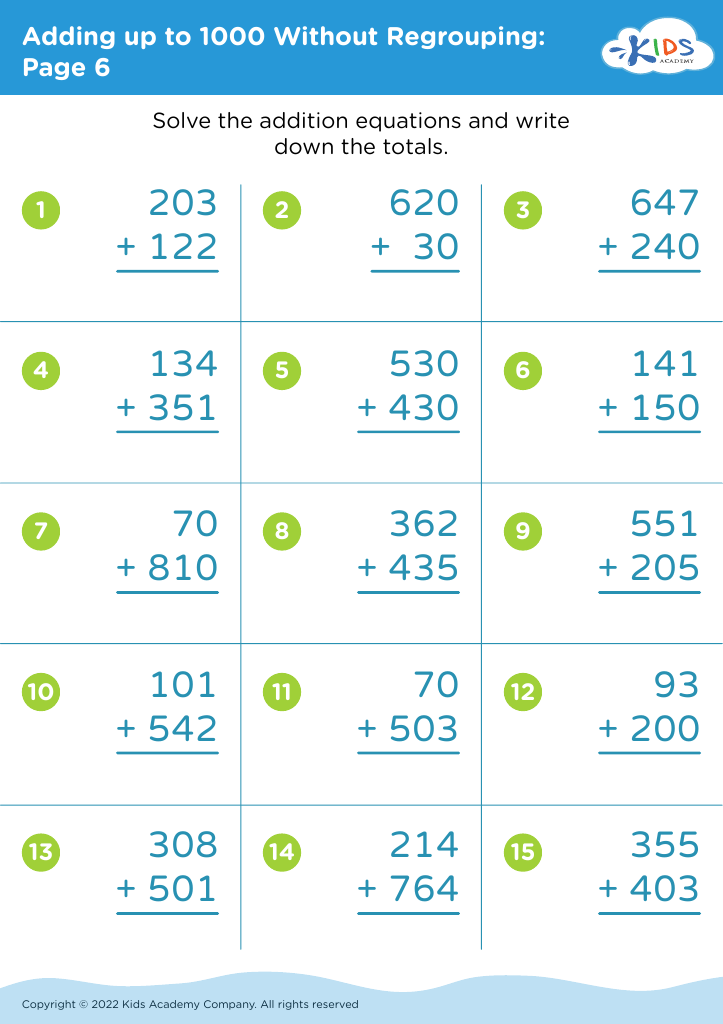
Enhance your child's counting skills with our engaging "Improving Counting Skills: Adding Up to 1000 Without Regrouping Worksheets," designed for ages 6-9. These worksheets provide a fun and interactive way to help young learners master addition up to 1000, without the complexity of regrouping. Vocabulary development, number recognition, and basic addition concepts are reinforced through colorful activities that promote confidence and proficiency in math. Ideal for both classroom and home learning, these worksheets encourage practice while making numbers enjoyable. Spark your child's enthusiasm for math today and lay a strong foundation for their future success with our carefully crafted resources!
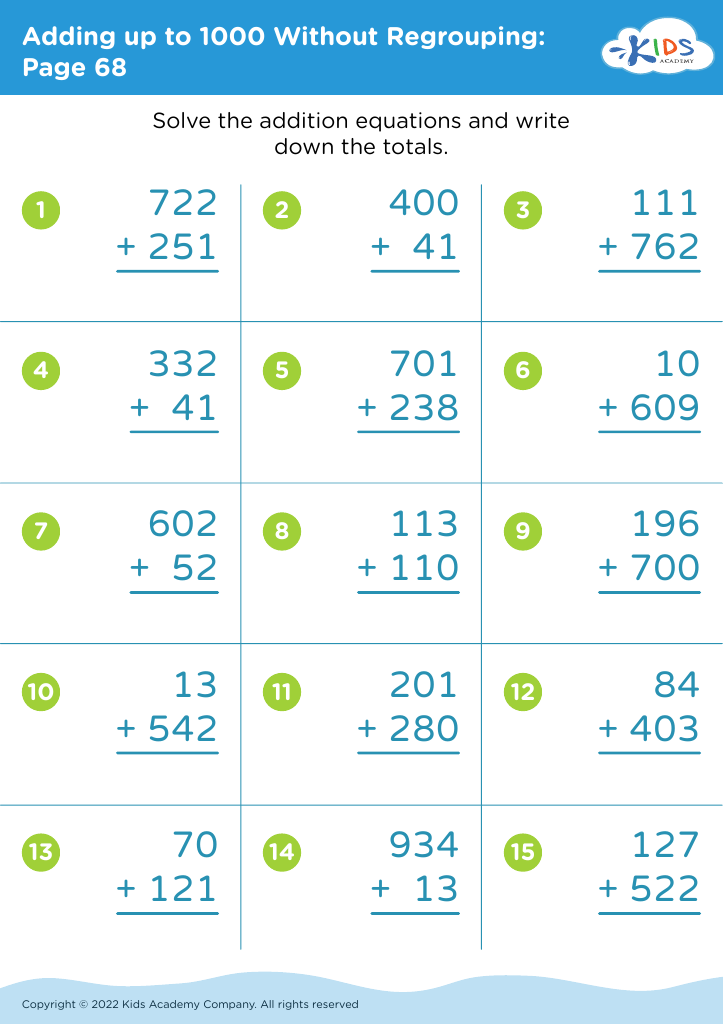


Improving counting skills and the ability to add numbers up to 1000 without regrouping is crucial for children aged 6-9, as it lays the foundation for their mathematical understanding. First, strong counting skills enhance number sense, enabling students to understand the relationships between numbers and develop mental math strategies. This mastery appropriately prepares them for more complex mathematical concepts and operations in the future.
Additionally, enhancing adding skills empowers children with confidence and fosters a positive attitude toward mathematics, paving the way for lifelong learning. It helps children to easily tackle everyday situations such as making change, measuring ingredients, or budgeting their allowance.
Moreover, these skills support overall cognitive development, including enhanced critical thinking and problem-solving abilities. When students excel in basic counting and addition, they can participate more fully in group activities, fostering collaboration and communication.
For parents and teachers, investing time and resources into improving these skills can lead to significant academic growth. It bridges the gap between foundational math concepts and higher-level mathematics, enhancing students' ability to tackle and excel in school. Ultimately, promoting counting and addition skills ensures a better foundation for lifelong mathematical competence.