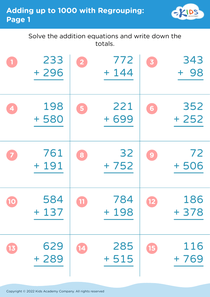
Reading comprehension Adding up to 1000 Without Regrouping Worksheets for Ages 6-9
4 filtered results
-
From - To
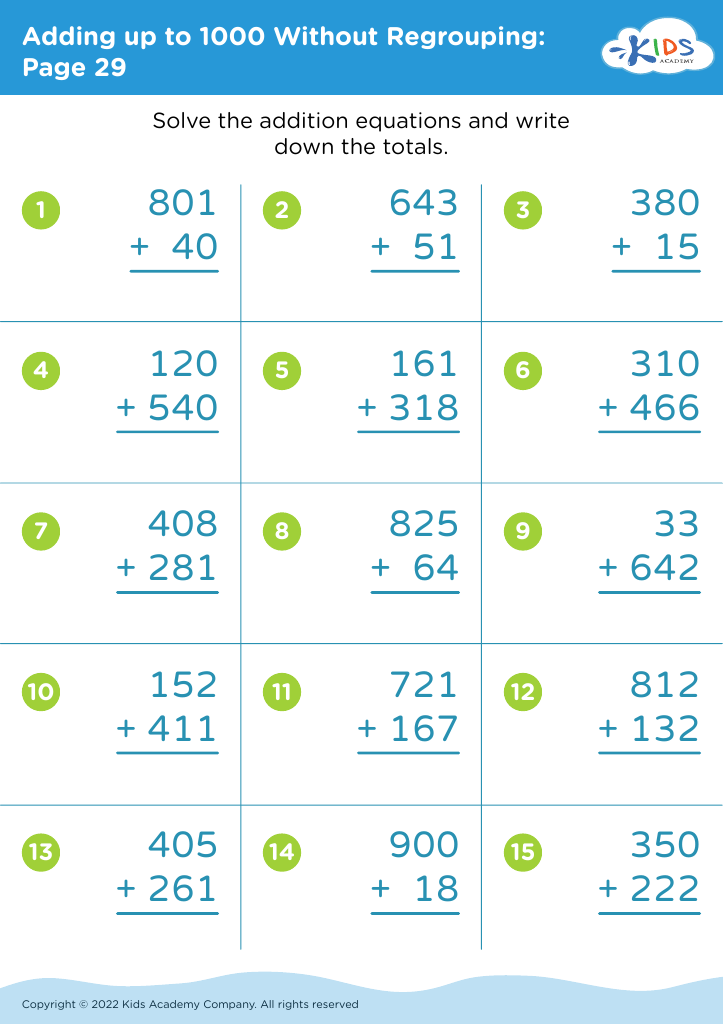
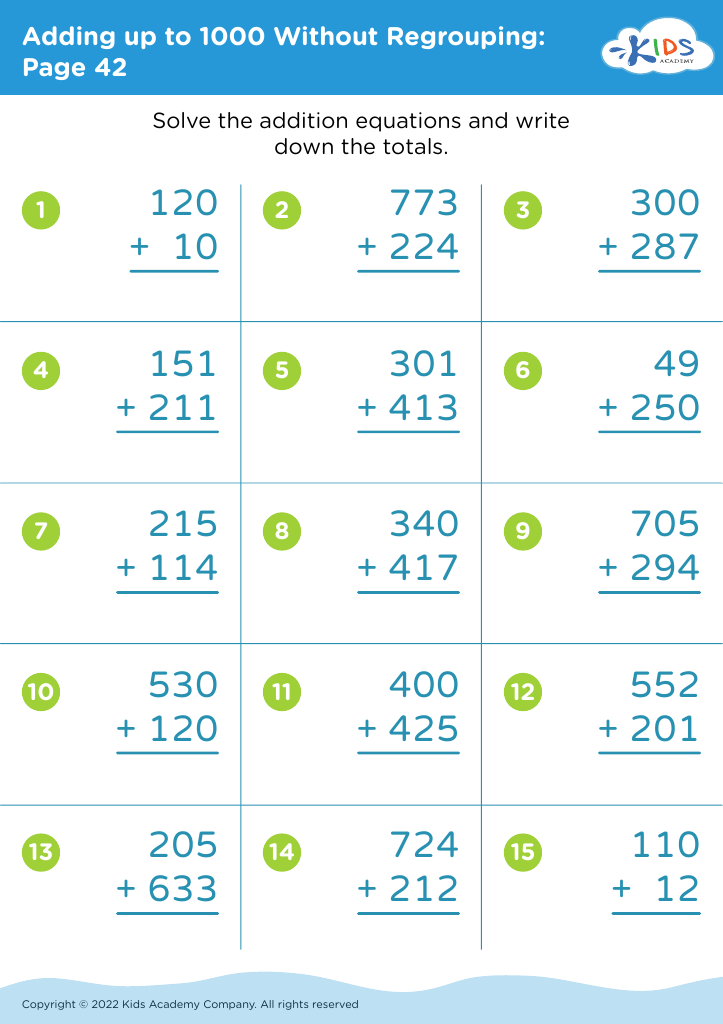
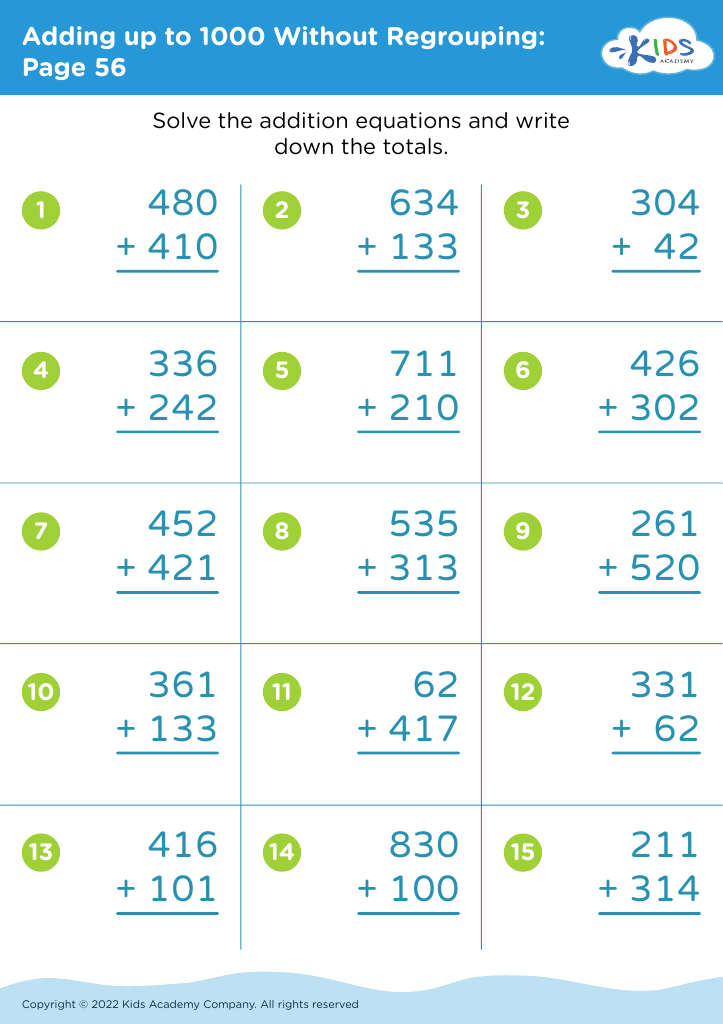
Enhance your child's reading comprehension and math skills simultaneously with "Reading Comprehension Adding up to 1000 Without Regrouping Worksheets for Ages 6-9." Designed for young learners, these engaging worksheets present math challenges combined with reading tasks. Children will solve addition problems up to 1000 without regrouping, fostering their arithmetic abilities while strengthening comprehension through relevant word problems. Perfect for classroom or home learning, these worksheets promote critical thinking and problem-solving skills, ensuring a well-rounded educational experience. Visit Kids Academy to access these excellent resources and support your child’s academic growth in both math and reading comprehension.
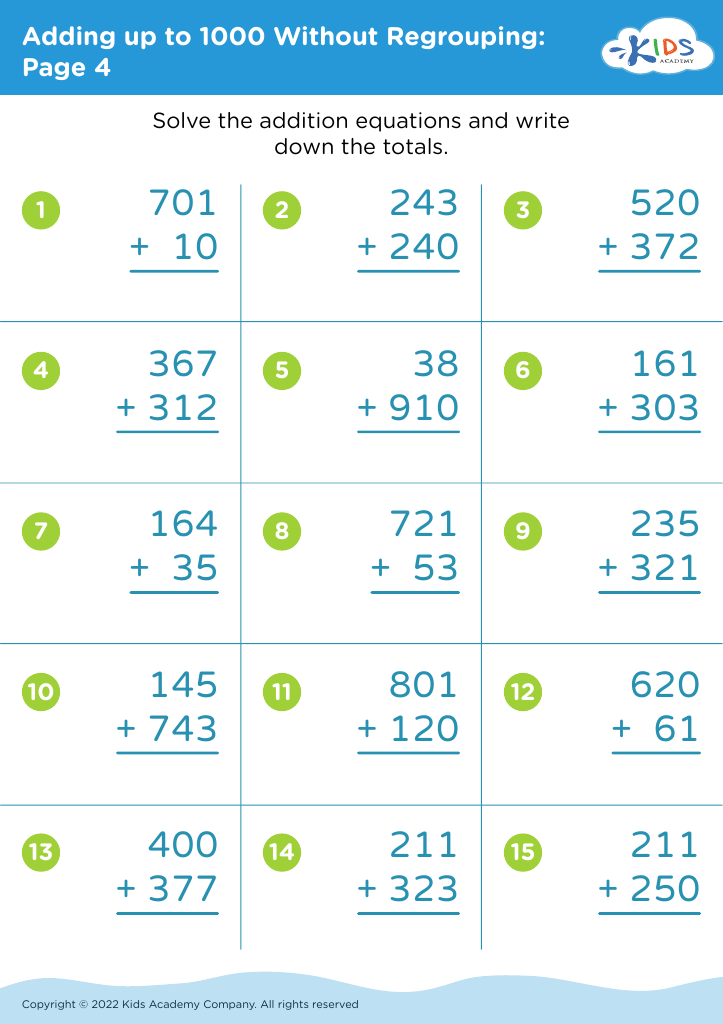


Reading comprehension and adding up to 1000 without regrouping are critical skills for children ages 6-9, and both play an essential role in their academic and personal development. Reading comprehension helps kids understand and engage with the text, enhancing their vocabulary, critical thinking, and ability to follow instructions. When children can comprehend what they read, they're more likely to be successful in all subject areas, as reading is a foundational skill for learning.
Simultaneously, adding up to 1000 without regrouping is a key math skill in early education. Mastering basic arithmetic prepares children for more advanced math concepts. Adding without regrouping teaches them number sense, place value, and mental calculation strategies, which boost their confidence and reduce math anxiety.
Focusing on these skills helps create well-rounded learners. Parents and teachers should care because these abilities are interconnected—strong reading comprehension allows students to understand math problems better, while good math skills reinforce logical thinking used in reading. Providing support in these areas encourages a growth mindset, setting children on a path to academic excellence. Emphasizing reading comprehension and math skills ensures that young learners build a solid foundation, promoting lifelong learning and problem-solving abilities.